L’Angélus Singapore: Classic French Dining That Has Endured on Club Street
There are restaurants that continually reinvent themselves, and there are restaurants that build their identity around not needing to.
L’Angélus belongs firmly in the second group.
Operating on Club Street since 1998, the French restaurant has spent more than two decades serving a style of cooking that remains recognisably rooted in the traditional French repertoire. Escargots, foie gras, duck confit, cassoulet, Châteaubriand, French onion soup and Crêpes Suzette sit comfortably within its world. Sauces matter. Proper cooking matters. Wine matters. And the restaurant itself still leans into the visual language of the traditional Parisian bistro rather than trying to reinterpret it through contemporary minimalism.
That makes L’Angélus increasingly unusual in Singapore.
The city’s restaurant landscape moves quickly. New concepts open, dining rooms are redesigned and culinary ideas evolve constantly. Across The Cuisine Journal’s growing collection of Singapore venues, restaurants can range from highly contemporary dining rooms to chef-driven establishments built around very specific techniques or cultural identities.
L’Angélus has instead found longevity through continuity.
It is not trying to make French cuisine unfamiliar. It is trying to make familiar French cuisine well.
A French Restaurant Built Around Continuity
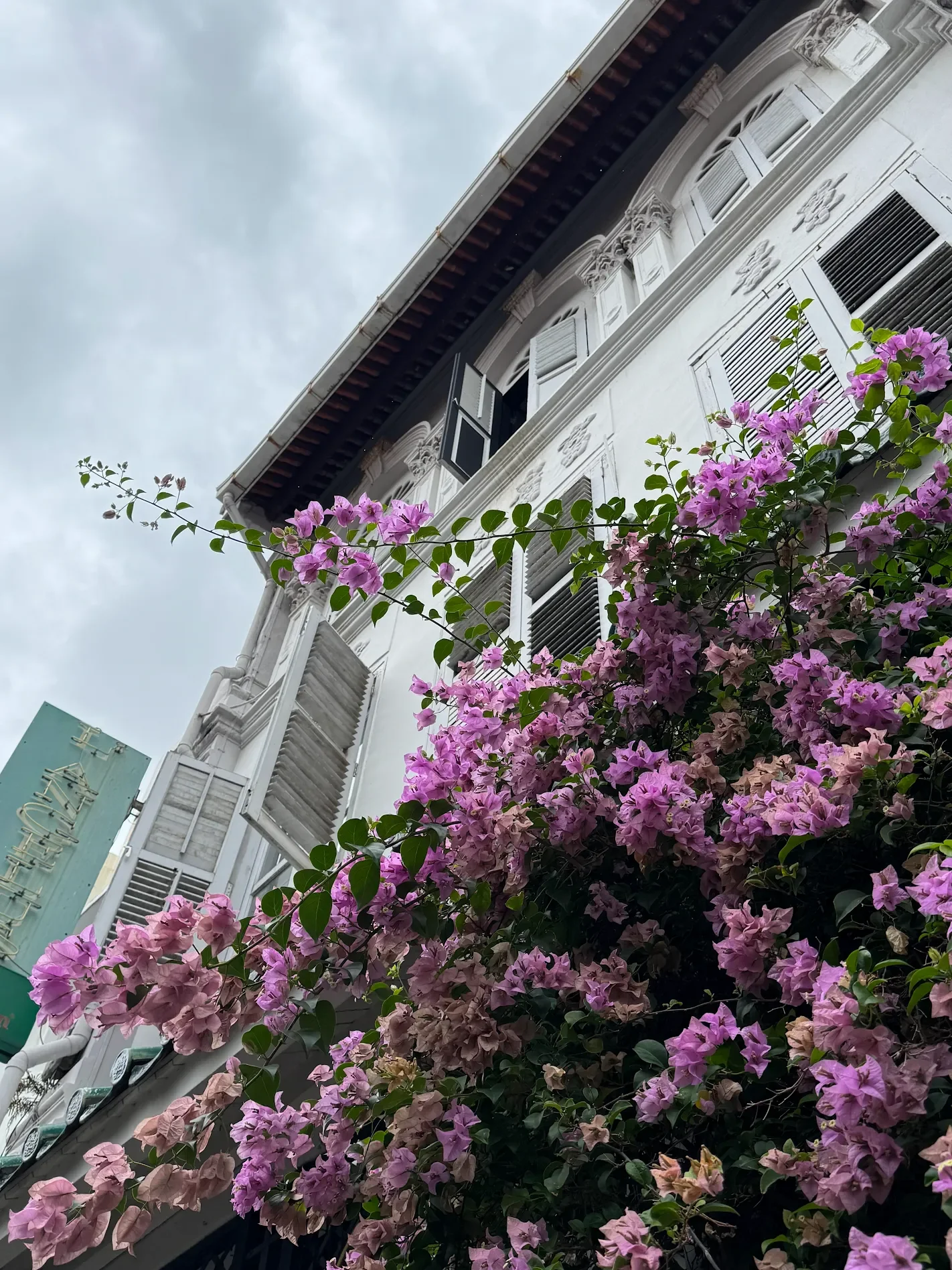
L’Angélus occupies a shophouse at 85 Club Street, placing it within one of Singapore’s most recognisable historical dining districts.
The location suits the restaurant.
Club Street and the surrounding Telok Ayer, Ann Siang and Chinatown neighbourhoods are filled with conserved architecture, narrow streets and an unusually dense mixture of old and new businesses. L’Angélus feels less like something inserted into that environment than something that has gradually become part of it.
Its longevity matters because restaurants rarely remain static for nearly three decades.
Singapore's dining culture has changed enormously since the late 1990s. Fine dining became less formal. Modern European cooking became more international. Open kitchens, tasting menus, chef counters and concept-driven restaurants proliferated. Diners became increasingly comfortable with restaurants that blurred national culinary boundaries.
L’Angélus remained recognisably French.
The restaurant describes itself as Singapore's oldest single-location traditional French restaurant, and that word — traditional — is probably the most useful way of understanding what it does.
This is not French cuisine being deconstructed, reinterpreted or placed behind layers of conceptual storytelling. The foundations are considerably more straightforward: ingredients, classical preparations, sauces, wine and hospitality.
That approach puts L’Angélus at an interesting opposite end of the restaurant spectrum from places such as Burnt Ends, where Dave Pynt built an entire culinary identity around fire and the restaurant's custom ovens, or KOMA Singapore, where architecture and theatricality are deliberately integrated into the dining experience.
At L’Angélus, the central idea is much older.
It is the French bistro.
The Dining Room Is Part of the Restaurant's Identity
Walking into L’Angélus is not supposed to feel like entering a newly designed contemporary restaurant.
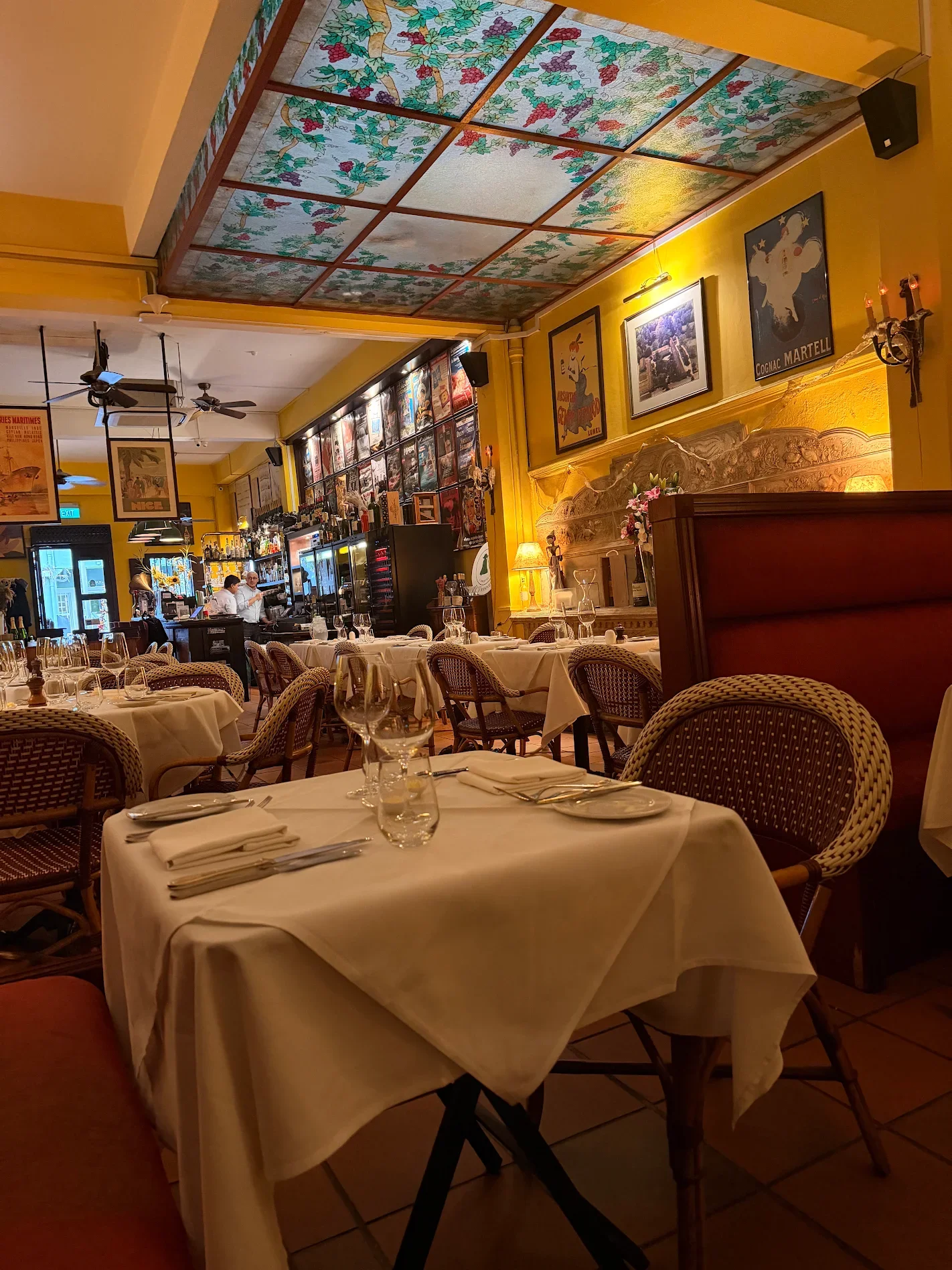
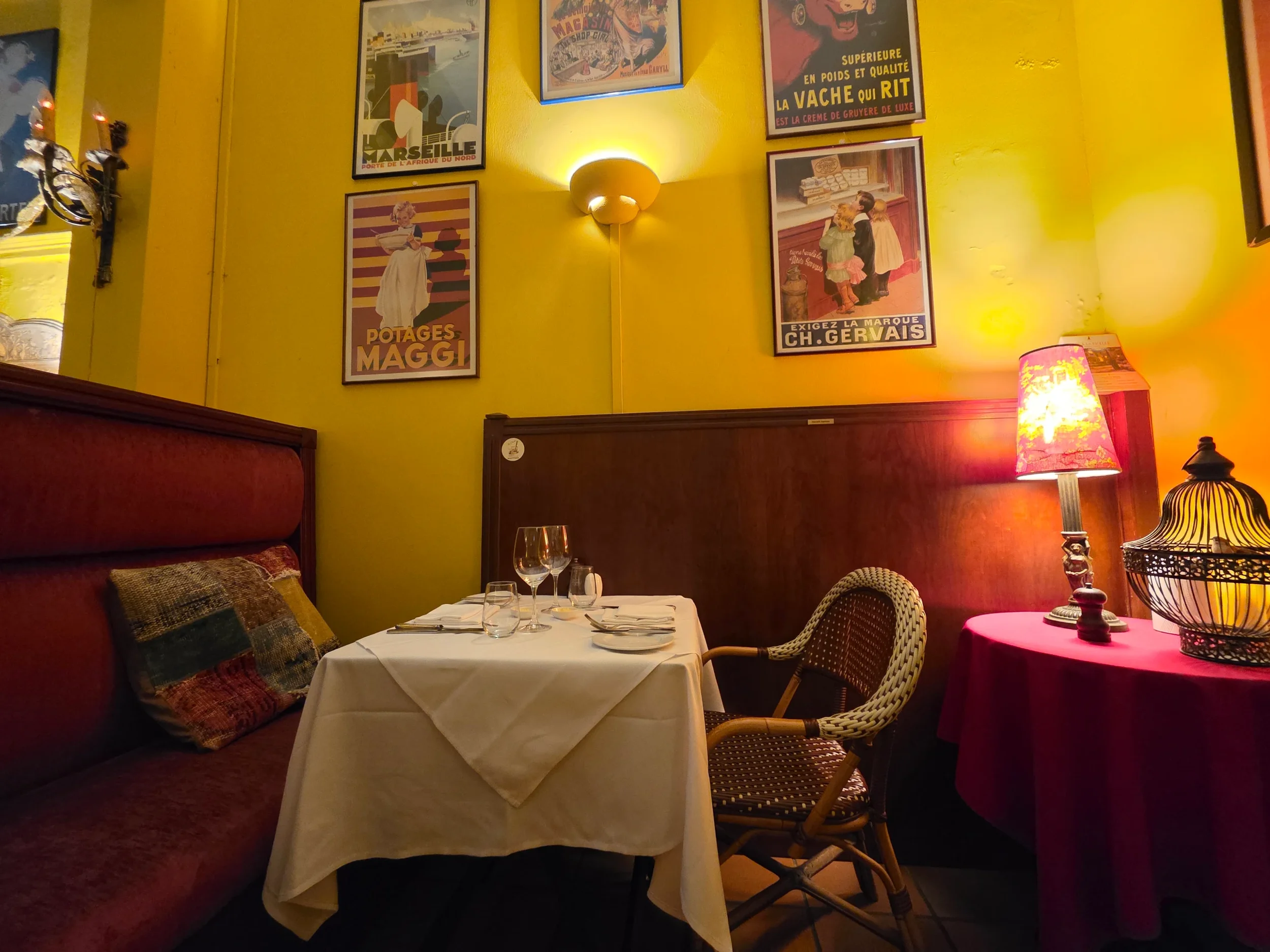
Its interior deliberately carries the vocabulary of an older European dining room: dark wood, framed pictures, French memorabilia, bottles, closely arranged tables and decorative details accumulated rather than stripped away.
For diners accustomed to the polished restraint of modern luxury restaurants, the room can feel almost unusually decorative.
That is part of its character.
Recent diner feedback frequently describes the restaurant as calm, quiet and comfortable for conversation. Several guests specifically mention visiting for anniversaries and birthdays, while others describe it simply as a low-key place for dinner.
That distinction is important.
L’Angélus can function as an occasion restaurant without behaving like an occasion restaurant.
There is no requirement for the evening to unfold as a three-hour theatrical tasting experience. Someone can arrive for French onion soup and steak frites, while another table orders foie gras, Châteaubriand and dessert for an anniversary.
The restaurant can accommodate both.
And because the dining room has existed for so long, there is another element that cannot easily be manufactured through interior design: accumulated history.
A new restaurant can imitate a classic bistro. It cannot immediately reproduce the feeling of a room that has spent decades serving people.
The Menu Begins With the French Classics
The easiest way to understand L’Angélus is through the dishes diners repeatedly talk about.
Escargots are one of the restaurant's longstanding signatures. French onion soup appears constantly in diner feedback. Duck confit remains another recurring order. There is cassoulet, foie gras, tartare, steak and larger-format beef preparations.
These are not accidental inclusions.
Traditional French cooking is built upon technique as much as ingredients. Browning, roasting, braising, reducing, emulsifying and building sauces properly can turn relatively familiar ingredients into dishes of considerable depth.
A restaurant serving this kind of food consequently has fewer places to hide.
If the duck is dry, diners notice.
If a steak is overcooked, diners notice.
If an onion soup lacks depth, diners notice.
If a sauce is poorly made, the entire plate can collapse.
The strongest recurring observation in feedback around L’Angélus is that the kitchen generally understands these fundamentals.
One diner described the restaurant specifically as a place for classic French dishes and praised its sauces. Another highlighted a properly cooked steak frites with a rich red-wine sauce. Others repeatedly mention well-executed Wagyu, Châteaubriand, duck and pork.
The pattern matters more than any individual dish.
L’Angélus does not depend upon a single signature plate carrying the restaurant's reputation. Its identity rests upon the kitchen's ability to execute a broad range of recognisably French preparations.
Escargots, Onion Soup and the Importance of the Beginning
French restaurants reveal a surprising amount about themselves before the main course arrives.
Consider escargots.
The pleasure of escargots is not simply the snails themselves. Much of the appeal comes from what surrounds them: butter, garlic, herbs, seasoning and the bread that inevitably becomes part of the experience.
French onion soup operates similarly.
Its ingredient list sounds simple enough, but its success depends upon patience. The onions need enough time to develop sweetness and depth. The broth needs sufficient concentration. Cheese, bread and soup need to work as a whole rather than as separate components.
Diner feedback on L’Angélus repeatedly returns to these kinds of dishes.
The French onion soup is regularly mentioned, although opinions on seasoning are not universally positive. Escargots remain popular, though at least one diner found them slightly dry.
That variation is worth acknowledging because L’Angélus is not interesting because every diner agrees on every plate.
It is interesting because the restaurant continues to commit itself to dishes that diners already know well enough to judge critically.
Foie Gras, Including a Singaporean Detour
Foie gras is another recurring presence.
It appears in more traditional preparations, but L’Angélus has also occasionally allowed its menu to move beyond strict orthodoxy.
One Restaurant Week menu, for example, paired foie gras with bak kwa.
The combination makes intuitive sense despite crossing culinary traditions. Foie gras brings richness and a soft, almost buttery texture; bak kwa contributes sweetness, smoke and concentrated savouriness.
It is a useful example of where L’Angélus appears most comfortable innovating.
The restaurant does not need to abandon its French foundation to introduce something recognisably Singaporean. Instead, the new component can be inserted into an existing culinary vocabulary.
That keeps experimentation secondary to identity rather than making experimentation the identity itself.
Duck Confit, Cassoulet and the Heavier Side of French Cooking
L’Angélus is particularly suited to diners who enjoy the more substantial side of French cuisine.
Duck confit is one of the most consistently praised dishes in the supplied diner feedback. Guests describe properly cooked duck, crisp skin and tender meat, while cassoulet has also attracted particularly affectionate responses.
One anniversary diner wrote that the cassoulet reminded her husband of home.
That might be one of the more meaningful compliments a restaurant serving traditional cuisine can receive.
Cassoulet is not designed primarily to impress visually.
It belongs to an older category of food built around preservation, slow cooking and appetite. Beans, meat and rendered fat slowly become something deeper than the individual ingredients suggest.
There is an important distinction here between rustic food and simple food.
Cassoulet may have rustic origins, but producing a good one requires considerable control. Duck confit has the same paradox. The finished dish can appear uncomplicated even though the process behind it is not.
L’Angélus seems comfortable with this sort of cooking.
These are plates built for satisfaction rather than surprise.
Steak Frites and Châteaubriand
Beef provides another major thread running through diner experiences.
Steak frites is perhaps the archetypal bistro main course because it leaves so little room for unnecessary complication.
Cook the beef properly.
Make a good sauce.
Cook the fries correctly.
Serve it.
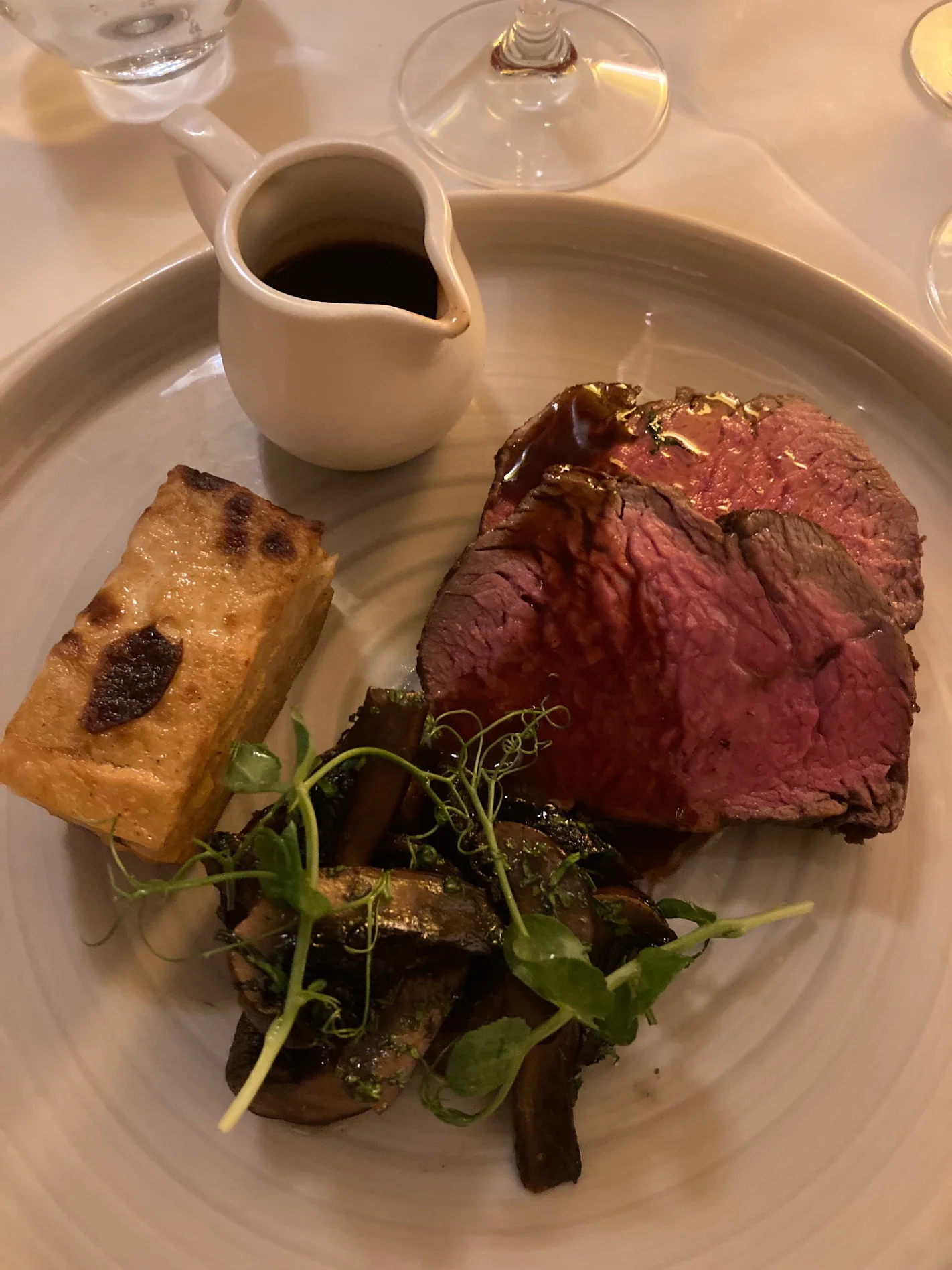
At L’Angélus, diners repeatedly highlight accurate cooking temperatures and the quality of accompanying sauces. Wagyu preparations have also received strong feedback, while Châteaubriand appears frequently in celebratory meals.
The latter changes the rhythm of dinner.
Châteaubriand is inherently more communal than an individually plated steak. It encourages sharing and gives the meal the character of an occasion without requiring elaborate presentation.
That partly explains why L’Angélus appears repeatedly in anniversary and birthday accounts.
Some restaurants create celebration through spectacle.
Traditional French restaurants often create it through abundance.
Seafood Shows Another Side of the Kitchen
Although meat-heavy French classics form much of the restaurant's identity, diner feedback also reveals a substantial seafood side.
Scallops, trout, oysters, octopus, ceviche and lobster have all appeared in recent meals and special menus.
Lobster risotto, in particular, has attracted enthusiastic responses. One guest described entering the restaurant and immediately noticing the aroma of lobster before later identifying the risotto as the highlight of the meal.
This part of the menu helps prevent L’Angélus from becoming a catalogue of brown sauces and braised meat.
French cooking has always had an enormous seafood tradition, and lighter preparations offer necessary contrast against foie gras, beef, duck and cassoulet.
The restaurant can consequently move between richness and freshness without abandoning its culinary framework.
Sauces May Be the Quiet Measure of L’Angélus
One of the most revealing pieces of diner feedback about L’Angélus is also one of the simplest:
The sauces were good.
Sauce is easy to overlook when discussing restaurants because it rarely carries the headline. Diners remember the steak, duck or fish.
But classical French cuisine treats sauce as fundamental infrastructure.
A good sauce can carry roasting juices, wine, stock, butter, aromatics and hours of reduction in something that occupies only a small portion of the plate.
When diners repeatedly notice the sauces, they are indirectly noticing technique.
That also helps explain why a restaurant such as L’Angélus can survive without constantly searching for a new culinary concept.
Technique has a longer shelf life than novelty.
Desserts Stay Within the Same Classical Language
The end of dinner does not radically change direction.
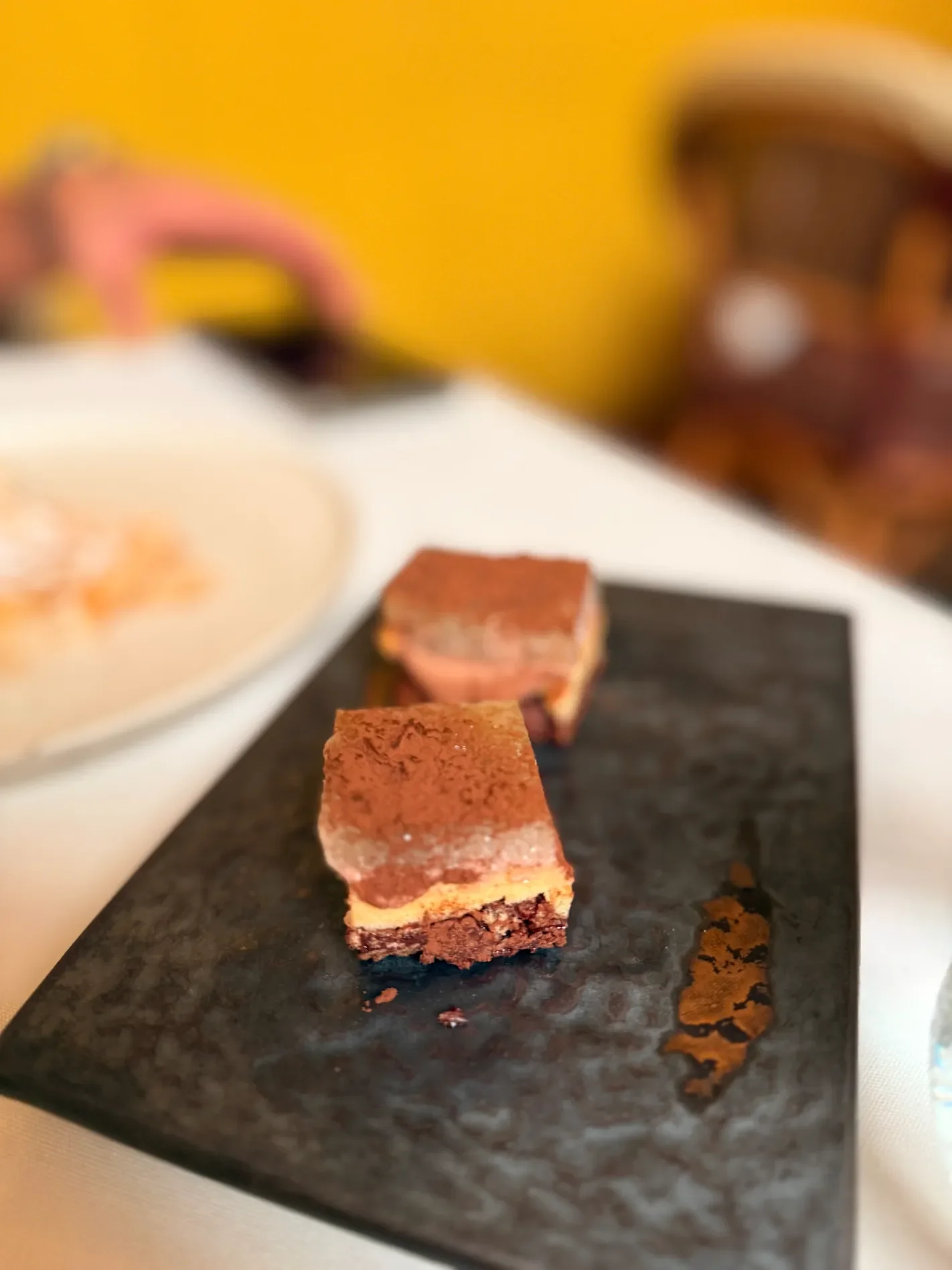
Apple tart, chocolate desserts, tiramisu and other familiar European preparations appear regularly in diner feedback, but Crêpes Suzette remains the dessert most closely aligned with the restaurant's old-school identity.
One guest celebrating a 20th wedding anniversary made a special request for Crêpes Suzette and reported that the kitchen accommodated it.
The restaurant's traditional tableside version is exactly the kind of preparation that feels increasingly uncommon.
Crêpes Suzette is dessert as both cooking and ritual: warm crêpes, orange, butter, sugar and liqueur brought together before flambéing.
It provides theatre, but importantly, it is culinary theatre.
The performance exists because of the dish rather than the dish existing because the restaurant needs a performance.
The Restaurant Still Has People at Its Centre
Longevity is rarely the result of a dining room alone.
L’Angélus currently identifies Chef Benjamin Yip as the chef leading its kitchen, with an emphasis on consistency, fresh ingredients and classical French cooking. Group Head Sommelier Guillaume Pace oversees much of the wine selection, while General Manager Christopher Roch leads the service team. The restaurant provides more information on the people behind the operation through its L’Angélus team page.
That division of responsibilities reflects a traditional restaurant structure.
Kitchen, wine and dining-room service operate as related disciplines.
It is a model that can sometimes seem less visible in an era when restaurants are frequently marketed almost entirely through the identity of a celebrity chef.
Yet hospitality depends just as heavily on the people outside the kitchen.
Diner feedback illustrates this particularly clearly.
Numerous guests describe warm recommendations, attentive service and personal touches during celebrations. Individual staff members are remembered by name. Complimentary anniversary desserts and chocolates appear in several accounts.
At the same time, service is also where the restaurant receives some of its clearest criticism.
Service Is the Most Uneven Part of the Diner Feedback
A balanced picture of L’Angélus needs to include the less successful experiences.
Several diners who praised the food nevertheless reported service lapses.
One guest celebrating an anniversary enjoyed the duck and octopus but described difficulty getting staff attention, a missing soup spoon and cleared cutlery before a complimentary dessert arrived.
Another diner enjoyed the Wagyu and Kurobuta pork but felt staff were rushing during a full service.
Others, conversely, describe service as calm, warm, knowledgeable and attentive.
This suggests that the restaurant's hospitality can be very good but may become less consistent depending on the service period.
That distinction matters for a restaurant whose appeal relies partly on traditional hospitality.
When someone chooses an established French dining room for a birthday or anniversary, expectations extend beyond whether the steak reaches the table at the correct temperature.
The pacing matters.
Recommendations matter.
Cutlery matters.
The ability to get someone's attention matters.
For many guests, L’Angélus delivers that experience extremely well. The presence of recurring criticism, however, is worth retaining in any useful account of the restaurant.
Longevity creates expectations as much as credibility.
A Restaurant for Celebrations Without Excessive Formality
Perhaps the clearest theme emerging from recent diners is how frequently L’Angélus is used to mark something.
Wedding anniversaries.
Birthdays.
Colleague celebrations.
Restaurant Week discoveries that become return visits.
This makes sense.
The restaurant occupies a useful middle ground between everyday dining and formal fine dining. It can feel special without requiring the behavioural choreography sometimes associated with elaborate tasting-menu restaurants.
You can order a substantial French dinner, open a bottle of wine and spend an evening talking.
For many diners, that is enough.
The room being relatively quiet helps.
So does its visual warmth.
And so does the familiarity of the food.
There is something reassuring about celebrating an anniversary over Châteaubriand or duck confit. The dish itself does not need explaining before someone can enjoy it.
French Identity in a City That Constantly Mixes Culinary Traditions
Singapore's restaurant scene is unusually good at absorbing international food cultures without freezing them in place.
Italian food offers a useful comparison. Chefs such as Antonio Manetto have brought distinctly Neapolitan culinary roots into their work in Singapore, while Roberto Galbiati represents a different Italian tradition shaped by Milan and a long international career.
L’Angélus performs a similar function for French cuisine, but through the institution rather than a single personality.
Its significance comes from continuity.
It gives diners access to a style of restaurant that predates much of Singapore's current wave of chef-led dining.
That does not make it inherently better than newer restaurants.
It makes it different.
Why L’Angélus Still Makes Sense
A restaurant does not survive from 1998 into 2026 simply because it is old.
Longevity requires enough people to continue finding a reason to return.
At L’Angélus, those reasons appear fairly clear.
Some come for the escargots.
Some come for duck confit or steak.
Some remember the sauces.
Some discover it through a set lunch.
Some arrive for an anniversary and ask for Crêpes Suzette.
Some have walked past the Club Street frontage for years before finally deciding to enter.
And some return because the restaurant offers something increasingly difficult to manufacture: familiarity without complete predictability.
Seasonal dishes change. Ingredients change. Restaurant Week menus introduce variations. Not every service is flawless and not every dish receives universal praise.
But the underlying restaurant remains recognisable.
That may ultimately be L’Angélus's strongest characteristic.
It has not survived by spending nearly three decades trying to become whatever French dining is supposed to look like next.
It has survived by remaining quite clear about what it already is.
L’Angélus at a Glance
Restaurant: L’Angélus
Cuisine: Traditional French
Address: 85 Club Street, Singapore 069453
Setting: Traditional Parisian-style dining room in a Club Street shophouse
Known for: Escargots, French onion soup, duck confit, cassoulet, foie gras, steak preparations, Châteaubriand and Crêpes Suzette
Best suited to: Quiet dinners, date nights, business meals, birthdays and anniversaries