Thiru Gunasakaran: The Western-Trained Chef Who Found Indian Food Through Memory
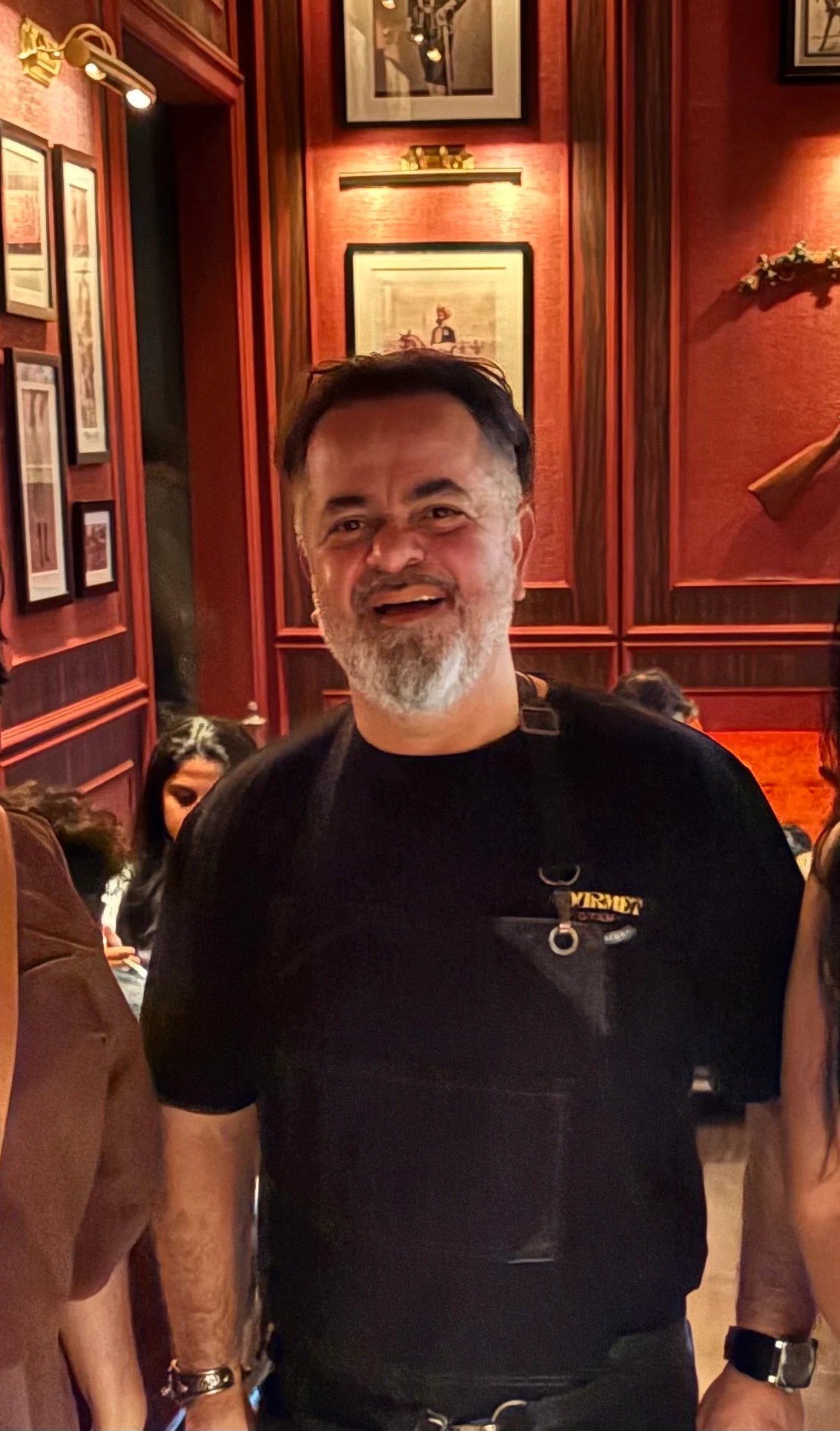
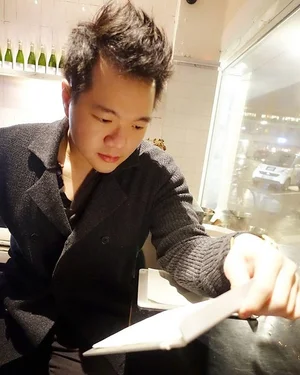
When Thiru Gunasakaran was asked to lead the kitchen at Firangi Superstar, there was one unusual detail in his résumé.
He had never professionally cooked Indian food.
Gunasakaran was a third-generation Malaysian of South Indian heritage. He had grown up eating the food of his mother, grandmother, aunties and family, but his professional education had taken him elsewhere.
French-Western technique.
Restaurant kitchens.
And eventually approximately six years at Spago by Wolfgang Puck in Singapore, where he rose to executive sous chef.
Then came Firangi Superstar.
Suddenly, Gunasakaran was being asked to build a modern Indian menu.
He could have approached the task by studying restaurant conventions and reproducing recognisable classics.
Instead, he went backwards.
Into childhood.
Into memory.
Into the tastes of food that had never previously belonged to his professional career.
The result was Indian cooking viewed through a chef who was simultaneously deeply connected to it and, professionally at least, something of an outsider.
Which made him unusually well suited to a restaurant called Firangi Superstar.
Indian by Heritage, Western by Training
Gunasakaran grew up in Malaysia in a South Indian family.
Indian food was therefore not foreign to him.
It was home food.
What was missing was professional Indian kitchen experience.
CNA Luxury later described Gunasakaran as a Malaysian Indian chef whose culinary background had been built around French-Western cooking. Before Firangi Superstar, he had worked as executive sous chef at Spago by Wolfgang Puck.
Other contemporary coverage places his time with Spago at roughly six years.
That matters because professional training changes the way a chef sees food.
A cook learns to think about texture.
Sauce construction.
Acidity.
Temperature.
Plating.
Contrast.
Consistency.
How ingredients transform under different techniques.
Gunasakaran accumulated that vocabulary without using it professionally to cook the food he had grown up eating.
Then he was given the opportunity to combine the two.
A Firangi Cooking Indian Food
The restaurant's name provides an unusually good framework for understanding Gunasakaran.
Firangi refers broadly to a foreigner or outsider.
The restaurant itself describes Firangi Superstar as “a foreigner's love letter to India” — an imagined, cinematic interpretation of the country rather than an attempt to reproduce it literally.
Gunasakaran fit that concept in a complicated way.
He was not foreign to Indian food.
But neither had he been professionally trained inside an Indian culinary tradition.
He was also Malaysian rather than Indian-born and had not grown up in India.
That gave him a peculiar position.
Close enough to recognise the flavours instinctively.
Far enough away to question their forms.
In a 2021 CNA Lifestyle profile of Firangi Superstar, the restaurant's co-founder Michael Goodman described Gunasakaran as beginning to connect more deeply with both his childhood memories and his heritage through the dishes he was developing.
For the first time, professional technique and personal memory were working on the same food.
His First Recipe Book Was Memory
When developing Firangi Superstar's menu, Gunasakaran drew on the food cooked by the women in his family.
His mother.
Grandmother.
Aunties.
His sister.
Those memories became reference points.
Not recipes in the conventional restaurant sense.
Memories.
How something smelled.
The kind of spice profile a dish carried.
A texture.
A familiar combination.
The emotional recognition that happens before someone necessarily understands why a dish tastes familiar.
This is a very different relationship with heritage from the precise apprenticeship associated with chefs such as Shintaro Hozumi, where knowledge moves professionally through generations of a specialised craft.
Gunasakaran's inheritance happened at the family table.
Only later did he translate it into restaurant technique.
This Is Not Aloo Gobi
One of his most recognisable early dishes made that philosophy obvious in the name.
This Is Not Aloo Gobi.
Aloo gobi is fundamentally straightforward: potato, cauliflower and spices.
Gunasakaran kept those familiar flavour associations while completely changing the structure.
As documented by CNA Lifestyle, his version involved cauliflower couscous, masala compote and crisp potato.
CNA Luxury later described an even more detailed construction in which cauliflower appeared in multiple textures — including couscous, purée and roasted florets — alongside layered potato, cashews, raisins and masala.
Nobody looking at the finished plate would mistake it for a conventional serving of aloo gobi.
But the flavour memory remained.
That is a useful distinction.
Gunasakaran did not necessarily preserve the appearance of the dish.
He preserved the point of recognition.
The Prata Became a Waffle
Then there was Prata Waffle???.
Even the question marks were part of the joke.
Take prata.
Press it into a waffle iron.
Add Madras-style fried chicken.
Serve it with butter chicken sauce.
The reference point is partly Indian and partly American.
Fried chicken and waffles belong to American food culture.
Prata is immediately familiar throughout Singapore and Malaysia.
Butter chicken belongs to yet another part of the Indian culinary vocabulary.
Gunasakaran stacked the ideas together.
Time Out Singapore's early review of Firangi Superstar highlighted precisely this tendency in his food: traditional flavours were continually rearranged until familiar things became unexpected again.
That is the recurring pattern.
Recognition first.
Then disruption.
Authentic Flavour Without Authentic Form
Firangi Superstar's founders have used the deliberately contradictory phrase “authentically inauthentic” to describe the food.
For Gunasakaran, that makes more sense than it initially appears.
The flavour can be deeply connected to Indian cooking without the finished dish reproducing a traditional format.
That distinction gives him enormous freedom.
Cauliflower does not need to resemble aloo gobi.
Prata does not need to remain flat.
Tikka flavours do not necessarily need to arrive as pieces of chicken.
The underlying taste can survive structural change.
That philosophy is not entirely unlike the contemporary reinterpretations found elsewhere in Singapore. At Bottega di Carna, modern Italian cooking likewise involves deciding which parts of a culinary tradition are essential and which can move.
For Gunasakaran, flavour memory appears to be more important than visual fidelity.
Tikka Without the Expected Tikka
Another early Firangi Superstar dish, Tikka Takeaway, demonstrated the same instinct.
The dish used octopus.
What mattered was that when the diner ate it, the flavour associations suggested something they already understood.
Goodman explained to CNA that the dish could look completely unexpected, but the moment it was tasted, its name suddenly made sense.
This is a recurring trick in Gunasakaran's cooking.
He creates distance visually.
Then closes that distance through flavour.
The diner experiences the food twice.
First:
What is this?
Then:
I know this.
Tandoori Lamb Without Being Bound by the Tandoor
His lamb followed a similar principle.
An early Tandoori Lamb Saddle involved lamb porterhouse marinated in spiced yoghurt, accompanied by Indian-inspired chermoula and confit garlic sauce.
Again, the food did not need to obey one culinary border.
North African chermoula could enter the conversation.
Western butchery could determine the cut.
Indian spice and yoghurt marinades could provide the foundation.
Gunasakaran had spent his professional life learning Western technique.
There was no reason to pretend that education disappeared when he began cooking Indian food.
Instead, it became the tool through which he interpreted it.
That cross-cultural confidence also appears in restaurants such as Eden Restaurant, where contemporary Asian cooking can comfortably draw across geographic boundaries rather than insisting everything remain inside a single national cuisine.
Childhood Became a Professional Ingredient
This may be the most important development in Gunasakaran's career.
Before Firangi Superstar, childhood memory and professional cooking occupied different worlds.
Indian food belonged to home.
Western technique belonged to work.
Firangi brought them together.
Suddenly, the food cooked by his mother or grandmother was not merely something to remember.
It became material.
A chef could ask:
Why did that flavour work?
What was the balance?
What part of it produced the strongest memory?
What happens if the texture changes?
What happens if the protein changes?
How much can be removed before the dish stops feeling like itself?
Those are professional questions applied to deeply personal food.
The Restaurant Itself Does the Same Thing
Gunasakaran's food also makes more sense once placed inside Firangi Superstar.
The restaurant is intentionally theatrical.
The official Firangi Superstar description presents it as a cinematic journey through an imagined India.
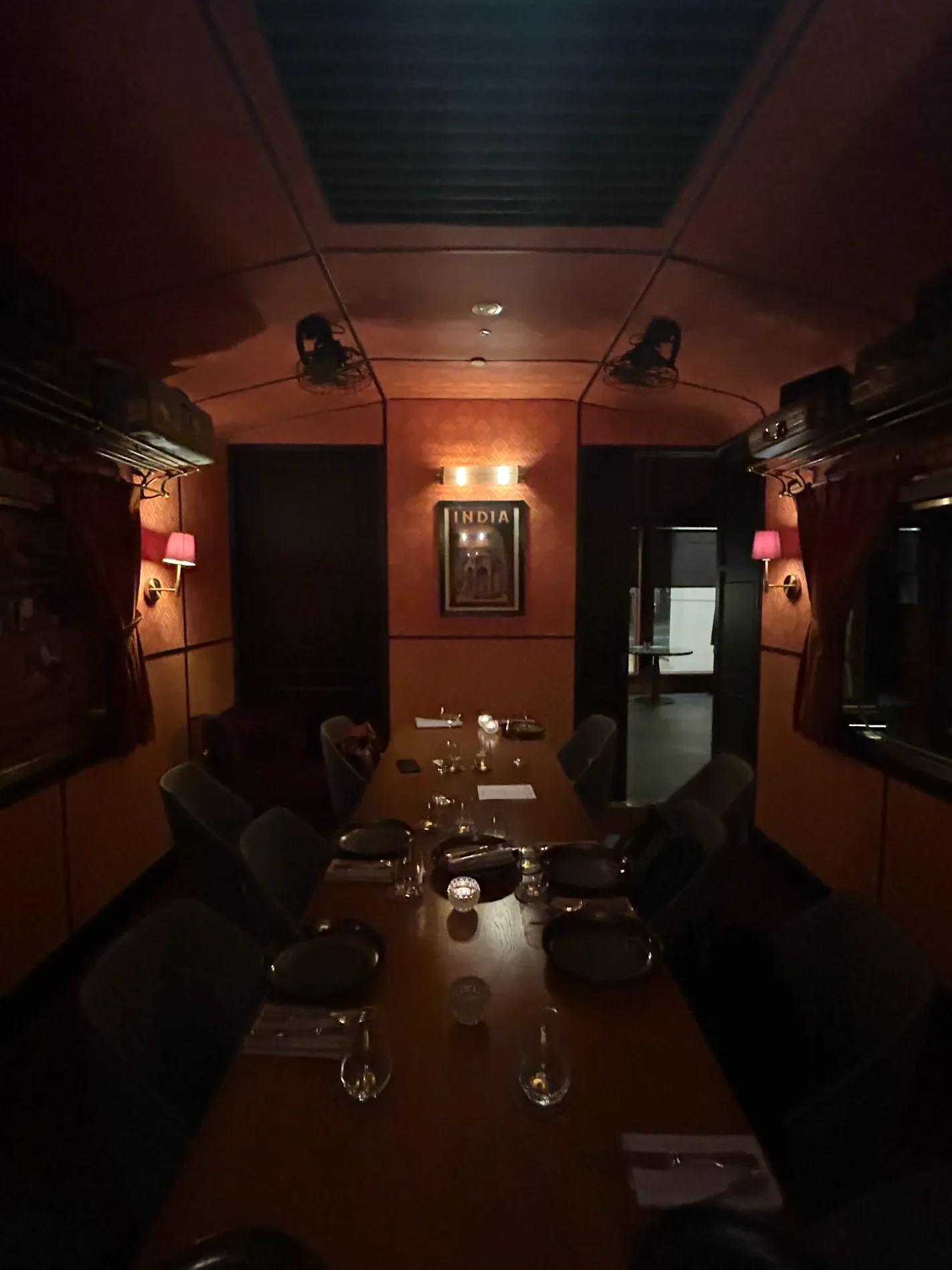
The original design divided the restaurant into fantastical environments including the Officer's Club, Old Railway Room, Elephant Palace and Jungle Lodge.
CNA described the space as reminiscent of stepping into a Wes Anderson film.
This is not an ethnographic recreation of India.
It is memory, fantasy, cinema and nostalgia blended together.
The food operates using essentially the same mechanism.
It does not claim:
This is exactly how India cooks.
It says:
This is what these flavours make us imagine.
That relationship between food and theatrical environment makes Firangi Superstar an interesting counterpart to KOMA Singapore.
At both restaurants, the room is not merely somewhere the food happens to be served.
The surroundings participate in the story.
But the Food Still Has to Survive the Room
There is a danger with restaurants this visually elaborate.
The interior can become the attraction.
People photograph the room.
Remember the décor.
Tell friends about the railway carriage.
And forget what they ate.
Gunasakaran's job was therefore unusually demanding.
His cooking had to possess enough personality to compete with the restaurant around it.
Contemporary reviewers repeatedly returned to the dishes rather than treating them as secondary to the design.
DestinAsian described Firangi Superstar as a culinary love letter to India, while Time Out singled out Gunasakaran's reinterpretations of traditional flavours as central to the restaurant's appeal.
The room might get someone through the door once.
The kitchen has to give them a reason to return.
Comfort Beneath the Cleverness
For all the conceptual playfulness, Gunasakaran's food has another important requirement.
It has to remain comforting.
Goodman made that point explicitly in the CNA interview.
A diner should not need an extensive understanding of Indian culinary history to enjoy the meal.
Someone who recognises the references may discover another layer.
Someone who does not should still receive good food.
That principle prevents Firangi Superstar from becoming an intellectual exercise.
The dish can have a joke in its name.
It can deconstruct a familiar preparation.
It can rearrange culinary references.
But eventually someone has to want another bite.
Modern Indian Without Rejecting Indian Food
Restaurants described as modern Indian sometimes create an unfortunate implication that traditional Indian cuisine needs modernisation in order to become sophisticated.
Gunasakaran's work does not require that assumption.
His food works because traditional Indian cooking already contains powerful flavours.
The modernity lies in how he reorganises them.
That is quite different.
The masala is not being rescued.
The chef is simply asking what else it can do.
This distinction also appears in the work of chefs who reinterpret other established traditions. Sushi Masaaki, for example, demonstrates that a chef can work inside a highly respected culinary tradition while allowing more personality and playfulness into its expression.
Modernity does not have to mean rejection.
It can mean permission.
A Malaysian Chef Interpreting India in Singapore
There is another layer to Gunasakaran's story that makes the cooking particularly Singaporean.
He is Malaysian.
Of South Indian heritage.
Professionally trained in Western cooking.
Working in Singapore.
Interpreting Indian cuisine.
Inside a restaurant deliberately imagined through the eyes of outsiders.
Trying to assign one national category to that becomes increasingly pointless.
His background itself explains why the food crosses borders so easily.
Prata and fried chicken can coexist.
French technique can shape Indian flavours.
American dishes can become reference points.
South Indian memories can appear through ingredients or formats borrowed from somewhere else.
Singapore is unusually comfortable territory for that kind of cooking.
The city already eats across cultures every day.
What Thiru Gunasakaran Brought to Firangi Superstar
Firangi Superstar was conceived by its founders as a love letter to India.
But a restaurant concept remains an abstraction until somebody cooks it.
Gunasakaran gave that idea flavour.
He did it through an unusual combination of distance and intimacy.
He knew Indian food because he grew up with it.
He could question Indian food because he had never been professionally trained to treat its structures as fixed.
He had the technical vocabulary of Western kitchens.
And he had memories that no culinary school could provide.
That combination gave Firangi Superstar its opening culinary identity.
The Chef Who Came Back to His Own Food
There is an appealing reversal in Thiru Gunasakaran's career.
He did not begin professionally with the cuisine of his heritage and gradually move outward.
He did the opposite.
He spent years learning another culinary language.
Then came back.
When he finally began cooking Indian food professionally, he could no longer approach it exactly as the women in his family had.
Too much had happened in between.
French-Western training.
Spago.
Years of restaurant discipline.
Different ingredients.
Different techniques.
Different expectations.
So Gunasakaran did not try to recreate childhood literally.
He translated it.
Aloo gobi became multiple textures.
Prata became a waffle.
Tikka became octopus.
Indian flavours travelled through a Western-trained chef and returned in unfamiliar shapes.
But somewhere underneath all of that technique and playfulness remained the most important reference point.
The food he remembered eating before he ever became a chef.
That may be the defining idea behind Thiru Gunasakaran's work at Firangi Superstar.
He had to become a professional cook somewhere else before he could discover what his own food might become.