Antonio Manetto: The Neapolitan Chef Who Made Singapore Home
Antonio Manetto has spent so long cooking Italian food in Singapore that the story is no longer really about an Italian chef working abroad.
Singapore became home.
The chef-owner of Acqua e Farina comes from a small town near Naples in southern Italy, but his professional life has been deeply tied to Singapore for more than two decades.
Before Acqua e Farina, there was Da Paolo.
Then Bella Pizza.
Then Bella Pasta.
And eventually, alongside fellow Italian chef Roberto Galbiati, came a restaurant built around one of the simplest ideas in Italian cooking:
water and flour.
Food Was Already in the Family
Manetto grew up in southern Italy.
An earlier interview with him records that his father’s side of the family was involved in the food business, and that he began his own career as a chef in Italy before eventually coming to Singapore.
By 2001, Manetto was already in Singapore.
That makes his relationship with the country considerably longer than that of many expatriate chefs who arrive for a single restaurant opening and move on a few years later.
Singapore became the place where much of his career would unfold.
Da Paolo Came Before the Restaurants of His Own
Manetto worked at Da Paolo, where he met Roberto Galbiati.
At the time, neither could have known that they would eventually become business partners.
Manetto later moved into restaurant ownership himself.
By 2012, he was already running Bella Pizza and Bella Pasta at Robertson Quay.
The two restaurants were deliberately separated.
Bella Pizza focused on the more casual pizzeria tradition.
Bella Pasta reflected the broader Italian restaurant experience.
Manetto explained at the time that he wanted diners in Singapore to understand that distinction rather than treating pizza and pasta as though they automatically belonged to exactly the same kind of establishment.
That tells us something useful about him.
Even relatively early in his Singapore career, he was interested not simply in serving Italian food, but in preserving some of the cultural context around it.
Naples Still Shows Up in the Dough
Manetto comes from near Naples.
Naturally, pizza follows.
At Acqua e Farina, his approach remains grounded in traditional Neapolitan technique.
The dough is left to rest for around 36 hours, a process intended to produce a lighter finished crust. Earlier coverage of his cooking already noted the same commitment to long fermentation.
That technique is visible in dishes such as Montanara, a Neapolitan-style pizza that is first fried and then baked. At the Keong Saik restaurant, it has been served with tomato, sausage, nduja and burrata.
There is creativity in the toppings.
The foundation remains recognisably southern Italian.
Then North Met South
Acqua e Farina works because Manetto is only half of the equation.
The other half is Roberto Galbiati.
Galbiati comes from Milan in northern Italy.
Manetto comes from the south near Naples.
Their restaurant deliberately brings those two Italian traditions together.
The contrast gives the menu a wider range than a restaurant focused on one Italian region.
Southern Italy contributes seafood, tomatoes, pizza and stronger Mediterranean flavours.
Northern Italy contributes risotto, butter, richer sauces and a different relationship with rice and cured meats.
Sometimes the two approaches meet on the same plate.
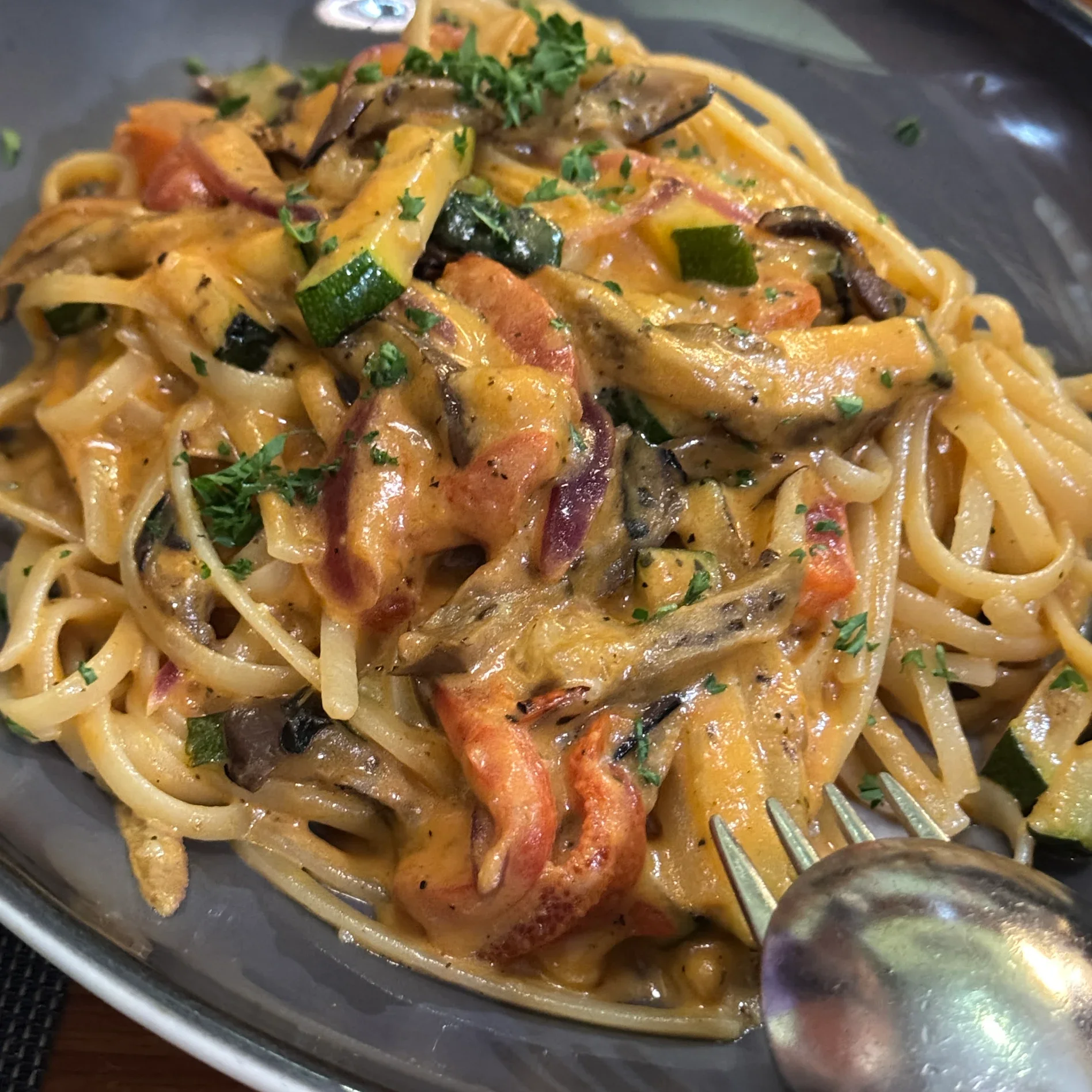
One example is Acqua e Farina’s uni and bottarga risotto.
Sea urchin is more commonly associated with pasta in southern Italy, while risotto belongs firmly to the northern Italian tradition.
So the chefs combined them.
The ingredient came from one side.
The technique came from the other.
Manetto Is the One Who Wants the Right Mozzarella
The partnership also works because the two chefs do not always think exactly alike.
Galbiati recalled that he once approached mozzarella by looking for the best value.
Manetto objected.
He wanted the original product from the specific Italian place associated with it.
That insistence has continued.
Manetto has spoken about searching for suppliers capable of bringing ingredients directly from Italy because freshness and origin matter to the way they cook.
That makes his relationship with authenticity slightly more interesting than simply saying he cooks “traditional Italian food.”
For Manetto, authenticity appears partly to be about ingredients.
If a dish depends on a particular product, find the right product.
Do not simply substitute something easier because it is available.
Traditional Does Not Mean Inflexible
This is where Manetto becomes more interesting.
He is serious about ingredients.
He is serious about traditional technique.
But he is not particularly interested in policing diners.
At Acqua e Farina, customers asking for chilli padi are not treated as culinary criminals.
Manetto has openly said that if guests want certain dishes spicier, the kitchen can accommodate them. One off-menu aglio olio variation reportedly exists because his Singaporean wife enjoys spicy food.
That attitude matters.
There is a difference between respecting Italian cooking and insisting that every diner interact with it according to rigid rules.
Manetto seems comfortable drawing that line.
The kitchen can protect the craft.
The guest is still allowed to enjoy dinner.
Acqua e Farina Came Together in 2016
Galbiati’s original Rail Mall business began much earlier as a takeaway concept.
Eventually, he wanted to transform it into something more ambitious, using better ingredients and offering a fuller restaurant experience.
He brought Manetto into the project.
In 2016, the restaurant became Acqua e Farina.
The name means “water and flour.”
It is difficult to find two ingredients that say more with less.
Pizza begins there.
Pasta begins there.
Bread begins there.
For two chefs from opposite ends of Italy, the name also provided common ground.
Different regional traditions.
Same basic ingredients.
Then Came Keong Saik
For years, Acqua e Farina remained associated with The Rail Mall.
Then the chefs began noticing something.
During the pandemic, delivery orders were arriving from much farther east, including areas around Changi.
There was demand beyond the original neighbourhood.
In 2024, Acqua e Farina opened its second restaurant at Keong Saik Road.
For Galbiati, the shophouse location fulfilled a long-standing ambition.
For Manetto, it created another place to express the southern half of the restaurant’s identity.
As of 2026, he remains actively involved in Acqua e Farina, and the restaurant continues to operate both its Rail Mall and Keong Saik locations.
More Than Twenty Years in Singapore Changes the Definition of Authentic
There is an interesting question underneath Manetto’s career.
What happens when an Italian chef spends more than twenty years cooking in Singapore?
The answer does not appear to be that the food stops being Italian.
But it does become more aware of where it is being served.
Manetto knows that some Singapore diners want chilli.
He understands that guests may want to share dishes differently.
He has spent enough time here to know that authenticity and hospitality do not have to fight each other.
That may be why Acqua e Farina describes itself as a family-style trattoria rather than as a temple of Italian correctness.
The food can retain its origins.
The restaurant can still belong to the city it operates in.
Antonio Manetto Came From Naples, But He Didn't Stay a Visitor
Manetto arrived in Singapore more than two decades ago.
He cooked at Da Paolo.
He built Bella Pizza and Bella Pasta.
He partnered with a chef from Milan.
He helped turn a Rail Mall restaurant into Acqua e Farina.
Then he helped take it into Keong Saik.
Along the way, he married a Singaporean and built much of his professional life here.
So describing Antonio Manetto simply as a chef from southern Italy misses part of the story.
Naples gave him the food.
Singapore gave him the career in which he was able to keep cooking it.
After more than twenty years, Antonio Manetto is no longer simply bringing Italian food to Singapore.
He has become part of Singapore’s Italian food story.