Atout is the kind of French restaurant where charcuterie, bread, butter and wine are not supporting details. They are part of the reason the restaurant exists.
Chef-owner Patrick Heuberger opened Atout at Dempsey Hill in 2018 around a relatively uncomplicated idea: homemade charcuterie, informal French bistro cooking and wine priced to be drunk rather than merely admired on a list. The restaurant has since expanded its role beyond a conventional dining room, incorporating takeaway, private rooms, events and a substantial retail wine and food operation.
The result is a restaurant that feels less like a formal expression of French gastronomy and more like a chef's collection of things he actually enjoys eating and making.
Within The Cuisine Journal's collection of Singapore venues, Atout occupies a particularly comfortable middle ground. It can serve a full dinner, but it also makes sense for rillettes, cheese and wine. The food is polished when it needs to be, but rustic dishes are allowed to remain rustic.
Patrick Heuberger and the Road Back to Dempsey
Atout's story is closely connected to Patrick Heuberger's own history in Singapore.
The Geneva-born chef trained in Europe, including time in France and at the three-Michelin-starred Troisgros in Roanne, before arriving in Singapore in 2001. One of his early local positions was at Au Petit Salut, a French restaurant that later operated from 40C Harding Road in Dempsey.
Heuberger subsequently co-founded Bistro du Sommelier, spent time pursuing his interest in charcuterie in France, operated an artisanal charcuterie business and worked at Huber's Butchery. In 2018, an opportunity emerged to take over the former Au Petit Salut premises, bringing him back to the same Dempsey address where he had previously worked.
The official Atout website describes the restaurant as the culmination of that journey, built around homemade charcuterie, informal bistro fare and approachable wine.
That background explains why Atout does not feel as though it was created from a restaurant concept document. The menu reflects several strands of Heuberger's career at once: traditional French cooking, butchery, curing, European comfort food and a longstanding interest in wine.
Charcuterie Is Part of the Foundation
Atout's charcuterie deserves attention because it predates the restaurant in spirit.
Heuberger spent considerable time learning and producing terrines, sausages, rillettes and other preserved meats, and that experience remains visible in the restaurant. Duck rillettes, foie gras, sausages, cured meats and cheese fit naturally into a menu where diners can build a meal gradually rather than committing immediately to a large main course.
This kind of food also suits the Dempsey setting. Charcuterie encourages slower eating. Bread gets passed around, another glass of wine appears, and dishes remain on the table rather than disappearing course by course.
Recent diners continue to single out the richer starters. One particularly detailed meal praised monkfish liver for its creamy texture, duck rillette for its depth, garlic-butter escargots and moist chorizo with unusually good texture.
That variety is important because Atout is not simply a meat restaurant. Its strength lies in understanding preservation, fat, seasoning and texture across many forms.
Bread and Butter Matter Here
Atout's bread service appears surprisingly often in diner feedback.
Warm sourdough and French butter are regularly described as highlights, sometimes before diners even mention the main courses. One lunch guest called the combination of sourdough and La Conviette butter "heavenly," while another return diner remembered the bread and butter strongly enough to make it part of the reason for coming back.
There is also criticism. Another diner found part of a bread basket inexplicably dry and thought the absence of a proper baguette was a surprising weakness for a French restaurant.
That disagreement is useful because bread is not incidental in this style of restaurant. It accompanies rillette, collects garlic butter and sauce, and gives charcuterie structure. When it is good, diners notice. When it is not, they notice that too.
The Chicken With 40 Cloves of Garlic
One of Atout's most recognisable mains is its chicken leg cooked with 40 cloves of garlic.
The idea belongs to a long French tradition of using an apparently absurd quantity of garlic and discovering that slow cooking transforms it. Garlic loses much of its raw aggression when roasted or braised for long enough, becoming soft, sweet and almost creamy.
Recent diners describe the dish warmly, particularly alongside mashed potato and the restaurant's bread.
It captures Atout's style well. The name sounds theatrical, but the actual dish is comfort food. There is no need to turn chicken into an elaborate fine-dining composition when garlic, proper cooking and good sauce already provide enough interest.
Beef Cheeks and Lamb Spare Ribs Show the Rustic Side
Slow-cooked meat is another recurring strength.
Red-wine-braised Angus beef cheeks and lamb spare ribs receive especially positive feedback. Diners describe both as extremely tender, with the lamb sometimes moving towards North African flavours through spice, raisins and a more Moroccan-influenced sauce.
These dishes demonstrate that Atout's understanding of French cooking is not especially rigid.
French technique provides the foundation, but Heuberger's menu can move through the wider Mediterranean without losing coherence. A Moroccan-style lamb preparation does not feel particularly strange beside French charcuterie because the restaurant is organised around the chef's culinary history rather than strict national boundaries.
That approach has parallels with Roberto Galbiati's career in Singapore, where European culinary roots gradually became part of a much longer relationship with the city rather than a temporary imported concept.
Heuberger has similarly spent most of his professional life in Singapore.
Frog Legs Remain a House Favourite
Frog legs are one of the most consistently mentioned dishes in Atout reviews.
Served with garlic and herb butter, they fall firmly within traditional French restaurant territory. Recent diners describe them as particularly good even when other parts of the meal feel less distinctive. One guest came specifically because a friend had repeatedly praised the frog legs and concluded they deserved the recommendation.
They also make sense beside Atout's charcuterie and wine.
The restaurant is not attempting to sanitise French bistro food into a selection of globally familiar dishes. Rillettes, frog legs, foie gras and strong cheeses retain a place on the menu precisely because the restaurant assumes there are still diners who want them.
That confidence gives Atout more character than a menu designed purely around universally safe choices.
Truffle Pasta Provides the Richer, More Contemporary Counterpoint
Atout's truffle pasta appears regularly among diner favourites.
It represents a more contemporary style of restaurant luxury than the traditional charcuterie and braises surrounding it, but it remains compatible with Atout because the dish is primarily about richness and aroma rather than complicated presentation.
Several diners describe it as one of the meal's strongest dishes, particularly when compared with less successful seafood preparations.
This is one area where the restaurant's broad menu becomes an advantage. Guests do not have to choose between old-school French dishes and newer restaurant favourites. Both can occupy the same table.
Seafood Is Less Consistent
The more mixed diner feedback tends to involve seafood.
Lobster bisque receives everything from strong praise to criticism for being watery. One repeat guest enjoyed it on an earlier visit while other diners considered it a significant disappointment. Fish preparations are similarly divided: there is praise for moist sea bass, but also recent complaints about fishiness, dry or underwhelming cod and sauces overpowering delicate seafood.
That suggests the meat, charcuterie and richer bistro dishes form a more dependable core than every seafood offering.
It does not mean seafood should be avoided altogether. Rather, the supplied feedback is simply less consistent there than it is for dishes such as beef cheeks, lamb, frog legs and charcuterie.
A useful restaurant article should retain that distinction rather than treating every part of a large menu as equally successful.
Wine Is Built Into the Restaurant Rather Than Added to It
Atout's wine programme is central to the concept.
The restaurant maintains a retail cellar, allowing guests to browse bottles physically rather than working solely from a conventional wine list. Diners repeatedly appreciate the opportunity to choose wine from the shop and drink it alongside the meal, and the current online cellar spans France alongside substantial selections from Italy, Spain, the New World and elsewhere. (atout.sg)
One regular diner specifically noted that the restaurant had moved away from a traditional wine list while continuing to display bottles at comparatively accessible retail-style pricing. Another appreciated being able to purchase a bottle from the on-site shop without the usual restaurant corkage model.
This makes Atout particularly suitable for groups who care about wine but do not want the ceremony of a formal sommelier-led fine-dining programme.
The restaurant's Atout Instagram also reflects this broader identity, regularly combining food, wine and the life of the restaurant rather than presenting the kitchen as the only attraction.
Dempsey Gives Atout Room to Breathe
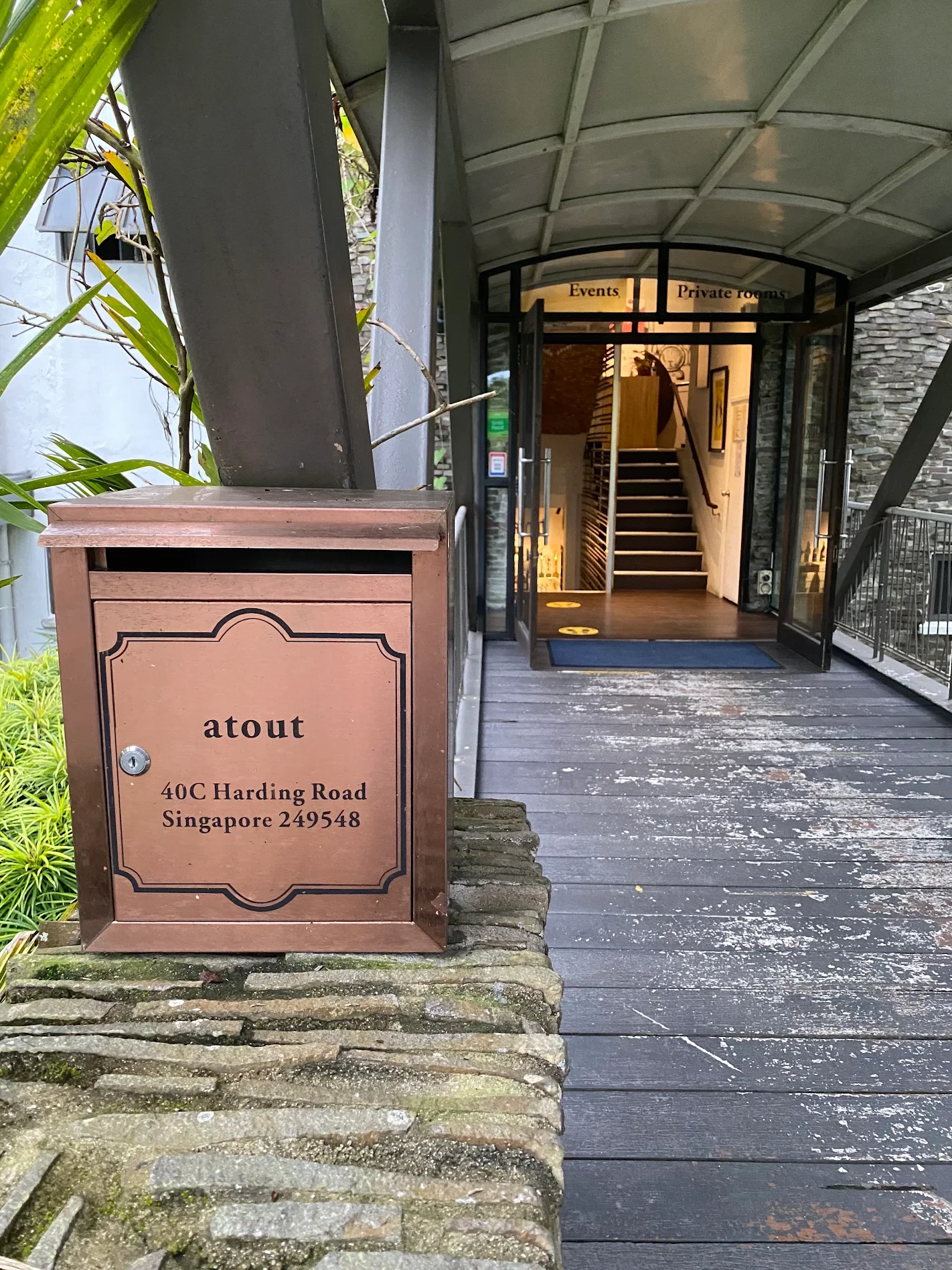
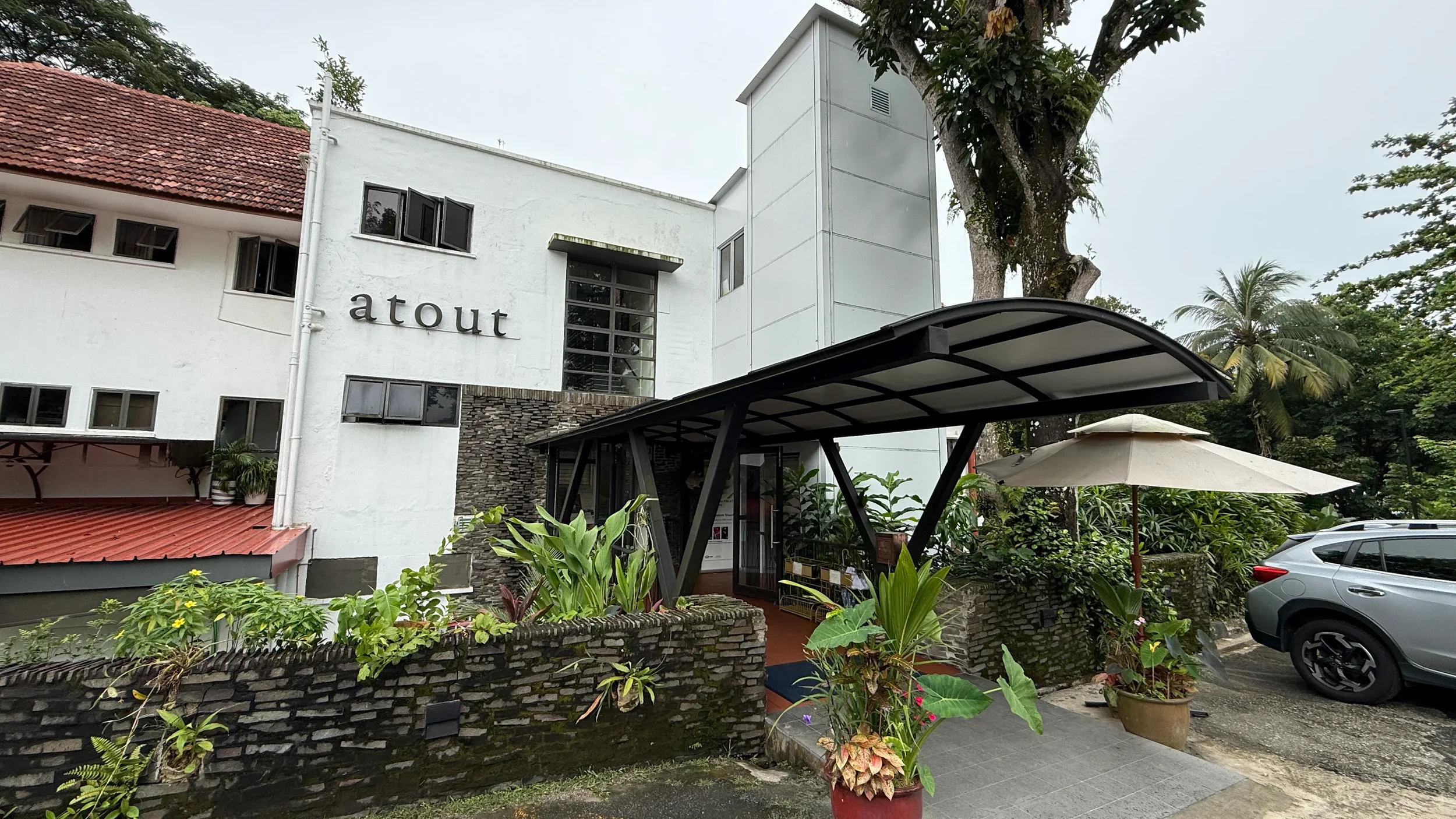
Atout sits at 40C Harding Road in Dempsey, surrounded by greenery and away from the density of central Singapore's shophouse restaurant districts.
The location significantly changes the experience.
There is more physical space for private rooms and events, and the restaurant can accommodate diners who want a longer afternoon or evening rather than a tightly timed city-centre booking. Natural light and greenery are regularly mentioned positively, particularly by lunch guests.
The wider Dempsey area has developed into one of Singapore's most distinctive restaurant clusters, ranging from casual dining to internationally recognised restaurants. Burnt Ends, for example, built its current home around fire-driven cooking elsewhere in Dempsey Hill.
Atout occupies a quieter niche.
It feels less like a destination engineered around a single culinary spectacle and more like somewhere designed to accommodate lunch, wine, dinner and conversation with equal ease.
The Restaurant Has Changed Physically
Long-time diners note that Atout's space has evolved.
Parts of the original dining footprint have been repurposed, while the current official restaurant describes operations across levels two and three, including private rooms and an event space. (atout.sg)
Some regular guests miss the brighter former lower dining room and find portions of the current interior darker. Others continue to praise the greenery, space between tables and relaxed atmosphere.
This is a reminder that restaurants lasting beyond their opening years rarely remain physically static. Commercial realities, event business and changing customer habits can alter how space is used even when the culinary identity remains intact.
Atout's food has remained the more stable element.
Service Is Generally Warm, but Experiences Vary
Most diners describe service positively.
Staff are frequently praised for water refills, recommendations and the ability to handle large groups. Heuberger himself is also mentioned regularly, particularly by guests who appreciate seeing the chef-owner present in the restaurant.
There are exceptions. Some reviews describe less polished interact