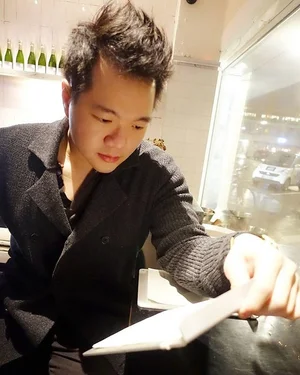
After three decades in professional kitchens, from Le Jules Verne in Paris to JAAN in Singapore and the international operations of Meta, French chef Michael Muller finally opened a restaurant of his own. Named after his wife, La Table d’Emma celebrates the comforting traditions of Alsace, the importance of family, and a belief that the finest dining experiences are not necessarily the most elaborate.
For much of his professional life, Michael Muller worked in kitchens where precision, consistency, and demanding culinary standards were essential. His career took him from traditional restaurants in northeastern France to the Eiffel Tower in Paris, the upper floors of Singapore's Swissôtel The Stamford, and eventually senior culinary management positions overseeing large hospitality operations.
Along the way, he worked with Michelin-recognised restaurants, helped establish luxury hotel kitchens, and contributed to the development of competitive culinary talent through the Bocuse d'Or Academy Singapore.
Yet after approximately 30 years in the industry, Muller chose to pursue a considerably more personal ambition.
In 2024, he opened La Table d’Emma, a French restaurant on Club Street in Singapore, named in honour of his wife, Emma.
Rather than building another formal fine dining establishment, Muller created a restaurant dedicated to traditional French cooking, particularly the regional dishes of his native Alsace.
The menu features preparations such as tarte flambée, bouchée à la reine, slow-cooked meats, and French onion soup. These are dishes associated with regional traditions, family gatherings, and the everyday pleasures of French gastronomy.
For Muller, the restaurant represents a return to the culinary influences that shaped his earliest experiences in the kitchen.
It is also a family business, developed with Emma and inspired by their life together in Singapore.
Growing Up in Alsace: The Foundations of a Culinary Career
Michael Muller was born and raised in Strasbourg, the capital of Alsace in northeastern France.
Situated along the Rhine near the German border, Alsace has a distinctive culinary identity shaped by centuries of cultural exchange between French and German-speaking communities.
Its traditional cuisine includes substantial meat dishes, pastries, breads, seasonal vegetables, and preparations that reflect the region's agricultural heritage.
Among its most recognisable specialities are choucroute garnie, tarte flambée, and bouchée à la reine.
These dishes would eventually become important influences on Muller's cooking.
His professional culinary education began at the age of 17, when he became an apprentice at Le Bec Doré, a family-operated restaurant in Strasbourg.
In a 2024 interview with Le Petit Journal, Muller recalled that the apprenticeship required him to participate in the different responsibilities involved in running a professional kitchen.
The training was demanding, providing an introduction to the discipline and organisation necessary for restaurant work.
Rather than concentrating exclusively on preparing individual dishes, his apprenticeship involved learning the broader practical requirements of kitchen operations.
Following this early experience, Muller continued working in restaurants throughout Alsace, training under chefs who emphasised technical discipline and professional standards.
His formal education also included studies at CEFPPA, a hospitality and culinary training institution in France.
These experiences provided the foundation for a career that would eventually extend far beyond his home region.
Although Muller later became associated with sophisticated international restaurants, the culinary traditions of Alsace remained an enduring influence.
From Alsace to the Caribbean and Luxembourg
After establishing his professional foundations in France, Muller began pursuing opportunities outside his home region.
His career took him to the Caribbean, where he continued developing his culinary experience, and subsequently to Luxembourg.
These assignments introduced him to different professional environments and expanded his experience beyond the kitchens in which he had originally trained.
The available biographical accounts do not identify every restaurant or position he held during these years, but Muller has described them as important stages in his development.
Working internationally provided opportunities to experience different culinary cultures while refining the French techniques he had learned during his apprenticeship.
Eventually, his career led him to Paris.
It was there that he joined one of the French capital's most recognisable restaurants, situated within one of the world's most famous landmarks.
Le Jules Verne: Cooking Inside the Eiffel Tower
Muller spent approximately three years working at Le Jules Verne, the celebrated restaurant located on the second floor of the Eiffel Tower.
The restaurant was an important stage in his professional development.
During this period, he worked alongside chef Alain Reix, gaining experience in an establishment associated with the technical standards and presentation of French haute cuisine.
Le Jules Verne combined sophisticated cooking with the operational demands of serving an international clientele in an exceptional setting.
The restaurant's reputation required a high degree of consistency, precision, and coordination between kitchen personnel.
For Muller, the appointment also brought an opportunity that would change the direction of his career.
In 2003, Swissôtel organised a culinary promotion known as Chefs With Altitude at Singapore's Equinox Complex.
The programme involved visiting chefs demonstrating their cooking within the hotel's restaurant operations.
Muller accompanied Alain Reix to Singapore and participated in the event.
During the visit, he was given an opportunity to prepare a tasting for the hotel's management, which was searching for a chef to join its resident culinary team.
The presentation proved successful.
According to Muller's account in Le Petit Journal, the hotel offered him a position, and he returned to Singapore less than two weeks later to begin the next stage of his career.
He was 27 years old.
What began as an international culinary promotion became the beginning of his long relationship with Singapore.
Arriving in Singapore in 2003
When Muller arrived in Singapore in 2003, the city's restaurant industry was developing rapidly.
International hotel groups, luxury dining establishments, and independent restaurants were expanding the range of culinary experiences available to local and international diners.
His appointment at JAAN placed him within one of the city's most prominent hotel dining environments.
Located high above Singapore within Swissôtel The Stamford, JAAN offered contemporary French cuisine alongside panoramic views of the city.
Muller spent approximately five years working at the restaurant, eventually serving as Executive Chef.
The experience helped establish his professional reputation in Singapore.
It also represented a significant transition from working within a French restaurant in Paris to leading a kitchen in a major Asian hospitality destination.
At JAAN, Muller was responsible for maintaining demanding culinary standards while operating within the broader structure of an international hotel.
His work required both technical proficiency and the ability to manage a professional kitchen team.
The restaurant would later become internationally recognised through the Michelin Guide, although Singapore's Michelin Guide did not launch until 2016, after Muller's tenure.
His time at JAAN therefore belongs to an earlier chapter in the restaurant's history.
Nevertheless, the appointment remained an important milestone in his career and established professional relationships that would support his subsequent progression through Singapore's hospitality industry.
Moving Beyond the Restaurant Kitchen
After approximately five years at JAAN, Muller accepted a new challenge within the Fairmont hotel organisation.
He became Deputy Executive Chef, taking responsibility for a considerably broader range of culinary operations.
Unlike his previous position, which focused primarily on an individual restaurant, the Fairmont appointment required him to oversee multiple dining outlets and large-scale hospitality services.
In his interview with Le Petit Journal, Muller explained that the responsibilities included five restaurants, banquet operations, room service, and extensive breakfast production.
The scale of the operation required a different approach to culinary management.
Maintaining quality across multiple outlets involves coordinating purchasing, food preparation, staffing, and service procedures.
The challenge is not simply to prepare an excellent dish on one occasion, but to ensure that large teams can reproduce consistent results throughout different services.
For Muller, the position represented an important expansion of his professional responsibilities.
His career was developing beyond restaurant cooking into the management of complex culinary organisations.
This experience would prove valuable during his subsequent appointments.
Resorts World Sentosa and Culinary Standards
Following his time at Fairmont, Muller joined Resorts World Sentosa as Director of Culinary Standards.
The integrated resort brought together hotels, entertainment attractions, and a wide range of restaurants, including establishments associated with internationally recognised chefs.
Muller's responsibilities extended across the resort's culinary operations.
In his 2024 interview with Le Petit Journal, he identified restaurants associated with Joël Robuchon and Singaporean chef Sam Leong among the establishments that fell within his area of responsibility.
The position required him to work across different culinary concepts while maintaining consistent operational standards.
Managing a luxury resort's food operations differs significantly from leading an individual restaurant.
Different outlets may have distinct menus, service styles, kitchen structures, and customer expectations.
Establishing common standards therefore requires a combination of technical knowledge, management experience, and the ability to communicate effectively with different culinary teams.
Muller's appointment reflected the broadening scope of his career.
Although he remained a professionally trained chef, his responsibilities increasingly involved developing and maintaining the systems that supported large hospitality operations.
The experience helped prepare him for another major international assignment.
Raffles Jakarta: Building a Luxury Hotel Kitchen
In early 2014, Muller moved to Indonesia to become Executive Chef for the pre-opening operations of Raffles Jakarta.
The luxury hotel subsequently opened in 2015.
As part of the opening team, Muller was responsible for helping establish the hotel's culinary operations before welcoming its first guests.
Pre-opening hotel appointments present particular challenges.
Unlike joining an established kitchen, a pre-opening chef must help create systems that will support daily service once the business begins operating.
These responsibilities can include menu development, kitchen organisation, recruitment, training, equipment planning, and the establishment of operational procedures.
For Muller, the appointment brought together the experience he had accumulated at JAAN, Fairmont, and Resorts World Sentosa.
It also took him to a city that would become personally significant.
Jakarta was where he met Emma, the woman who would eventually become his wife and the inspiration behind his first independent restaurant.
Their relationship would later influence the direction of his professional life.
Meeting Emma: The Story Behind the Restaurant
Michael Muller and Emma first met during a flight.
According to a June 2024 feature published by Mothership, the two were seated beside each other and began talking during the journey.
Muller expressed an interest in getting to know her, and they exchanged business cards.
Emma, who is originally from Jakarta, subsequently became an important part of Muller's life.
The couple eventually settled in Singapore and started a family.
They have two daughters.
For Muller, the relationship also strengthened a longstanding ambition to open his own restaurant.
Although he had spent many years working within prestigious hospitality organisations, he had never established a restaurant entirely around his own vision.
Opening La Table d’Emma provided an opportunity to do so.
The restaurant's name is a personal tribute to Emma, but it also contains a deliberate linguistic reference.
La Table d’Emma resembles the French expression la table d'amis, meaning the friends' table.
The similarity communicates the restaurant's intended atmosphere: a welcoming place where people gather to enjoy food and spend time together.
Muller has described the restaurant as a way of expressing appreciation for his wife and their family.
The personal meaning of the name is reflected in the restaurant's dishes, several of which are connected to memories from the couple's relationship.
Returning to Singapore and Joining Meta
After his assignment in Jakarta, Muller returned to Singapore in 2015.
He subsequently joined Meta, formerly Facebook, taking responsibility for corporate culinary operations.
His appointment eventually developed into the role of Asia Pacific Executive Chef.
The position represented another major expansion of his professional responsibilities.
Rather than concentrating on conventional restaurant customers, Muller was involved in developing food services for employees across the company's regional operations.
His work extended to locations including Singapore, Sydney, Hong Kong, Manila, and Seoul.
According to Muller's professional profile, his responsibilities included managing food programmes capable of serving approximately 20,000 people daily across the organisation.
The scale of these operations required extensive planning and coordination.
Corporate dining programmes must accommodate different dietary requirements, regional preferences, operational limitations, and expectations for consistency.
They also involve considerations such as food safety, procurement, sustainability, and efficient service.
Muller's experience in hotel management and restaurant operations provided a foundation for these responsibilities.
However, the corporate environment was considerably different from the intimate restaurant settings in which he had begun his career.
Although his work at Meta represented a significant professional achievement, he continued to think about opening a restaurant of his own.
After decades spent helping develop culinary operations for other organisations, the opportunity to create something personal became increasingly important.
Discover the Chefs Behind Singapore's Restaurants
Singapore's dining culture has been shaped by chefs whose careers extend across countries, traditions, and generations of culinary knowledge.
From Michael Muller's journey through French fine dining and international hospitality to Roberto Galbiati's experience bringing Italian cooking to Singapore, every chef brings a different perspective to the dining table.
Explore more culinary personalities and restaurant stories through The Cuisine Journal.
Discover the people behind the plate.
Bocuse d'Or: Supporting the Next Generation of Chefs
Alongside his professional appointments, Muller has also contributed to culinary education and competition training.
He has been closely involved with the Bocuse d'Or Academy Singapore, an organisation connected to one of the world's most prestigious international culinary competitions.
The Bocuse d'Or was established in 1987 by French chef Paul Bocuse.
The competition challenges professional chefs to prepare technically demanding dishes within strict time limits, combining culinary skill, creativity, and precise presentation.
Competitors must demonstrate exceptional organisation and consistency while working under considerable pressure.
Muller has served as a coach and subsequently Vice President of the Bocuse d'Or Academy Singapore.
According to his professional profile, he held the vice-presidential position from January 2016 until January 2024.
His involvement reflected a commitment to developing culinary talent beyond his own restaurant and hospitality operations.
Competition coaching requires a different form of leadership from ordinary restaurant management.
Chefs must be trained to execute complex preparations with precision while maintaining consistency under demanding conditions.
Success also depends on teamwork, preparation, and the ability to make practical decisions when confronted with unexpected difficulties.
Muller's experience across fine dining restaurants, luxury hotels, and large-scale corporate operations provided a broad foundation for mentoring younger professionals.
His work with the academy also helped maintain his connection to the technical standards of competitive French gastronomy.
These experiences would eventually influence the restaurant he opened with Emma.
Opening La Table d’Emma in 2024
After approximately three decades in professional kitchens, Muller opened La Table d’Emma in Singapore in 2024.
Situated at 8 Club Street, within the Mercure ICON Singapore City Centre development, the restaurant marked his transition from senior culinary management to independent restaurant ownership.
The decision represented a substantial change in professional direction.
Having previously overseen complex hotel and corporate dining operations, Muller was now responsible for establishing a restaurant that expressed his own culinary identity.
Rather than creating another elaborate fine dining establishment, he chose to focus on the traditional cuisine of Alsace.
The restaurant would introduce Singapore diners to regional French dishes that received comparatively limited attention within the local dining landscape.
The concept was also intended to be approachable.
Although Muller brought experience from prestigious kitchens, he wanted guests to feel comfortable sharing a meal with family and friends.
The result was a French bistro that combined familiar classical cooking with regional specialities from his childhood.
Its original dining room accommodated approximately 130 guests, providing space for both smaller gatherings and larger celebrations.
The restaurant's location on Club Street also placed it close to Singapore's central business district, where it could serve residents, office workers, and visitors.
For Muller, however, the restaurant's defining characteristic was not its location or capacity.
It was the opportunity to cook the food he loved while building a business with his family.
Cuisine Comme à la Maison: Cooking Like Home
The culinary philosophy of La Table d’Emma is expressed through a simple French phrase: cuisine comme à la maison.
The expression describes food prepared in the manner of home cooking.
It reflects Muller's intention to present French dishes that are generous, familiar, and connected to everyday culinary traditions.
Although the restaurant operates with professional kitchen equipment and techniques, its menu is not intended to resemble an elaborate fine dining tasting experience.
Instead, guests can order dishes that reflect regional French cooking, particularly the traditions of Alsace.
The emphasis is on recognisable flavours, careful preparation, and the satisfaction of a substantial meal.
This approach represents a return to the culinary environment in which Muller began his career.
His apprenticeship in Strasbourg introduced him to the discipline of French restaurant cooking, but the ingredients and dishes of Alsace also remained closely connected to his personal identity.
After years spent working in international hospitality, La Table d’Emma provided an opportunity to share those traditions directly with Singapore diners.
The restaurant's philosophy also reflects his understanding of hospitality.
Food is intended to support the experience of gathering around a table rather than becoming an elaborate performance requiring constant explanation.
This distinction is important because Muller's professional background could easily have supported a more formal restaurant concept.
Instead, he chose to celebrate the cooking that reminded him of home.
Tarte Flambée: Bringing Alsace to Singapore
One of the most recognisable dishes associated with Alsace is tarte flambée, also known as flammekueche.
The preparation consists of a thin bread-like base traditionally topped with fromage blanc or a similar dairy mixture, onions, and bacon.
It is cooked at high temperatures, producing a crisp base with a lightly browned topping.
Although its appearance resembles pizza, the ingredients and preparation belong to a different culinary tradition.
At La Table d’Emma, Muller introduced several variations of the dish.
These included traditional combinations of onions and lardons, mushroom preparations, versions incorporating Emmental cheese, and a seafood variation featuring house-smoked salmon.
The restaurant also introduced a playful variation on the dish's name, incorporating Emma's name into its presentation.
In the 2024 Mothership interview, the couple explained that tarte flambée held personal significance because it was among the first dishes Emma experienced when visiting Muller's family in Alsace.
The preparation therefore connected the restaurant's culinary identity with a memory from their relationship.
It also provided Singapore diners with an introduction to a regional speciality that differs from the French dishes commonly associated with Parisian restaurants.
As documented in MiddleClass.sg's review of La Table d’Emma, the restaurant's early menu offered several variations of tarte flambée alongside other French and Alsatian preparations.
The dish remains representative of Muller's approach: traditional ingredients, straightforward cooking, and a personal story behind the food.
Bouchée à la Reine: A Dish Connected to His Marriage
Another signature preparation at La Table d’Emma is bouchée à la reine.
The classical French dish features a puff pastry case filled with ingredients in a rich sauce.
Variations often include poultry, veal, mushrooms, and a creamy velouté.
At La Table d’Emma, Muller's version incorporates chicken and veal in a sauce prepared with Riesling, a wine closely associated with Alsace.
The restaurant's presentation also includes a distinctive visual detail.
The puff pastry is shaped to resemble a butterfly.
Butterflies appear throughout La Table d’Emma's interior and visual identity, reflecting a decorative motif associated with Muller's childhood home.
The dish also holds a personal connection to the chef's relationship with Emma.
According to the couple's 2024 Mothership interview, Muller prepared bouchée à la reine for Emma during their third date.
The dish subsequently became one of the restaurant's signatures.
Its inclusion on the menu therefore represents more than a traditional French recipe.
It connects Muller's professional cooking with a memory from his personal life.
The preparation also demonstrates his ability to present classical French techniques within a relaxed restaurant setting.
Preparing a good velouté requires attention to flavour, consistency, and the balance between richness and acidity.
The pastry must be cooked carefully to retain its structure and crispness.
Although the finished dish is presented as comforting food, its preparation draws upon techniques Muller developed throughout his professional career.
French Onion Soup: Three Days of Preparation
Among the restaurant's other recognisable dishes is its French onion soup.
The preparation is widely associated with French bistro cooking, traditionally combining caramelised onions, a rich broth, bread, and melted cheese.
At La Table d’Emma, Muller developed a more elaborate interpretation while retaining the familiar character of the dish.
According to the restaurant's official website, its signature onion soup is prepared over approximately 72 hours.
The process involves developing a rich beef-and-onion broth before incorporating Wagyu beef cheek and smoked bacon foam.
The soup is finished with a Gruyère puff pastry crown.
The result combines the flavours of traditional French onion soup with additional components reflecting Muller's professional background.
Beef cheek contributes richness, while the puff pastry provides a crisp contrast to the broth.
The extended preparation also illustrates the importance of time in developing flavour.
Although the restaurant promotes approachable French cooking, its kitchen does not necessarily rely on simple or rapid preparation methods.
Instead, Muller uses professional techniques to develop familiar dishes with greater depth.
The onion soup demonstrates how classical cooking can remain central to a relaxed dining concept.
It also reflects the relationship between Muller's fine dining experience and his preference for traditional comfort food.
Other Alsatian and French Specialities
La Table d’Emma's menu extends beyond its best-known signature dishes.
The restaurant has offered preparations such as duck leg confit, traditional French pastries, and desserts inspired by familiar regional recipes.
In its May 2024 review, MiddleClass.sg highlighted a crispy duck leg confit served with mashed potatoes and caramelised grapes.
The preparation combined tender slow-cooked meat with a crisp exterior, accompanied by buttery potatoes.
The same review documented desserts including vanilla mille-feuille with hazelnut praline and rice pudding finished with salted butter caramel.
These dishes reflect the wider French culinary tradition within which Alsatian cooking developed.
While tarte flambée and bouchée à la reine emphasise Muller's regional identity, other menu items draw from classical French restaurant cooking more broadly.
The combination allows La Table d’Emma to introduce diners to Alsace without limiting the restaurant exclusively to regional specialities.
The menu has continued evolving since the restaurant opened.
Its current offering includes seasonal specials and dishes developed according to the kitchen's available ingredients.
This flexibility allows Muller to maintain a connection to traditional cooking while continuing to introduce new preparations.
For diners interested in understanding the restaurant's regional identity, So Chic's profile of La Table d’Emma provides an overview of its Alsatian influences and family-oriented concept.
A Restaurant Built Around Family
One of the most distinctive characteristics of La Table d’Emma is the role that family plays in its identity.
The restaurant is named after Muller's wife, but its connection to his family extends beyond the name.
Emma is actively involved in the business, and the couple have described how the restaurant allows them to spend more time together.
Their two daughters are also part of the family's daily life around the restaurant.
In an interview published by So Chic Singapore, Michael and Emma discussed the benefits of operating a family business.
Muller explained that he enjoyed the atmosphere created by having their children around the restaurant, while Emma appreciated the opportunity to spend more time with her husband.
The arrangement contrasts with the lifestyle associated with many senior hospitality positions.
Throughout his career, Muller had worked in demanding professional environments requiring long hours, extensive operational responsibilities, and international travel.
Opening La Table d’Emma allowed him to build a business directly connected to his family.
The restaurant's atmosphere reflects that ambition.
Rather than presenting hospitality as a formal exchange between service personnel and guests, the couple wanted visitors to experience a sense of familiarity and welcome.
This philosophy is also reflected in the restaurant's emphasis on communal dining and generous portions.
For Muller, La Table d’Emma represents the opportunity to combine professional cooking with the relationships that matter most to him.
Bringing Alsatian Culture to Singapore
Although French cuisine has an established presence in Singapore, the country's French restaurant landscape encompasses many different interpretations.
Some establishments concentrate on classical haute cuisine, while others draw inspiration from modern bistro cooking, regional traditions, or contemporary international influences.
La Table d’Emma occupies a distinctive position through its emphasis on Alsace.
The region's culinary identity differs considerably from the Mediterranean cooking commonly associated with Provence or the refined dishes traditionally presented in Parisian fine dining restaurants.
Alsatian cuisine reflects the region's geography, agricultural traditions, and historical relationship with neighbouring German-speaking cultures.
Bread, pork, potatoes, dairy products, and regional wines play important roles in its culinary heritage.
Muller's decision to highlight these traditions provides Singapore diners with an opportunity to discover a different side of French gastronomy.
His restaurant also demonstrates how regional cooking can be presented within an international dining environment.
Rather than reproducing every aspect of an Alsatian restaurant, Muller combines familiar regional dishes with classical French preparations and a hospitality style suited to Singapore.
The result reflects both his personal background and the experience accumulated throughout his international career.
From Corporate Kitchens to Independent Restaurant Ownership
Muller's decision to establish La Table d’Emma represents one of the most significant transitions in his career.
His previous appointments involved responsibility for prestigious restaurants, luxury hotels, and extensive corporate dining programmes.
These positions required advanced culinary knowledge and considerable management experience.
However, they also involved operating within organisations whose broader objectives were determined by other stakeholders.
Opening his own restaurant provided a different form of professional independence.
Muller could determine the culinary direction, develop the menu, and establish the hospitality philosophy according to his personal priorities.
At the same time, the move introduced the challenges associated with independent restaurant ownership.
A chef-owner must consider operating expenses, staffing, marketing, bookings, customer relationships, and the financial sustainability of the business.
These responsibilities are particularly significant in Singapore's competitive restaurant industry.
Muller's experience managing large culinary operations provided a foundation for approaching these challenges.
However, operating a relatively small independent business requires a different allocation of time and resources.
His professional updates in 2026 reflect this reality.
Through his LinkedIn profile, Muller has discussed taking a direct role in activities extending beyond the kitchen, including event bookings and the development of the restaurant's website.
Rather than relying entirely on specialist departments, he has become personally involved in the practical requirements of running the business.
The experience demonstrates how independent restaurant ownership can require established chefs to develop new skills beyond their original culinary training.
Private Dining and the Evolution of La Table d’Emma
Since opening in 2024, La Table d’Emma has continued developing its role as both a French bistro and a venue for private gatherings.
Its Club Street location provides access to Singapore's central business district, making the restaurant suitable for corporate meals, celebrations, and group dining.
The restaurant's official website now places considerable emphasis on private events, with arrangements for larger gatherings and customised menus.
Muller's experience overseeing hotel banquets and corporate food programmes provides a relevant background for this aspect of the business.
Large events require careful planning, particularly when guests have different dietary needs or the meal must be served according to a fixed schedule.
His previous responsibilities at Fairmont, Resorts World Sentosa, and Meta exposed him to these operational challenges on a substantial scale.
At La Table d’Emma, that experience can be applied within a more personal hospitality setting.
The restaurant also continues to develop its regular dining menu, maintaining traditional dishes alongside changing weekly specials.
In this respect, the business combines two important aspects of Muller's career.
The cooking reflects his roots in Alsace, while the broader operation draws upon decades of experience managing complex hospitality environments.
A Personal Interpretation of French Hospitality
Michael Muller's career is particularly interesting because his restaurant differs from the professional environments in which he spent much of his working life.
At Le Jules Verne and JAAN, his responsibilities centred on the demanding standards of fine dining.
At Fairmont, Resorts World Sentosa, and Raffles Jakarta, he worked within large luxury hospitality operations.
At Meta, his responsibilities extended across an international corporate dining programme.
Each appointment required a different combination of culinary ability, leadership, and operational knowledge.
Yet when Muller finally established his own restaurant, he chose an approach rooted in the food of his childhood.
This decision reflects a distinction between professional achievement and personal culinary identity.
A chef may spend decades mastering sophisticated techniques without necessarily wanting to reproduce the conventions of fine dining within an independent restaurant.
For Muller, La Table d’Emma offered an opportunity to concentrate on the dishes he associated with home, family, and regional tradition.
His professional experience remained important, but it became a foundation for a more personal style of hospitality.
The restaurant's French onion soup, tarte flambée, and bouchée à la reine demonstrate how classical techniques can support comforting, recognisable food.
Its emphasis on family and communal dining reflects the personal motivations behind its creation.
Together, these elements define Muller's contribution to Singapore's French restaurant landscape.
Michael Muller's Continuing Culinary Journey
Michael Muller's professional journey began as a teenager in Strasbourg, where he entered the demanding world of French restaurant kitchens.
His early training in Alsace established the culinary foundations that would support an international career.
Subsequent appointments in the Caribbean, Luxembourg, and Paris expanded his experience before an opportunity at Le Jules Verne brought him to Singapore in 2003.
His years at JAAN helped establish his reputation within the city's restaurant industry.
Later positions at Fairmont and Resorts World Sentosa introduced him to the complexities of managing large hospitality operations.
His appointment at Raffles Jakarta further developed his experience while also bringing him into contact with Emma, who would become his wife.
Returning to Singapore, Muller assumed responsibility for Meta's regional corporate dining operations and continued contributing to professional culinary development through the Bocuse d'Or Academy Singapore.
After approximately three decades in professional kitchens, he finally established an independent restaurant.
La Table d’Emma, which opened in 2024, represents a combination of the experiences that shaped his life.
Its menu reflects the culinary traditions of Alsace, while its operations benefit from the management knowledge accumulated throughout his international career.
More importantly, the restaurant expresses the personal values that increasingly influenced his professional decisions.
Named after his wife and developed around the idea of welcoming friends and family, La Table d’Emma is intended to provide a place where people can gather and enjoy traditional French cooking.
For Muller, the restaurant is not a rejection of the sophisticated culinary environments in which he previously worked.
It is an opportunity to apply everything he learned to a business that reflects his own priorities.
His career demonstrates that the culmination of decades in professional cooking does not necessarily have to be another prestigious appointment or an elaborate fine dining concept.
Sometimes, it can be something considerably more personal: a restaurant built around familiar dishes, shared meals, and the people who make those experiences meaningful.
Continue Exploring The Cuisine Journal
Singapore's restaurant industry brings together chefs whose professional journeys have been shaped by different cultures, traditions, and culinary philosophies.
Discover more of the people behind the city's dining establishments, including Antonio Manetto, the Neapolitan chef who made Singapore home, and Ciro Sorrentino, whose career has taken Neapolitan pizza across international kitchens.
For more culinary inspiration, browse our Singapore restaurant and venue directory or explore our curated culinary collections.
The Cuisine Journal — Discover the people behind the plate.