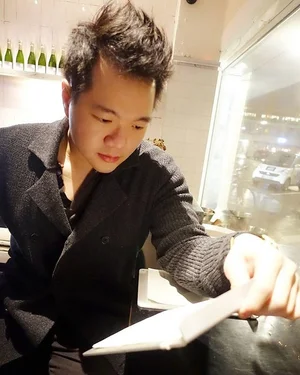
From the rustic French cooking of Cocotte to the neighbourhood charm of Summer Hill, Singaporean chef Anthony Yeoh has built a career around an uncomplicated idea: good food should bring people together. Through roast chicken, traditional French stews, and an inventive approach to communal dining, he has developed a culinary identity that celebrates comfort, generosity, and the enduring traditions of French home cooking.
French cuisine is frequently associated with elaborate tasting menus, sophisticated techniques, and Michelin-starred dining rooms. Yet beyond the prestigious restaurants and intricate presentations lies another side of French gastronomy, one built around family meals, regional recipes, and dishes intended to be shared.
For Singaporean chef Anthony Yeoh, it is this more intimate expression of French cooking that has become the foundation of his professional career.
As chef-owner of Summer Hill, a French restaurant at Claymore Connect on Orchard Road, Yeoh has established a dining concept centred on hearty food and the experience of gathering around a table. His menus draw inspiration from traditional French recipes, including roast chicken, slow-cooked stews, rustic pâtés, and other dishes associated with regional home cooking.
Rather than pursuing the conventions of fine dining, Yeoh has concentrated on creating a restaurant where guests can enjoy familiar flavours in a relaxed environment.
His journey to Summer Hill, however, involved several distinct chapters in Singapore's restaurant industry.
Before establishing his own business in 2018, he spent almost seven years leading the kitchen at Cocotte, a French restaurant on Dickson Road. He subsequently worked with chef-restaurateur Bjorn Shen as Group Executive Chef for Artichoke and Bird Bird, gaining experience in restaurant operations beyond his established French culinary specialisation.
The lessons accumulated throughout these appointments eventually shaped Summer Hill, which began as a modest takeaway operation in Clementi before developing into a full-service restaurant.
Today, Yeoh's career offers an example of how traditional French cuisine can find an enduring place within Singapore's diverse dining culture.
Early Career: From Private Cooking to Professional Kitchens
Anthony Yeoh's professional journey began with a private dining venture rather than the immediate pursuit of a prominent restaurant position.
In 2008, he established The Funky Chefs with fellow chef and business partner Melvyn Lee.
The venture introduced Yeoh to the practical challenges of operating a food business, including the need to balance culinary ambitions with commercial considerations.
Although he would later become associated with French cooking, his early entrepreneurial experience taught him lessons that extended beyond preparing individual dishes.
In a 2018 interview with 8days, Yeoh reflected on the difficulties of developing The Funky Chefs into a sustainable business.
He acknowledged that the venture lacked a sufficiently developed strategy for growth, an experience that helped shape his understanding of restaurant management.
The distinction between being a passionate cook and operating a financially sustainable business would become particularly important later in his career.
Restaurants require more than a compelling menu. They must manage costs, attract returning customers, maintain consistent standards, and develop operations capable of supporting their employees.
These realities would influence Yeoh's decisions when he eventually established Summer Hill.
Before that happened, however, he would spend several years developing his reputation through a very different culinary concept.
Cocotte: Discovering the Appeal of Rustic French Cuisine
One of the most influential chapters in Yeoh's career was his time at Cocotte, the now-closed French restaurant formerly located at Wanderlust Hotel on Dickson Road.
Cocotte became known for its rustic interpretation of French cooking, offering traditional dishes in a setting that encouraged communal dining.
Rather than concentrating exclusively on individually plated fine dining preparations, the restaurant embraced the generous portions and straightforward flavours associated with French home cooking.
Yeoh spent almost seven years at Cocotte, eventually becoming closely associated with the restaurant and its culinary identity.
It was during this period that he developed one of the dishes that would later define Summer Hill: traditional French roast chicken.
Known as poulet rôti, the preparation occupies an important place in French domestic cooking.
A properly roasted chicken requires relatively few ingredients, yet achieving the right balance of crisp skin, tender meat, and natural flavour demands careful attention to technique.
For Yeoh and his team, the appeal of the dish lay in its simplicity.
According to Summer Hill's official restaurant history, the original motivation for introducing roast chicken at Cocotte was the difficulty of finding a particularly good example available to order in a restaurant.
The team believed that a well-prepared roast chicken could provide the centrepiece of a memorable shared meal.
That philosophy would remain important long after Cocotte closed.
Although Yeoh eventually moved on to other professional opportunities, he continued working with members of the team he had known during his Cocotte years.
Their experience together established the culinary and operational foundations that would later support Summer Hill.
Working with Bjorn Shen at Artichoke and Bird Bird
After leaving Cocotte, Yeoh joined chef-restaurateur Bjorn Shen's restaurant operations.
Shen was known for a markedly different culinary style, particularly through Artichoke's bold Middle Eastern-inspired cooking and the fried chicken concept Bird Bird.
For Yeoh, the appointment offered an opportunity to expand his management experience beyond the French restaurant environment in which he had spent much of his career.
He became Group Executive Chef, working across the two concepts.
In his 2018 interview with 8days, Yeoh explained that Shen had approached him after learning that he was leaving Cocotte.
At the time, Bird Bird was preparing to relocate from Ann Siang Hill to Frankel Avenue.
Yeoh regarded the appointment as a chance to develop his understanding of managing multiple restaurant operations.
His work with the group exposed him to different culinary concepts and the challenges of maintaining consistent operations across separate establishments.
Although Artichoke's cooking differed significantly from his own preferred style, the opportunity offered valuable experience in kitchen leadership and business management.
Yeoh eventually left the group following Bird Bird's closure.
By then, he had spent years working in professional kitchens and had developed a clearer understanding of the type of restaurant he wanted to create.
The next step was to establish a business of his own.
Opening Summer Hill in 2018
Anthony Yeoh opened Summer Hill in January 2018 at Sunset Way in Clementi.
The original concept was modest.
Rather than immediately establishing a large restaurant, Yeoh began with a small takeaway operation specialising in French-inspired comfort food.
Roast chicken was central to the offering, reflecting the dish's popularity during his years at Cocotte.
The location was also deliberately practical.
Situated beneath a residential HDB block, Summer Hill was intended to serve the surrounding neighbourhood.
Customers could collect takeaway meals conveniently, while the relatively small premises allowed Yeoh to develop the business without committing to the operational scale of a larger restaurant.
According to his 2018 interview with 8days, the initial investment was approximately S$60,000, funded partly through his own savings and partly through money borrowed from his grandmother.
The commitment represented a significant personal and financial responsibility.
For the first time, Yeoh had full control over the direction of his restaurant.
However, he also carried responsibility for its financial performance, employees, and long-term survival.
The business soon began developing in a direction that differed from his original plan.
Customers wanted more than takeaway meals.
They wanted somewhere to sit, eat, and spend time together.
Within approximately six months, Summer Hill began evolving into a full-service neighbourhood restaurant.
The transition was gradual, reflecting Yeoh's willingness to adjust the business according to customer preferences.
It also reinforced a lesson he had learned earlier in his career: successful restaurants need to understand what their customers genuinely value.
The Philosophy Behind Summer Hill
At the centre of Summer Hill's culinary identity is a particular interpretation of French cuisine.
Yeoh has repeatedly expressed his preference for traditional country cooking over elaborate fine dining.
The distinction is significant.
French gastronomy encompasses a wide range of culinary traditions, from the technical sophistication of haute cuisine to the regional dishes prepared in family kitchens.
Yeoh's preference lies primarily with the latter.
His cooking draws from the tradition of cuisine bourgeoise, a style associated with substantial, carefully prepared domestic meals.
These dishes often feature recognisable ingredients, established cooking techniques, and preparations designed to provide comfort rather than surprise.
Roasted meats, stews, gratins, pâtés, and rich sauces are all characteristic of this broader culinary tradition.
Although such dishes may appear straightforward, preparing them well requires careful attention to the quality of ingredients and the development of flavour.
A roast chicken must be properly seasoned and cooked without drying out.
A stew requires sufficient time for its ingredients to develop depth and tenderness.
A sauce must complement the principal ingredients without overwhelming them.
For Yeoh, these techniques are valuable because they contribute directly to the enjoyment of the meal.
In an April 2025 interview with CNA Lifestyle, he explained that rustic French cooking was the style that most closely reflected his personality.
Although he appreciated fine dining and had worked in sophisticated restaurant environments, his preference was for food that resembled the meals he enjoyed preparing for friends at home.
The image of a large pot of stew placed in the middle of a dining table captures much of Summer Hill's philosophy.
The food is intended to encourage conversation, sharing, and the simple pleasure of eating together.
Roast Chicken: The Dish That Followed Him from Cocotte
Few dishes are as closely associated with Anthony Yeoh as his French roast chicken.
Its origins can be traced to his years at Cocotte, where the restaurant's kitchen developed a preparation based on traditional French roasting techniques.
When Yeoh established Summer Hill, the dish became one of the foundations of his new business.
The appeal of roast chicken lies partly in its familiarity.
Unlike elaborate tasting-menu preparations, it requires little explanation.
However, its apparent simplicity also leaves limited room for error.
The quality of the chicken, the seasoning, and the cooking process determine whether the finished dish is memorable or merely ordinary.
At Summer Hill, the restaurant's commitment to roast chicken reflects the belief that familiar food can be worth gathering around when prepared with sufficient care.
In an October 2022 review, The Business Times highlighted the restaurant's roast chicken as one of its defining preparations.
The publication also noted that the dish had been associated with Yeoh since his Cocotte years.
This continuity is particularly important to understanding his career.
Although his professional responsibilities and restaurant locations have changed, the underlying culinary philosophy has remained consistent.
He has not pursued novelty simply for its own sake.
Instead, he has continued refining dishes that communicate the kind of restaurant experience he wants to provide.
The enduring popularity of roast chicken at Summer Hill demonstrates how a relatively uncomplicated preparation can become an important part of a chef's professional identity.
Surviving the Pandemic and the Challenges of Independence
Summer Hill's early years were not without difficulties.
Like many independent restaurants, the business faced the challenge of establishing a reliable customer base while managing its operating expenses.
In a May 2022 interview with CNA Lifestyle, Yeoh explained that Summer Hill struggled financially during its initial years.
It was only in 2019 that the restaurant began generating a profit.
Just as the business was finding greater stability, Yeoh experienced the death of his father.
The COVID-19 pandemic followed shortly afterwards, creating substantial uncertainty for Singapore's restaurant industry.
Dining restrictions, changing customer behaviour, and operational disruptions forced restaurants to reconsider how they served their customers.
For Summer Hill, its origins as a takeaway business proved particularly valuable.
Because the restaurant had already developed systems for preparing food for collection and delivery, it was comparatively well positioned to adapt when dine-in operations were restricted.
Yeoh continued exploring different ways to maintain the business during the pandemic.
These included takeaway meals, delivery operations, and adjustments to the restaurant's service arrangements.
The experience reinforced the importance of flexibility.
Independent restaurants often lack the financial resources and administrative infrastructure of larger hospitality groups.
However, their smaller scale can allow them to respond more quickly to changes in customer demand.
For Yeoh, the pandemic demonstrated that operational adaptability was just as important as culinary skill.
It was a lesson that would influence Summer Hill's next significant transformation.
Discover the Chefs Behind Singapore's Restaurants
Singapore's dining culture is shaped by chefs whose careers reflect different traditions, experiences, and approaches to cooking.
From Anthony Yeoh's comforting French bistro cuisine to Roberto Galbiati's journey from Milan to Singapore, each chef brings a distinctive perspective to the table.
Explore more culinary personalities, independent restaurants, and dining stories through The Cuisine Journal.
Discover the people behind the plate.
Moving Summer Hill from Clementi to Orchard Road
In January 2022, Summer Hill closed its original premises at Sunset Way.
After four years in Clementi, the restaurant needed a new location.
Rather than immediately securing another dine-in space, Yeoh temporarily shifted operations to a cloud kitchen at Orchard Towers.
The arrangement allowed Summer Hill to continue serving customers through takeaway and delivery while searching for a permanent home.
Approximately five months later, the restaurant announced that it would reopen at Claymore Connect on Orchard Road.
The move represented a significant change.
Summer Hill had established its identity as a neighbourhood restaurant operating beneath an HDB block.
Its new location would place it within one of Singapore's most recognisable shopping and dining districts.
However, Yeoh did not regard the move as a departure from the restaurant's original philosophy.
In a May 2022 interview with CNA Lifestyle, he explained that Claymore Connect appealed to him because it served the surrounding residential community.
Rather than concentrating exclusively on tourists and shoppers, the mall attracted people living and working in the neighbourhood.
This made it a suitable location for a restaurant whose identity depended on developing relationships with regular customers.
Yeoh wanted Summer Hill to remain approachable despite its new Orchard Road address.
The larger premises also allowed the restaurant to expand its dining capacity and develop a more extensive menu.
Its culinary identity, however, remained centred on familiar French comfort food.
The move represented both an expansion of the business and a continuation of the neighbourhood restaurant concept that had guided its development since 2018.
Lessons from His Father's Business
The decision to expand Summer Hill also carried personal significance for Yeoh.
In his 2022 CNA Lifestyle interview, he reflected on the influence of his late father, who had built a successful business with Yeoh's mother.
The business had begun in the garage of Yeoh's grandfather's home before eventually expanding beyond those modest premises.
Yeoh recognised similarities between his parents' experience and his own journey with Summer Hill.
Both businesses began on a relatively small scale, encountered difficulties, and gradually developed through persistence and practical decision-making.
For Yeoh, moving Summer Hill from Sunset Way to Orchard Road represented a comparable stage of growth.
The restaurant had effectively outgrown its original premises.
Yet expansion also introduced new responsibilities.
A larger restaurant requires more employees, greater operational coordination, and sufficient revenue to support increased expenses.
The challenge was therefore not simply to attract more diners.
It was to preserve the characteristics that had made Summer Hill successful while adapting to a different commercial environment.
Yeoh's reflections on his father's business provide insight into his approach to entrepreneurship.
He understands restaurant ownership as a long-term undertaking requiring patience, adaptability, and careful financial management.
These considerations have remained important throughout Summer Hill's development.
Reinventing Brunch Through the Trolley Experience
One of Summer Hill's most distinctive developments emerged in 2024.
At a time when Singapore's restaurant industry was facing significant commercial pressure, Yeoh introduced a new approach to weekend brunch.
Instead of relying on a conventional buffet or individually ordered dishes, Summer Hill began serving its brunch through a series of trolleys.
The concept combined elements of traditional restaurant service with the communal atmosphere of dim sum dining.
Guests could enjoy a progression of smaller dishes, followed by substantial mains and desserts, served directly from trolleys moving around the dining room.
The format allowed diners to sample different preparations without committing to a conventional tasting menu.
It also created opportunities for greater interaction between the restaurant team and its guests.
According to a report published by The Straits Times in late 2024, Yeoh developed the concept during a difficult period for the business.
He had become concerned about the restaurant's financial position and was searching for a way to attract more customers.
The brunch trolley drew on an idea associated with his earlier years at Cocotte.
Within approximately two weeks, Yeoh developed the format into a new dining experience.
The response helped establish the trolley brunch as an important part of Summer Hill's offering.
Rather than introducing a radically different cuisine, Yeoh had changed the way familiar French dishes were presented and enjoyed.
The innovation reflected a central characteristic of his business approach: finding new ways to make the restaurant experience engaging without abandoning its culinary identity.
The Tour de France Brunch
One of the brunch trolley's early themes was Tour de France, a menu designed to introduce diners to different regional French preparations.
French cuisine varies considerably between regions.
The seafood traditions of Normandy differ from the olive oil, herbs, and vegetables commonly associated with Provence.
The rich meat dishes of Burgundy reflect different ingredients and cooking traditions from those found in the southwest.
Through the trolley format, Summer Hill could present a selection of dishes representing these regional influences within a single meal.
The menu included preparations such as Provençal beef stew and mussels cooked in white wine.
These dishes reflected the broader philosophy that Yeoh had pursued throughout his career.
Rather than presenting French gastronomy exclusively through elaborate restaurant techniques, the menu focused on traditional recipes and their regional origins.
The trolley service also changed the atmosphere of the meal.
Instead of receiving individually plated dishes in a fixed sequence, guests experienced a more interactive dining format.
The movement of the trolleys, the presentation of different preparations, and the opportunity to share food contributed to a communal experience.
The concept proved popular enough that some dishes were subsequently incorporated into a weekday set menu.
For Yeoh, this demonstrated how traditional French cooking could remain engaging through changes in presentation and service.
Savouring Stories: When Literature Becomes a Menu
In April 2025, Yeoh introduced another creative interpretation of Summer Hill's brunch trolley.
Titled Savouring Stories: At the Table with Women Writers, the menu drew inspiration from books, memoirs, and essays by female authors who had written about food.
The concept reflected Yeoh's longstanding interest in culinary literature.
During the development of the menu, he revisited books that had influenced his understanding of cooking and the cultural significance of meals.
He discovered that many of the writers whose work he admired most were women.
Among them were M. F. K. Fisher, Ruth Reichl, Julia Child, Nora Ephron, and Paula Wolfert.
Rather than using their books simply as sources of recipes, Yeoh drew inspiration from the memories, emotions, and experiences described in their writing.
This approach produced a menu in which individual dishes were connected to literary passages.
For example, a passage from Nora Ephron's novel Heartburn inspired a preparation of aligot, the rich French dish made from mashed potatoes and melted cheese.
The aligot was presented tableside, where its characteristic elasticity became part of the dining experience.
Another dish featured pork and chicken liver pâté with pistachios, inspired by the writing of M. F. K. Fisher.
A spinach and garlic gratin drew inspiration from Ruth Reichl's memoir Comfort Me with Apples.
Meanwhile, a preparation of skate wing with brown butter and lemon referenced Julia Child's descriptions of classic French fish cookery.
The menu demonstrated that Yeoh's culinary influences extended beyond the techniques taught in professional kitchens.
Literature had also shaped his understanding of how food becomes meaningful.
The Influence of Women Food Writers
Yeoh's interest in female food writers is particularly revealing because it connects directly to his preferred style of cooking.
In his April 2025 interview with CNA Lifestyle, he explained that the books he admired frequently explored the rituals and relationships surrounding meals.
Rather than concentrating exclusively on technical instructions, these writers described how food became connected to particular places, people, and memories.
For Yeoh, this perspective reflected the type of restaurant experience he wanted to create.
His interest in cuisine bourgeoise was not simply a preference for traditional French recipes.
It was also an appreciation for the social circumstances in which those dishes were historically prepared and enjoyed.
Home cooking often develops through shared knowledge, repeated family practices, and recipes passed between generations.
The meals themselves become associated with celebrations, daily routines, and personal relationships.
Yeoh identified these qualities in the writing of M. F. K. Fisher and Ruth Reichl, whose memoirs frequently explore the emotional and cultural significance of eating.
He also highlighted the influence of Paula Wolfert, particularly her book The Cooking of Southwest France.
Wolfert's writing introduced him to the regional cuisines of southwestern France and encouraged him to travel there.
For Yeoh, the book demonstrated how understanding a region's culinary traditions could reveal the relationships between ingredients, geography, and local culture.
The influence of these writers helps explain why Summer Hill's menus often emphasise the stories behind familiar dishes.
The food is important, but so are the experiences associated with preparing and sharing it.
French Cooking Without the Formality of Fine Dining
Throughout his professional career, Yeoh has maintained a distinction between appreciating fine dining and wanting to reproduce its conventions within his own restaurant.
He has experience working in sophisticated kitchens and understands the technical demands of high-end French cuisine.
However, his personal culinary identity is more closely associated with traditional country cooking.
This preference is visible in the dishes that have become associated with Summer Hill.
Roast chicken, lobster pot pie, French fried chicken, mussels Normandy, and pork belly porchetta have all appeared among the restaurant's offerings.
These preparations favour recognisable flavours and generous portions.
Even when they require considerable technical skill, their presentation is intended to remain approachable.
Yeoh's cooking therefore challenges the assumption that French cuisine must be formal to be taken seriously.
A properly prepared roast chicken can demand significant attention to temperature, seasoning, and moisture retention.
A traditional stew may require several hours of careful preparation.
A pâté involves precise ingredient ratios and cooking methods.
The techniques remain important, but they serve the finished dish rather than becoming the main attraction.
This approach also allows Summer Hill to occupy a distinctive position within Singapore's dining landscape.
It offers French cuisine without requiring guests to participate in the rituals commonly associated with fine dining.
For Yeoh, the purpose of the restaurant is ultimately to provide an enjoyable meal in a welcoming environment.
The Importance of Ingredients in Familiar Dishes
Although Summer Hill's cuisine is deliberately approachable, Yeoh places considerable importance on the quality of its ingredients.
This is particularly apparent in the restaurant's chicken preparations.
In a 2025 CNA Lifestyle feature examining fried chicken techniques, Yeoh discussed the differences between using higher-quality poultry and cheaper frozen alternatives.
He explained that the quality of the raw chicken had a direct effect on the flavour and texture of the finished dish.
Summer Hill used barn-raised chicken selected for its quality, reflecting the restaurant's emphasis on achieving good results through careful sourcing.
Yeoh's comments highlighted an important characteristic of traditional cooking.
When a dish uses relatively few ingredients, the quality of those ingredients becomes particularly noticeable.
A heavily seasoned or technically elaborate preparation may contain numerous components competing for attention.
A simple roast chicken offers fewer opportunities to conceal the characteristics of the main ingredient.
The same principle applies to many of the traditional French dishes served at Summer Hill.
Butter, cream, vegetables, meat, and seafood must be selected and prepared carefully because their natural qualities contribute directly to the finished result.
For Yeoh, this attention to ingredients supports his preference for cooking that prioritises flavour and satisfaction over unnecessary complexity.
The Realities of Running an Independent Restaurant
Beyond his work in the kitchen, Yeoh has become a familiar voice in discussions about the challenges facing Singapore's independent restaurant industry.
His experience with Summer Hill has given him firsthand knowledge of the financial and operational pressures involved in maintaining a small hospitality business.
Rising costs, changing dining habits, and competition from larger restaurant groups have created difficult conditions for independent operators.
In late 2024, The Straits Times reported that Yeoh had been concerned about Summer Hill's financial position earlier that year.
The introduction of the brunch trolley was partly a response to those challenges.
Rather than relying solely on cost reductions, he sought to create a dining experience that would encourage customers to return.
The strategy reflected his understanding that restaurants must continue offering something compelling while remaining commercially sustainable.
In March 2026, Yeoh again discussed the importance of flexibility in an interview with The Straits Times about Singapore's independent restaurant sector.
He observed that smaller restaurants could sometimes respond more quickly to changing circumstances because they operated with less bureaucracy than larger hospitality organisations.
This flexibility has been a recurring feature of Summer Hill's development.
The business began as a takeaway shop, expanded into a neighbourhood restaurant, adapted during the pandemic, operated temporarily from a cloud kitchen, relocated to Orchard Road, and introduced new service formats.
Each transition required Yeoh to reconsider how the business operated while preserving its central identity.
His career demonstrates that successful restaurant ownership depends on a combination of culinary ability, financial awareness, and the willingness to adapt.
A Restaurant Built Around Familiarity and Community
One of the most consistent themes throughout Summer Hill's history is Yeoh's emphasis on community.
The restaurant began in a residential neighbourhood and developed its customer base through the appeal of familiar food.
Even after relocating to Orchard Road, Yeoh continued presenting Summer Hill as a neighbourhood restaurant.
Its identity was not intended to depend on a particular postal code.
Instead, it was built around the relationships between the restaurant, its employees, and the people who returned to dine there.
This philosophy is also reflected in the continuity of Summer Hill's kitchen team.
According to the restaurant's official website, members of the team have worked together for approximately 15 years, with professional relationships dating back to Cocotte.
That continuity has allowed the restaurant to preserve dishes and techniques developed long before Summer Hill opened.
It has also contributed to a consistent approach to hospitality.
For Yeoh, the purpose of the restaurant extends beyond serving food.
He wants guests to have somewhere they can gather with friends and family, enjoy a substantial meal, and create memories together.
The idea is straightforward, but it has guided the restaurant through several significant changes.
From the original takeaway operation in Clementi to the larger dining room at Claymore Connect, Summer Hill has continued promoting the pleasures of familiar food and shared meals.
Anthony Yeoh's Place in Singapore's French Dining Landscape
Singapore's French restaurant industry encompasses a wide range of culinary experiences.
At one end are internationally recognised fine dining establishments dedicated to classical techniques, elaborate tasting menus, and highly structured service.
At the other are informal bistros, neighbourhood restaurants, and contemporary concepts that interpret French cooking through more accessible formats.
Anthony Yeoh's work at Summer Hill occupies an important place within this second category.
His cooking demonstrates that traditional French gastronomy can be appreciated without the formality commonly associated with luxury dining.
It also illustrates how regional French recipes can remain relevant to diners in Singapore.
Roast chicken, rich stews, pâtés, and gratins may have originated within particular European culinary traditions, but their appeal is not restricted to those regions.
The experience of sharing a substantial meal is familiar across many cultures.
For Yeoh, that commonality provides a foundation for his approach to French cuisine.
His restaurant does not need to imitate the conventions of a Parisian fine dining establishment.
Instead, it can communicate the warmth of French home cooking through familiar dishes, generous hospitality, and an atmosphere designed for gathering.
The concept has continued evolving through menu changes and new dining formats, but its underlying philosophy remains consistent.
The Continuing Story of Anthony Yeoh and Summer Hill
Anthony Yeoh's career reflects the development of a chef who has gradually found his own interpretation of French cooking.
His early private dining venture introduced him to the realities of operating a food business.
His years at Cocotte established his reputation for rustic French cuisine and helped develop the roast chicken that would later become closely associated with Summer Hill.
His subsequent work with Bjorn Shen at Artichoke and Bird Bird expanded his experience in kitchen leadership and restaurant management.
When he established Summer Hill in 2018, those experiences provided the foundation for an independent venture.
The restaurant began as a small takeaway shop in Clementi, gradually developed into a neighbourhood bistro, and eventually relocated to a larger space on Orchard Road.
Throughout these transitions, Yeoh has maintained a preference for French cooking that celebrates familiarity rather than extravagance.
His development of the brunch trolley and the literary-inspired Savouring Stories menu demonstrates that traditional cuisine can continue evolving through creative presentation and thoughtful storytelling.
At the same time, his experience as an independent restaurateur has required him to respond to commercial pressures, changing customer expectations, and the challenges of operating within Singapore's competitive dining industry.
For Yeoh, cooking and restaurant ownership are closely connected to the broader experience of hospitality.
A successful restaurant must prepare food well, but it must also provide a place where people want to return.
This understanding has shaped Summer Hill from its earliest days.
While its premises, menus, and service formats have changed, the underlying idea remains familiar: a properly prepared meal, served generously, can become the centre of a memorable gathering.
It is a philosophy that has accompanied Anthony Yeoh from Cocotte to Summer Hill, and one that continues to define his contribution to Singapore's French dining landscape.
Continue Exploring The Cuisine Journal
From rustic French bistros to contemporary restaurants interpreting the culinary traditions of different cultures, Singapore offers a remarkable variety of dining experiences.
Discover more chefs and their journeys, including Antonio Manetto, the Neapolitan chef who made Singapore his home, or explore Ciro Sorrentino's journey as a Neapolitan pizzaiolo.
For more dining inspiration, browse our Singapore restaurant and venue directory or explore our curated culinary collections.
The Cuisine Journal — Discover the people behind the plate.