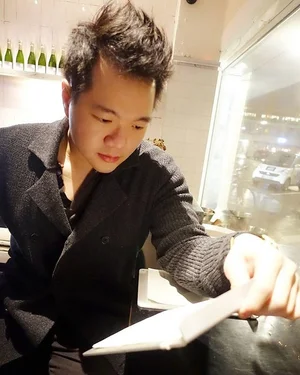
From the kitchens of Les Amis and Saint Pierre to the relaxed, convivial atmosphere of Bistro Du Vin, Chef de Cuisine Kenneth Tan has developed a culinary philosophy grounded in classical French techniques, quality ingredients, and the belief that good food does not need unnecessary complexity.
Singapore's French dining landscape encompasses everything from elaborate Michelin-starred tasting menus to neighbourhood bistros serving traditional regional dishes. While some chefs pursue innovation through unexpected ingredients and contemporary presentations, others find inspiration in the enduring appeal of familiar recipes.
For Kenneth Tan, Chef de Cuisine at Bistro Du Vin, the focus is firmly on the latter.
A graduate of SHATEC's Diploma in Culinary Studies, Tan developed his professional foundations through classical culinary training and experience in the kitchens of acclaimed Singapore restaurants, including Les Amis and Saint Pierre. His subsequent career took him into more family-oriented dining concepts, notably Café Melba, where he became involved in kitchen management and the expansion of the Tadcaster Group's restaurant operations.
Today, he leads the kitchen at Bistro Du Vin, a French restaurant at Shaw Centre that has been serving traditional bistro cuisine since July 2009.
His approach centres on a straightforward principle: quality ingredients, prepared with care, should remain the focus of the dish.
Rather than introducing elaborate techniques for their own sake, Tan favours preparations that respect the traditions of French cooking while providing guests with a satisfying and approachable dining experience.
It is a philosophy well suited to Bistro Du Vin, where familiar dishes such as steak frites, duck confit, French onion soup, and slow-braised meats remain central to the restaurant's identity.
Classical Training at SHATEC
Kenneth Tan's professional culinary education began at SHATEC, one of Singapore's established institutions for hospitality and culinary training.
He completed the Diploma in Culinary Studies, specialising in classical cuisine.
This educational background provided a foundation in the techniques and principles associated with professional Western cooking, particularly the traditions of French gastronomy.
Classical French cooking places considerable importance on understanding ingredients and mastering fundamental preparations.
Stocks, sauces, roasting, braising, sautéing, and other essential techniques form the basis of numerous traditional recipes.
For chefs working within this tradition, technical knowledge must be accompanied by consistency.
A dish prepared during one service should meet the same standards when reproduced during the next.
These principles would become particularly relevant to Tan's subsequent career.
Although his professional appointments have included both fine dining and more casual restaurant environments, his cooking has remained closely connected to the foundations of classical cuisine.
His formal training also prepared him for opportunities within some of Singapore's most established restaurants.
Developing His Craft at Les Amis and Saint Pierre
Following his culinary education, Tan gained experience in the kitchens of Les Amis and Saint Pierre.
Both restaurants have played important roles in the development of Singapore's fine dining industry.
Les Amis, established in 1994, is recognised for its dedication to French haute cuisine, premium ingredients, and carefully structured dining experiences.
Saint Pierre, meanwhile, has developed a reputation for contemporary French gastronomy, incorporating seasonal ingredients and sophisticated culinary techniques.
Tan's official biography identifies both restaurants as important stages in his professional development.
Although the available sources do not establish his precise positions, employment dates, or individual responsibilities within these kitchens, they confirm that he spent time working with their culinary teams.
Such environments place considerable emphasis on the standards of professional cooking.
Ingredients must be prepared accurately, dishes assembled consistently, and kitchen operations coordinated to meet the expectations of demanding restaurant service.
For a chef trained in classical cuisine, experience within these establishments offers opportunities to develop technical confidence and familiarity with high-end restaurant procedures.
However, Tan's subsequent career would move beyond the formal structures of fine dining.
Rather than concentrating exclusively on elaborate restaurant cooking, he began developing experience in establishments serving a broader range of guests.
This transition would eventually become an important part of his professional identity.
Moving Towards Family-Oriented Cuisine
In 2011, Tan joined the Tadcaster Group, where his professional responsibilities became more closely associated with family-oriented dining.
He was based at Café Melba, a restaurant concept known for combining Australian-inspired café culture with a relaxed, welcoming dining environment.
According to Bistro Du Vin's official account of his career, Tan managed kitchen operations at Café Melba while assisting with the Tadcaster Group's local and regional expansion.
The appointment introduced a different set of professional responsibilities from those associated with fine dining.
A family-oriented restaurant must accommodate a broad range of dining preferences while maintaining consistency throughout service.
Its menu needs to appeal to guests seeking familiar, satisfying dishes, and its kitchen must operate efficiently across different dining periods.
For Tan, this environment provided opportunities to develop his management experience alongside his culinary skills.
Kitchen leadership requires more than the ability to prepare excellent food.
It involves organising staff, coordinating preparation, managing ingredients, and ensuring that dishes are delivered consistently.
His involvement in the group's expansion also introduced operational considerations associated with developing restaurant businesses beyond an individual location.
This experience would prove relevant when Tan eventually joined Bistro Du Vin.
The restaurant's identity depended on balancing classical French cooking with the informal atmosphere of a neighbourhood bistro.
Tan's professional background provided experience in both areas.
Taking the Helm at Bistro Du Vin
Bistro Du Vin opened in July 2009 as part of the Les Amis Group.
Situated at Shaw Centre on Scotts Road, the restaurant was established to recreate the experience of a traditional French bistro in Singapore.
Its founders placed considerable attention on the dining room's atmosphere, furnishings, music, and service style.
Rather than presenting French cuisine exclusively through the conventions of formal fine dining, Bistro Du Vin sought to provide a lively environment where guests could enjoy familiar dishes and French wines.
Over the years, the restaurant developed a reputation for traditional preparations, including escargots, duck confit, braised beef cheeks, and steak frites.
When Tan assumed leadership of the kitchen, he joined an establishment with an already defined culinary identity.
His responsibility was therefore not to create an entirely new restaurant concept.
Instead, he needed to maintain the standards associated with Bistro Du Vin while contributing his own interpretation of classical French cooking.
The restaurant's official website identifies Tan as Chef de Cuisine, working alongside Director Philippe Pau and Group Restaurant Manager Suhaimi bin Husain.
Together, the team oversees a restaurant whose identity combines traditional food, French wine, and convivial hospitality.
Tan's contribution centres on the kitchen.
His approach emphasises the ingredients and techniques that have made French bistro cuisine recognisable across generations.
For a closer examination of the restaurant itself, read our existing feature, Bistro Du Vin Singapore: Classic French Bistro Cooking at Shaw Centre.
A Culinary Philosophy Built Around Simplicity
The clearest expression of Kenneth Tan's culinary philosophy is his preference for the principle of less is more.
According to his official biography, Tan believes that carefully selected ingredients should be paired simply to create hearty and satisfying dishes.
This approach reflects an important characteristic of traditional French bistro cooking.
Although French gastronomy is often associated with elaborate sauces and highly technical preparations, many of its best-known regional dishes are comparatively straightforward.
Their success depends on the quality of the ingredients and the chef's ability to prepare them correctly.
A well-made steak frites, for example, requires an understanding of meat selection, seasoning, temperature, and cooking technique.
A traditional beef stew depends on the patient development of flavour through slow cooking.
Duck confit requires careful preparation to produce tender meat and properly rendered fat.
None of these dishes necessarily benefits from additional ingredients or complicated presentation.
Instead, their appeal lies in the balance between familiar flavours and skilful execution.
Tan's philosophy reflects this understanding.
He does not reject creativity, but his approach places it within the context of traditional cooking.
The objective is to prepare food that guests recognise and enjoy while maintaining the standards expected of a professional French kitchen.
This philosophy also connects his different professional experiences.
His training at SHATEC and work in fine dining kitchens provided a technical foundation, while his years at Café Melba introduced him to the demands of more relaxed restaurant environments.
At Bistro Du Vin, these experiences come together.
Steak Frites: Kenneth Tan's Personal Recommendation
Among the dishes served at Bistro Du Vin, Tan identifies steak frites as his personal recommendation.
The preparation is one of the most recognisable examples of French bistro cuisine.
At its simplest, steak frites consists of a properly cooked steak served with French fries.
Despite its apparent simplicity, the dish requires careful attention to several elements.
The quality of the beef influences its flavour and texture, while the cooking process determines tenderness and the development of a browned exterior.
The fries must provide a contrasting texture, ideally with a crisp exterior and soft interior.
Seasoning and accompaniments complete the preparation without overwhelming the principal ingredients.
For Tan, steak frites represents the hearty character expected of traditional French bistro dining.
His preference is also consistent with his wider culinary philosophy.
Rather than selecting an elaborate signature dish intended primarily to demonstrate technical ability, he recommends a familiar preparation that depends on careful execution.
Bistro Du Vin's autumn 2026 menu features a charcoal-grilled Wagyu ribeye served with watercress salad and French fries.
The combination retains the essential character of steak frites while incorporating premium beef.
Tan's recommendation highlights the restaurant's commitment to traditional preparations that remain relevant to contemporary diners.
The Importance of Traditional French Bistro Cooking
French bistros occupy a distinctive place within the country's culinary history.
Traditionally, these establishments offer approachable meals in an informal atmosphere, providing an alternative to the more elaborate conventions of formal restaurants.
Their menus frequently feature regional specialities and dishes associated with everyday French cooking.
Bistro Du Vin follows this tradition.
The restaurant's menu includes preparations such as escargots de Bourgogne, French onion soup, duck confit, cassoulet, and braised meats.
Each dish reflects techniques and ingredients that have long been associated with French gastronomy.
Escargots de Bourgogne, for example, are traditionally prepared with parsley and garlic butter.
French onion soup depends on the development of flavour through caramelised onions and a rich broth, typically finished with bread and melted cheese.
Cassoulet, a speciality associated with southwestern France, combines beans and meats in a substantial slow-cooked preparation.
These dishes are not intended to surprise diners through unfamiliar combinations.
Instead, their appeal lies in their established flavours and the satisfaction of eating food prepared according to recognisable traditions.
For Tan, preserving these characteristics is central to the kitchen's responsibility.
His classical training provides the technical foundation necessary to maintain the dishes, while his experience in family-oriented dining supports their presentation within a relaxed restaurant environment.
The result is a cooking style that places consistency and satisfaction ahead of unnecessary complexity.
Discover Singapore's Culinary Personalities
Behind Singapore's established restaurants are chefs whose professional experiences help define the city's dining culture.
From Kenneth Tan's commitment to classical French bistro cooking to Roberto Galbiati's journey from Milan to Singapore, each chef brings a different understanding of ingredients, techniques, and hospitality.
Explore more culinary stories and restaurant features through The Cuisine Journal.
Discover the people behind the plate.
Preserving Familiar Dishes While Maintaining Seasonal Variety
Although Bistro Du Vin remains closely associated with traditional French cooking, its menu is not entirely static.
The restaurant introduces weekly specials and seasonal offerings alongside its established dishes.
According to the Les Amis Group, Bistro Du Vin also offers seasonal two- and three-course lunch menus.
These arrangements allow the kitchen to introduce variety while preserving the restaurant's fundamental identity.
For Tan, this creates an opportunity to balance established recipes with seasonal ingredients.
French cooking has a longstanding relationship with seasonality.
Different vegetables, meats, and other ingredients are traditionally associated with particular times of year, influencing the dishes prepared in both domestic and professional kitchens.
At Bistro Du Vin, the seasonal menu provides a framework for maintaining this connection.
Its autumn 2026 offerings include duck confit accompanied by roasted figs, Brussels sprouts, and Anna potatoes.
Other dishes feature slow-braised beef cheeks, cassoulet, and seafood preparations associated with regional French cooking.
These examples demonstrate how familiar recipes can be presented with seasonal accompaniments without abandoning their traditional character.
An October 2026 restaurant overview published by Karpo documents several of these dishes, alongside the restaurant's lunch offerings and established bistro specialities.
For Tan, the challenge lies in maintaining the consistency of the restaurant's classics while allowing the menu to reflect changing ingredients and customer preferences.
This balance is important for a restaurant that has operated for more than fifteen years.
Longstanding customers may return for familiar dishes, while newer guests may appreciate the opportunity to explore seasonal preparations.
The kitchen must accommodate both expectations.
The Relationship Between Food and Hospitality
Kenneth Tan's approach to restaurant cooking extends beyond the preparation of individual dishes.
His official biography emphasises the importance of ensuring that guests leave Bistro Du Vin satisfied with both the food and the hospitality.
He also hopes that customers will look forward to returning.
This objective reflects the relationship between the kitchen and dining room in a traditional French bistro.
Unlike a formal tasting-menu restaurant, where the dining experience may follow a carefully prescribed sequence, a bistro generally provides greater flexibility.
Guests may visit for a simple lunch, a substantial dinner, or an evening spent enjoying food and wine with friends.
The kitchen must therefore accommodate different dining occasions while maintaining consistent standards.
Bistro Du Vin's service philosophy supports this approach.
Director Philippe Pau, originally from Bordeaux, brings extensive international hospitality experience to the restaurant.
His professional background includes work in France, Switzerland, Dubai, the Seychelles, and Singapore.
Alongside Group Restaurant Manager Suhaimi bin Husain, Pau contributes to the informal and welcoming atmosphere that defines the establishment.
Tan's kitchen forms another essential part of that experience.
The restaurant's success depends on food and service working together.
A familiar French dish can be satisfying on its own, but the overall experience is strengthened when guests feel comfortable in their surroundings.
For Tan, the intention is to deliver both.
His cooking provides the culinary foundation, while the restaurant's hospitality team creates the atmosphere in which those dishes are enjoyed.
The Value of Experience Across Different Restaurant Concepts
One of the more interesting aspects of Tan's career is the variety of restaurant environments in which he has worked.
His professional background includes classical culinary education, experience in fine dining kitchens, and management responsibilities within family-oriented restaurant operations.
Each setting requires a different approach.
Fine dining establishments place considerable emphasis on technical precision, sophisticated presentation, and carefully coordinated service.
Family-oriented restaurants must balance quality with accessibility, operational efficiency, and the needs of a broader customer base.
Traditional French bistros occupy a position between these environments.
Their food requires technical knowledge, but their atmosphere is generally less formal than that of a luxury restaurant.
Tan's professional experience has provided exposure to these different demands.
His time at Les Amis and Saint Pierre contributed to his development within demanding culinary environments.
His subsequent work with the Tadcaster Group expanded his experience in restaurant operations and management.
At Bistro Du Vin, he is responsible for translating that knowledge into a menu built around familiar French recipes.
The combination is particularly appropriate for a chef whose stated philosophy places simplicity at the centre of cooking.
Producing a straightforward dish consistently requires technical ability, even when the finished preparation appears uncomplicated.
The experience of different restaurant environments can help a chef understand when elaborate techniques are necessary and when restraint produces a better result.
For Tan, that distinction is central to his approach.
Classical French Cuisine in Singapore
Singapore's restaurant industry has developed into an international dining destination, bringing together chefs and culinary traditions from across the world.
Within this environment, French cuisine occupies an established position.
Restaurants such as Les Amis and Saint Pierre demonstrate the technical sophistication associated with contemporary fine dining.
Other establishments, including Bistro Du Vin, concentrate on the familiar pleasures of traditional French cooking.
Both approaches contribute to the diversity of Singapore's French dining landscape.
For a chef like Kenneth Tan, whose professional experience includes both styles, the distinction is particularly relevant.
His work at Bistro Du Vin demonstrates that classical culinary techniques are not restricted to elaborate tasting menus.
They are equally important in preparing the dishes served in traditional bistros.
The skills involved in producing a rich sauce, cooking meat accurately, or preparing a properly balanced stew remain valuable regardless of the restaurant's formality.
Tan's contribution lies in applying these techniques to dishes designed for everyday enjoyment.
The restaurant's long history also provides an important context.
Bistro Du Vin has operated since 2009, maintaining a clear identity despite changes in Singapore's wider dining industry.
Its continued emphasis on French bistro traditions demonstrates the enduring appeal of familiar food prepared with care.
Tan's leadership supports that identity by combining classical training with an understanding of approachable restaurant dining.
Kenneth Tan's Continuing Role at Bistro Du Vin
Kenneth Tan's professional journey reflects the value of developing culinary experience across different parts of the restaurant industry.
His formal education at SHATEC provided a foundation in classical cuisine.
Subsequent experience in the kitchens of Les Amis and Saint Pierre exposed him to the technical demands of fine dining.
His career with the Tadcaster Group introduced him to family-oriented restaurant operations, kitchen management, and the practical responsibilities associated with business expansion.
These experiences eventually brought him to Bistro Du Vin, where he serves as Chef de Cuisine.
Rather than pursuing a culinary identity based on constant reinvention, Tan has embraced the enduring appeal of traditional French cooking.
His philosophy emphasises quality ingredients, straightforward combinations, and dishes that provide genuine satisfaction.
The approach is reflected in his personal recommendation of steak frites, a preparation whose success depends on careful cooking rather than elaborate presentation.
It is also evident in the wider menu at Bistro Du Vin, where familiar dishes such as duck confit, cassoulet, French onion soup, and braised beef remain central to the restaurant's identity.
Tan's role is to maintain these traditions while ensuring that the restaurant continues providing a satisfying experience for its guests.
His career illustrates an important principle within professional cooking: technical sophistication and simplicity are not necessarily opposites.
A chef may develop advanced skills in prestigious kitchens and subsequently apply them to comparatively familiar dishes.
For Kenneth Tan, this balance has become the foundation of his work at Bistro Du Vin.
Within Singapore's diverse French dining landscape, his approach demonstrates that classical cuisine does not always need elaborate presentation to remain meaningful.
Sometimes, the most enduring expression of a chef's experience is a familiar dish prepared properly, served generously, and enjoyed in the company of others.
Explore More Culinary Stories at The Cuisine Journal
From traditional French bistros to contemporary restaurants interpreting regional European cuisines, Singapore offers an extensive range of dining experiences shaped by the chefs behind them.
Discover more culinary personalities, including Antonio Manetto, the Neapolitan chef who made Singapore home, or explore our dedicated coverage of Bistro Du Vin and its traditional French cooking.
For more dining discoveries, visit our Singapore restaurant and venue directory or explore our curated culinary collections.
The Cuisine Journal — Discover the people behind the plate.