Burnt Ends: Dave Pynt’s Temple to Fire at Dempsey Hill
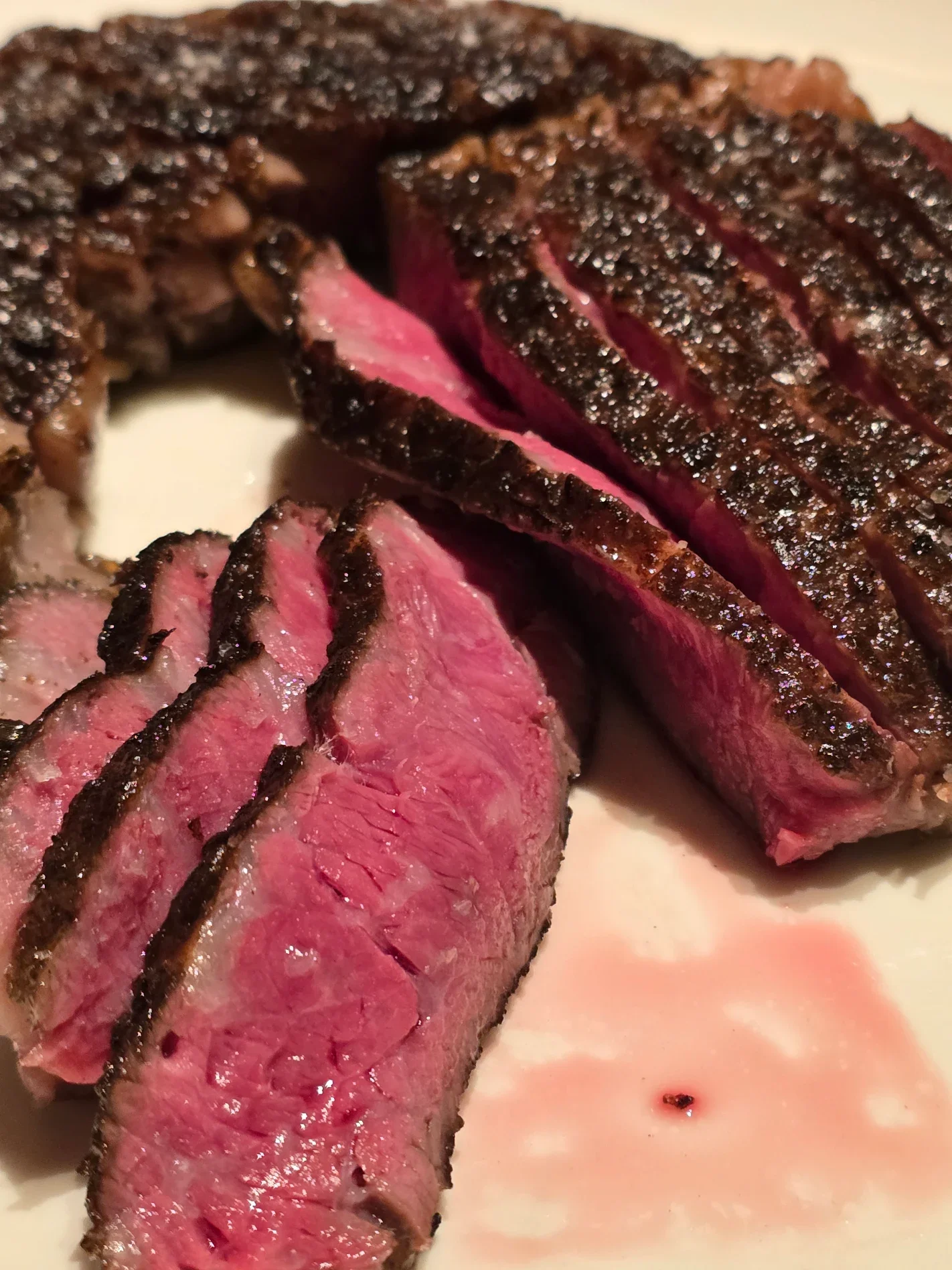
Burnt Ends is built around a deceptively simple idea: cook good ingredients over fire and get out of their way. Under chef-owner Dave Pynt, that philosophy has grown into one of Singapore’s most internationally recognised restaurants — loud, smoky, energetic and centred around a four-tonne oven that functions almost like another member of the kitchen team.
Burnt Ends does not behave very much like a conventional fine-dining restaurant.
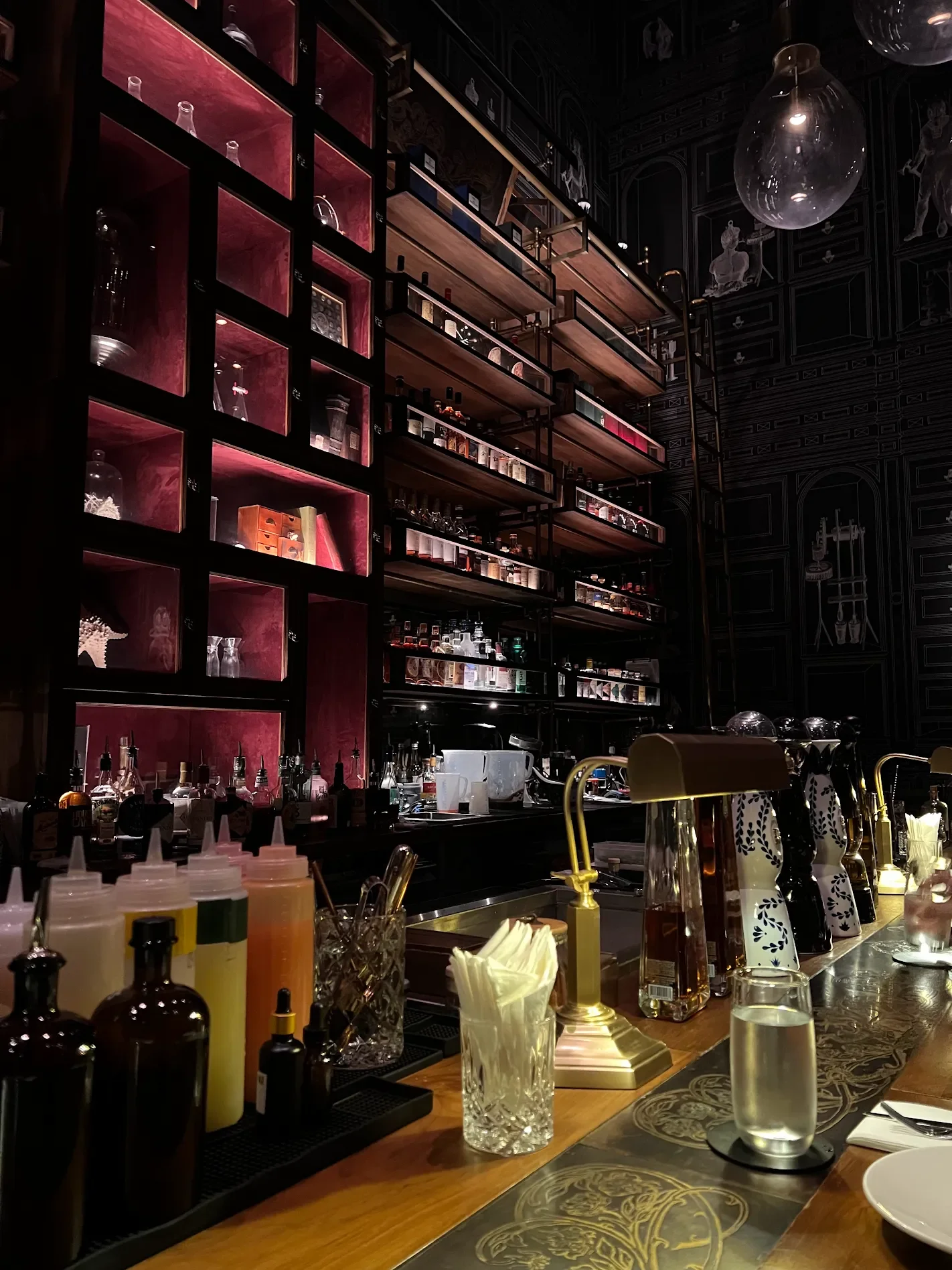
There are no hushed rooms demanding reverence. The kitchen is exposed. Fire is visible. Chefs move directly in front of diners. The room can get loud. Meat, seafood, bread and vegetables arrive carrying the marks of charcoal and smoke.
And much of that is deliberate.
Chef-owner Dave Pynt describes Burnt Ends as modern Australian barbecue, served in a relaxed environment with boutique wines and spirits. At its centre is a custom four-tonne dual-cavity oven accompanied by four elevation grills, giving the kitchen direct control over distance from the heat as well as the character of the fire itself.
The restaurant says it writes its menus daily and believes there is a certain magic in cooking with wood.
That sounds romantic.
At Burnt Ends, it is also engineering.
The Restaurant Is Built Around the Fire
A conventional kitchen gives a chef relatively predictable controls.
Set the oven to a temperature. Turn a burner up or down. Start a timer.
Fire is less obedient.
Wood burns differently as it ages. Heat rises and falls. Smoke changes. Moving food a few centimetres closer to the source can alter the result.
Burnt Ends effectively builds its cooking system around learning to control that instability.
Its elevation grills allow ingredients to move towards or away from the coals, while the enormous oven provides another form of heat entirely.
The result is not simply "barbecue" in the backyard sense.
It is cooking in which distance, fuel, time, smoke and temperature become ingredients in their own right.
That helps explain why diners can encounter everything from steak and pork to fish, bread and small plates without the restaurant feeling as though every dish has been forced into the same smoky template.
Some guests actually resist calling Burnt Ends a barbecue restaurant at all, precisely because the cooking extends considerably beyond meat on a grill.
But barbecue remains the restaurant's language.
Burnt Ends has simply developed a considerably larger vocabulary.
Dave Pynt and the Appeal of Controlled Chaos
Pynt is central to that personality.
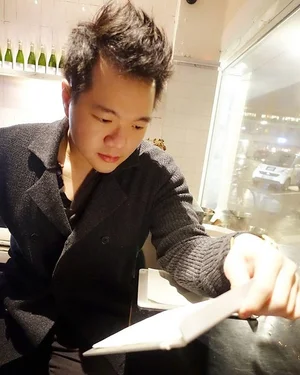
He is the founder and chef-owner of Burnt Ends, and the restaurant bears the qualities usually associated with him: directness, informality, a serious interest in technique and relatively little interest in making fine dining feel ceremonious.
His professional profile can be found on Dave Pynt's LinkedIn.
What is interesting about Burnt Ends is that Pynt has managed to make a technically demanding restaurant feel almost anti-precious.
There is no contradiction in that.
The cooking can be exact even when the atmosphere is not stiff.
That distinction becomes especially obvious at the counter, where diners can watch the kitchen operate. Guests repeatedly recommend those seats because they turn dinner into something closer to live observation: food moving over flames, chefs adjusting grills and dishes being assembled only a short distance away. One diner specifically recalled Pynt being particularly gracious while interacting with guests from behind the counter.
This is not a restaurant trying to hide the kitchen.
The kitchen is the show.
From Barbecue Restaurant to International Institution
Burnt Ends opened in 2013 and became internationally recognised remarkably quickly.
It debuted on Asia's 50 Best Restaurants at No.30 in 2014 and entered The World's 50 Best Restaurants at No.70 in 2016. In 2017, Pynt received The World's 50 Best Restaurants' Chef's Choice Award.
A Michelin star followed in 2018, and Burnt Ends says it has retained that star ever since.
Its rankings have moved over the years — as rankings do — but the restaurant remains firmly on the international radar. It currently lists itself as No.93 on The World's 50 Best Restaurants 2025 extended ranking and No.59 on Asia's 50 Best Restaurants 2026.
That distinction is worth phrasing carefully.
Burnt Ends is not presently No.93 on a 2026 World's 50 Best ranking; the No.93 position refers to the 2025 World's 50 Best Restaurants extended list. Its current 2026 regional ranking is No.59 in Asia.
For a restaurant that describes itself in such uncomplicated terms — modern Australian barbecue, fire, wine, fun — the résumé is unusually formidable.
What Does Burnt Ends Actually Serve?
There is no single permanent menu that completely defines Burnt Ends.
The restaurant says its menu is written daily.
That gives the kitchen room to respond to produce while preserving several preparations and styles that have become strongly associated with the restaurant.
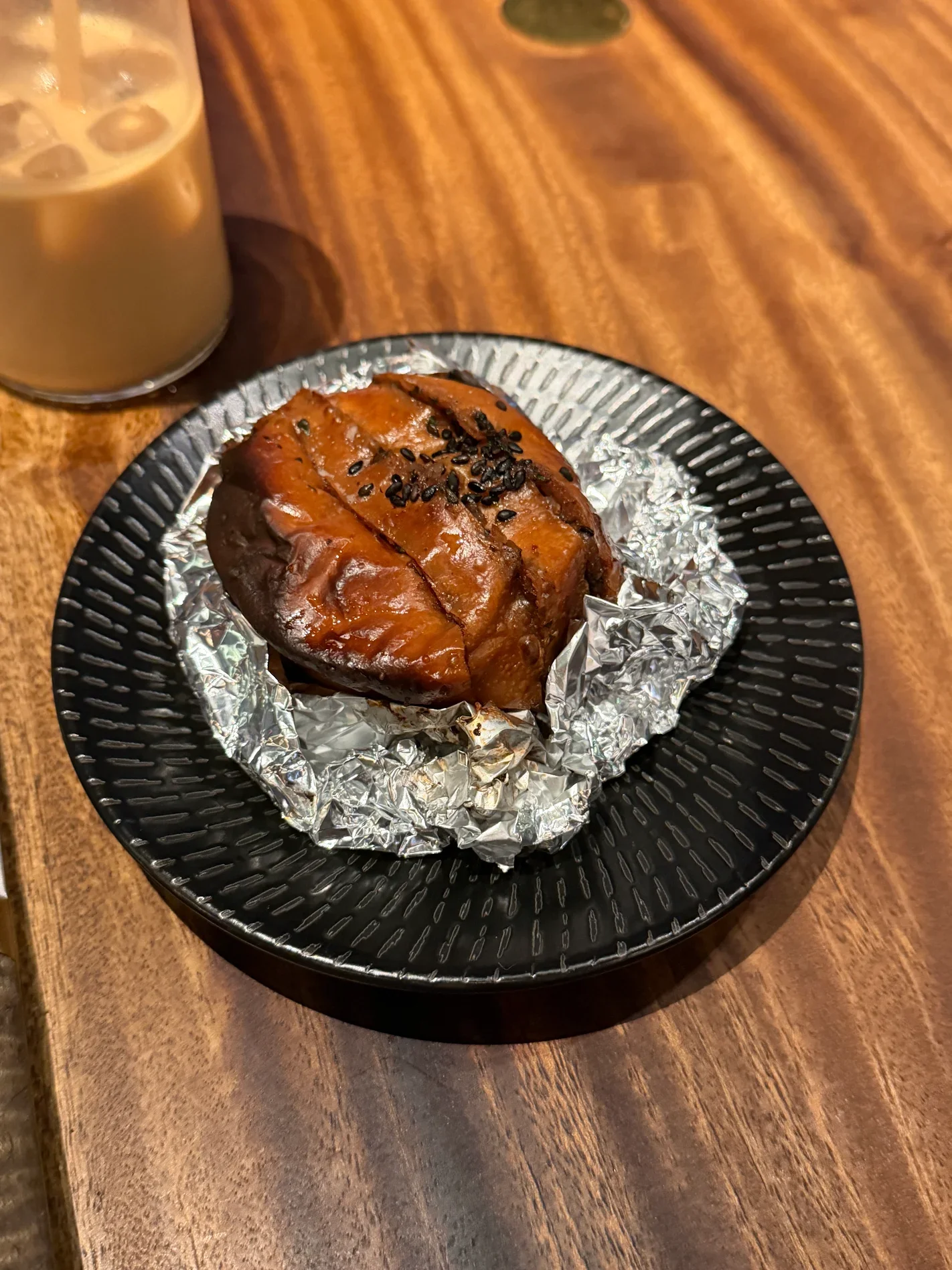
Diner accounts mention items such as grilled steaks, swordfish, jerk-style chicken, pork belly, scallops, peri-peri duck hearts and small plates built around bread, seafood and smoke.
The Burnt Ends Sanger has also become one of the wider brand's most recognisable dishes — sufficiently established that Burnt Ends Bakery now sells a kit for building one at home.
But some of the most interesting responses come from dishes that are not enormous slabs of meat.
Guests repeatedly praise the smaller plates.
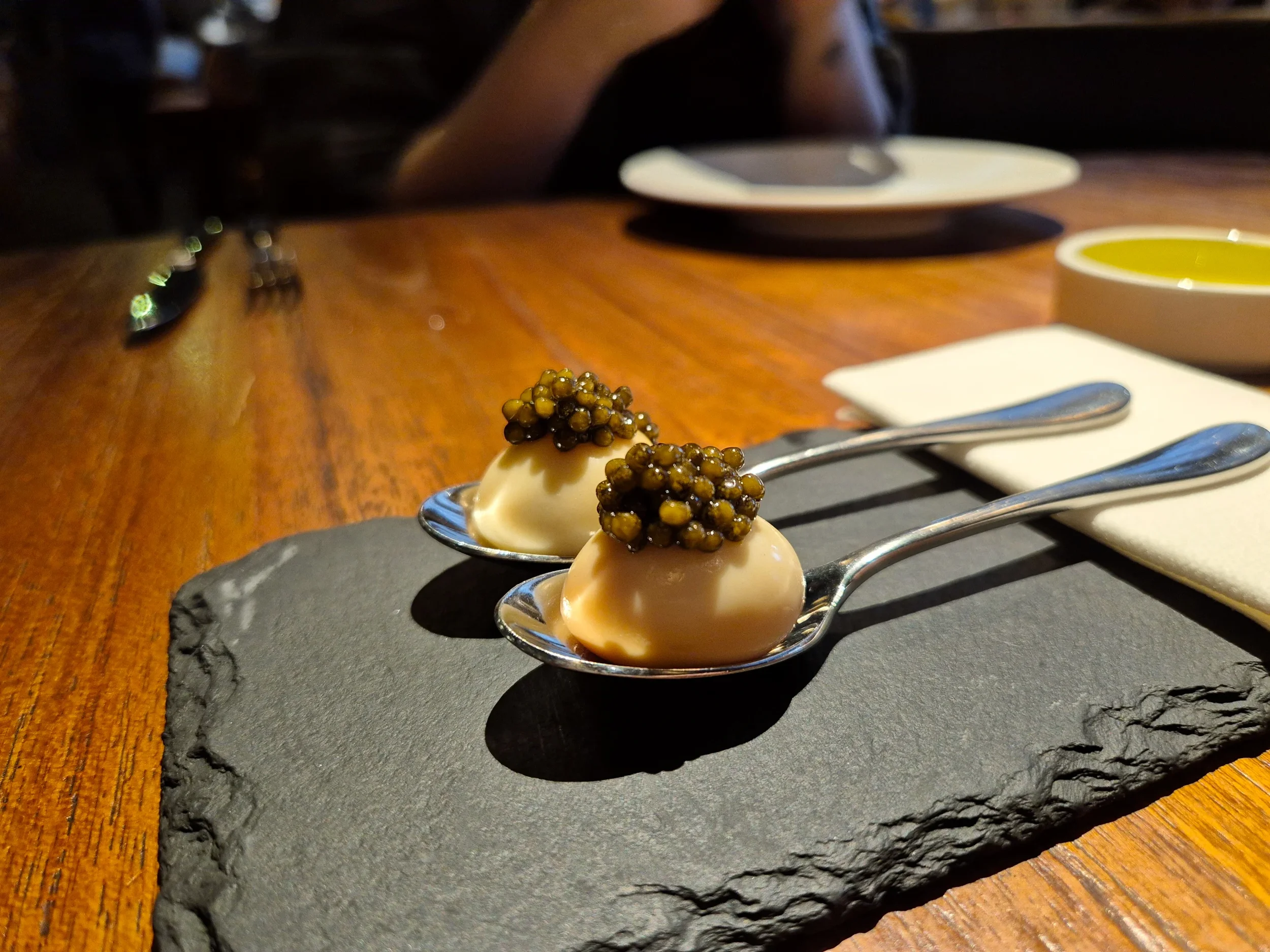
Taramasalata with grissini, grilled seafood, chicken, fish and bread can make just as much impression as the beef.
That is important because Burnt Ends would be much less interesting if the formula were simply:
expensive ingredient + fire = restaurant.
The kitchen works because it understands when fire should dominate and when it should merely leave a trace.
Smoke Should Taste Like Something, Not Everything
A common mistake in wood-fired cooking is to make smoke the loudest flavour on the plate.
Burnt Ends generally seems more interested in smoke as seasoning.
A piece of fish can retain its softness while picking up char.
Bread can develop a darker crust.
Fat can render into coals and create a different aroma as it burns.
A vegetable can sweeten before its edges become bitter.
These transformations happen at different temperatures and over different lengths of time.
That makes the grill less like a single cooking technique and more like a platform.
It also explains one interesting criticism from diners who expected the restaurant to taste more aggressively of barbecue. A handful of guests have said they wanted deeper smoke or more overt grilled flavour from certain dishes.
That criticism reveals a difference in expectations.
Burnt Ends uses fire constantly.
That does not mean every plate is supposed to taste like smoke.
The Counter Is Probably the Most Burnt Ends Way to Eat Here
Where you sit can noticeably change the experience.
Burnt Ends has conventional dining areas, but the counter places diners directly alongside the activity of the open kitchen.
Several guests specifically recommend it because they can watch the preparation and speak with the chefs while eating.
There is something appropriate about that arrangement.
Many fine-dining restaurants construct an invisible wall between culinary labour and the dining room.
Burnt Ends largely removes it.
You see the heat.
You see the pace.
You see someone lean into an oven.
You watch dishes move through stations.
For diners genuinely interested in kitchens rather than merely restaurants, that makes the counter particularly compelling.
TCJ explores more restaurants and food destinations through Dining Venues, while the people responsible for them sit within our Professionals section.
A Restaurant That Can Be Very Loud
The room's energy comes with a trade-off.
Burnt Ends is repeatedly described by diners as lively, and occasionally simply loud. Some guests find conversation noticeably more difficult during busy services.
That is worth knowing before booking.
Someone expecting the atmosphere of a hushed Michelin-starred dining room may be surprised.
But silence would almost feel strange here.
There are flames in the kitchen, chefs working within view, drinks moving through the room and tables ordering food designed to be shared.
Burnt Ends feels closer to a very sophisticated restaurant party than a temple of gastronomy.
Its own website describes the intended atmosphere as fun and relaxed.
That may be one of the more accurate pieces of marketing copy on the site.
Is It Worth the Hype?
This is where public opinion becomes useful.
Burnt Ends inspires unusually strong expectations because it is difficult to book, Michelin-starred and repeatedly included in major international restaurant rankings.
For many diners, it delivers.
Guests praise the service, cooking, atmosphere and particularly the experience of watching the chefs work at the counter. Several describe steaks or individual small plates as among the best they have eaten recently.
Others come away less convinced.
The most consistent criticism is not poor execution but value relative to reputation. Some diners see extraordinarily well-executed wood-fired food; others see premium barbecue whose prices and global accolades have pushed expectations beyond what the experience can realistically satisfy.
That disagreement is perfectly reasonable.
Once a restaurant becomes famous enough, diners are no longer comparing dinner simply with other dinners.
They are comparing it with the story they have heard about dinner.
Burnt Ends carries a very large story.
The Burnt Ends Universe Has Grown Beyond the Restaurant
What began as a restaurant is now considerably broader.
There is Burnt Ends Bakery, Burnt Ends Cellars, a dedicated cocktail bar and the wider Burnt Ends Hospitality Group.
The bakery continues the same fascination with fire through its own wood-fired baking programme, while the restaurant's cookbook extends the philosophy even further.
Published in 2024, the Burnt Ends book runs to 368 pages and includes 70 recipes and base recipes alongside 16 techniques. Pynt wrote it with Max Veenhuyzen.
That expansion is significant.
Burnt Ends is no longer simply a place where Pynt cooks.
It has become a recognisable culinary identity built around a particular combination of fire, irreverence and technical control.
Even the Private Dining Room Is Built Around Fire and Earth
The private dining room takes the elemental theme in a darker direction.
The fourteen-seat space incorporates petrified wood, Japanese Shou Sugi Ban charred timber and a six-metre black petrified-wood table. Above it hangs an installation comprising roughly 5,000 black lava stones.
Guests there can receive large-format dishes, experimental preparations and off-menu items from a dedicated kitchen team.
It is a remarkably literal extension of the restaurant's worldview.
Wood | Char | Stone | Heat
Fire appears not merely as a cooking method but as the organising principle for the entire place.
Who Is Burnt Ends For?
Burnt Ends is particularly appealing to diners who want serious cooking without the behavioural conventions that sometimes accompany serious restaurants.
It suits people who enjoy sitting near a kitchen.
People fascinated by live-fire cooking.
People who would rather hear the restaurant than whisper through it.
And particularly people interested in what happens when a chef stops treating fire as a primitive heat source and starts treating it as a precision instrument.
It may be less satisfying for diners who equate fine dining with elaborate plating, long conceptual explanations or constant innovation for innovation's sake.
Burnt Ends can look remarkably simple.
A piece of meat.
A grill.
Some bread.
A sauce.
But simplicity in restaurants is often dangerous.
The fewer things on the plate, the fewer places there are to conceal mistakes.
Pynt's restaurant has spent more than a decade demonstrating just how much technique can sit behind food that does not necessarily look technical.
And that is probably the essential Burnt Ends idea:
Make the machinery complicated so the food can feel simple.
Burnt Ends
7 Dempsey Road, #01-02, Singapore 249671
Cuisine: Modern Australian / Wood-Fired Barbecue
Chef-Owner: Dave Pynt
MICHELIN Guide: One Star
Asia's 50 Best Restaurants 2026: No.59
The World's 50 Best Restaurants 2025 extended list: No.93
Current restaurant hours are lunch from 12pm to 2:30pm, Thursday to Saturday, and dinner from 6pm to 11pm, Tuesday to Saturday. The restaurant is closed Sunday and Monday.
Visit the official Burnt Ends website or view Dave Pynt on LinkedIn.
Explore more through TCJ's Dining Venues, Professionals, Products and Food Guides.