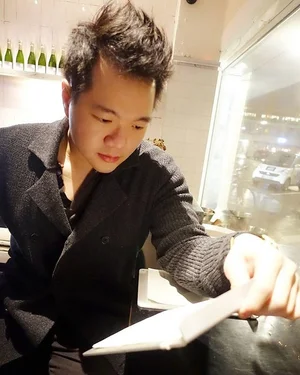
At a Club Street bistro that has served French food since 1998, the chef’s work is to make familiar dishes worth returning for.
A chef joining an established restaurant faces a particular challenge. The room already means something to its regulars. Guests know the dishes they hope to find, the way they want an evening to feel and sometimes the particular sauce they remember from a previous visit. At L’Angélus, that history stretches back to 1998 at one Club Street address. The restaurant identifies Benjamin Yip as the chef heading its kitchen, with a commitment to consistency, fresh ingredients and classical French cooking.
Those are practical obligations rather than an easy slogan. An onion soup or steak frites offers little room to hide weak fundamentals. A kitchen must develop flavour, control the cooking and make each component arrive as it should, again and again. Yip’s role at L’Angélus is rooted in that kind of repetition. The restaurant describes his traditional cooking as capable of pleasant surprises, suggesting that a classical base leaves room for a chef’s judgement.
Cooking within a long-established identity
L’Angélus calls itself Singapore’s oldest single-location traditional French restaurant. The claim is the restaurant’s own, but its Club Street history is tangible: an interior with vintage posters, photographs and keepsakes, and a predominantly French wine selection. A chef in that setting is cooking inside a larger experience. The kitchen’s food needs to make sense alongside the room, the service and the wines selected by group head sommelier Guillaume Pace.
Yip also works with a service team led by general manager Christopher Roch. That partnership matters because a well-prepared main course can be diminished by an uncertain pace or enhanced by a thoughtful recommendation. The best version of a bistro meal is a coordinated one: a guest can enjoy the food without noticing all the small decisions that made the evening run smoothly.
The restaurant is explicit about the quality of the ingredients it seeks, from seafood and fish to meat, poultry and produce. In French classical cooking, freshness does not replace technique; it gives the chef something worth handling carefully. That distinction is central to Yip’s described approach. A sauce may be the memorable part of a steak dinner, but it can only work fully when the ingredient beneath it is cooked with equal attention.
The classics leave room for personality
The restaurant’s menus range from sets to à la carte dishes, so a guest might meet Yip’s kitchen through a quick lunch or a more ceremonial dinner. Familiar French preparations remain the through-line. The interest lies in the details: how a soup is seasoned, how meat is rested, how a sauce brings a plate together and when a lighter seafood course gives the meal a change of pace. These are the daily choices behind the restaurant’s promise of consistency, rather than claims about a particular dish being available at every visit.
Yip has also been connected with a public discussion of common myths about French food in Singapore. The theme fits a chef working in a traditional bistro: the food can be recognisably French while remaining approachable to someone who has never ordered beyond a steak. The linked article is useful further reading; the restaurant’s own team page is the basis for the description of his current position and cooking priorities.
This profile does not need an elaborate childhood anecdote or a guessed apprenticeship to explain why his work matters. The publicly available material is much clearer on what Yip is doing now than on a detailed chronology of how he arrived. His professional profile offers another point of reference for readers who want to follow his career. For the diner at L’Angélus, the relevant biography is also being written in the present: a longstanding kitchen has to deliver the French classics convincingly every service.
The challenge is distinct from that of a chef opening a new restaurant. Yip has to respect what L’Angélus means to existing patrons while giving a new guest a reason to come back. That could be the precision of a familiar main, the ease of a well-balanced lunch or the surprise of a seasonal addition. The restaurant’s continuity does not depend on serving an identical meal forever. It depends on understanding which pleasures people came for and cooking them with care.
Other chefs in Singapore answer the question of tradition in different ways. Dave Pynt’s cooking at Burnt Ends puts fire at the centre, while Roberto Galbiati’s story follows the pull of Milanese roots. Explore more dining addresses through The Cuisine Journal’s venues.
At L’Angélus, Yip’s craft is quieter. It lives in the decision to take a known dish seriously, and to earn the next visit through the quality of this one.