Tiziano Ciani: The Italian Chef Who Came Back to Simplicity at Al Borgo
Tiziano Ciani has spent more than two decades cooking professionally.
He started at 16.
He left Italy.
Worked in different countries.
Learned other cuisines.
Experimented with modern techniques.
Built a career as a private chef capable of moving between Italian food, Mediterranean cooking, seafood, barbecue, Asian fusion and even molecular gastronomy.
And yet at Al Borgo, the Italian trattoria along Bukit Timah Road, much of that complexity is deliberately kept in the background.
Here, Ciani cooks pasta.
Pizza.
Risotto.
Charcoal-grilled meats.
Seafood.
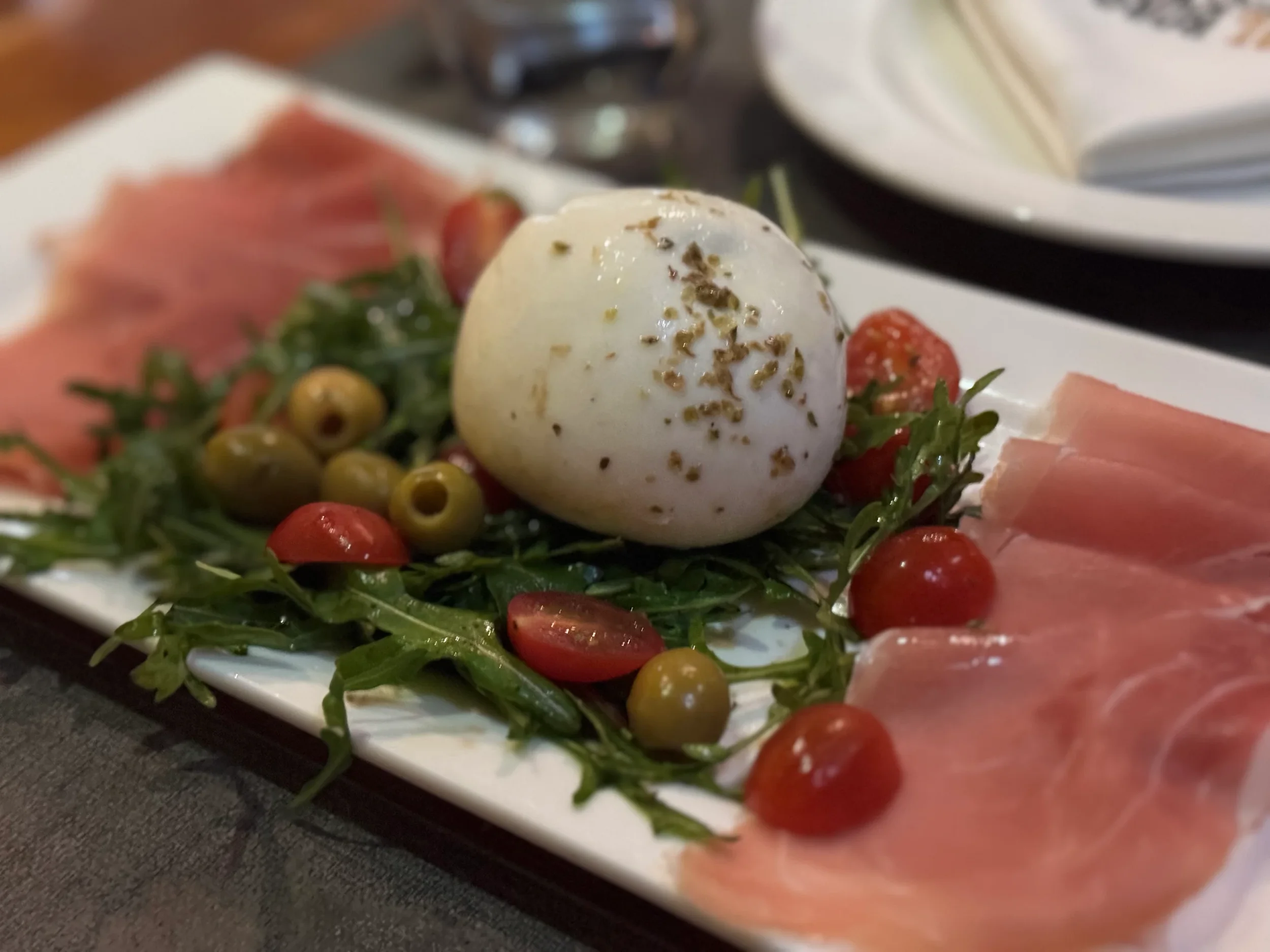
The kind of food that should feel immediately recognisable when it arrives at the table.
That contrast may be the most interesting thing about him.
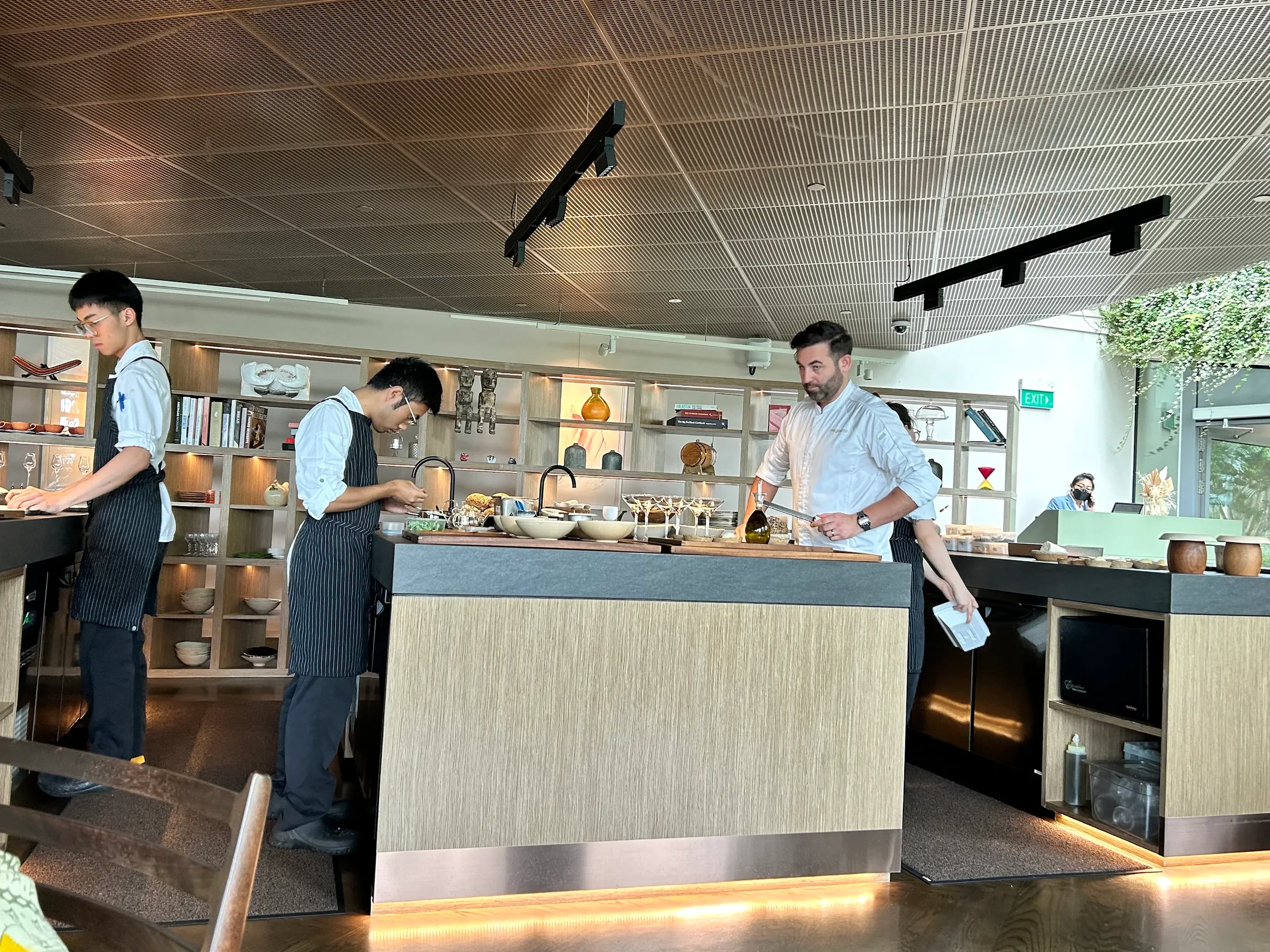
Tiziano Ciani appears to be a chef who has learned enough techniques to know when he does not need to show them.
From Lago d'Orta
Ciani comes from Lago d'Orta in northern Italy.
On his Private Chef Tiziano website, he describes starting professional cooking at only 16 years old and spending more than 20 years working as a chef.
That career subsequently took him well beyond Italy.
Ciani names Egypt, Germany and Greece among the countries in which he has lived and worked, alongside his native Italy. He describes using those journeys as an education, collecting recipes and learning from local ingredients and cuisines wherever he went.
For an Italian chef, that kind of movement matters.
It would have been entirely possible to spend those decades moving progressively deeper into one regional culinary tradition.
Chefs such as Antonio Manetto demonstrate what happens when a strong connection to a specific Italian region — in his case Naples — remains central to a chef's professional identity.
Ciani developed differently.
Italy remained the foundation.
But the rest of the world became part of his education.
Cooking as Something Inherited
For all the travel, Ciani does not describe his relationship with food as beginning inside a professional kitchen.
It began with family.
On his private-chef site, he credits his mother and grandmother with passing on their passion for cooking.
His own description of the lesson is straightforward: cooking is a form of caring.
That idea fits naturally with the kind of Italian cooking eventually associated with Al Borgo.
The restaurant is not built around technical display.
It presents itself as a trattoria.
Comfort.
Generous portions.
Familiar dishes.
Warm hospitality.
The food is intended to reproduce some of the emotional qualities of a family Italian restaurant rather than create distance between the cook and diner.
That is a different expression of Italian identity from the more contemporary restaurant cooking explored at Bottega di Carna.
Ciani's Al Borgo cooking starts somewhere more domestic.
Twenty Years of Learning Not to Stay Still
Ciani's private-chef work reveals another side of him.
The Private Chef Tiziano About page describes a philosophy built around four ideas:
Freshness.
Personalisation.
Innovation.
Passion.
The innovation component is particularly revealing.
Ciani and his team specifically mention working with sous-vide cooking, smoking and spherification, alongside traditional recipes.
Elsewhere on the site, the range extends through Mediterranean and vegetarian cuisine, grill and barbecue, seafood, Asian fusion and molecular gastronomy.
This is not a chef whose technical world ends at pasta and pizza.
He has deliberately spent years expanding it.
The interesting question, then, is what happens when a chef capable of doing all of those things enters a restaurant where the objective is almost the opposite.
Keep the food recognisable.
Al Borgo
Al Borgo opened along Bukit Timah Road in 2010.
Its name means “small town” in Italian, and the restaurant positions itself as a relaxed neighbourhood trattoria rather than a formal Italian dining room.
According to Al Borgo's own account, Ciani leads the kitchen with more than 20 years of experience in Italian cuisine, serving food inspired by what the restaurant calls Little Napoli as well as flavours from across Italy.
The menu follows that philosophy.
Pasta.
Risotto.
Pizza.
Antipasti.
Charcoal-grilled dishes.
Seafood.
Desserts.
The restaurant's current material highlights dishes such as Fiorentina steak, sea bass baked in a salt crust and a cheese-wheel carbonara, alongside a broad range of traditional pasta preparations.
There is little attempt to disguise what any of it is.
That matters.
The Discipline of Familiar Food
A chef does not necessarily demonstrate experience by making a dish more complicated.
Sometimes the difficult thing is making something familiar sufficiently well that people want to return for it.
A plate of pasta has nowhere to hide.
Neither does a pizza.
People already know what these dishes are supposed to taste like.
The diner arrives with expectations before the food reaches the table.
That creates a different kind of pressure from highly conceptual cooking.
At Sushi Sakuta, precision is expressed through an intensely specialised Japanese craft.
At Al Borgo, Ciani's problem is more domestic.
Can a simple plate of pasta still feel worth leaving home for?
Handmade Pasta and the Value of Repetition
Al Borgo states that its pasta is made fresh daily.
Its current pasta programme ranges from familiar preparations to more individual combinations: porcini mushrooms, seafood, pesto, chilli, prawns and richer meat-based sauces all appear across the menu.
Fresh pasta is a useful example of the kind of craft that rarely looks spectacular from the dining room.
Flour.
Egg.
Water, depending on the preparation.
Mix.
Knead.
Rest.
Roll.
Cut.
Then do it again tomorrow.
Much of Italian cooking is built around that kind of repetition.
The technique becomes almost invisible once it is performed correctly.
For someone with Ciani's interest in advanced techniques, there is something revealing about choosing to spend that experience on fundamentals.
Italy Is Larger Than One Region
Al Borgo uses the phrase Little Napoli, but the restaurant's food is not presented as exclusively Neapolitan.
The menu pulls from different parts of Italy.
That gives Ciani room to cook across a broader national vocabulary.
This distinguishes his work from chefs such as Ciro Sorrentino, whose professional identity is particularly closely tied to Naples and the craft of pizza.
Ciani's identity appears broader.
He is Italian first.
Then the menu moves.
That makes sense given his career.
A chef who spent years travelling and learning from different food cultures is unlikely to suddenly become interested in strict culinary borders when he returns to Italian food.
Freshness Before Technique
One principle connects Ciani's private work and Al Borgo particularly clearly.
Fresh ingredients.
His private-chef operation describes seasonal, local and fresh produce as a starting point, with an explicit interest in supporting local farmers and producers whenever practical.
Al Borgo similarly emphasises ingredient quality, although the needs of an Italian restaurant in Singapore mean imported Italian products also play an important role.
These approaches are not contradictory.
They reveal the same priority.
The ingredient comes first.
Where authenticity requires a particular Italian product, bring it in.
Where freshness matters more, use what makes sense locally.
Technique follows.
Charcoal Gives Another Side of the Chef
Al Borgo's charcoal-grilled dishes also connect neatly with Ciani's broader repertoire.
His private-chef work explicitly includes barbecue, grill and seafood.
At Al Borgo, those skills appear through dishes such as Fiorentina steak and grilled seafood.
Charcoal changes the personality of the cooking.
Pasta demands control over water, starch, emulsification and sauce.
A charcoal grill asks different questions.
Heat.
Distance.
Smoke.
Timing.
Fat.
Resting.
It is another example of how a broad professional background can make a seemingly straightforward trattoria menu more demanding than it initially appears.
There is an obvious conceptual connection with Dave Pynt's work at Burnt Ends, although the role of fire is very different.
At Burnt Ends, fire is effectively the restaurant's organising principle.
For Ciani, it is one part of a larger Italian vocabulary.
Tradition and Innovation Do Not Have to Fight
Ciani's two professional identities could easily appear contradictory.
The private chef who talks about spherification and molecular gastronomy.
The trattoria chef serving carbonara and pizza.
But they actually reveal a useful distinction.
Innovation is a tool.
It does not have to become the point of the food.
A chef can understand sous-vide cooking without putting everything in a water bath.
He can know how to create spheres without turning dinner into molecular gastronomy.
He can understand Asian ingredients without converting Italian food into fusion.
Technical knowledge simply provides more choices.
The experienced chef decides which ones not to use.
Personalisation Matters
Another principle from Ciani's private-chef work is personalisation.
The private-chef operation builds menus around individual diners, dietary requirements and the character of an event rather than imposing one fixed experience.
That instinct appears at Al Borgo in a much more informal way.
The restaurant states that diners can ask for dishes outside the printed menu and, when the kitchen has the necessary ingredients, the chefs may prepare them.
That is an unusually old-fashioned form of hospitality.
Not:
This is the chef's menu. Eat what you are given.
But:
What would you like?
For a neighbourhood Italian restaurant, that may matter as much as any signature dish.
A Different Kind of Italian Restaurant
Italian dining in Singapore can take many forms.
There are chef-driven contemporary restaurants.
Pizzerias.
Fine dining.
Regional restaurants.
Large international concepts.
Al Borgo occupies a deliberately less complicated position.
It wants to be the neighbourhood Italian restaurant.
The place where someone comes back.
The place where staff begin recognising customers.
The place where a diner can ask whether the kitchen can make something that is not currently printed on the menu.
That model depends heavily upon consistency and hospitality.
It also depends upon the chef resisting the temptation to turn every meal into a demonstration of himself.
The Private Chef and the Trattoria Chef
Tiziano Ciani's career becomes most interesting when both sides are considered together.
The private-chef version of Ciani travels.
Experiments.
Adapts.
Uses modern techniques.
Learns from other cuisines.
Builds menus around individual guests.
The Al Borgo version returns to something more grounded.
Italian food.
Fresh pasta.
Pizza.
Charcoal.
Seafood.
A neighbourhood dining room.
Generous portions.
Neither version cancels the other.
The first explains why the second can look so relaxed.
Knowing Enough to Keep Things Simple
There is a stage in a cook's development where complexity proves capability.
Learning another technique matters.
Trying another ingredient matters.
Cooking another cuisine matters.
Ciani seems to have passed through that stage a long time ago.
He started professionally at 16.
Spent more than 20 years cooking.
Worked in several countries.
Learned from different cuisines.
Built a private-chef practice comfortable with everything from Italian food to molecular gastronomy.
Then found himself leading a Bukit Timah trattoria whose promise is essentially this:
Come in.
Eat Italian food.
Feel comfortable.
That may sound less ambitious than a highly conceptual restaurant.
It isn't necessarily easier.
Because when the food is simple, the chef becomes dependent on the things that cannot be disguised.
Ingredients.
Timing.
Technique.
Consistency.
Hospitality.
The fundamentals.
Tiziano Ciani has spent much of his career learning how many things a chef can do.
At Al Borgo, the more interesting lesson may be how many of them he is willing not to.