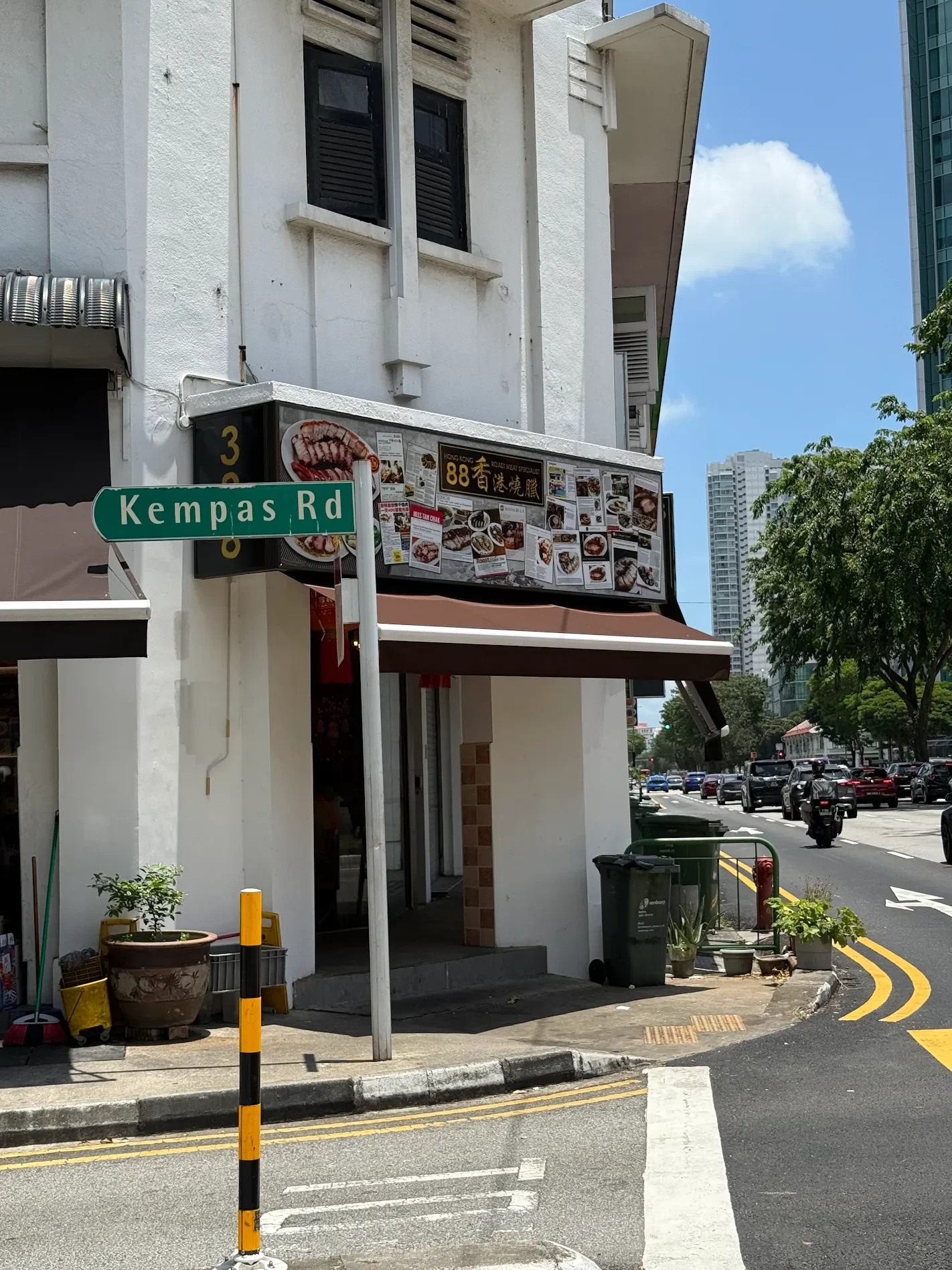
88 Hong Kong Roast Meat Specialist: Charcoal-Roasted Char Siew and Sio Bak from Lavender to the CBD
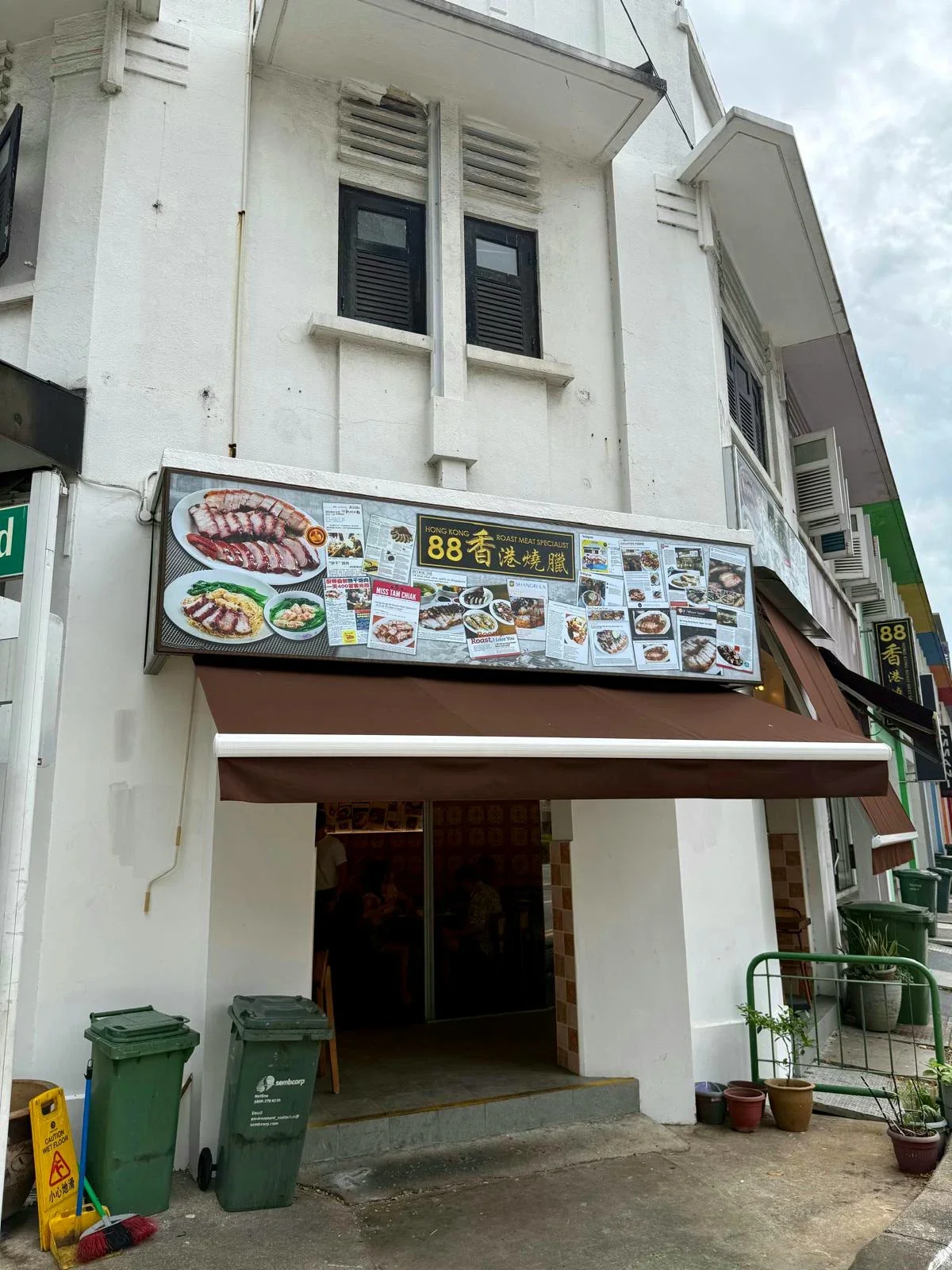
88 Hong Kong Roast Meat Specialist built its following on charcoal-roasted char siew and sio bak, growing from a roving hawker operation into a larger restaurant business while keeping smoke, caramelisation and crisp pork skin at the centre of the menu.
88 Hong Kong Roast Meat Specialist has moved around enough that following its history can become confusing.
The addresses changed.
The format changed.
The dining rooms became larger.
But the food remained recognisable.
Char siew. Sio bak. Roast duck. Rice. Noodles. Charcoal.
The business is closely associated with founder Martin Ong, a former restaurant chef who moved into hawker food in 2012 and spent years developing his own roasting system.
Today, however, 88 Hong Kong Roast Meat Specialist has become more than a chef's personal stall. It is a recognisable Singapore roast-meat business with standalone restaurant spaces, online ordering and a following built largely around two pieces of pork.
For current announcements directly from the business, see the 88 Hong Kong Roast Meat Specialist Facebook page.
Charcoal Is the Foundation
The clearest starting point is the fire.
88 Hong Kong Roast Meat Specialist has long differentiated itself through the use of charcoal rather than relying entirely on gas ovens.
Charcoal is less convenient.
Its temperature fluctuates.
Smoke changes.
Fuel burns differently from batch to batch.
But it also contributes aroma and powerful radiant heat.
For roast meat, that matters.
Sugars on the exterior caramelise.
Fat renders.
Edges blacken.
Smoke settles onto the surface.
This helps explain why 88's char siew tends towards a darker appearance than the bright-red char siew found at many everyday roast-meat stalls.
The relationship between cooking and live heat also appears elsewhere in Singapore dining. At a completely different end of the restaurant spectrum, Burnt Ends at Dempsey Hill similarly builds much of its culinary identity around controlling fire rather than treating heat as invisible kitchen infrastructure.
At 88 Hong Kong Roast Meat Specialist, the scale is different.
The principle is still visible on the meat.
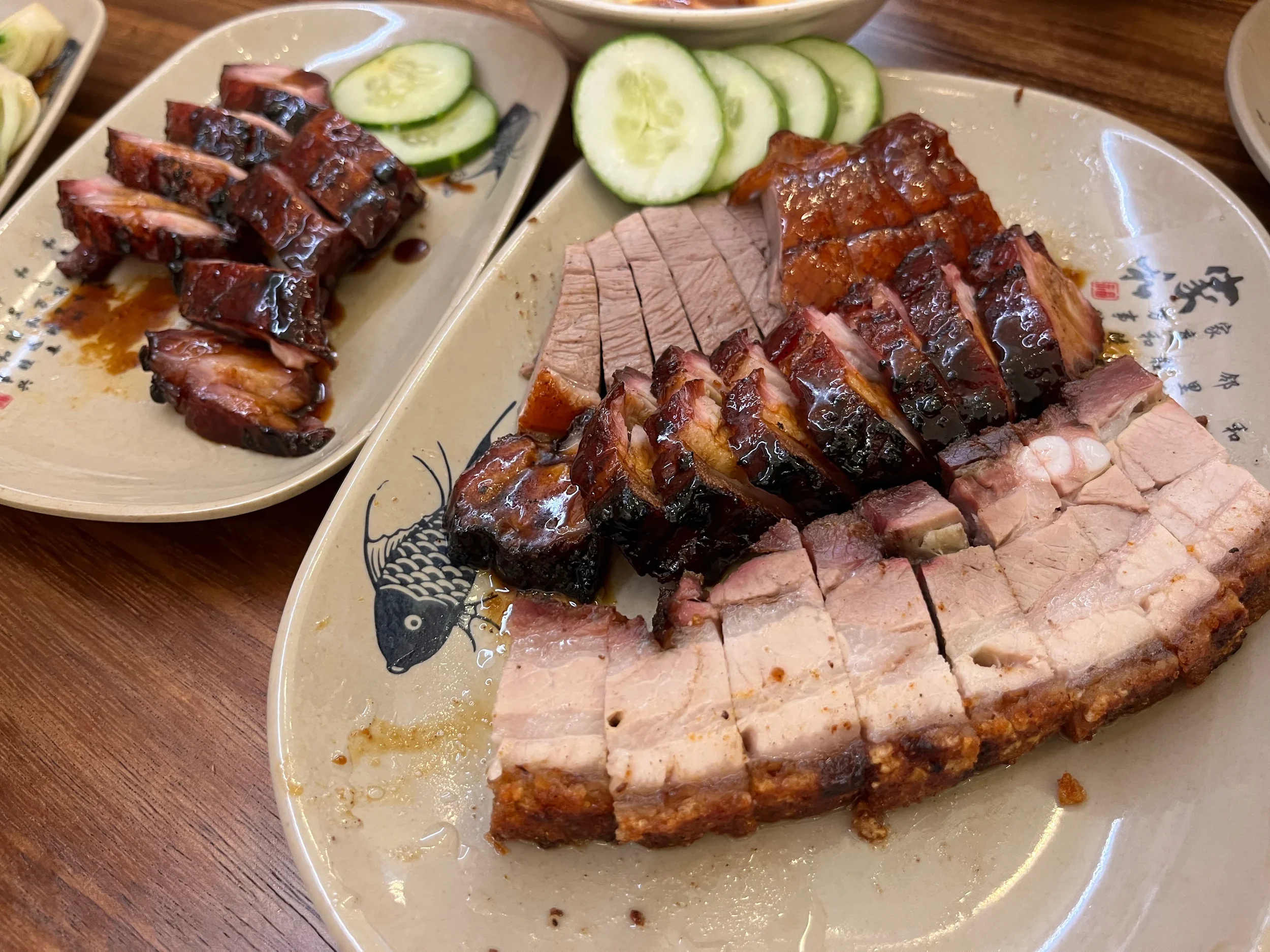
The Char Siew
The char siew is one of the business's defining products.
It is generally cut thick.
There is visible fat.
The exterior develops dark, sticky caramelisation.
The edges can move well beyond golden brown into almost blackened territory.
That is deliberate.
The pork needs sufficient fat to tolerate the roasting process without drying out before the exterior has properly caramelised.
As the meat cooks, fat renders and mixes with the glaze.
Sugars concentrate.
The surface becomes sticky.
Smoke provides another layer.
Recent diners supplied to The Cuisine Journal repeatedly mention those same characteristics: thick cuts, fatty sections, smoky edges and deep caramelisation.
This is not lean char siew pretending otherwise.
Fat is part of the design.
Why the Fat Matters
Char siew works particularly well with pork cuts containing enough intramuscular and external fat to remain moist through roasting.
That fat also affects flavour perception.
Sugar, salt and smoke become richer when carried by rendered pork fat.
A leaner cut may produce a cleaner-looking piece of char siew, but it can also become dry before the exterior develops enough colour.
88 Hong Kong Roast Meat Specialist leans in the opposite direction.
Some pieces can be visibly fatty.
Customer responses naturally vary — some specifically seek that richness while others find it heavier than they prefer.
But the fattiness itself is not an accident.
It is connected directly to the style of char siew the business is trying to produce.
Sio Bak and the Crackling
Then there is the sio bak.
Roast pork belly presents a different technical problem from char siew.
Instead of caramelising a glaze, the cook must create extremely dry, crisp skin while keeping the meat underneath from becoming dry.
Those two goals fight each other.
Moist meat generally benefits from retaining water.
Crisp crackling requires removing it.
That is why good sio bak depends heavily on how the skin is prepared before roasting.
It may be pierced.
Salted.
Dried.
Scraped.
Exposed to intense heat.
88 Hong Kong Roast Meat Specialist has become particularly known for a thin, brittle style of crackling sometimes described as biscuit-like skin.
The Miss Tam Chiak profile of 88 Hong Kong Roast Meat Specialist highlighted this combination of crisp skin and juicy pork relatively early in the stall's rise.
Recent diners continue to focus heavily on the sio bak's crackling.
Roast Duck Completes the Trio
The third major roast is duck.
Duck behaves very differently from pork.
Much of its fat sits beneath the skin.
Roasting therefore requires enough heat to render that fat while maintaining moisture in the meat.
Too little rendering and the skin becomes soft.
Too much cooking and the meat dries out.
88 Hong Kong Roast Meat Specialist sells roast duck alongside its char siew and sio bak, and it frequently appears in mixed platters.
Customer material suggests the pork remains the larger draw, but duck gives diners another texture and flavour when several meats are ordered together.
The Mixed Platter Changes the Meal
A roast-meat stall naturally lends itself to individual rice or noodle plates.
The restaurant format makes sharing more practical.
A mixed platter can combine:
char siew, with caramelised sweetness and smoke;
sio bak, with brittle crackling and fatty pork belly;
and roast duck, with rendered poultry fat and darker meat.
That turns a quick hawker-style meal into something more communal.
Recent diners frequently mention ordering two- or three-meat platters for the table rather than choosing a single roast.
It is a subtle example of how changing the venue can change the way the same food is eaten.
The Noodles Developed Their Own Following
The meat gets the headlines.
The noodles increasingly receive their own attention.
Recent customers describe springy noodles coated with combinations of pork lard, garlic oil, chilli and savoury sauce, sometimes with crisp lard pieces added for texture.
That matters because noodles underneath roast meat can easily become an afterthought.
Here, some diners specifically mention them as one of the reasons they return.
Wantons and handmade pork balls broaden the noodle side of the menu further.
So although “Roast Meat Specialist” remains an accurate name, the business now functions more like a complete Cantonese casual restaurant than a counter selling nothing but chopped meats.
A Business That Kept Moving
88 Hong Kong Roast Meat Specialist's early years were unusually nomadic.
Martin Ong became a hawker around 2012, after previously working in restaurant kitchens.
The business subsequently operated through several addresses before becoming strongly associated with the Lavender and Tyrwhitt Road area.
This movement helped create part of the stall's reputation.
Customers did not simply discover one fixed neighbourhood institution.
Some actively followed the business when it relocated.
The SETHLUI account of 88 Hong Kong Roast Meat Specialist's Tyrwhitt Road return even described it as a “nomadic sio bak stall”, which captures that period of its history rather well.
Eventually, Lavender became the area most strongly associated with the brand.
Lavender Built the Following
The Lavender operation gave 88 Hong Kong Roast Meat Specialist a more permanent base.
Queues became a regular feature.
The customer base expanded beyond people living nearby.
Office workers and diners from other areas travelled specifically for the roast pork and char siew.
That mattered because 88 was becoming a destination rather than simply a convenient neighbourhood roast-meat stall.
The food itself did not become more elaborate.
The demand changed.
That distinction is important.
Many businesses grow by expanding the menu.
88 Hong Kong Roast Meat Specialist largely grew because more people wanted the thing it was already making.
Then the CBD Came to 88
In 2023, the business made a major move into Singapore's central business district.
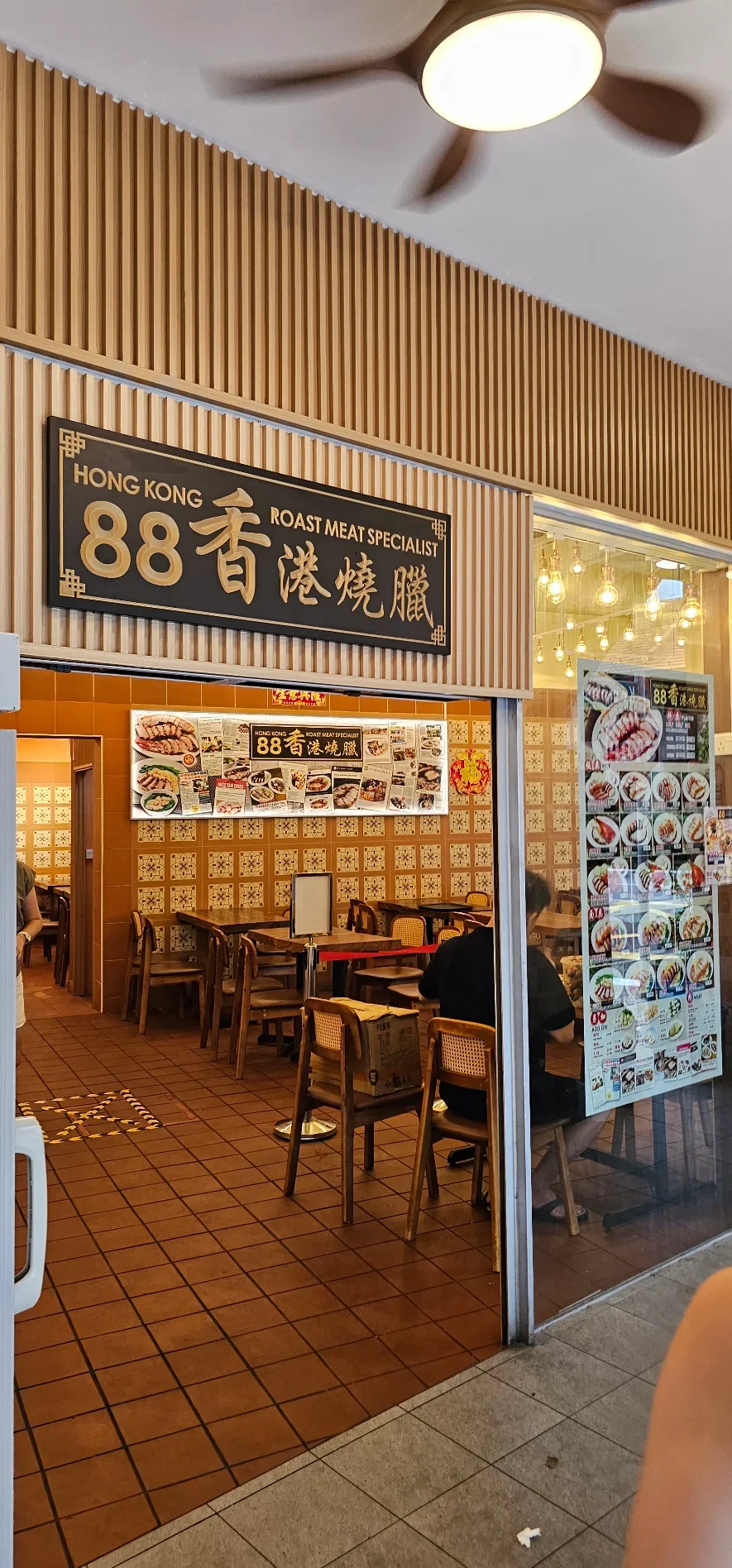
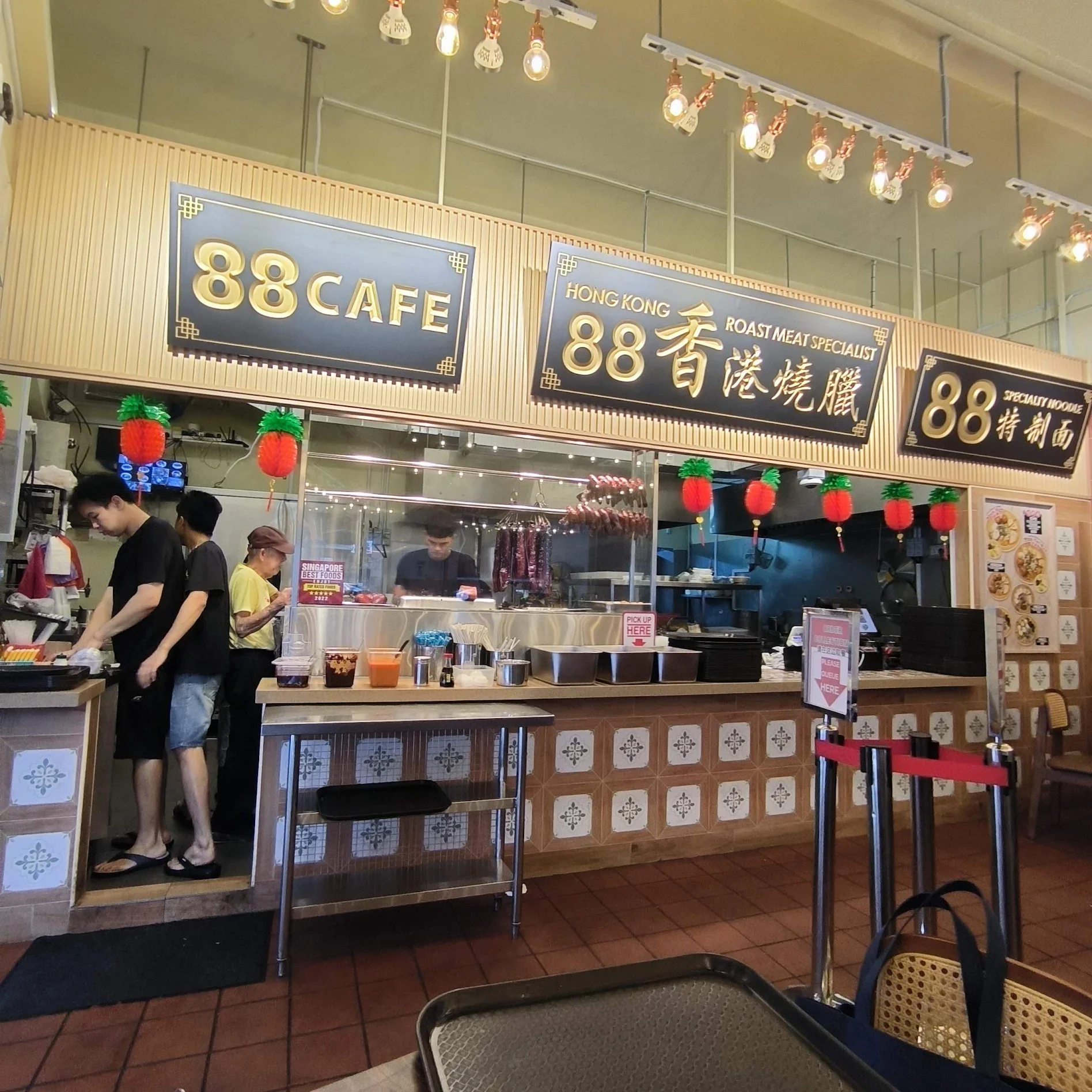
A new restaurant opened at Far East Square, providing an air-conditioned environment and substantially more seats than the earlier hawker-style operations.
The CNA Lifestyle account of the Far East Square opening reported that Ong had noticed many Lavender customers travelling from the CBD during lunch.
Opening closer to them made practical sense.
Instead of asking the customers to travel to the roast meat, the roast meat travelled to them.
From Hawker Stall to Restaurant
The transition changed the environment substantially.
Air-conditioning.
More seating.
A proper restaurant frontage.
More space for groups.
But 88 Hong Kong Roast Meat Specialist did not transform itself into formal dining.
Customers still order at a counter.
The service remains casual.
The food remains recognisably descended from hawker and coffeeshop roast-meat culture.
That places the business in an increasingly common middle ground in Singapore.
It is no longer quite a hawker stall.
It is not attempting to become fine dining either.
The restaurant provides more infrastructure around fundamentally casual food.
The Cuisine Journal looks at Singapore food businesses across exactly this sort of spectrum, from hawker-derived concepts to destination restaurants. More can be found through TCJ Venues.
Scaling Something as Unpredictable as Charcoal
Growth creates a difficult technical problem.
A single roast-meat chef can react intuitively.
If the charcoal is running hotter, cooking changes.
If a cut is thicker, time changes.
If the pork carries more fat, roasting changes.
A multi-outlet business cannot depend entirely on one person's intuition.
The method must become teachable.
That is especially difficult with charcoal because charcoal does not behave like a thermostat-controlled electric oven.
88 Hong Kong Roast Meat Specialist therefore represents more than expansion in floor space.
It is an attempt to make a craft process repeatable.
The bigger the business becomes, the more important that becomes.
Consistency Becomes the New Challenge
Customer responses supplied to The Cuisine Journal show why.
Many diners continue to focus on crisp sio bak, caramelised char siew and springy noodles.
Others describe differences between outlets or visits.
That is not particularly surprising.
Roast meat involves variables in the meat itself as well as the roasting process.
Thickness.
Fat content.
Holding time.
Serving temperature.
Different cooks.
Different ovens.
All can change the final plate.
The challenge facing a successful food business eventually becomes different from the challenge facing a successful stall.
At first, the task is making something people want.
Later, the task is making sure hundreds of plates still resemble the original idea.
The Restaurant Has Broadened the Menu
Larger premises also give 88 more room to move beyond the classic meat-over-rice format.
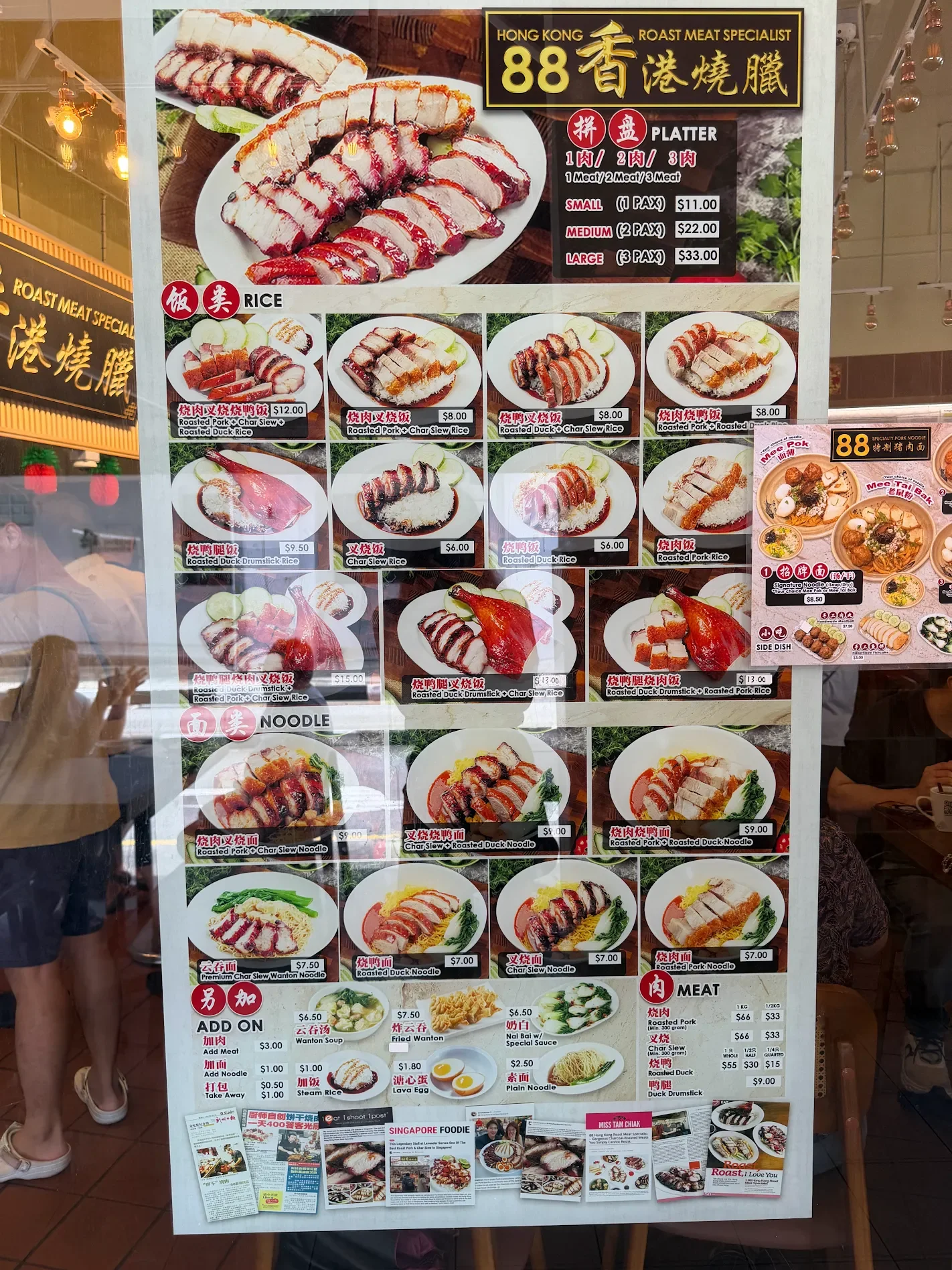
The menu now includes combinations such as:
mixed roast platters
rice sets
noodle dishes
wantons
fried wantons
handmade pork balls
vegetables
side dishes
Recent customers particularly mention noodles and dumplings alongside the roasts.
The expansion has therefore happened around the meat rather than away from it.
Char siew and sio bak remain the anchor.
Everything else makes them easier to turn into a complete restaurant meal.
Roast Meat Without Michelin
88 Hong Kong Roast Meat Specialist's reputation is also interesting because it developed without Michelin acting as the catalyst.
Some Singapore hawker businesses became internationally visible because a guide, award or television programme brought attention overnight.
88 grew more gradually through queues, repeat customers, media coverage and word of mouth.
That creates a useful contrast with businesses such as Hawker Chan, where one award dramatically accelerated growth.
The broader variety of these Singapore food stories is part of what The Cuisine Journal Collections is designed to document — restaurants, chefs and food businesses developing through very different routes.
The Roast Meat Remains the Point
It would be easy for a successful stall to lose its identity while becoming a restaurant.
There are more seats to fill.
Higher rents.
More menu categories.
More opportunities to chase trends.
88 Hong Kong Roast Meat Specialist has certainly become larger.
But the central sales pitch remains almost embarrassingly simple.
Look at the hanging meat.
Look at the charred edges.
Look at the crackling.
Choose your portion.
Rice or noodles?
That is essentially it.
From Smoke to Scale
88 Hong Kong Roast Meat Specialist is therefore a story about scale as much as roast meat.
It started with a cook working out how to produce the char siew and sio bak he wanted.
Customers followed.
The business moved.
Queues grew.
Lavender became associated with the brand.
Then an air-conditioned CBD restaurant followed.
Yet the product that drove the expansion remains fundamentally old-fashioned:
pork,
seasoning,
time,
fat,
and charcoal.
For more stories about Singapore's restaurants, hawkers and food businesses, browse The Cuisine Journal.
88 Hong Kong Roast Meat Specialist: Quick Information
Restaurant: 88 Hong Kong Roast Meat Specialist
Founder: Martin Ong
Cuisine: Cantonese / Hong Kong-style roast meats
Known For: Char siew, sio bak, roast duck and noodles
Cooking Style: Charcoal roasting
Facebook: 88 Hong Kong Roast Meat Specialist
Far East Square Location:
19/20 China Street, #01-01, Far East Square, Singapore
Frequently Asked Questions
What is 88 Hong Kong Roast Meat Specialist known for?
It is primarily known for charcoal-roasted char siew and sio bak, with roast duck, noodles and mixed roast-meat platters also forming important parts of the menu.
Is 88 Hong Kong Roast Meat Specialist a hawker stall?
The business originated in a hawker and coffeeshop-style format, but it has since expanded into standalone restaurant spaces, including an air-conditioned outlet at Far East Square.
Who founded 88 Hong Kong Roast Meat Specialist?
The business was founded by Martin Ong, a former restaurant chef who moved into hawker-style roast meats around 2012.
Does 88 Hong Kong Roast Meat Specialist use charcoal?
Yes. Charcoal roasting is one of the central cooking methods associated with the business.
What is sio bak?
Sio bak is Cantonese-style roast pork belly, traditionally prepared with crisp crackling over alternating layers of meat and fat.
Why is the char siew so fatty?
88 Hong Kong Roast Meat Specialist uses relatively fatty pork because the fat helps the meat remain moist during roasting while contributing richness to the heavily caramelised exterior.
Does 88 Hong Kong Roast Meat Specialist serve noodles?
Yes. Noodles have become an important part of the menu, and recent customers frequently mention their springy texture, lard-based seasoning and accompanying chilli.
Where can I find more Singapore restaurant profiles?
Browse The Cuisine Journal Venues for more restaurants, stalls and food businesses across Singapore and beyond.