Sushi Masaaki: A More Playful Side of Singapore Omakase
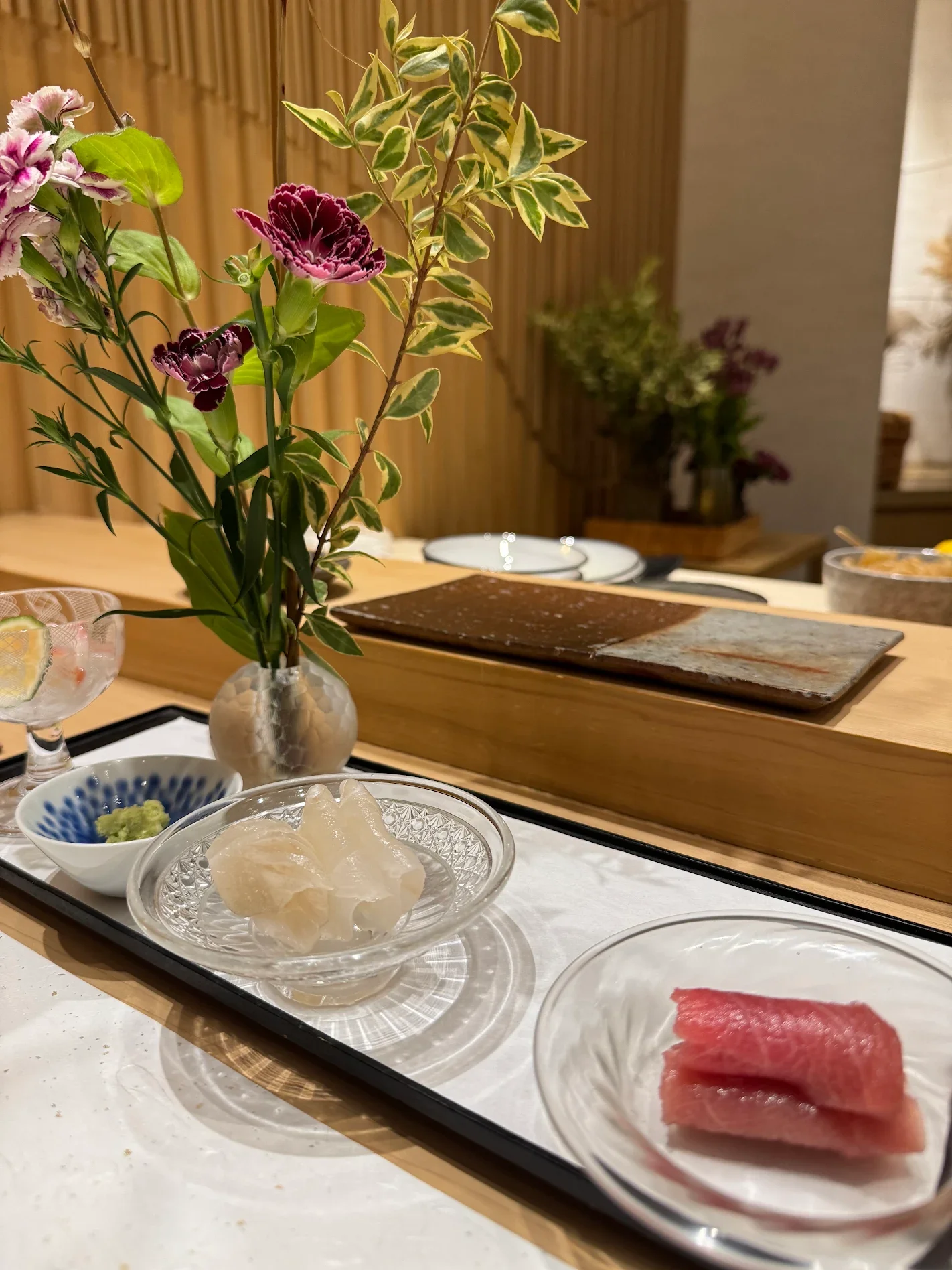
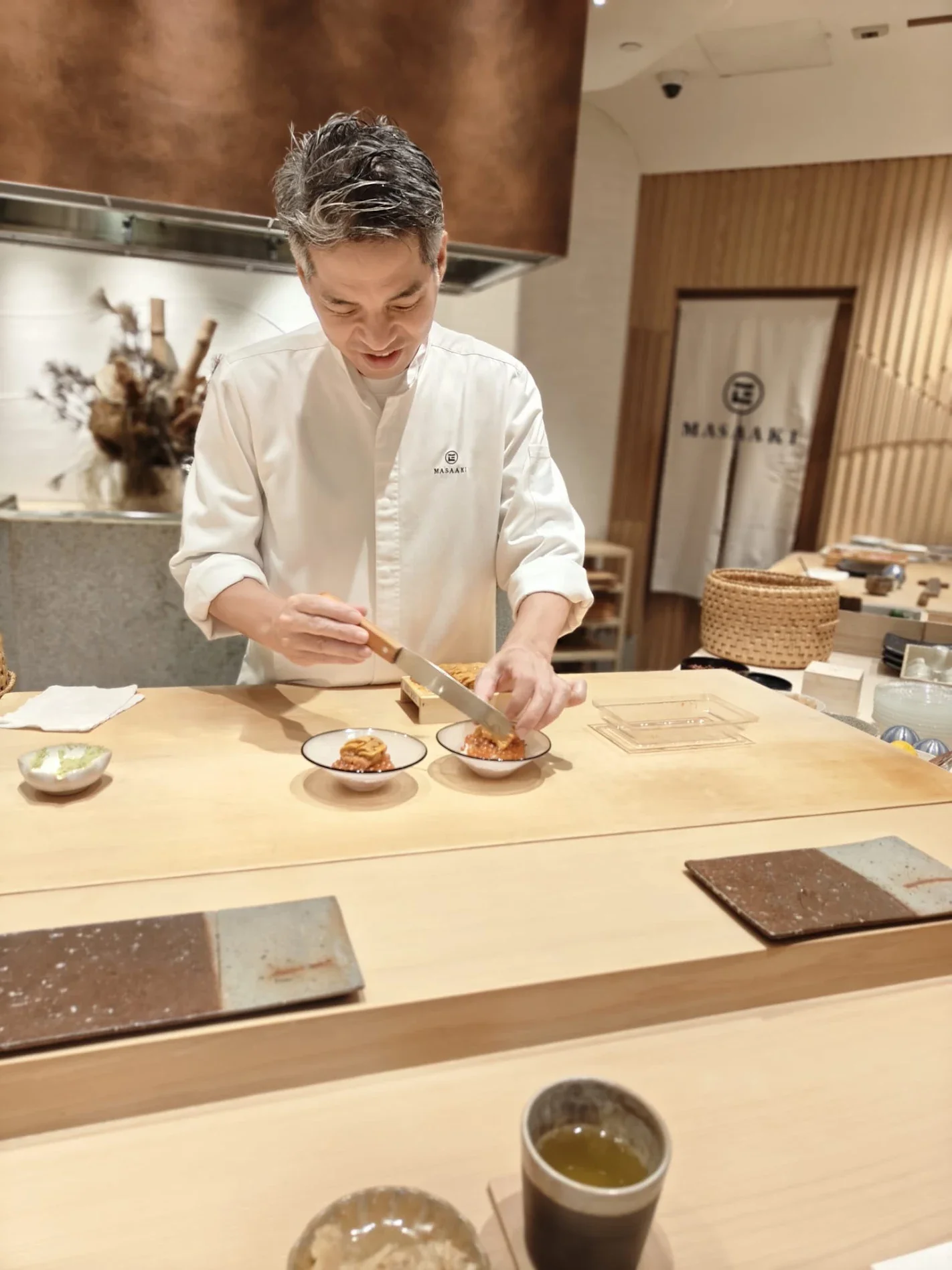
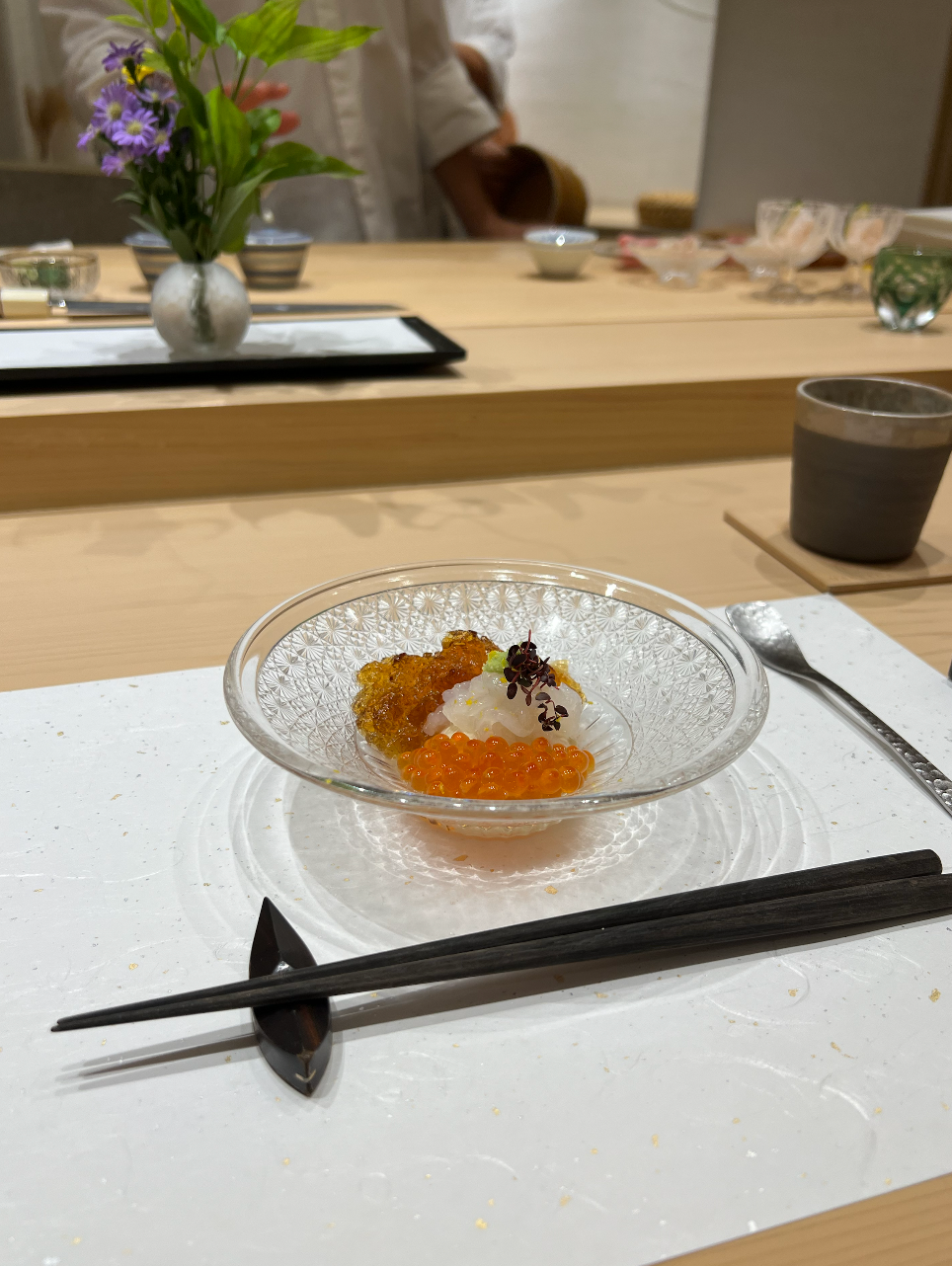
Sushi Masaaki pairs serious Japanese technique with an unusually expressive personality. From its pink crane-covered entrance to chef Masaaki Sakashita’s conversational style behind the counter, this South Beach Avenue omakase restaurant is designed to feel polished without becoming solemn.
There is a particular image associated with high-end sushi: pale wood, quiet voices, minimal decoration and a chef working with almost ritualistic concentration.
Sushi Masaaki does not entirely reject that image.
It simply refuses to be trapped by it.
Located at South Beach Avenue, the restaurant combines a traditional sushi counter with a much more exuberant visual identity. Before diners even reach the counter, they pass through a space decorated with pink dancing Gucci cranes, mountain-like dividers and suspended sheets of washi intended to evoke Japanese clouds. The centrepiece beyond all of this is considerably more traditional: a counter fashioned from 250-year-old hinoki wood, chosen not only for its appearance but also for the soft, citrus-like scent of the timber.
That contrast — serious craft surrounded by a little theatricality — is a useful way of understanding Sushi Masaaki as a whole.
The Chef Who Was Always Going to Work With Fish
Owner-chef Masaaki Sakashita grew up near Kyoto's Kamo River, where his interest in fish began long before he entered a professional kitchen.
According to the restaurant, he was already so interested in fishing as a child that his mother joked he would eventually become a sushi chef. He was also apparently the pickiest of three siblings, willing to refuse dinner when something did not taste right.
There is something revealing about that story.
Sakashita's relationship with food appears to have begun not simply with enjoyment, but with opinions.
He formally entered the restaurant industry at 18. As a junior chef, he would arrive hours before his colleagues, finish the work assigned to him and use the remaining time to practise other tasks. His own recollection of the period is less polished: he remembers making mistakes, being scolded by senior chefs and continuing because he wanted to learn.
That pursuit of technique eventually developed into something more personal.
Sushi Masaaki describes its philosophy as combining traditional Japanese cooking with Sakashita's own ingenuity rather than treating tradition as something that must remain completely untouched.
You can also follow Chef Masaaki Sakashita on Instagram for a more personal view of the chef and his work.
An Omakase Restaurant That Is Allowed to Have Fun
Personality matters at a sushi counter more than it does in many restaurants.
The chef is standing immediately in front of you. There is no dining room separating kitchen and guest, and very little opportunity to disappear between courses.
At Sushi Masaaki, that relationship appears to be part of the attraction.
Diner accounts repeatedly describe the chefs as friendly, humorous and willing to converse, rather than maintaining an intentionally stern or silent counter. One guest recalled Masaaki-san himself being particularly friendly and funny throughout a birthday dinner; others described chefs explaining dishes, helping diners take photographs and finding a comfortable balance between conversation and concentration.
That does not make the restaurant casual.
It makes it less ceremonially distant.
For people who find very formal omakase counters intimidating, that distinction can matter considerably.
Explore more restaurants and dining destinations through TCJ's Dining Venues.
The Restaurant Changes Character as You Enter
Sushi Masaaki's interior deserves more attention than the obligatory paragraph usually given to restaurant decor.
The entrance is conspicuous.
Pink cranes dance across the walls. Dividers curve through the room like mountains. Overhead, layers of suspended washi create something closer to an installation than a conventional Japanese restaurant ceiling.
Then the visual language changes.
The main counter is deliberately restrained, allowing the pale hinoki timber and the food itself to take over.
Several diners have picked up on exactly this contrast, describing the restaurant as one of the more visually memorable omakase rooms in Singapore and noting the mixture of modern and traditional Japanese references.
It is not attempting to reproduce a traditional Tokyo sushiya exactly.
That appears to be intentional.
Traditional Technique, Personal Decisions
The cooking follows a similar principle.
Sakashita works within Japanese culinary traditions, but Sushi Masaaki's stated philosophy gives him space to introduce his own ideas. Ingredients are sourced from around Japan and handled with an emphasis on preserving their individual character rather than burying them beneath excessive seasoning.
The omakase naturally changes with season and menu.
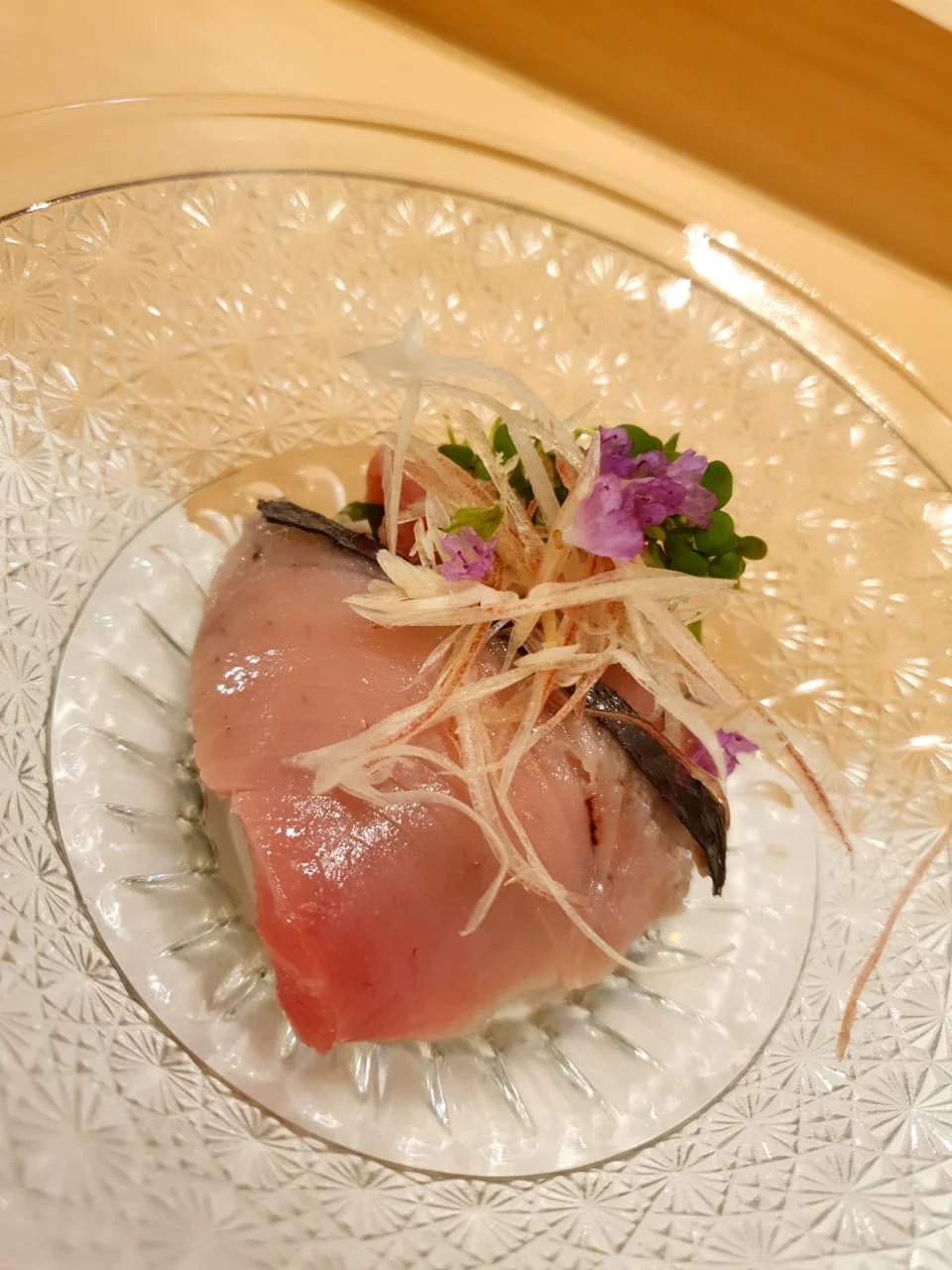
Recent diner accounts have singled out nodoguro, unagi, otoro, negitoro, monkfish liver, uni, baby shrimp and other seasonal seafood.
One particularly recurring favourite is grilled unagi.
Guests describe versions in which the eel retains a smoky, freshly grilled character, including one preparation paired with tamago whose almost custard-like sweetness contrasted against the hot fish.
Another recurring feature is nori.
One diner who visited specifically to try the restaurant's seaweed described it as unusually crisp and complex in flavour, particularly effective around negitoro and ankimo.
These details matter because they reveal where Sushi Masaaki differs from a restaurant built solely around pristine slices of expensive fish.
Texture, aroma and contrast are allowed to participate.
Hinoki, Binchotan and the Smell of Dinner
Sushi Masaaki explicitly describes food as a journey of the senses, and some of its most interesting choices are not strictly about taste.
Hinoki wood contributes its own fragrance to the counter.
Binchotan charcoal introduces smoke and heat.
The aroma released from grilled fish becomes part of the course before the food actually reaches the mouth.
This is easy to dismiss as romantic restaurant language until you consider how omakase actually works.
At a counter, you watch the chef cut.
You hear food hit charcoal.
You smell it before it arrives.
You see the piece assembled immediately in front of you.
The absence of distance between cooking and eating turns sensory details that might disappear in a conventional restaurant into part of the meal itself.
Sakashita seems particularly comfortable working in that territory.
Not Every Diner Agrees — Which Is Useful
Sushi Masaaki has strong public feedback overall, but the disagreements are informative.
Some diners consider the food exceptional and the restaurant among their favourite omakase experiences in Singapore. Others praise the quality of the seafood and technique while questioning whether the menu is progressive enough for its price. One guest found certain sushi components too restrained in umami and wanted more assertiveness from the shari despite appreciating specific courses such as negitoro, ankimo and unagi.
That criticism is worth retaining rather than smoothing away.
At this level of dining, the question is rarely simply whether the ingredients are "good."
They almost certainly are.
The more interesting questions concern preference: how assertive should sushi rice be? How much innovation should an expensive omakase contain? Should the chef intervene heavily, or disappear behind the ingredient?
Different answers produce very different restaurants.
Sushi Masaaki appears to favour accessibility and balance over relentless technical aggression.
For diners who want personality at the counter as well as serious Japanese cooking, that may be precisely the attraction.
A Counter Built Around Interaction
There is another small detail in the diner accounts that says quite a lot about the restaurant.
Guests repeatedly remember the chefs.
Not simply the dishes.
One remembers a chef joking with the table. Another remembers help taking photographs. Another remembers having each dish carefully explained. Even critical reviews tend to separate disagreements about the food from praise for the hospitality.
For omakase, that is significant.
The person making dinner is part of dinner.
Sushi Masaaki seems more willing than some traditional counters to acknowledge that openly.
TCJ explores the people behind restaurants separately through our Professionals, including chefs whose individual philosophies help explain why ostensibly similar restaurants can feel completely different.
Who Is Sushi Masaaki For?
Sushi Masaaki is particularly suited to diners who want the precision of a serious omakase without feeling as though conversation might violate an unwritten rule.
It remains an intimate, high-end Japanese restaurant.
Reservations are expected. The meal is paced deliberately. Ingredients are treated seriously.
But seriousness does not extend to suppressing personality.
The pink cranes are allowed to exist.
The chef is allowed to joke.
The dining room is allowed to be beautiful.
And a sushi restaurant is allowed to acknowledge that enjoyment is also part of craftsmanship.
That combination may ultimately be Sushi Masaaki's clearest identity.
It respects the discipline of Japanese cooking without insisting that discipline must always look austere.
Sushi Masaaki
26 Beach Road, #B1-17 South Beach Avenue, Singapore 189768
Cuisine: Japanese / Sushi
Format: Omakase
The restaurant currently lists lunch from 12pm to 3pm, with the last seating at 1pm, and dinner from 6pm to 11pm, with seatings at 6pm and 8:30pm.
Visit the official Sushi Masaaki website or follow Chef Masaaki Sakashita on Instagram.
Explore more through TCJ's Dining Venues, Professionals, Products and Food Guides.