Shintaro Hozumi: A Third-Generation Sushi Chef Who Kept Moving
Some chefs inherit a tradition and spend their careers protecting it.
Shintaro Hozumi inherited one and took it travelling.
The Tokyo-born Executive Chef of KOMA Singapore comes from a third generation of sushi craftsmanship, with more than two decades of culinary experience behind him. But his career has not remained anchored to Japan.
It has moved through Tokyo, Hong Kong, Bangkok, Kuala Lumpur and Singapore.
That matters.
Because Hozumi did not simply learn Japanese food and then repeat it somewhere else.
He spent years cooking it in different cities, for different diners, inside different restaurant cultures.
Today, that experience sits behind one of Singapore's most visually extravagant Japanese restaurants.
Sushi Came Before the Travelling
Hozumi comes from Tokyo and is described as a third-generation sushi chef.
That immediately places his career inside an inherited craft.
Sushi is not simply something he encountered professionally later in life. It belongs to a family tradition that predates his own career.
By the time he arrived at KOMA, Hozumi had accumulated more than 20 years of experience in Japanese kitchens and restaurants across Asia.
The interesting part is what happened after the foundation had already been established.
He left Japan.
Tokyo Became Hong Kong, Bangkok and Kuala Lumpur
Hozumi's career took him through several of Asia's major dining cities.
Singapore Food Festival lists Tokyo, Hong Kong, Bangkok, Kuala Lumpur and Singapore as the major stops in his professional journey.
His LinkedIn adds some useful detail to the later part of that path.
Before KOMA, Hozumi worked as Chef de Cuisine at Banyan Tree Kuala Lumpur from October 2022. Earlier, he had also served in a combined assistant chef and general manager role at Wa Theater Restaurant.
That kind of movement gives a Japanese chef a different perspective.
The techniques may travel intact.
The diners do not.
Every city brings different expectations, different levels of familiarity with Japanese food and different ideas about what feels traditional, modern or adventurous.
For Hozumi, those years abroad became part of the food.
Singapore Became the Current Home
Hozumi joined KOMA Singapore as Executive Chef in June 2023.
As of 2026, he remains in the role.
That is worth stating clearly because Japanese chefs working internationally often move between markets, and Hozumi himself has already built a career across several countries.
For now, however, Singapore is the current chapter.
KOMA continues to identify him as the chef leading its kitchen, and recent coverage in July 2026 still featured him as Executive Chef.
KOMA Is Not a Quiet Sushi Counter
KOMA is an unusual restaurant for someone with traditional sushi lineage.
There is almost nothing restrained about the room.
Guests enter through a long passage inspired by the torii gates of Kyoto's Fushimi Inari Shrine.
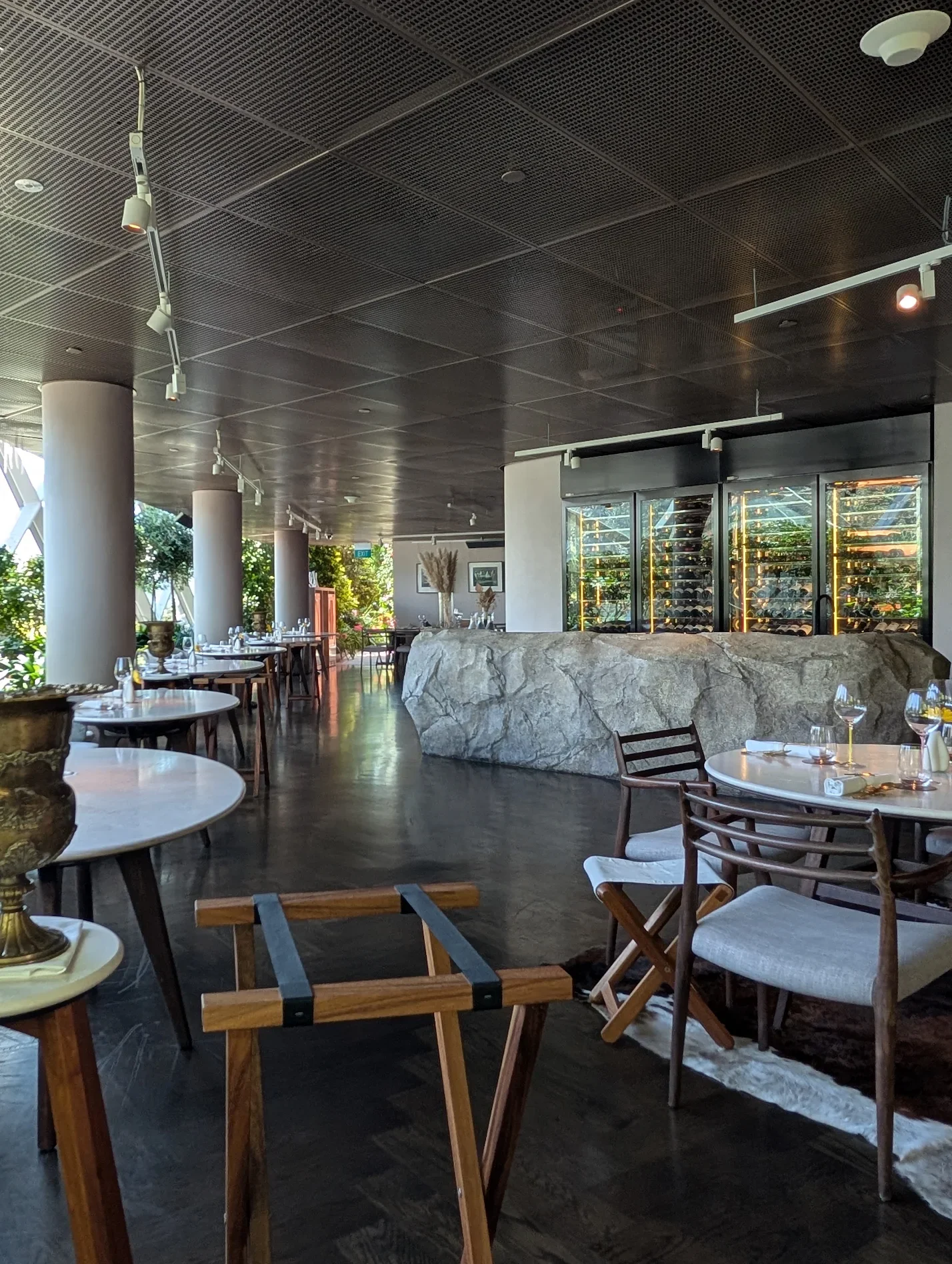
Inside, there is a reflecting pool, a footbridge, a massive Japanese bell and a dramatic dining room built for spectacle.
At the centre of it all sits a 15-seat sushi bar.
That contrast suits Hozumi.
His background may come from traditional sushi craftsmanship, but KOMA itself is designed around contemporary Japanese dining rather than strict preservation.
The chef has to operate somewhere between the two.
Tradition, Then a Wider Vocabulary
Hozumi's food at KOMA extends far beyond sushi alone.
The restaurant combines sushi and sashimi with robatayaki, contemporary Japanese dishes and more inventive creations.
Exquisite Taste described his cooking as using his international experience to produce bold flavours with careful presentation.
One example is the Salmon Pillow.
The dish combines puff pastry with smoked avocado, salmon sashimi and charred jalapeño.
There is very little traditional sushi-counter orthodoxy in that combination.
But that is precisely the point.
Hozumi's background gives him the traditional vocabulary.
His career across Asia gives him permission to speak with an accent.
Snow-Aged Wagyu and Old Japanese Ideas
Not everything contemporary has to mean abandoning older Japanese techniques.
In November 2025, Hozumi presented a special Yukimuro snow-aged dining experience at KOMA.
Yukimuro is a traditional method in which ingredients are aged in natural snow houses at consistently cool temperatures. The process is used to preserve ingredients while changing their sweetness, texture and flavour.
At KOMA, Hozumi used the technique with premium Japanese ingredients, including snow-aged beef.
The restaurant has also featured A5 Niigata wagyu aged for 30 days using Yukimuro techniques.
This is where his cooking becomes more interesting.
Modern presentation does not necessarily mean modern technique.
Sometimes the innovation lies in putting an old method into a very different restaurant.
The Sushi Counter Is Where Things Get Personal
For all of KOMA's visual scale, Hozumi has spoken about the sushi counter as a more personal part of the restaurant.
The main dining room may be grand.
At the counter, the relationship becomes smaller.
Chef.
Fish.
Guest.
That difference is important for someone whose career began with sushi.
Even inside a restaurant built around spectacle, the counter still brings the experience back to something much older.
The food happens directly in front of you.
The chef cannot disappear into the kitchen.
And the diner sees the craft rather than simply receiving the finished plate.
More Than Twenty Years, Across Five Cities
It would be easy to describe Hozumi mainly through KOMA.
The restaurant is large enough to dominate the story.
But his career is broader than the room he currently runs.
Tokyo.
Hong Kong.
Bangkok.
Kuala Lumpur.
Singapore.
Each move adds another layer to a chef who began with inherited sushi tradition.
The result is not a chef abandoning Japanese cooking.
It is a chef testing how far Japanese cooking can travel while remaining recognisably Japanese.
Shintaro Hozumi Took His Inheritance on the Road
Hozumi could have stayed close to the tradition he inherited.
Instead, he carried it across Asia.
That may be the clearest way to understand his career.
He began with sushi.
He moved through different restaurant cultures.
He took on broader leadership roles.
And eventually he arrived at KOMA Singapore, where old Japanese techniques sit inside one of the country's most theatrical contemporary Japanese restaurants.
The family tradition is still there.
It simply travelled.
And after more than twenty years, Shintaro Hozumi seems to have learned that sometimes the best way to preserve a craft is not to keep it in one place.