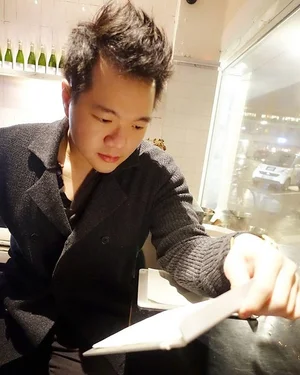
Michael Wilson: The Australian Chef Finding His Way Home Through Marguerite
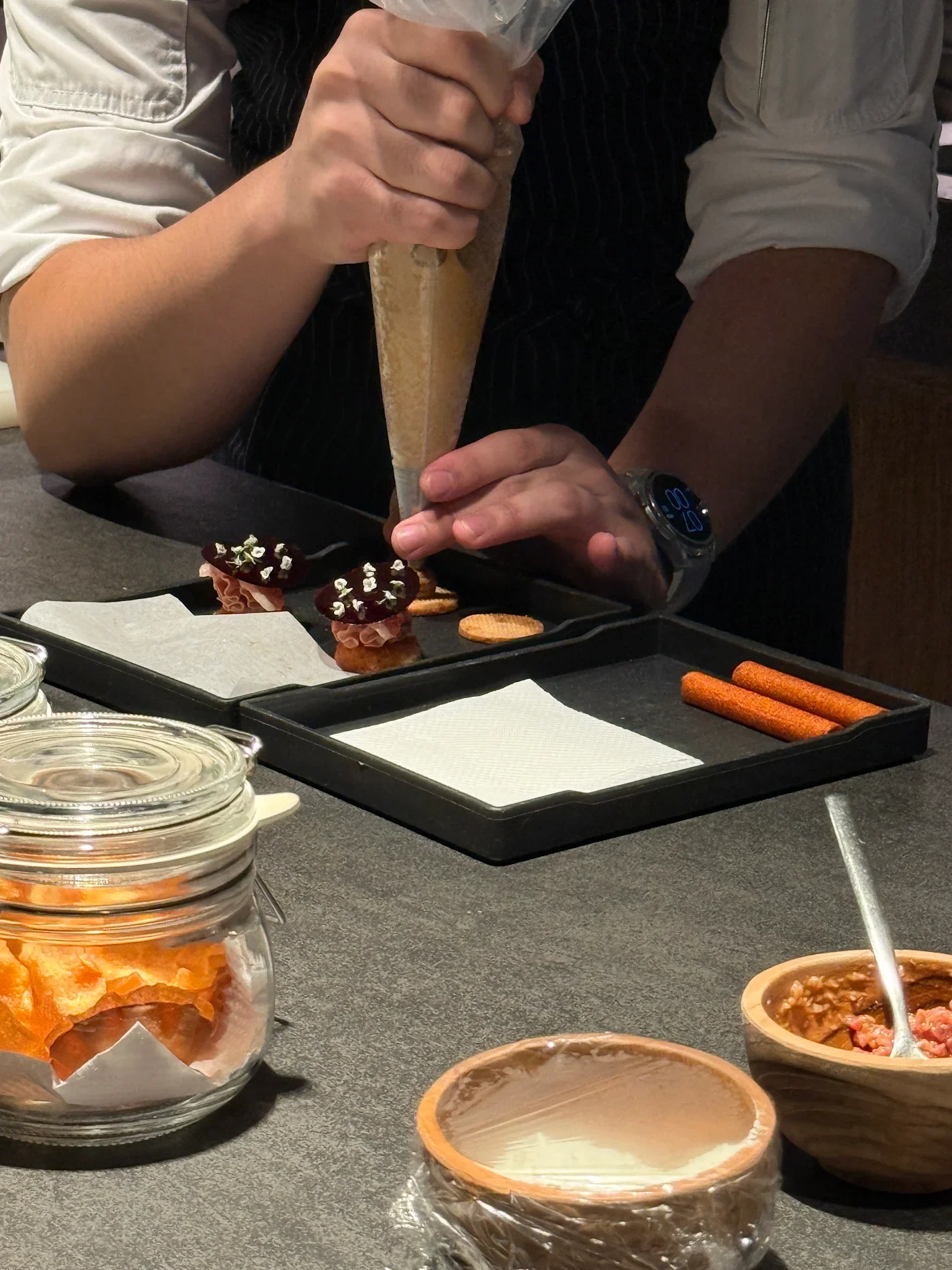
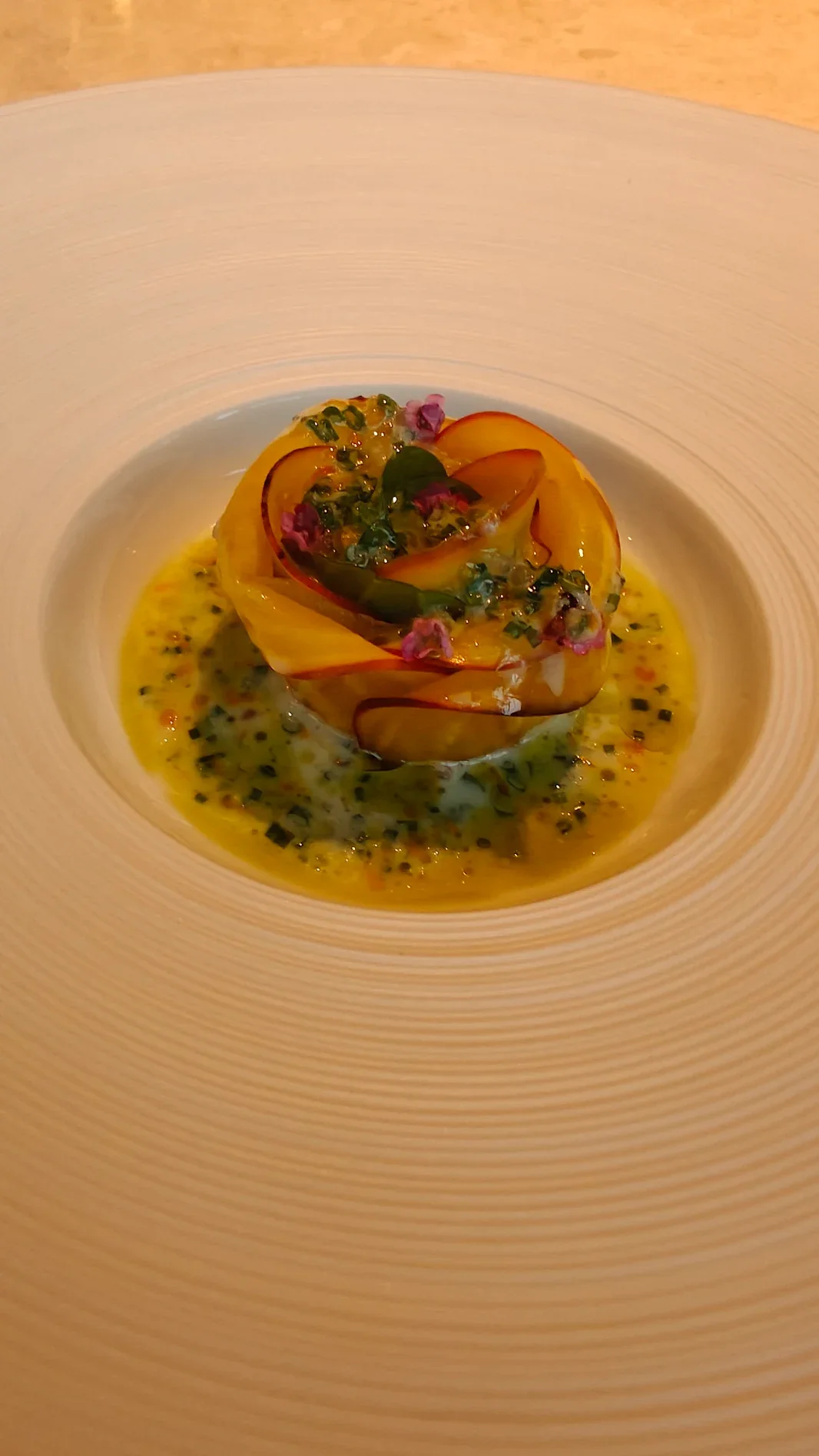
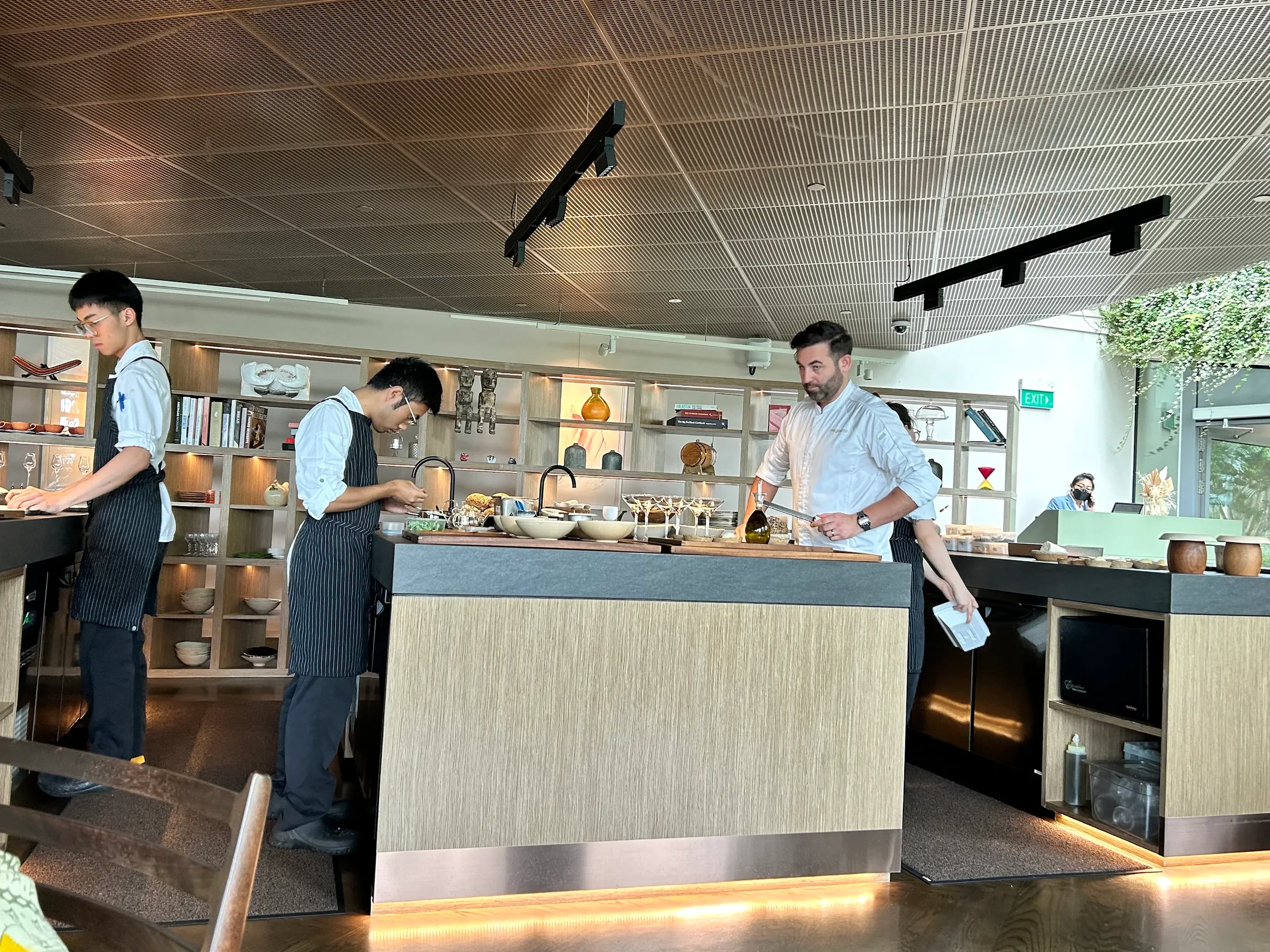
Michael Wilson built much of his career away from Australia.
Born in Melbourne, he worked in respected Australian kitchens before moving into Asia, eventually earning a Michelin star in Shanghai and then another in Singapore.
For years, his cooking was shaped by that movement.
European technique.
Asian ingredients.
Singapore's extraordinary access to produce from around the world.
The precision expected of Michelin-level restaurants.
But at Marguerite, the restaurant Wilson opened inside Gardens by the Bay's Flower Dome, something has gradually shifted.
Australia has begun moving closer to the centre of his cooking.
Wild kangaroo.
Coral trout from Western Australia.
Warrigal greens.
Wattleseed.
Saltbush.
Native pepper berries.
Ingredients Wilson once knew largely as part of his home country have become material for a more personal version of Modern Australian cuisine.
It is not nostalgia.
It is a chef who spent years travelling finally looking back at where he came from — and discovering there was considerably more there than he remembered.
Melbourne Before Asia
Wilson was born in Melbourne, one of Australia's most influential food cities.
According to Marguerite's official account of his career, he worked with celebrated Melbourne restaurateur and chef Guy Grossi and at Cutler & Co, Andrew McConnell's highly regarded Fitzroy restaurant.
Those kitchens placed Wilson inside Australia's contemporary restaurant culture before his career eventually took him further north.
It was a valuable foundation.
Modern Australian cooking has always been difficult to define through a single traditional canon.
Australia's restaurant culture developed through immigration, access to exceptional produce and an unusual willingness to borrow ideas from European and Asian food traditions without insisting that they remain separate.
Wilson would eventually carry that openness with him.
There are parallels with chefs such as Roberto Galbiati, whose professional identity likewise evolved through movement between countries.
But Wilson's relationship with home became more complicated.
He left Australia.
Then spent years developing the cooking that would eventually help him rediscover it.
A Michelin Star in Shanghai
One of the defining chapters of Wilson's early career came in Shanghai.
He opened Phénix at The PuLi Hotel and Spa and earned his first Michelin star only five months later.
That achievement established him as a chef capable not merely of operating within serious restaurants but of building one quickly enough and consistently enough to receive international recognition almost immediately.
It also placed Wilson firmly within Asia's increasingly sophisticated fine-dining landscape.
By the time Singapore came next, he was no longer simply an Australian chef working overseas.
He had developed a culinary vocabulary shaped by several places.
Building Something in Singapore
Wilson later joined forces with Singapore hospitality group Unlisted Collection.
Together, they developed and conceptualised new restaurant brands including the Mediterranean-focused Hortus and Marguerite.
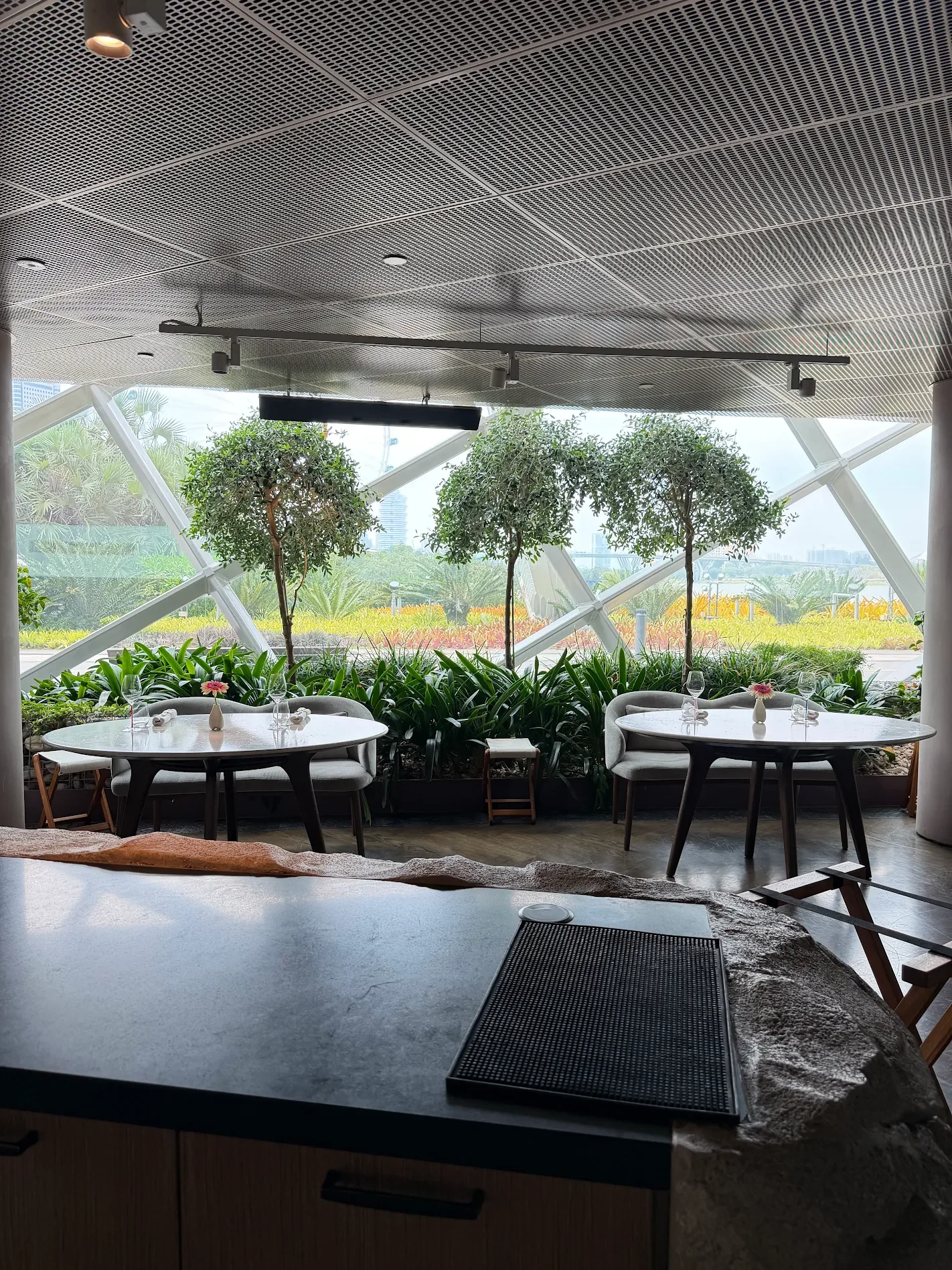
Marguerite opened in 2021 inside the Flower Dome at Gardens by the Bay.
The location is unusual even by Singapore standards.
The restaurant sits within one of the city's most recognisable horticultural spaces, surrounded by plants from around the world.
That environment suited Wilson's increasing preoccupation with produce.
The official Marguerite profile describes his cooking as driven by ingredients first: Wilson uses different techniques to extract, concentrate and intensify flavour, allowing the quality and character of the produce to dictate the finished composition.
That principle separates his work from cooking built primarily around spectacle.
At KOMA Singapore, architecture and theatricality are deliberately part of the restaurant experience.
Marguerite certainly has a dramatic setting.
But Wilson's food keeps returning attention to something considerably smaller.
An ingredient.
And what can be drawn out of it.
Eight Months to Another Michelin Star
Marguerite opened under difficult circumstances.
Singapore was still navigating the uncertainty created by the Covid-19 pandemic.
Dining restrictions could change.
Supply chains were unpredictable.
Restaurants could not rely upon the normal rhythms of international travel or even local dining.
Yet Marguerite earned its first Michelin star around eight months after opening.
By 2026, it had retained that recognition for four consecutive years.
The speed resembles Wilson's earlier achievement at Phénix.
Five months in Shanghai.
Eight months in Singapore.
But the more interesting part of Marguerite's evolution came after the foundation had been established.
Once Wilson no longer needed to prove that the restaurant could function, he had more freedom to ask what he actually wanted it to become.
Increasingly, the answer was Australian.
What Does “Modern Australian” Actually Mean?
Modern Australian cuisine can be frustratingly difficult to describe.
It is not comparable with a cuisine that has a clearly recognisable historical structure.
A Neapolitan chef such as Antonio Manetto works within a food culture whose identity can be traced through particular dishes, ingredients and traditions.
A sushi chef such as Yuji Sato operates inside an equally identifiable culinary lineage.
Australian cooking is different.
Migration built much of the country's modern dining culture.
European techniques coexist with ingredients and ideas from Asia.
Mediterranean influences sit comfortably beside Southeast Asian ones.
And underneath all of it is a continent with produce found nowhere else.
Wilson's cooking at Marguerite increasingly seems interested in that last part.
What happens when the Australian identity comes not simply from the chef's passport, but from the land itself?
Going Home Changed the Menu
In 2026, CNA Luxury documented a new phase in Wilson's cooking.
Wilson had spent more time travelling around Australia again.
He visited the tropical north around Port Douglas.
He travelled to Perth.
He returned to Gippsland in Victoria.
He reconnected with farmers, producers and foragers.
He also appeared as a guest judge on MasterChef Australia.
Those journeys reminded Wilson just how geographically and biologically varied Australia actually is.
The result began appearing on Marguerite's plates.
Australia was no longer merely one influence among many.
Its landscapes became part of the menu.
Wild Kangaroo and a Bowl of Pho
One of the clearest examples is Wilson's use of wild red kangaroo.
Kangaroo is unmistakably Australian.
But Wilson does not present it through some artificially historical version of Australian cuisine.
Instead, he turns it into a consommé inspired by pho.
That combination says a great deal about the kind of Australian chef Wilson is.
The ingredient comes from home.
The culinary language does not have to.
Asian flavours are not foreign to contemporary Australia. They are part of the everyday food culture of Melbourne, Sydney and other Australian cities.
Wilson therefore does not need to choose between Australian identity and Asian influence.
The two can occupy the same bowl.
That sort of cultural fluidity also appears in Singapore restaurants such as Eden Restaurant, where contemporary Asian cooking often operates through overlapping regional influences rather than rigid national categories.
For Wilson, Australia itself provides permission to cook that way.
Coral Trout From the Pilbara
Another dish documented by CNA Luxury uses coral trout from the Pilbara region of Western Australia.
Wilson dry-ages the fish for five days.
Then cooks it over charcoal.
It is served with a sabayon incorporating Noble One botrytis semillon from Australian producer De Bortoli.
The construction demonstrates several layers of his cooking at once.
Australian ingredient.
European sauce technique.
Controlled ageing.
Fire.
Australian wine.
It is contemporary cooking built from different traditions without needing to advertise the borders between them.
There is a technical connection here with Dave Pynt's work at Burnt Ends.
Both chefs understand fire as more than a source of heat.
But where Pynt builds an entire restaurant around it, Wilson treats charcoal as one tool among many.
The ingredient decides what technique is useful.
Not the other way around.
Native Plants Become More Than Garnish
Perhaps the most significant change in Wilson's Australian cooking is his use of native botanicals.
Warrigal greens.
Australian seablite.
Samphire.
Wattleseed.
Native pepper berries.
Old man saltbush.
These are ingredients capable of making a dish look Australian simply by appearing on the plate.
Wilson is trying to avoid that.
In the CNA Luxury interview, he explained that these ingredients are intended to contribute genuine flavour and complexity rather than function as decorative signals of Australianness.
That distinction is crucial.
A native ingredient used merely because it is native becomes branding.
A native ingredient used because its flavour changes the dish becomes cooking.
Wilson is much more interested in the second.
Building a Supply Chain Back to Australia
Using those ingredients in Singapore presents a practical problem.
Many Australian native plants do not travel particularly well.
Some are difficult to source commercially.
Others exist largely through networks of specialist growers and foragers.
Wilson and his team therefore began developing direct relationships with suppliers in Australia.
Some ingredients arrive fresh.
Others reach Singapore dried, fermented, pickled or preserved.
The logistics themselves become part of the cooking.
This reflects one of Marguerite's recurring ideas: provenance matters because flavour begins before the ingredient reaches the restaurant.
The chef does not merely choose from whatever appears in a distributor's catalogue.
He increasingly works backwards towards the people producing it.
Bunya Nut and the Problem With Tradition
The bunya nut demonstrates how Wilson approaches unfamiliar Australian ingredients.
Traditionally cooked through methods such as boiling or stewing, bunya nuts can develop a sticky texture that Wilson found unsuitable for the kind of food he wanted to create at Marguerite.
So he changed the process.
His team fermented the nut with koji rice and salt.
The result became a bunya nut miso with considerably greater depth and umami.
That is an important example of Wilson's culinary philosophy.
Respecting an ingredient does not require preserving its traditional preparation unchanged.
Sometimes the best way to reveal its potential is to use a technique borrowed from somewhere else.
The same principle can be seen in very different ways in contemporary restaurants such as Dirty Supper, where ingredients are approached through what they can become rather than through a fixed expectation of what they are supposed to be.
Wilson asks a similar question.
What does this ingredient want us to do with it?
Fermentation as a Second Pantry
Fermentation has become increasingly important at Marguerite.
Behind the finished tasting menu sits another collection of ingredients slowly developing over time.
Vinegars.
Garums.
Fruit wines.
Fermented preparations.
Wilson described this part of the work to CNA Luxury as an area the restaurant was still only beginning to explore.
That sense of unfinished development is important.
Marguerite has a Michelin star.
It has held it for years.
Wilson could easily protect a successful formula.
Instead, he appears increasingly interested in making the restaurant more specific.
More Australian.
More connected to producers.
More dependent on ingredients the kitchen itself transforms.
That is usually a riskier path than simply repeating what already works.
Craft Goes Beyond the Plate
The official Marguerite profile also places considerable emphasis on craft.
The idea extends beyond food.
Handmade ceramics.
Custom vessels.
Wooden fixtures.
Kitchen islands integrated into the dining room.
Even the butter is made in-house.
Wilson has previously explained that the restaurant's ethos is sufficiently committed to making things itself that, were producing its own olive oil practical, the kitchen would probably attempt that too.
This does not mean every object needs to become a demonstration of technical virtuosity.
The larger idea is control.
If something contributes meaningfully to the experience, Wilson wants to understand how it is made.
That mindset has something in common with the obsessive precision found at Sushi Sakuta.
The outward expressions are entirely different.
The underlying attention to detail is not.
Produce Before Ego
The clearest description of Wilson's philosophy comes from Marguerite itself.
Produce dictates the cooking.
That sounds simple.
It requires restraint.
A chef capable of advanced technique always faces the temptation to make the technique visible.
Wilson's approach tends towards using technique to concentrate what is already present.
Dry-age the fish because it improves texture and flavour.
Ferment the bunya nut because the conventional texture does not work.
Use charcoal when smoke contributes something useful.
Preserve native plants when freshness cannot survive transportation.
The method changes.
The objective remains the ingredient.
Australia Through a Singapore Lens
There is an interesting irony in Wilson having to leave Australia before developing a restaurant that speaks so directly about the country.
Distance can change what a chef notices.
Ingredients that once seemed ordinary become unusual.
Flavours associated with childhood become sources of curiosity.
Landscapes acquire culinary meaning.
Wilson's Australian menu at Marguerite does not read like the work of someone trying to reproduce Melbourne in Singapore.
It is the work of an Australian chef who has spent years elsewhere and can now look at his home country from the outside.
Singapore plays an important role in that.
Its access to Asian ingredients and culinary traditions allows Wilson to place Australian produce inside a much wider vocabulary.
Pho can carry kangaroo.
Koji can transform bunya nut.
European sauce technique can accompany Western Australian coral trout.
Modern Australian cooking emerges precisely because none of those influences needs to be excluded.
A Chef Still Moving
Michael Wilson already has the achievements that could define a career.
A Michelin star in Shanghai.
Another in Singapore.
Successful restaurant concepts.
Years of international experience.
Yet his current cooking suggests he does not regard Marguerite as a finished project.
The Australian ingredients are becoming more specific.
The supply network is becoming more direct.
The fermentation programme is growing.
New products are developing quietly in the background.
And Wilson himself has described the restaurant as still evolving.
That may be the most interesting stage of a chef's career.
Not the moment when he receives recognition.
The moment after it.
When the restaurant is secure enough that the chef can stop asking what will impress people and begin asking what actually matters to him.
For Michael Wilson, the answer increasingly appears to be home.
Not Australia as an abstract national identity.
Australia as ingredients.
Farmers.
Foragers.
Wild plants.
Fish.
Kangaroo.
Landscape.
Memory.
And all the things he perhaps needed to leave before he could properly see.
Marguerite is still a Singapore restaurant.
Michael Wilson is still an Australian chef shaped by years of cooking elsewhere.
The interesting part is that those two identities no longer seem to compete.
They are becoming the same cuisine.