Yuji Sato: The Sushi Chef Who Watches the Room as Closely as the Fish
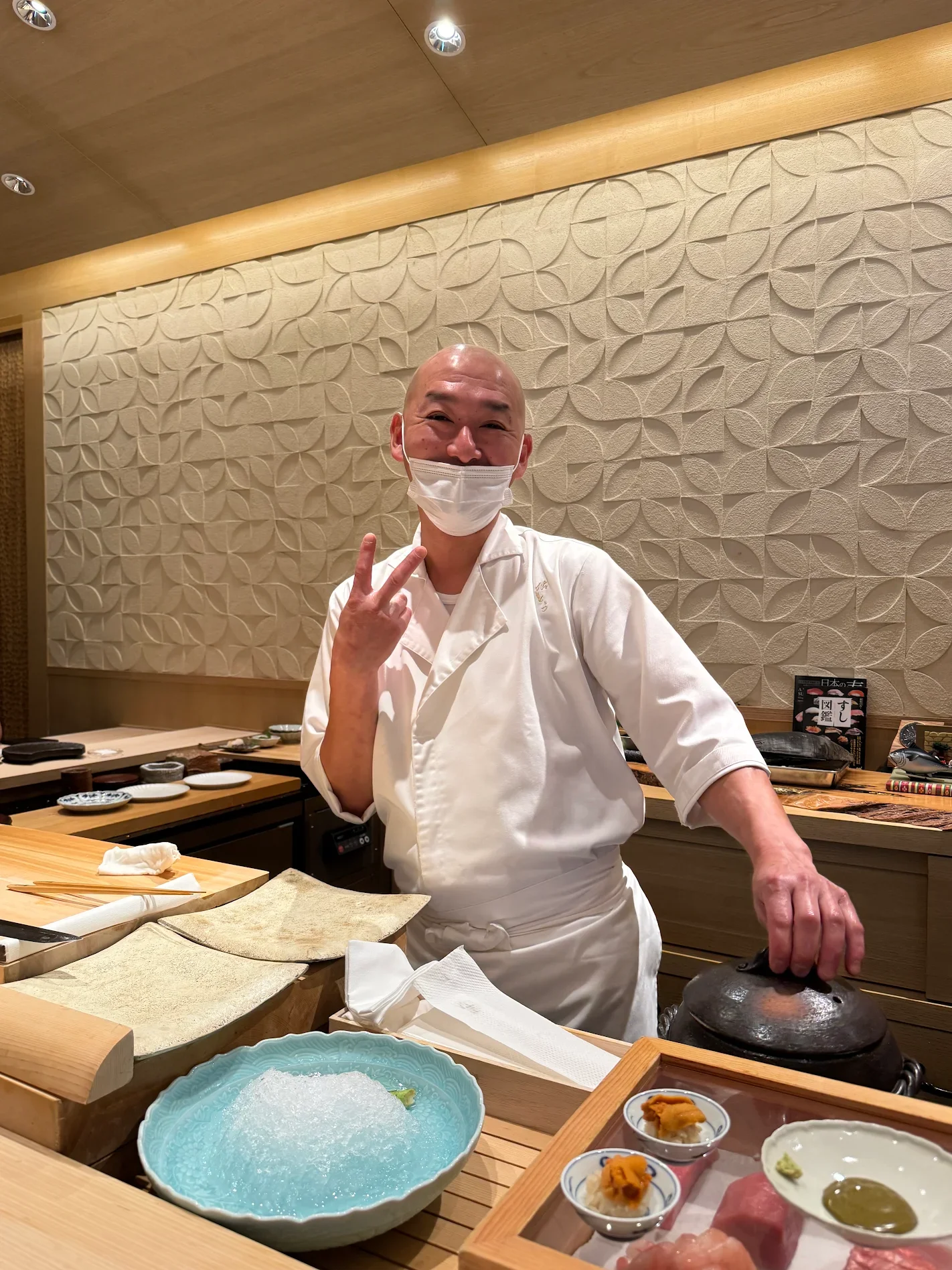
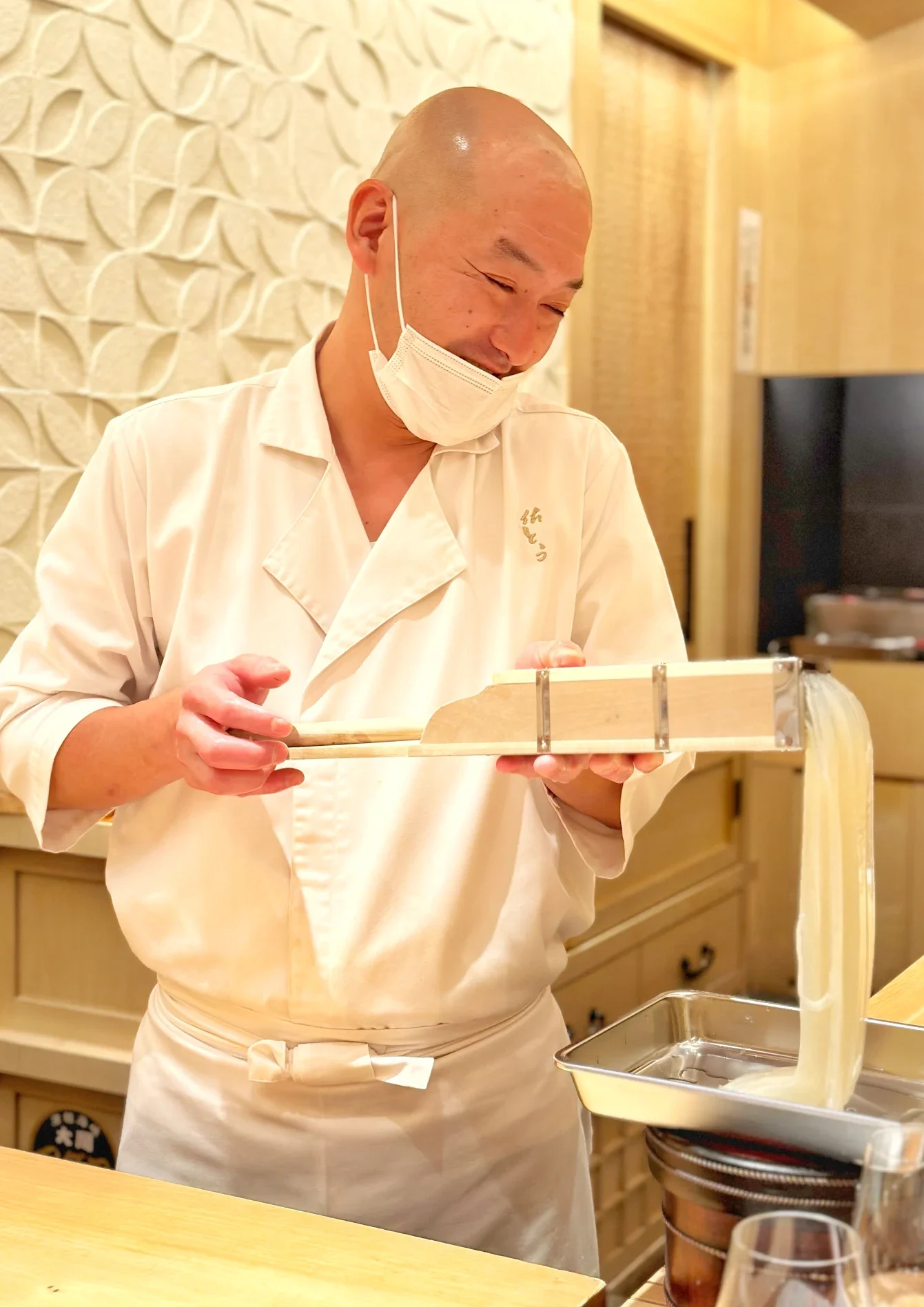
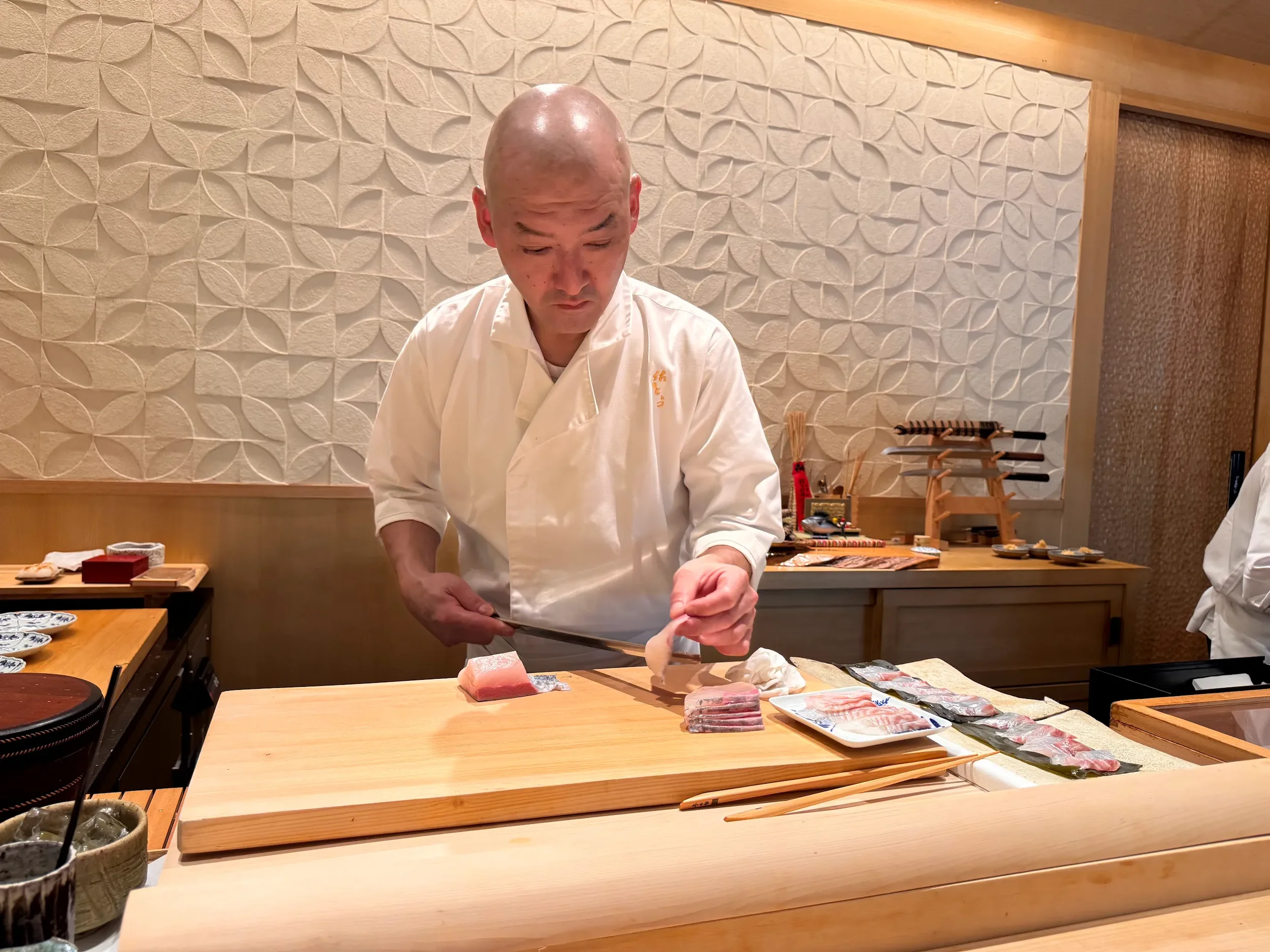
Yuji Sato does not seem interested in making omakase behave like a script.
At Sushi Sato in Dempsey Hill, two groups sitting at the same counter can receive their courses in a different order.
A dish may disappear.
Another may take its place.
The amount of rice can change.
The chef watches.
Then he decides.
For Sato, omakase appears to mean exactly what the word promises: leave it to the chef.
That requires considerably more than knowing how to cut fish.
It requires knowing the person eating it.
From Obihiro to Tsukiji
Sato comes from Obihiro in Hokkaido, a part of Japan that would continue to shape his cooking decades later.
As a young chef, he moved to Tokyo and trained at a sushi restaurant in Tsukiji, where he developed his understanding of seafood at the centre of Japan's fish trade. He later returned north and gained further experience in Sapporo.
It became the foundation of a career that now stretches beyond 30 years.
The connection to Hokkaido never really disappeared.
Today, much of the produce used at Sushi Sato still comes from there.
Singapore Became the Next Chapter
In 2013, Sato moved to Singapore.
He initially came here to help establish Hashida Sushi, according to a 2026 profile of his career. He then remained in Singapore, spending eight years working as a sous chef before eventually taking charge of a restaurant carrying his own name.
That makes Sato somewhat different from a chef simply parachuted into Singapore to helm an overseas outpost.
He has spent more than a decade working here.
Singapore became part of the career rather than merely another stop along it.
Eventually came Sushi Sato at Dempsey Hill.
For Sato, the restaurant represented something he had wanted for years: a place where the food could properly reflect his own ideas.
Hokkaido Still Comes With Him
The restaurant may be in Singapore, but Hokkaido remains one of its most important reference points.
Sushi Sato says fresh produce is flown in from Hokkaido, while its omakase changes with the availability of seasonal ingredients.
Sato's relationships with suppliers in Japan have also become an important part of his work.
The restaurant credits those relationships with giving him access to unusual and limited ingredients that may not be widely available elsewhere.
That matters in omakase because the menu cannot simply be separated from what arrives.
Seasonality is not decoration.
It determines the meal.
The Rice Is Doing More Work Than It Looks
Fish naturally receives most of the attention at a sushi counter.
Sato's rice deserves some of it back.
His shari uses Tsuyahime rice from Yamagata Prefecture seasoned with a blend of three Japanese red vinegars. Vogue noted that each piece is formed loosely enough to retain softness while still holding together when lifted by the diner.
His use of wasabi is similarly restrained.
Rather than allowing its heat to announce itself, the amount is adjusted so that it supports the fish instead of overwhelming it.
These are small decisions.
That is exactly why they matter.
Sushi rarely gives the chef anywhere to hide.
Hot Is Hot. Cold Is Cold.
One of the simplest ideas associated with Sato's cooking is also one of the most revealing.
Hot should be hot. Cold should be cold.
The principle sounds almost absurdly obvious.
In practice, it requires discipline.
Fish is cut when it is needed.
Hot dishes should reach the diner while they are still at the temperature the chef intended.
Hand rolls cannot sit around waiting for someone to finish a conversation.
Timing becomes part of flavour.
This is especially important in omakase, where the distance between kitchen and diner may be only a few feet.
There is very little excuse for food arriving late to its own moment.
His Omakase Watches You Back
This is where Sato becomes particularly interesting.
Vogue observed that his menus are improvisational rather than rigidly sequential.
During one meal, different diners at the same counter received courses in different orders. Sato also swapped dishes based on what he observed about individual preferences.
That turns omakase into something closer to conversation.
If a diner appears to be getting full, the next piece can become smaller.
If something clearly works, the chef can respond.
If something does not, the meal does not need to continue blindly down a predetermined path.
The menu exists.
The diner changes it.
Precision Without the Stiffness
Sato's concentration at the counter has been noted repeatedly.
Vogue describes him moving between the grill and his hinoki counter with intense focus while preparing each dish.
But that seriousness apparently does not extend to making the room uncomfortable.
The same review describes him joking with guests at the end of the meal, asking whether they had eaten enough despite already being very full.
That combination is useful.
The food can be exacting without the experience becoming intimidating.
Some omakase counters rely heavily on ceremony.
Sato appears more interested in attention.
They are not quite the same thing.
A 200-Year-Old Counter in Dempsey
Sushi Sato itself reinforces the sense of quiet focus.
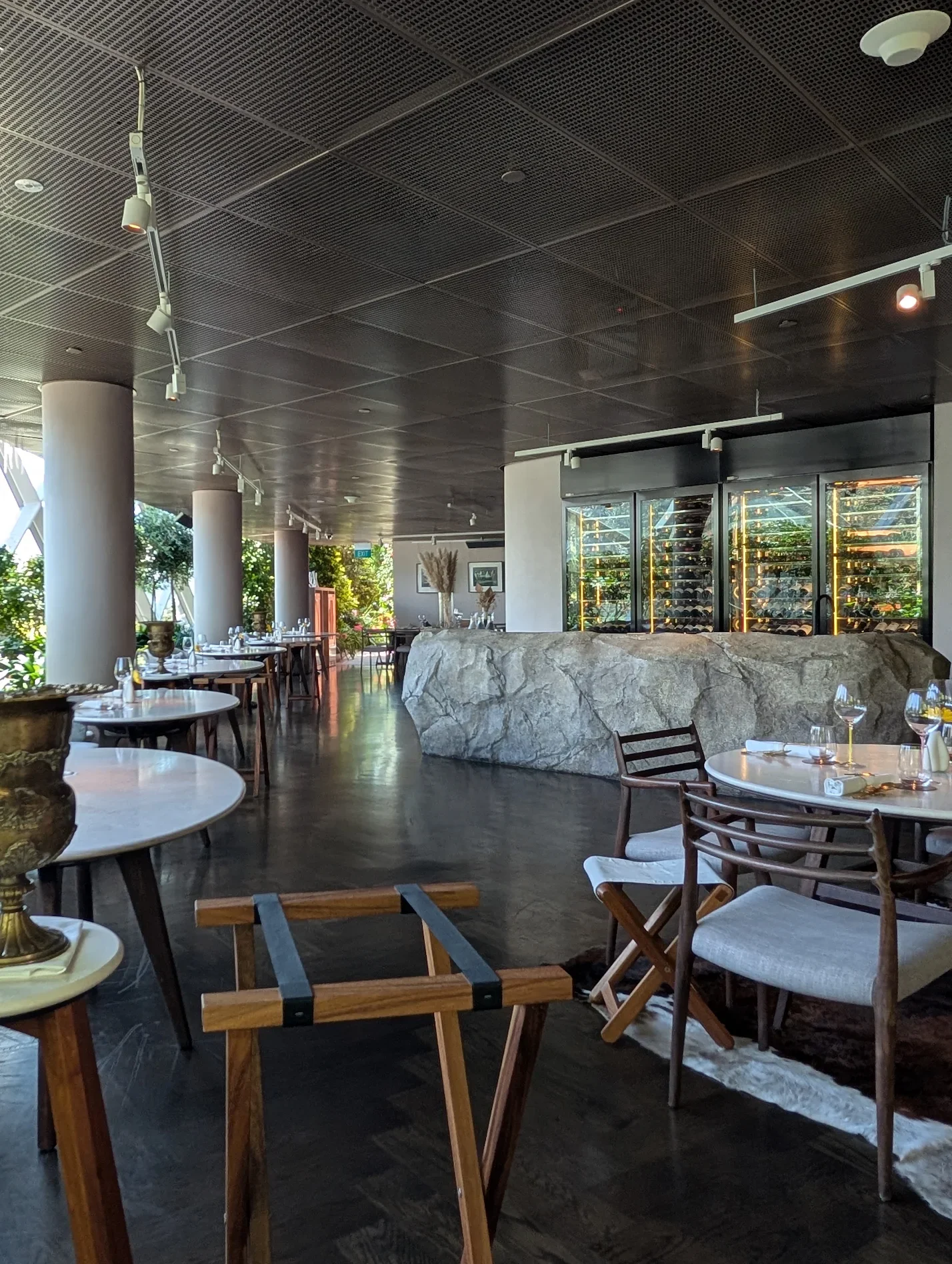
The restaurant is tucked into the greenery of Dempsey Hill, with its design drawing inspiration from the surrounding foliage.
At its centre sits a counter made from 200-year-old hinoki wood imported from Japan.
The main counter seats only a small number of diners.
That intimacy matters because Sato's cooking depends so heavily on interaction.
The closer the chef is to the guest, the easier it becomes to see what is happening.
Who is slowing down.
Who loved the last piece.
Who might need less rice.
Who is ready for something richer.
In that kind of room, service becomes another ingredient.
More Than Thirty Years, Still Improvising
There is an interesting tension in Sato's career.
He has more than three decades of experience.
He trained in Tsukiji.
He worked in Hokkaido.
He spent years as a sous chef in Singapore.
He now leads a restaurant under his own name.
That amount of experience could easily produce rigidity.
Instead, his food appears unusually responsive.
The technique is established.
The order is not necessarily.
That may be one of the more mature expressions of mastery.
Knowing the rules well enough that you no longer need to force every dinner through them in exactly the same way.
Yuji Sato Doesn't Serve the Menu. He Serves the Person.
There is a tempting way to describe a sushi master.
Talk about the knife.
Talk about the fish.
Talk about the rice.
All of those things matter at Sushi Sato.
But Sato's most interesting quality may be what happens after all of that technique has been learned.
He looks up.
He watches the diner.
Then he changes something.
More than thirty years into his career, Yuji Sato's omakase does not appear to be built simply around showing people what he knows.
It is built around noticing what they need.
And perhaps that is why leaving dinner in his hands actually feels like omakase.