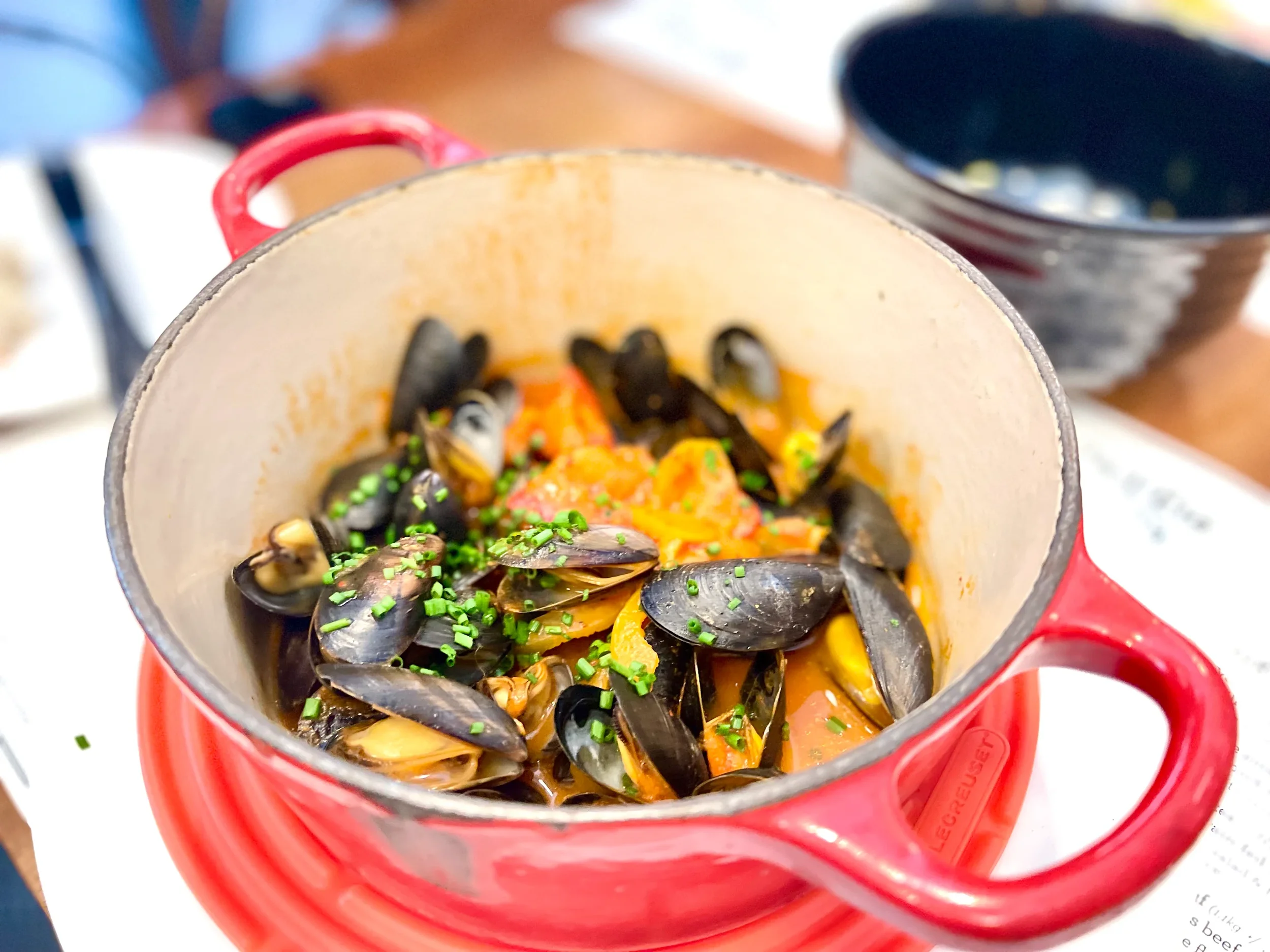
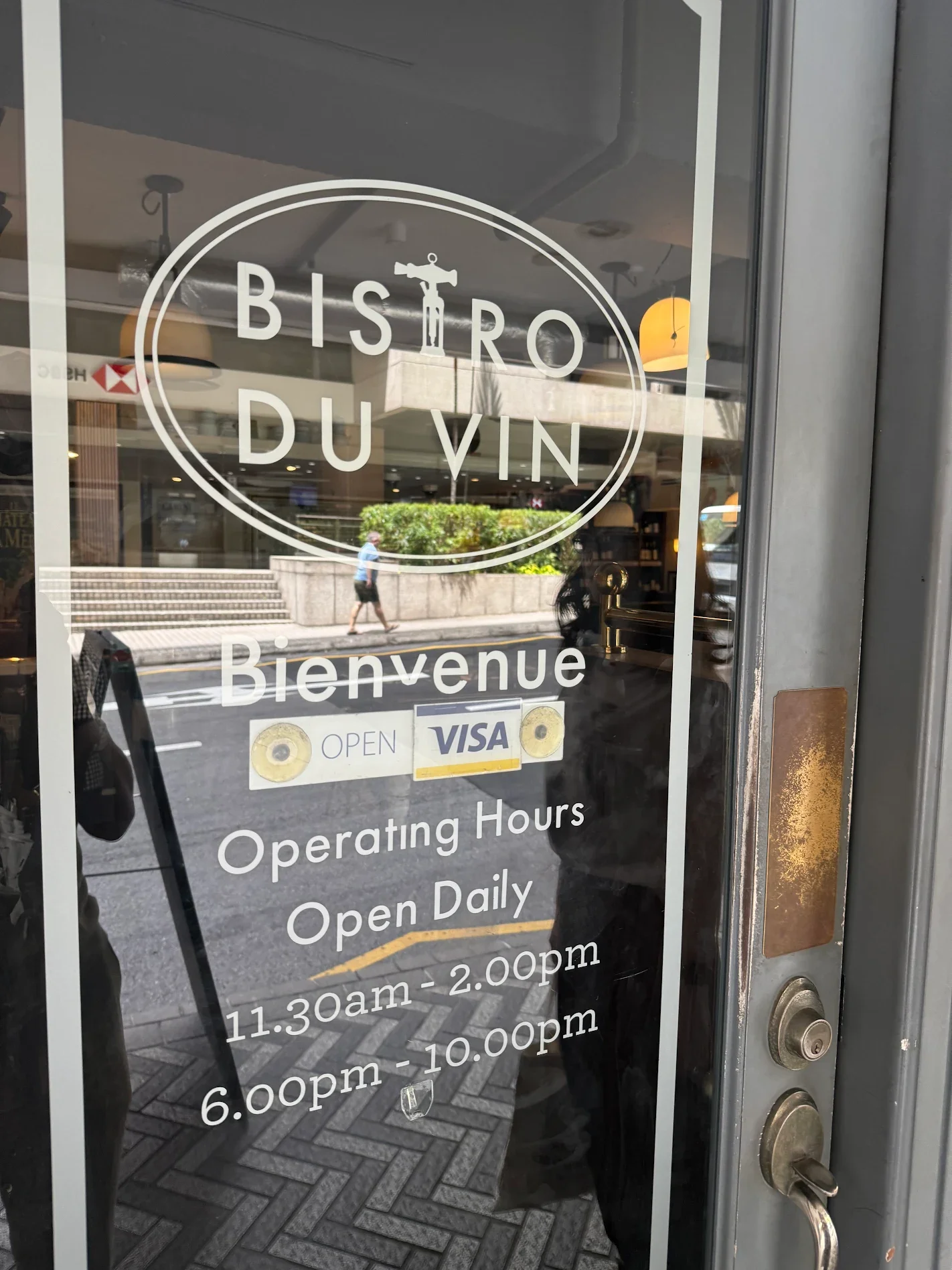
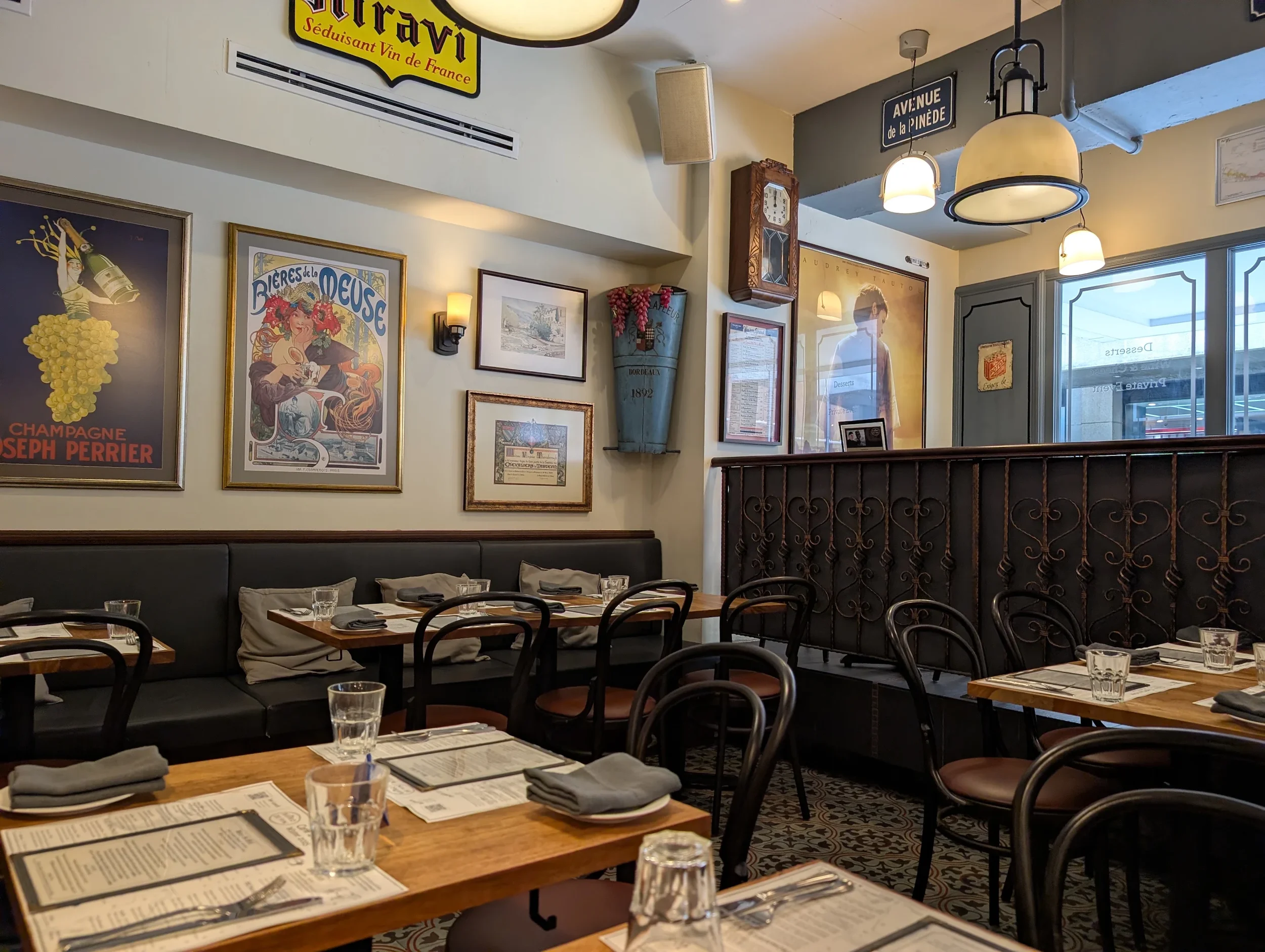
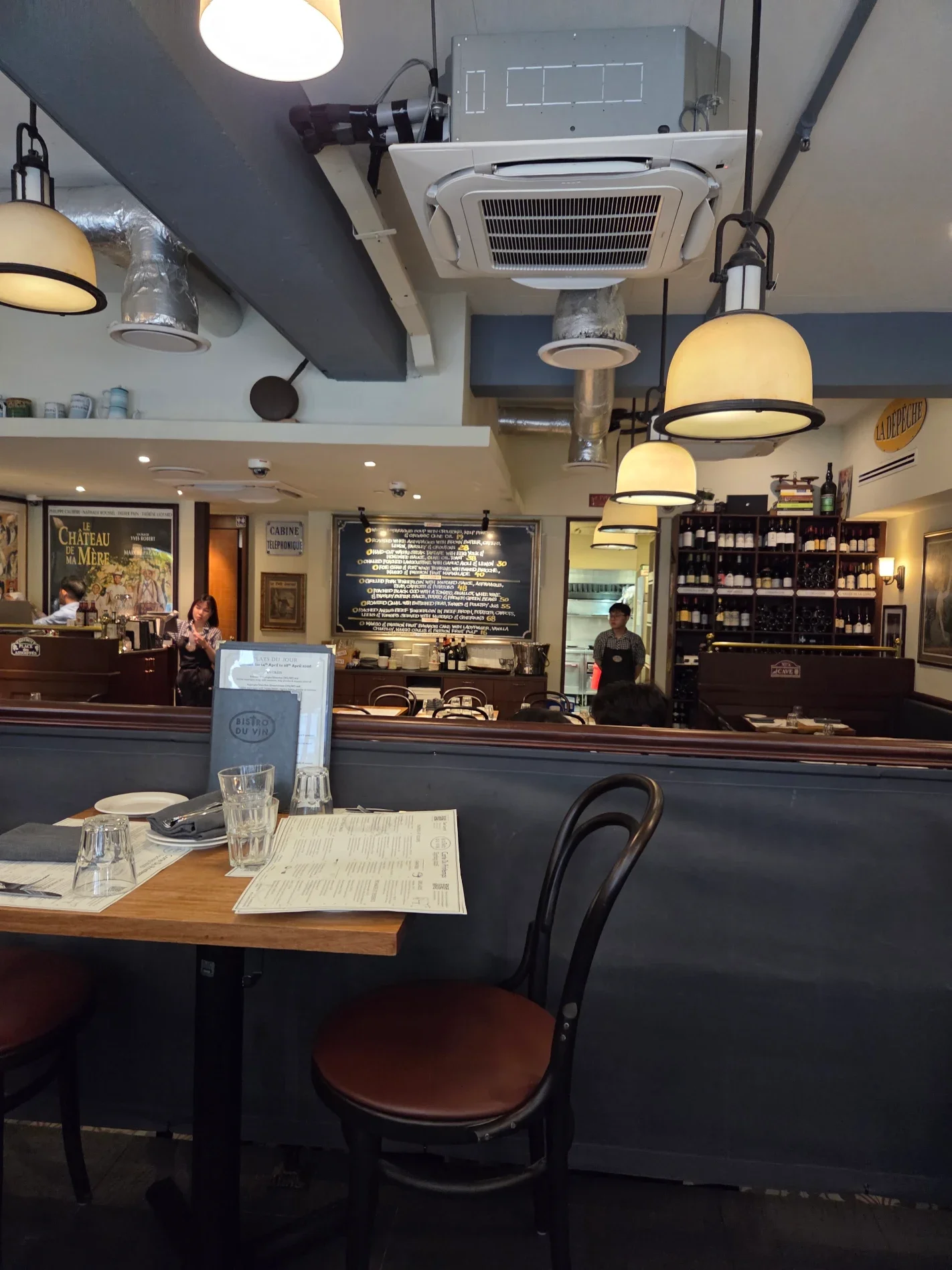
There is something reassuring about a restaurant that knows exactly what it wants to be.
Bistro Du Vin has been serving French food at Shaw Centre since 2009, and its identity has remained remarkably straightforward: recreate the warmth and informality of a traditional French bistro, serve the classics properly, pour good wine and avoid turning dinner into something more complicated than it needs to be.
That means French onion soup, escargots, frog legs, duck confit, steak frites, braised meats, soufflés and crème brûlée rather than a menu built around culinary abstraction. The restaurant's appeal lies less in novelty than in familiarity executed with care.
Within The Cuisine Journal's collection of Singapore venues, Bistro Du Vin occupies an increasingly valuable space. It is serious about French cooking without behaving like a formal fine-dining restaurant, making it suitable for anything from a weekday lunch to a bottle of wine and a long dinner.
A French Bistro Since 2009
Bistro Du Vin opened in July 2009 as part of the Les Amis Group. Its official story describes the restaurant as an attempt to recreate an authentic French bistro experience, right down to the furnishings, music, wall memorabilia and deliberately convivial service style.
More than fifteen years later, that remains the clearest way to understand it.
The dining room is cosy rather than grand. Tables are arranged for conversation rather than ceremony, the walls carry the visual clutter associated with an old European bistro, and the food arrives without the lengthy explanations expected from tasting-menu restaurants.
There is also a certain confidence required to maintain this kind of concept for so long. New restaurants often need novelty to attract attention. Bistro Du Vin instead depends on whether its onion soup, duck confit or steak is good enough for somebody to want it again.
That is a much less forgiving proposition.
Kenneth Tan and the “Less Is More” Approach
The kitchen is currently led by Chef de Cuisine Kenneth Tan, whose background includes training in classical cuisine and experience in the kitchens of Les Amis and Saint Pierre before moving through more family-oriented restaurant operations.
Bistro Du Vin describes Tan's approach as “less is more”: use good ingredients, pair them simply and allow familiar dishes to remain recognisable rather than forcing complexity onto them. His own recommendation from the menu is steak frites, precisely because it represents the kind of hearty, uncomplicated cooking expected from a French bistro.
Tan's professional background can also be explored through his LinkedIn profile.
That philosophy fits Bistro Du Vin particularly well. A restaurant built around classics does not benefit from endlessly reinventing them. What matters is whether the duck skin is crisp, whether the steak is correctly cooked and whether the sauce tastes as though somebody has taken the time to make it properly.
French Onion Soup as a Measure of the Kitchen
French onion soup appears constantly in diner feedback, and for good reason.
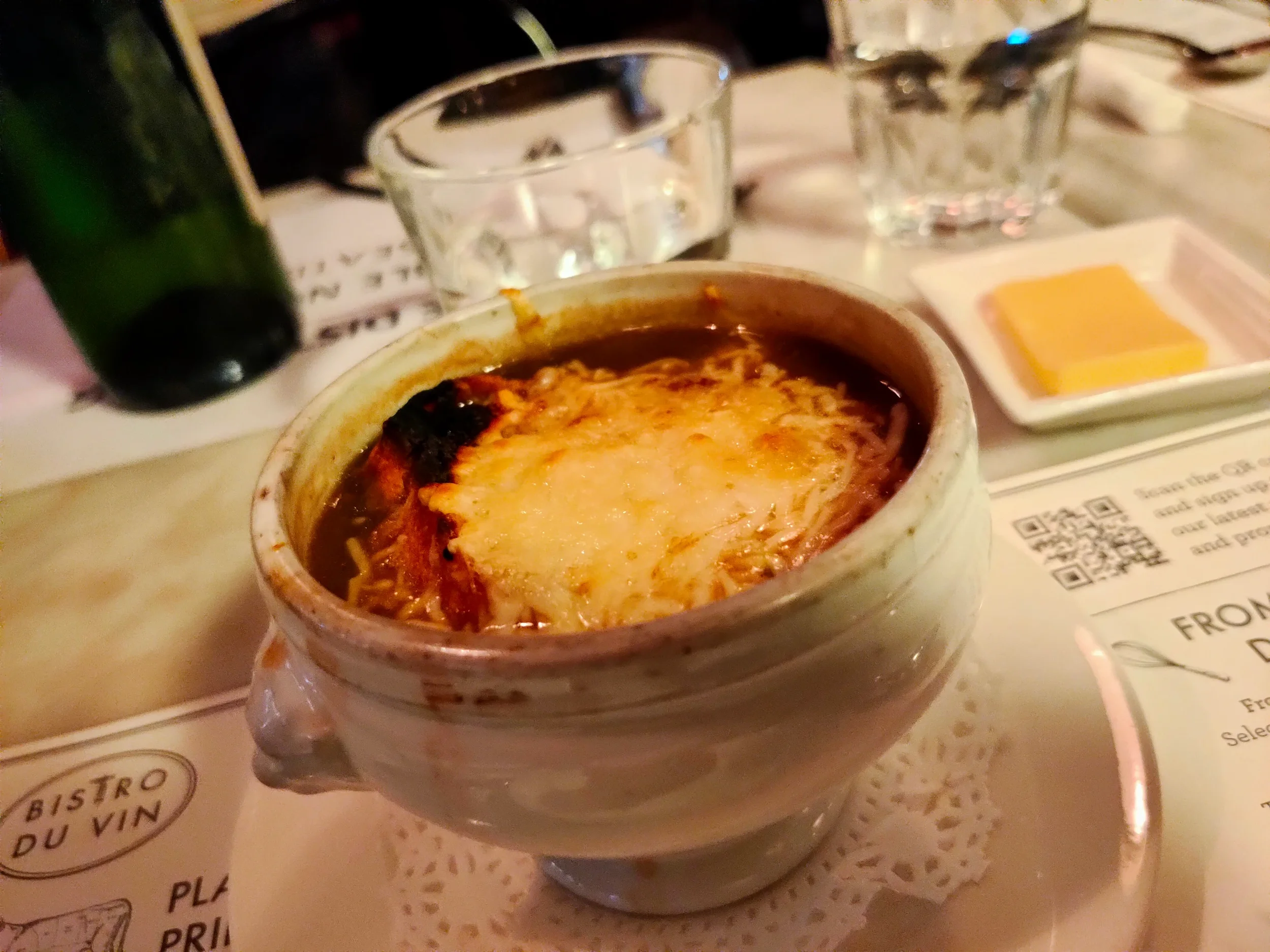
It sounds simple enough: onions, broth, bread and cheese. In reality, almost every component can go wrong. The onions need enough time to caramelise and develop sweetness. The broth needs concentration without becoming aggressively salty. The bread needs enough structure to survive beneath the liquid, while the Gruyère should create richness without overwhelming everything underneath.
Bistro Du Vin's version is one of its most consistently praised dishes.
Recent diners describe the soup as deeply flavoured, comforting and balanced, while several identify it as something they would specifically return to order again. One diner who had lived in France also found the restaurant convincing as a classic bistro experience, while another praised the onion soup alongside beef cheek and lamb stew.
That is exactly the kind of dish on which a traditional French restaurant should be judged. There is nowhere to hide behind an unfamiliar ingredient or complicated presentation. The diner already knows roughly what should arrive.
Duck Confit Remains One of the Strongest Reasons to Visit
Duck confit is another recurring favourite.
The dish began historically as a preservation method, with duck legs salted and slowly cooked in fat. Today, the preservation is less important than the texture the process creates: tender meat underneath properly crisped skin.
Bistro Du Vin's version receives particularly consistent praise. Diners frequently describe crisp skin and tender, flavourful meat, with some ranking it among the better duck confits they have tried in Singapore.
Not everyone responds identically. One guest found the duck unusually gamey, while another specifically disagreed with previous complaints that the restaurant's confit could be too salty. That variation is useful because duck has a naturally stronger flavour than chicken and personal tolerance differs considerably.
What remains consistent is that the dish is recognisably traditional. Bistro Du Vin does not appear interested in redesigning confit. Its job is simply to cook one that makes diners want another.
Steak Frites and the Bistro Test
If onion soup tests patience and confit tests technique, steak frites tests restraint.
Beef, fries and sauce leave very little room for distraction.
Recent diner feedback suggests that Bistro Du Vin generally performs well here. Steaks are described as properly cooked and well charred, with crisp fries and sauces that support rather than disguise the meat. One diner who normally did not consider himself much of a meat eater described the beef as the reason he was already thinking about returning.
The dish also suits Kenneth Tan's stated “less is more” philosophy. Quality beef does not need a dozen components. Temperature, seasoning, resting and sauce matter far more.
This gives Bistro Du Vin something in common with Burnt Ends, where Dave Pynt's cooking also depends heavily on controlling heat and understanding meat, although the two restaurants arrive there through very different traditions. Burnt Ends foregrounds fire and the oven; Bistro Du Vin remains firmly within the language of the French bistro.
Braises Are Where the Restaurant Feels Most Traditional
Beyond the obvious signatures, Bistro Du Vin is particularly comfortable with slow-cooked dishes.
Beef cheek, lamb stew and braised chicken appear throughout the menu and diner feedback. These are dishes that depend on time rather than spectacle. Tougher cuts become tender as collagen breaks down, while wine, stock and aromatics gradually concentrate into sauces that carry much of the character of the dish.
A Poulet au Vin Jaune recently received praise for its sauce and freshness of the chicken, even if one diner wanted slightly more flavour in the meat itself. Beef cheeks and lamb stew have attracted stronger enthusiasm, particularly from guests looking for the kind of substantial food associated with old-fashioned French restaurants.
This kind of cooking has become less fashionable as restaurants move towards lighter plating and shorter cooking times, but that does not make it less relevant. In a bistro, a good braise may be more appropriate than something technically more elaborate.
Escargots and Frog Legs Keep the Bistro Identity Intact
Bistro Du Vin also continues to serve dishes that international diners strongly associate with France.
Escargots arrive with garlic and parsley butter, while frog legs provide another old-school bistro preparation. Recent diners particularly praise the frog legs for being light, fragrant and not excessively greasy.
These dishes give the restaurant a stronger French identity than simply serving steak and wine.
They also help explain why diners who have spent time in France repeatedly compare Bistro Du Vin favourably with bistros there. It is not merely using French culinary techniques; it is preserving a recognisable style of restaurant.
That distinguishes it from more contemporary European restaurants such as Bottega di Carna, where Italian cooking is placed within a modern international hotel environment. Bistro Du Vin is deliberately less polished in that sense. The familiarity is part of the appeal.
The Soufflé Is More Divisive
Dessert is where Bistro Du Vin produces some of its most enthusiastic praise and some of its more divided reactions.
Soufflés appear frequently, including versions flavoured with Grand Marnier, Calvados or rum. When successful, diners praise the airy texture and the contrast between the warm soufflé and cold vanilla ice cream. Others find particular alcohol-based versions bitter, overly eggy or poorly balanced.
That inconsistency may have as much to do with personal taste as technical execution. Strong spirits can dominate a delicate soufflé quickly, and diners who prefer less alcohol-forward desserts may find those variations challenging.
The underlying pastry technique, however, receives regular praise. Even a guest who disliked the bitterness of a Calvados soufflé described its texture as excellent.
Crème brûlée, chocolate mousse, apple tart and Crêpes Suzette provide more conventional alternatives, and reviews of those desserts are generally strong.
Wine Is Supposed to Be Part of the Meal
A French bistro without wine would feel incomplete.
Bistro Du Vin keeps a relatively approachable wine programme focused heavily on France rather than turning the list into another exercise in luxury. The intention is to make wine part of dinner rather than a separate performance.
That aligns with the restaurant's broader atmosphere. Diners describe meals that feel relaxed and unhurried, with staff willing to guide selections without making the experience unnecessarily formal.
The restaurant's French identity therefore comes from more than the food. Wine, décor, service and music work together to establish the setting.
It is difficult to recreate the exact experience of a neighbourhood bistro in France in the middle of Shaw Centre, but Bistro Du Vin has had more than fifteen years to develop its own version.
Service Is One of the Restaurant's Most Reliable Strengths
Service receives unusually consistent praise across the supplied reviews.
Diners mention Restaurant Director Philippe Pau by name, along with other members of the team, and repeatedly describe the service as warm, attentive and professional without being overbearing. Water is refilled, tables are checked without constant interruption and staff recommendations are generally received positively.
That style is important in a bistro.
Overly formal service would undermine the restaurant's personality, while excessively casual service would make the prices harder to justify. Bistro Du Vin generally appears to find the middle ground.
Long-standing staff also contribute significantly to the sense of continuity. A restaurant can reproduce old French posters and wooden furniture relatively easily. A dining room becomes convincing only when the people working in it understand how the restaurant is supposed to feel.
Price and Portion Size Are the Main Reservations
The most persistent criticism is value.
Several diners feel the portions are relatively small compared with the prices, particularly when ordering à la carte. One guest praised the cooking and service but still concluded that the restaurant was difficult to consider good value.
The set lunch changes that calculation considerably.
Bistro Du Vin currently offers two- and three-course lunch menus alongside its seasonal à la carte selection, providing a more accessible way to experience the restaurant. The current menu continues to include French onion soup, duck confit, seafood, grilled meats, crème brûlée and other recognisable bistro dishes.
Recent diners have specifically praised the lunch set as good value, suggesting that the restaurant makes considerably more sense financially depending on when and how it is approached.
Why Bistro Du Vin Has Lasted
A restaurant built around classics faces an unusual problem.
It cannot depend on novelty because the dishes are already familiar. Instead, it has to become dependable.
That may be the clearest explanation for Bistro Du Vin's longevity.
People return for onion soup because they remember the onion soup. They return for duck confit because the skin was crisp last time. They return because Philippe remembers how to make the room feel welcoming, or because a particular bottle of wine works with dinner.
There is a similar continuity in the stories of Italian chefs such as Antonio Manetto, whose career in Singapore remains strongly connected to his Neapolitan culinary background. Traditional European restaurants become most convincing when their identity feels lived rather than merely themed.
Bistro Du Vin has had enough time to reach that point.
Bistro Du Vin at a Glance
Restaurant: Bistro Du Vin
Chef de Cuisine: Kenneth Tan
Cuisine: Traditional French bistro
Address: 1 Scotts Road, #01-14 Shaw Centre, Singapore 228208
Established: 2009
Known for: French onion soup, duck confit, steak frites, braised meats, frog legs, soufflé and French wines
Best suited to: Casual French dinners, date nights, lunches and diners looking for traditional bistro cooking
Bistro Du Vin does not attempt to redefine French cuisine, and after more than fifteen years, that restraint has become part of its identity.
It serves dishes diners already understand and therefore judge more critically. When the onion soup has sufficient depth, the duck skin is crisp, the beef is cooked properly and the soufflé rises as it should, the restaurant does not need another concept layered on top.
Sometimes the entire point of a French bistro is simply that somebody knows how to run a good French bistro.