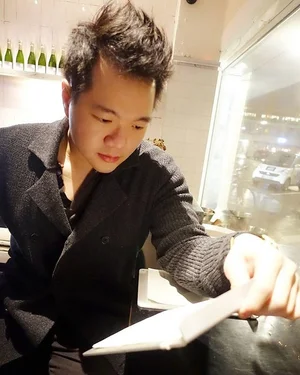
From his family's restaurant on the Belgian coast to the three-Michelin-starred kitchen of Alain Passard's L'Arpège in Paris, chef-owner Gunther Hubrechsen has spent his career developing a philosophy rooted in simplicity, seasonality, and respect for ingredients. At Gunther's Modern French Cuisine on Purvis Street, he has transformed those principles into one of Singapore's enduring expressions of contemporary French gastronomy.
In an industry where fine dining is frequently associated with elaborate techniques, intricate presentations, and increasingly unusual combinations of ingredients, Belgian chef Gunther Hubrechsen has built his reputation around a considerably more restrained philosophy.
His approach to cooking begins with the ingredient.
Rather than introducing complexity for its own sake, he believes that a chef's responsibility is to understand the natural characteristics of each product and prepare it in a way that allows those qualities to remain recognisable.
This philosophy has shaped Gunther's Modern French Cuisine, the restaurant he established in Singapore in August 2007.
Located on Purvis Street, Gunther's presents contemporary French cooking through seasonal produce, carefully selected luxury ingredients, and dishes that often appear deceptively straightforward.
Among its best-known preparations is cold angel hair pasta with Oscietra caviar, a dish that has become closely associated with Hubrechsen's professional identity.
Other signatures include crispy free-range egg with pumpkin coulis, Miyazaki Wagyu carpaccio, and fine apple tart with salted caramel.
These dishes reflect the technical experience accumulated throughout a career that began in Belgium and developed under some of France's most influential chefs.
Before opening his own restaurant, Hubrechsen spent five years working under Alain Passard at L'Arpège in Paris. He subsequently moved to Singapore, joining the Les Amis Group and eventually leading the kitchen at Les Amis.
Yet despite his experience within prestigious French restaurants, Hubrechsen has consistently emphasised that memorable cooking does not necessarily require elaborate preparation.
For him, the objective is to create food that respects its ingredients while giving guests a sense of comfort and familiarity.
Growing Up in Belgium: A Childhood Surrounded by Fresh Ingredients
Gunther Hubrechsen's interest in cooking began in Belgium, where his parents operated a restaurant near the coast.
The family business introduced him to the everyday realities of professional hospitality from an early age.
Growing up around a working restaurant, Hubrechsen observed the preparation of food, the importance of ingredients, and the relationships between restaurant employees and their guests.
The coastal location was particularly significant.
Fresh ingredients were an important part of the restaurant's daily operations, providing an early example of how the quality of produce could determine the character of a meal.
In a 2015 interview with Exquisite Taste Magazine, Hubrechsen recalled helping in his parents' restaurant and explained how those experiences influenced his understanding of cooking.
For him, respecting food meant preserving its natural characteristics rather than transforming ingredients beyond recognition.
This idea would eventually become central to his professional philosophy.
Although he later worked in some of the most technically demanding kitchens in French gastronomy, his appreciation for simple preparations remained closely connected to the food he encountered during childhood.
The family restaurant also introduced him to the importance of hospitality.
A successful dining experience depended not only on the kitchen but also on the relationships between the restaurant's employees and its customers.
These lessons would remain important as Hubrechsen developed his career.
Beginning Professional Culinary Training at Sixteen
Hubrechsen began his formal culinary education at approximately sixteen years old.
He attended the culinary institute associated with Ter Groene Poorte in Bruges, Belgium, where he developed the professional foundations necessary for a career in restaurant kitchens.
The training introduced him to the classical techniques and organisational discipline expected of professional chefs.
French culinary traditions played an important role in this education.
These included the preparation of stocks and sauces, accurate cooking techniques, ingredient handling, and the coordination required during restaurant service.
For a young chef, mastering these fundamentals provides the foundation for more advanced culinary work.
Hubrechsen subsequently gained experience in professional restaurants in Belgium before deciding to continue his career in France.
The opportunity would place him under the mentorship of one of the country's most influential contemporary chefs.
In 1998, he moved to Paris to work at L'Arpège.
The appointment would fundamentally shape his understanding of food.
Five Years Under Alain Passard at L'Arpège
Alain Passard is internationally recognised for his work at L'Arpège, the Parisian restaurant that received three Michelin stars in 1996.
Passard became particularly influential through his emphasis on seasonal vegetables and the relationship between cooking and agricultural produce.
His approach challenged conventional assumptions about the hierarchy of ingredients in haute cuisine.
Rather than treating vegetables primarily as accompaniments to meat and seafood, Passard demonstrated that they could become the central focus of sophisticated dishes.
For Hubrechsen, working within this environment proved transformative.
He joined L'Arpège in 1998 as a commis chef and remained for approximately five years, progressing through the kitchen until he reached the position of Sous Chef de Cuisine.
The experience provided extensive technical training, but its influence extended beyond individual cooking methods.
Passard encouraged his kitchen team to study ingredients carefully and understand how their flavour and texture changed according to seasonality and preparation.
Vegetables received the same attention as luxury proteins.
A chef needed to understand the natural character of each ingredient before deciding how it should be cooked.
In a later interview with Tatler Asia, Hubrechsen described Passard as the mentor who had changed his understanding of cooking.
He credited the French chef with teaching him to respect ingredients regardless of their origins.
This principle would become particularly important when Hubrechsen eventually began incorporating Japanese produce into his French cuisine.
The experience at L'Arpège also introduced him to a broader understanding of restaurant leadership.
Passard believed that a chef's responsibilities extended beyond the kitchen.
Building relationships with customers and service personnel was equally important.
For Hubrechsen, this approach provided a model for the restaurant he would later establish under his own name.
Learning to See Vegetables Differently
One of the most significant influences of Hubrechsen's time at L'Arpège was his growing appreciation for vegetables.
Within classical French cuisine, vegetables have always played an important role in stocks, garnishes, sauces, and regional dishes.
However, Passard's approach placed them more prominently within the structure of fine dining menus.
The quality of the vegetable itself became a principal consideration.
Different varieties of carrots, asparagus, tomatoes, and other produce could offer substantially different flavours and textures.
Their characteristics also changed according to seasonality, growing conditions, and freshness.
For Hubrechsen, this approach encouraged a more thoughtful relationship with ingredients.
Rather than beginning with an elaborate preparation and searching for ingredients to support it, the chef could begin with the produce available and allow its characteristics to influence the dish.
This philosophy remains visible at Gunther's.
Although the restaurant serves premium meat and seafood, seasonal vegetables continue playing an important role in its menus.
They are treated as ingredients with their own identity rather than simply decorative accompaniments.
The influence of Passard also helps explain Hubrechsen's preference for relatively restrained presentations.
When an ingredient possesses exceptional natural qualities, excessive preparation may distract from them.
A chef's technical knowledge should therefore help reveal those qualities rather than conceal them.
For Hubrechsen, this understanding became one of the defining principles of his cooking.
Moving to Singapore in 2002
After approximately five years in Paris, Hubrechsen moved to Singapore in 2002.
He joined the Les Amis Group, an organisation that had played an important role in establishing French fine dining within the city.
His first appointment was as Head Chef at The Lighthouse, where he worked for approximately one year.
He subsequently moved to Les Amis at Shaw Centre, serving as Head Chef for another three years.
The transition introduced him to a different restaurant environment.
Although his cooking remained grounded in French culinary traditions, Singapore offered access to a broader range of international ingredients and customers.
The city's position as a major international trading and hospitality destination made it possible to obtain premium produce from Europe, Japan, and other regions.
For Hubrechsen, this provided opportunities to explore ingredients that differed from those he had encountered during his earlier career.
However, his professional priorities remained consistent.
The lessons learned at L'Arpège continued influencing his approach to produce, preparation, and restaurant management.
His responsibilities at Les Amis also required him to lead a professional kitchen within an established fine dining institution.
The restaurant had already developed a reputation for classical French gastronomy and demanding service standards.
Maintaining that reputation involved technical consistency, effective kitchen organisation, and close coordination with the dining room.
Hubrechsen's years at Les Amis contributed to his growing recognition within Singapore's restaurant industry.
They also helped prepare him to establish an independent restaurant.
Developing Future Culinary Talent at Les Amis
Hubrechsen's tenure at Les Amis was significant not only for his own professional development but also for the younger chefs who worked under him.
Among them were Singaporean chefs Jason Tan and Janice Wong.
Both would subsequently establish prominent culinary careers.
Jason Tan later became associated with Corner House, where he developed an approach to contemporary cooking known as gastro-botanica.
The philosophy placed considerable emphasis on botanical ingredients and the relationship between vegetables and other components of a dish.
Janice Wong subsequently developed a reputation for her experimental approach to pastry and desserts, establishing 2am:dessertbar and pursuing projects combining culinary techniques with artistic presentation.
According to a Michelin Guide feature examining Singapore restaurants that developed culinary talent, both chefs spent time working with Hubrechsen at Les Amis.
Jason Tan completed approximately six months as a commis chef during Hubrechsen's tenure in 2004.
Janice Wong also undertook a six-month stint in the kitchen before pursuing further international experience.
These professional connections illustrate the importance of mentorship within fine dining.
Young chefs develop their skills through repeated practice, direct instruction, and exposure to experienced culinary leaders.
The knowledge acquired during these formative periods can influence their subsequent careers, even when they eventually develop substantially different cooking styles.
For Hubrechsen, training younger professionals was part of a broader understanding of restaurant leadership.
The kitchen depended on people working together to maintain consistent standards.
His experience under Passard had demonstrated the importance of this relationship, and he continued applying those lessons during his years in Singapore.
Establishing Gunther's in August 2007
After several years working within the Les Amis Group, Hubrechsen decided to establish a restaurant under his own name.
Gunther's opened on 2 August 2007.
The decision represented an important transition from leading established kitchens to developing a culinary concept that reflected his personal philosophy.
In his 2015 interview with Exquisite Taste Magazine, Hubrechsen explained that he wanted to create a restaurant where he could present food that genuinely belonged to his own culinary identity.
He also wanted guests to feel comfortable rather than intimidated by the conventions of fine dining.
The resulting restaurant combined sophisticated French cooking with an emphasis on warm hospitality.
Although the preparations demonstrated the technical precision associated with his professional background, Hubrechsen wanted the dining experience to remain personal.
The restaurant's identity was built around his preference for natural ingredients, seasonal produce, and careful presentation.
Rather than concentrating on elaborate culinary transformations, the kitchen would allow the characteristics of individual ingredients to guide its dishes.
This approach gave Gunther's a distinctive position within Singapore's growing fine dining industry.
The restaurant offered contemporary French cuisine that reflected the influence of Passard while maintaining Hubrechsen's personal interpretation.
It also provided him with greater freedom to develop dishes according to his own priorities.
Nearly two decades later, the restaurant continues operating under his leadership.
A Philosophy of Simple, Honest Cooking
Gunther Hubrechsen's culinary philosophy is closely associated with three ideas: simplicity, honesty, and respect for ingredients.
These principles have remained consistent throughout his career.
His official biography describes his approach as taking down-to-earth recipes and refining them through elegance and technical precision.
This distinction is important.
Hubrechsen does not necessarily regard simple cooking as the absence of sophisticated technique.
Instead, he believes that technique should support the ingredient and the intended flavour of the dish.
A preparation may require considerable skill, but that complexity does not need to dominate the finished result.
The objective is to create food that appears natural and tastes balanced.
This approach is reflected in the relatively compact menu at Gunther's.
Rather than offering an extensive selection of dishes, the restaurant concentrates on ingredients that meet the kitchen's standards for quality and freshness.
Seasonal specials allow the menu to change according to the produce available.
In a 2026 profile published by Made By Magazine, Hubrechsen's cooking is characterised by restraint, precision, and an emphasis on produce.
The profile highlights how the restaurant allows freshness and seasonality to determine menu decisions.
For Hubrechsen, this approach creates a direct relationship between the ingredients obtained by the kitchen and the dishes served to guests.
The menu is not simply a fixed collection of recipes.
It is also an expression of what the chef considers particularly good at a given moment.
Why Japanese Produce Became Central to His Cooking
Although Gunther's is firmly rooted in French culinary traditions, Hubrechsen has developed a longstanding appreciation for Japanese ingredients.
This interest reflects the philosophy he learned under Alain Passard.
The origin of an ingredient is less important than its quality, freshness, and suitability for the preparation.
In a 2017 interview with OISHII Magazine, Hubrechsen explained that approximately 70 percent of the ingredients used at his restaurant were sourced from Japan at the time.
He attributed this preference to the attention Japanese producers paid to the quality and handling of their products.
The interview described the careful packaging methods used to preserve the freshness of seafood during transportation.
Hubrechsen considered these details particularly important because ingredient quality could deteriorate before the product reached the kitchen.
The restaurant received deliveries from Japan approximately four times a week during the period discussed in the interview.
This allowed the kitchen to select ingredients according to freshness and seasonality.
Hubrechsen compared the approach to the Japanese tradition of omakase.
Although Gunther's remained a French restaurant, the chef selected dishes according to the ingredients available rather than relying exclusively on a fixed menu.
The comparison reflects an important aspect of his philosophy.
French cooking techniques provide the foundation, but they do not determine that every ingredient must originate in France.
A Japanese ingredient can be prepared using classical French methods if those techniques complement its natural characteristics.
For Hubrechsen, the objective is to achieve the best possible result rather than maintain rigid geographical boundaries.
Discover the Chefs Behind Singapore's Restaurants
Singapore's fine dining landscape is shaped by chefs whose professional journeys connect international culinary traditions with their own personal philosophies.
From Gunther Hubrechsen's appreciation for seasonal produce to Dave Pynt's distinctive approach to fire and cooking at Burnt Ends, each chef brings a different understanding of ingredients and preparation.
Explore more culinary personalities, restaurant features, and dining stories through The Cuisine Journal.
Discover the people behind the plate.
Cold Angel Hair Pasta: A Signature Since 2005
Few dishes are as closely associated with Gunther Hubrechsen as his cold angel hair pasta with Oscietra caviar.
The preparation dates to 2005, before the opening of Gunther's.
It subsequently became one of the restaurant's defining signatures.
The dish combines delicate strands of cold angel hair pasta with premium Oscietra caviar.
Its appeal lies in the relationship between texture, temperature, and the savoury character of the caviar.
Rather than relying on numerous visible components, the preparation allows a small collection of ingredients to provide the central experience.
The pasta offers a delicate foundation, while the caviar contributes salinity and a distinctive richness.
This approach reflects Hubrechsen's preference for restraint.
In an interview with Tatler Asia, he identified the dish as one of the preparations that best represented his cooking style.
He appreciated its spontaneity and the way it communicated his preference for relatively uncomplicated food.
The dish has remained closely associated with Gunther's through successive years.
The Michelin Guide also identifies the cold angel hair pasta as one of Hubrechsen's proudest creations.
Its description of the restaurant highlights a version served with a six-gram quenelle of Oscietra caviar.
Although the preparation uses a luxury ingredient, its significance does not depend exclusively on the cost of the caviar.
Instead, the dish demonstrates Hubrechsen's ability to create a memorable combination through careful ingredient selection and precise preparation.
For a closer examination of the restaurant and its signature dishes, explore our existing feature, Gunther's Singapore: Modern French Cooking Without the Excess.
Introducing Hokkaido Uni to a Familiar Favourite
Hubrechsen's willingness to refine established dishes became particularly apparent in 2017.
That year, he discussed introducing premium Hokkaido sea urchin to his popular cold pasta preparation.
Sea urchin, commonly known as uni in Japanese cuisine, is valued for its creamy texture and distinctive marine flavour.
Its characteristics differ considerably from those of caviar.
Where caviar provides individual pearls with a briny flavour, uni offers a softer consistency and a richer, more integrated texture.
Introducing the ingredient created a different interpretation of the cold pasta dish.
The preparation retained the underlying character of the original while exploring new flavour relationships.
In his OISHII interview, Hubrechsen expressed enthusiasm for the Hokkaido uni variation.
The development illustrates how he approaches culinary innovation.
Rather than abandoning an established dish in pursuit of something entirely different, he explores how an exceptional ingredient can provide a new dimension to a familiar preparation.
This philosophy allows signature dishes to remain recognisable while continuing to evolve.
It also reflects the importance of seasonal availability.
Premium uni is not necessarily available in the same condition throughout the year.
Its quality depends on factors including origin, harvesting conditions, and handling.
For Hubrechsen, these considerations determine whether an ingredient is suitable for a particular preparation.
Crispy Free-Range Egg with Pumpkin and Caviar
Another of Hubrechsen's signature dishes is crispy free-range egg with pumpkin coulis and Oscietra caviar.
According to the restaurant's official culinary history, the preparation dates to 2016.
The dish brings together ingredients with contrasting textures and flavours.
The egg provides richness, while the crispy exterior introduces a different texture.
Pumpkin coulis contributes sweetness and a smooth consistency.
Oscietra caviar adds salinity and further richness.
The resulting combination demonstrates how familiar ingredients can be presented within a sophisticated French preparation.
Eggs and pumpkin are not inherently luxurious products.
However, their preparation and the addition of caviar create a dish that belongs within the context of fine dining.
This relationship between ordinary and premium ingredients is consistent with the philosophy Hubrechsen developed under Passard.
A vegetable or other everyday ingredient should not be considered less deserving of attention than an expensive luxury product.
Instead, each component contributes according to its particular characteristics.
The success of the dish depends on their balance.
For Hubrechsen, that balance is more important than adding complexity simply to demonstrate technical ability.
Miyazaki Wagyu Carpaccio and the Importance of Texture
The restaurant's Miyazaki Wagyu ribeye carpaccio provides another example of Hubrechsen's cooking philosophy.
The dish, which dates to 2008, is described by Gunther's as carpaccio prepared cannibale style and served on crispy potato.
Miyazaki Wagyu is associated with highly marbled Japanese beef.
Its richness and texture make it particularly suitable for preparations in which the quality of the meat remains central.
Carpaccio traditionally involves presenting thinly sliced raw meat with carefully selected accompaniments.
The preparation places considerable importance on ingredient quality because the meat undergoes little transformation before being served.
At Gunther's, the addition of crispy potato introduces a contrasting texture.
The combination demonstrates how Hubrechsen uses familiar culinary techniques to emphasise the natural character of premium ingredients.
The dish also reflects his appreciation for Japanese produce.
Although carpaccio belongs to a European culinary tradition, the use of Miyazaki Wagyu demonstrates the international sourcing approach that has become central to the restaurant.
For Hubrechsen, the geographical origin of the beef does not conflict with his French culinary identity.
The ingredient is selected for its quality and prepared according to techniques that allow those characteristics to remain prominent.
Seafood, Seasonal Produce and the Influence of the Coast
Hubrechsen's interest in seafood can also be traced to his upbringing in Belgium.
His parents' coastal restaurant introduced him to the importance of fresh ingredients, particularly produce obtained from the surrounding region.
Throughout his professional career, seafood has remained an important part of his repertoire.
Gunther's signature dishes include smoked Alaskan king crab with a Comté cheese bonbon and roasted Spanish Carabinero prawns with tomato-infused rice.
The king crab preparation, which dates to 2017, combines the natural sweetness of seafood with the savoury characteristics of aged French cheese.
Carabinero prawns, meanwhile, are recognised for their intense flavour and distinctive red colouring.
Their use in a dish with tomato-infused rice demonstrates Hubrechsen's interest in creating complementary flavour relationships without overwhelming the principal ingredient.
The restaurant has also presented preparations involving pen shell, a type of large marine bivalve.
In his 2015 Exquisite Taste Magazine interview, Hubrechsen shared a recipe for grilled pen shell accompanied by a seafood consommé.
The preparation incorporated ingredients including Sakura prawns, tomato, chives, quail egg, and Cognac.
The dish reflected his preference for retaining the natural character of seafood while using classical techniques to develop the surrounding flavours.
These examples demonstrate how Hubrechsen's professional experience has expanded his understanding of ingredients while preserving the principles learned during childhood.
Freshness, careful preparation, and respect for the product remain central.
Fine Apple Tart and the Importance of Classical Desserts
Although Hubrechsen is particularly associated with seafood and savoury preparations, his repertoire also includes classical French desserts.
One of his signatures is fine apple tart aux dragées, accompanied by salted caramel and Havana rum raisin ice cream.
The restaurant dates the dish to 2006.
Apple tart occupies an established place within French pastry traditions.
Its success depends on the relationship between the fruit, pastry, and accompanying flavours.
The apples must retain sufficient texture while developing sweetness during cooking.
The pastry provides structure and contrast.
Salted caramel introduces richness, while rum raisin ice cream contributes additional sweetness and aromatic complexity.
Although the preparation incorporates several components, its central identity remains familiar.
It is recognisably an apple tart.
This is consistent with Hubrechsen's broader philosophy.
The objective is not to transform a traditional dessert beyond recognition.
Instead, he uses professional techniques to refine its flavour and presentation.
Other desserts associated with the restaurant include a floating island of chocolate served on coffee-flavoured parfait.
These preparations demonstrate the range of classical techniques incorporated into the restaurant's menu.
They also provide a conclusion to the dining experience that remains consistent with Hubrechsen's preference for recognisable ingredients and carefully balanced flavours.
A Dining Room Inspired by Belgian Art Nouveau
Gunther's culinary identity extends beyond the food.
The restaurant's interior was designed to reflect Hubrechsen's personality and his Belgian heritage.
According to its official website, the dining room draws inspiration from the Art Nouveau movement, which developed across Europe during the late nineteenth and early twentieth centuries.
Belgium played an important role in the movement's development.
Art Nouveau architecture and design frequently incorporate flowing lines, organic shapes, and decorative elements inspired by the natural world.
At Gunther's, these influences appear through curved silhouettes, asymmetrical forms, and natural wooden finishes.
Raw oak features prominently within the interior.
The use of wood and organic shapes reflects Hubrechsen's appreciation for natural ingredients.
Just as his cooking seeks to preserve the characteristics of produce, the restaurant's design highlights the material qualities of its furnishings.
The dining room is relatively intimate, accommodating approximately 25 guests.
Additional private dining rooms provide spaces for smaller gatherings and closed-door functions.
The restaurant also includes a compact bar where guests can enjoy champagne.
Together, these elements create an environment intended to combine sophistication with personal hospitality.
For Hubrechsen, the restaurant's atmosphere is an extension of his culinary philosophy.
The food may be refined, but guests should still feel comfortable.
The Relationship Between Kitchen and Dining Room
One of the most enduring lessons Hubrechsen learned from Alain Passard concerned the responsibilities of a chef beyond cooking.
Passard encouraged him to understand the importance of relationships with customers and service personnel.
Hubrechsen subsequently incorporated this principle into his own restaurant management philosophy.
In his interview with Exquisite Taste Magazine, he emphasised that the kitchen and dining room depend on one another.
The food cannot provide a complete restaurant experience without effective service.
Similarly, service personnel require a reliable kitchen capable of preparing dishes consistently.
The relationship between the two departments is therefore essential.
Hubrechsen also believes that employees should feel valued as members of the restaurant team.
Their contribution extends beyond completing individual tasks.
They help create the atmosphere and consistency that encourage guests to return.
This philosophy is particularly relevant to a relatively intimate restaurant such as Gunther's.
With a smaller dining room, the relationships between staff and customers can become an important part of the experience.
The chef's own involvement also contributes to that atmosphere.
Hubrechsen has repeatedly expressed a desire for guests to feel at home.
Although Gunther's operates within the fine dining category, its hospitality philosophy is grounded in familiarity and personal attention.
Recognition Within Singapore's Dining Industry
Since opening in 2007, Gunther's has received recognition from several restaurant guides and industry organisations.
The restaurant was named New Restaurant of the Year at the World Gourmet Summit Awards of Excellence in 2009.
It subsequently appeared in international restaurant rankings, including the extended World's Best Restaurants list.
In 2016, Gunther's was ranked No. 43 on Asia's 50 Best Restaurants list.
The distinction reflected its position within a competitive regional dining industry.
The restaurant has also received recognition through Singapore Tatler's restaurant awards and local dining guides.
Its official website records distinctions relating to service, wine, and the overall dining experience.
Hubrechsen himself received the Rising Chef of the Year award at the World Gourmet Summit in 2006, before establishing his independent restaurant.
He was also nominated for Chef of the Year recognition in 2009 and 2010.
These awards provide an indication of the professional reputation he developed throughout his career.
However, it is important to distinguish these recognitions from Michelin stars.
Although Gunther's appears in the Michelin Guide as a French Contemporary restaurant, its current listing is a Michelin selection rather than a Michelin-starred designation.
The distinction reflects the different systems used by restaurant guides to evaluate establishments.
For Hubrechsen, the restaurant's reputation has developed through a combination of critical recognition, established signature dishes, and long-term relationships with guests.
The Importance of Consistency Over Time
Maintaining an independent fine dining restaurant for almost two decades requires more than developing an appealing opening menu.
Customer preferences change, ingredients vary according to seasonality, and the wider restaurant industry continues evolving.
For Hubrechsen, consistency has remained an important part of the restaurant's identity.
Several signature dishes have been associated with his cooking for many years.
Cold angel hair pasta dates to 2005, while the fine apple tart was developed in 2006.
The Miyazaki Wagyu carpaccio followed in 2008.
These preparations have remained recognisable elements of his repertoire despite changes in the wider dining landscape.
However, consistency does not mean that the kitchen never changes.
The introduction of Hokkaido uni to the cold pasta dish illustrates his willingness to refine familiar preparations.
Seasonal ingredients also influence the restaurant's daily offerings.
This balance allows Gunther's to preserve its culinary identity while responding to the ingredients available.
The principle is particularly important for a restaurant whose philosophy emphasises freshness.
A chef cannot guarantee that every seasonal product will be available in the same condition throughout the year.
The menu must therefore retain sufficient flexibility to accommodate changes in supply.
For Hubrechsen, this relationship between consistency and seasonality is fundamental.
The restaurant's philosophy remains stable even when individual dishes or ingredients change.
Why Simplicity Requires Experience
One of the more interesting characteristics of Hubrechsen's cooking is the apparent contrast between his professional training and the simplicity of his stated philosophy.
He spent five years working in a three-Michelin-starred restaurant, progressed to a senior kitchen position, and subsequently led Les Amis.
These experiences required technical sophistication and an understanding of demanding restaurant standards.
Yet his own restaurant emphasises familiar ingredients and comparatively restrained preparations.
The relationship is not contradictory.
Sophisticated culinary techniques can allow chefs to achieve greater precision while using fewer visible components.
A carefully prepared sauce may require considerable knowledge even when it appears simple.
Cooking seafood accurately depends on understanding temperature and texture.
Selecting seasonal vegetables requires familiarity with the characteristics of different varieties.
For Hubrechsen, technical knowledge provides the freedom to simplify.
Instead of relying on numerous ingredients to create interest, he can concentrate on the components that contribute most meaningfully to the dish.
This approach reflects the influence of Alain Passard.
The objective is to respect the natural qualities of the product while using technique to present them effectively.
In his 2015 Exquisite Taste Magazine interview, Hubrechsen was asked about the most complicated French dish he had created.
Rather than identifying a particularly elaborate preparation, he reiterated his preference for uncomplicated but memorable food.
The response captures an important aspect of his professional identity.
He does not regard complexity as an achievement in itself.
The value of a dish lies in the experience it provides to the person eating it.
Gunther Hubrechsen's Place in Singapore's French Dining Landscape
Singapore's French restaurant industry has developed considerably since Hubrechsen arrived in 2002.
The city now accommodates a wide range of establishments, from traditional bistros to internationally recognised fine dining restaurants.
Within this environment, Gunther's occupies a distinctive position.
Its cuisine is grounded in classical French techniques but incorporates premium ingredients from different parts of the world.
Japanese produce plays a particularly important role, reflecting Hubrechsen's belief that ingredient quality should take precedence over geographical convention.
The restaurant also maintains a strong connection to its chef-owner's personal identity.
Its name, menu, interior design, and hospitality philosophy all reflect his professional experiences and culinary priorities.
This distinguishes Gunther's from establishments developed primarily around a broader restaurant group's identity.
Hubrechsen has spent much of his career refining a relatively consistent approach to cooking.
His time at L'Arpège established his appreciation for vegetables and seasonal produce.
His years at Les Amis developed his experience in kitchen leadership and Singapore's fine dining environment.
Opening Gunther's allowed him to combine those influences within a restaurant of his own.
The result is a dining concept that has remained recognisable despite changes in the industry surrounding it.
The Continuing Legacy of Gunther Hubrechsen
Gunther Hubrechsen's professional journey began in his family's restaurant on the Belgian coast, where he developed an early appreciation for fresh ingredients and the relationships that define hospitality.
His formal culinary education in Bruges provided the technical foundations necessary for a professional career.
The most influential stage of his development came in 1998, when he joined Alain Passard at L'Arpège in Paris.
During approximately five years under Passard's mentorship, he learned to approach ingredients with greater attention to seasonality, freshness, and their natural characteristics.
The experience also introduced him to the importance of restaurant leadership beyond the kitchen.
His subsequent move to Singapore in 2002 brought him into the Les Amis Group, where he developed his professional reputation and contributed to the training of younger culinary talent.
In August 2007, he established Gunther's Modern French Cuisine.
The restaurant provided an opportunity to express a philosophy that had developed throughout his career: good cooking begins with respect for ingredients, while technical knowledge should support rather than overwhelm their natural qualities.
His signature dishes reflect that principle.
Cold angel hair pasta with Oscietra caviar, crispy free-range egg with pumpkin coulis, and Miyazaki Wagyu carpaccio demonstrate how relatively familiar preparations can become memorable through careful ingredient selection and precise execution.
His appreciation for Japanese produce has further expanded the restaurant's culinary repertoire without fundamentally changing its French identity.
Meanwhile, the Art Nouveau-inspired dining room and emphasis on personal hospitality reflect the values he learned in his family's restaurant and under Passard.
Nearly two decades after opening Gunther's, Hubrechsen continues to demonstrate the enduring relevance of a culinary philosophy based on restraint.
His career illustrates that sophistication does not necessarily require excessive complexity.
A chef's technical experience may be most apparent when unnecessary elements are removed, allowing the ingredients themselves to become the focus.
For Gunther Hubrechsen, this understanding has remained central to his work from Belgium to Paris and ultimately Singapore.
At Gunther's Modern French Cuisine, it continues defining a restaurant built around carefully selected produce, classical technique, and the simple pleasure of eating food prepared with genuine respect for its ingredients.
Continue Exploring The Cuisine Journal
Singapore's culinary landscape brings together chefs whose careers reflect different traditions, philosophies, and interpretations of contemporary gastronomy.
Discover more of the people shaping the city's restaurants, including Shintaro Hozumi, a third-generation sushi chef whose career has taken him across different kitchens, or explore our dedicated feature on Gunther's Modern French Cuisine and its restrained approach to fine dining.
For more restaurant discoveries, visit our Singapore restaurant and venue directory or browse our curated culinary collections.
The Cuisine Journal — Discover the people behind the plate.