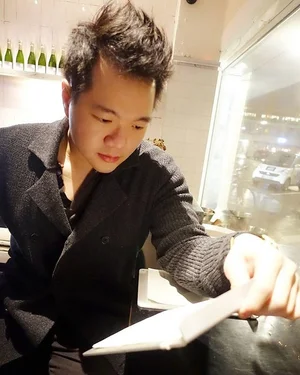
From a childhood fascination with French gastronomy to opening dozens of restaurants across Europe and Asia, Olivier Bendel has built a career around the belief that successful hospitality requires much more than excellent cooking. As the founder of L’Entrecôte and Déliciae Hospitality Management, the French-born restaurateur has helped shape Singapore's European dining landscape through distinctive restaurant concepts, operational discipline, and an enduring appreciation for the pleasure of sharing a meal.
Singapore's restaurant industry has attracted chefs and restaurateurs from around the world, each contributing different culinary traditions and approaches to hospitality. Some have established their reputations through elaborate fine dining menus, while others have concentrated on creating restaurants built around familiar dishes and memorable experiences.
For French restaurateur Olivier Bendel, the appeal of a restaurant has never depended exclusively on the complexity of its cuisine.
Instead, he believes that food, service, atmosphere, and the overall dining experience must work together.
This philosophy became central to the development of L’Entrecôte The Steak & Fries Bistro, which Bendel established on Duxton Hill in 2010.
Inspired by the traditional Parisian steak-frites restaurant, L’Entrecôte introduced a deliberately focused concept to Singapore: a meal built around entrecôte steak, golden French fries, and a closely guarded signature sauce.
The simplicity of the offering contrasted with the increasingly elaborate dining concepts entering Singapore's restaurant market.
Yet L’Entrecôte developed into a lasting restaurant brand, expanding beyond its original Duxton Hill location.
Through Déliciae Hospitality Management, commonly known as DHM, Bendel subsequently developed and operated a collection of restaurants spanning French, Spanish, Italian, and other European culinary traditions.
His professional journey has also included leadership positions in France, international business development, and, more recently, restaurant expansion into Bangkok.
Behind these achievements is a career shaped by an early appreciation for gastronomy and a fascination with the many different elements required to create a successful restaurant.
A Childhood Fascination with Restaurants
Olivier Bendel was born in Paris, where his interest in food developed during childhood.
His appreciation for restaurants was encouraged particularly by his grandparents, who introduced him to the experience of dining in established hotels and restaurants.
In a 2013 interview with SG Magazine, Bendel recalled asking for his first cookbook when he was approximately eight years old.
His birthday celebrations also became opportunities to explore restaurants.
Rather than choosing conventional presents, he enjoyed selecting establishments where his parents would take him for a meal.
These experiences introduced him to a wide variety of cuisines, including traditional French, Asian, German, and Polish cooking.
The exposure encouraged him to understand food as something more than a daily necessity.
Restaurants offered an opportunity to encounter different traditions, observe hospitality, and experience the relationship between cooking and the atmosphere surrounding a meal.
One particularly influential experience occurred during his early teenage years.
In a July 2026 interview with Le Petit Journal Thailand, Bendel recalled requesting a meal at a three-Michelin-starred restaurant for his thirteenth birthday.
His parents took him to the celebrated Troisgros restaurant in Roanne, France.
During the visit, Bendel declined the children's menu and ordered sweetbreads.
He subsequently met chef Pierre Troisgros, who invited him into the kitchen.
The opportunity to observe the restaurant's professional operations left a lasting impression.
For Bendel, the experience helped confirm that he wanted to pursue a career in hospitality.
Although his subsequent professional journey would involve considerable business management, his original attraction to the industry was rooted in the pleasures of cooking and dining.
Studying Hospitality in Lausanne
After completing his secondary education, Bendel initially faced family expectations that he would pursue a different professional direction.
His father, a lawyer, encouraged him to study law.
However, Bendel's longstanding interest in restaurants eventually led him to abandon that path.
He enrolled at the École hôtelière de Lausanne in Switzerland, now known as EHL Hospitality Business School.
The institution has an established reputation for hospitality management education, combining practical industry knowledge with business and operational training.
For Bendel, the decision provided an opportunity to pursue his interests through a professional education.
His studies also helped establish an important characteristic of his later career.
Although he possessed a strong interest in cooking, he was equally concerned with the broader business of hospitality.
Restaurants require financial planning, staff management, operational coordination, and an understanding of customer expectations.
The success of an establishment depends on how these elements function together.
This perspective would become central to Bendel's professional philosophy, particularly as he progressed into management positions within a major French restaurant group.
Léon de Bruxelles: Learning to Operate Restaurants at Scale
Following his hospitality education, Bendel joined Léon de Bruxelles, a French restaurant chain specialising in mussels and French fries.
The concept was built around a relatively familiar and approachable combination: moules-frites.
Much like the steak-frites restaurant he would later establish in Singapore, Léon de Bruxelles demonstrated how a restaurant could develop a recognisable identity around a relatively narrow culinary speciality.
Bendel progressed rapidly within the organisation.
He initially became a restaurant director in Paris before eventually assuming the position of Managing Director of the group.
During his leadership, Léon de Bruxelles expanded significantly.
According to his July 2026 interview with Le Petit Journal Thailand, 47 restaurants opened in France during his tenure.
The experience introduced him to the challenges of operating a large restaurant organisation.
Managing multiple establishments requires consistency across locations while accounting for differences in staffing, customer behaviour, and operational conditions.
It also involves the ability to reproduce a recognisable restaurant experience without compromising the qualities that made the original concept successful.
For Bendel, these responsibilities provided valuable preparation for his subsequent entrepreneurial career.
The experience demonstrated that a straightforward culinary concept could support substantial expansion when accompanied by effective management systems.
However, his time with the organisation eventually came to an end following changes in its ownership and leadership.
Bendel subsequently pursued opportunities outside the traditional restaurant industry.
International Business Development and the Move to Asia
Following his departure from Léon de Bruxelles, Bendel spent several months travelling.
He later became involved in international business development for Nespresso's professional coffee operations.
The assignment emerged through a professional connection from his time in Lausanne.
His responsibilities involved developing new markets in Asia and the Americas, requiring extensive international travel.
According to Bendel's 2026 interview, the work eventually involved approximately twelve journeys around the world annually.
The experience expanded his knowledge of international business and introduced him to the commercial environments of different countries.
Although the industry differed from restaurant operations, the work involved many of the same underlying considerations.
Successful international expansion requires an understanding of local markets, customer expectations, distribution systems, and business partnerships.
These experiences would become relevant when Bendel eventually established his own hospitality group in Singapore.
By 2009, he was considering a significant change in lifestyle.
Having spent years travelling extensively for work, Bendel decided to move to Asia with his family.
Singapore became their destination.
At the time, Bendel intended to step away from professional life.
However, the prospect of retirement proved short-lived.
After several months, his interest in restaurants and hospitality returned.
He began developing the concept that would eventually become L’Entrecôte.
Establishing Déliciae Hospitality Management in Singapore
In 2010, Olivier Bendel founded Déliciae Hospitality Management.
The Singapore-based company was established to develop and operate restaurant concepts based on his experience in European hospitality.
Its first major venture was L’Entrecôte The Steak & Fries Bistro, which opened on Duxton Hill.
The choice of concept reflected several aspects of Bendel's professional background.
His experience at Léon de Bruxelles had demonstrated the commercial potential of restaurants built around a distinctive speciality.
His childhood in France had introduced him to the enduring appeal of traditional bistro cooking.
His international business experience had also provided an understanding of how established European dining concepts might be adapted to new markets.
L’Entrecôte brought these influences together.
Rather than offering an extensive menu of unrelated main courses, the restaurant concentrated on a single defining combination.
The concept drew inspiration from the Parisian steak-frites establishments that became popular during the twentieth century.
According to L’Entrecôte's official history, Bendel carefully developed the restaurant's version of the traditional dish, combining premium entrecôte steak with French fries and its signature sauce.
The restaurant opened in an area of Singapore that was developing into a destination for independent dining establishments.
Duxton Hill's restored shophouses and intimate streets provided a suitable setting for the Parisian-inspired concept.
Over time, the restaurant became the foundation of Bendel's hospitality group.
L’Entrecôte: Building a Restaurant Around One Dish
The central idea behind L’Entrecôte is deliberately uncomplicated.
Guests visit the restaurant primarily for steak frites.
The signature dish consists of sliced entrecôte steak accompanied by golden French fries and a proprietary sauce.
The fries are served on a free-flow basis, allowing diners to request additional portions throughout the meal.
This arrangement creates a dining experience with a clear identity.
Unlike restaurants offering extensive selections of main courses, L’Entrecôte concentrates its attention on preparing a familiar combination consistently.
The concept also places considerable importance on execution.
A restaurant built around one main dish cannot rely on variety to compensate for inconsistencies.
The beef must be cooked accurately, the fries served properly, and the sauce prepared to a consistent standard.
Service must also support the format.
Staff need to understand the menu, manage the pace of the meal, and ensure that guests receive the experience they expect.
For Bendel, the restaurant represents a combination of culinary tradition and operational discipline.
Its success depends as much on the reliability of the overall experience as on the individual components of the dish.
The restaurant also offers traditional French starters and desserts, including escargots, French onion soup, duck rillettes, and chocolate mousse.
These preparations reinforce the Parisian bistro atmosphere while allowing the signature steak-frites combination to remain the centrepiece.
For a detailed examination of the restaurant itself, explore our existing feature, L’Entrecôte Singapore: The Steak-Frites Bistro Built Around One Main Course.
The Importance of Atmosphere and Restaurant Design
Bendel's understanding of hospitality extends beyond the food served on a plate.
Throughout his professional career, he has emphasised the importance of creating a complete restaurant experience.
In his 2013 SG Magazine interview, he explained that the development of a restaurant concept must consider not only its cuisine but also the dining room, interior design, atmosphere, and expectations of its customers.
This philosophy is particularly relevant to L’Entrecôte.
The restaurant's identity is strongly associated with the visual and social characteristics of a traditional Parisian bistro.
Its setting is intended to complement the familiar French dishes served by the kitchen.
The relationship between cuisine and environment also helps distinguish the restaurant from a conventional steakhouse.
Although both may serve beef, L’Entrecôte offers a more specific cultural experience.
Guests encounter a restaurant designed around the atmosphere and traditions associated with Parisian steak-frites dining.
For Bendel, this coherence is important.
A restaurant's food, service, design, and identity should support the same overall concept.
This approach would influence the development of his subsequent restaurant ventures.
Rather than simply opening establishments serving different cuisines, Bendel sought to create distinct environments associated with particular dining traditions.
Expanding Beyond French Cuisine
Following the opening of L’Entrecôte, Déliciae Hospitality Management expanded into additional restaurant concepts.
One of its earliest developments was Sabio, a Spanish tapas bar.
Located near the original L’Entrecôte on Duxton Hill, Sabio introduced a different style of European dining.
Where L’Entrecôte concentrated on a single main course, Sabio encouraged guests to order multiple smaller dishes and share them.
The concept was intended to recreate the convivial atmosphere associated with Spanish tapas bars.
According to Bendel's interviews, the original Sabio was a relatively small establishment with approximately 25 seats.
However, the restaurant developed a lively atmosphere, with guests gathering outside to enjoy sangria and tapas.
Bendel subsequently expanded the concept through Sabio by the Sea at Sentosa Cove.
The location introduced Spanish tapas and grilled dishes to a waterfront dining environment.
This expansion demonstrated Bendel's interest in adapting restaurant concepts to different settings.
The fundamental identity of Sabio remained associated with Spanish food and convivial dining, but its presentation could be adjusted according to the characteristics of each location.
The success of these early ventures encouraged further expansion.
By the middle of the 2010s, Déliciae Hospitality Management had developed a varied portfolio of European restaurant concepts across Singapore.
Forlino, &MADE and the Growth of Déliciae
As DHM expanded, Bendel became involved in restaurants representing different aspects of European gastronomy.
Among these was Forlino, an Italian fine dining establishment overlooking Marina Bay.
The restaurant occupied a prominent location at One Fullerton and was associated with refined Italian cooking.
When DHM assumed responsibility for Forlino, Bendel chose to preserve the restaurant's existing identity rather than introduce extensive changes.
In a 2015 interview with Le Petit Journal Singapore, he explained that some restaurant concepts required substantial reinvention, while others were better served by maintaining the qualities that had established their reputation.
Forlino represented the latter approach.
Another important development was the group's collaboration with French chef Bruno Ménard.
Ménard had previously led L'Osier in Tokyo, where the restaurant held three Michelin stars.
Through their collaboration, DHM developed &MADE, a gourmet burger concept, and La Cantine, a French brasserie.
These projects demonstrated the group's willingness to explore different restaurant formats.
A traditional French steakhouse, a Spanish tapas bar, an Italian fine dining restaurant, and a gourmet burger concept all required different approaches to menu development and hospitality.
However, they shared an emphasis on creating recognisable identities.
Bendel's role involved ensuring that each concept was supported by appropriate operations, staffing, and commercial planning.
By 2015, the group operated approximately ten restaurants in Singapore.
Its growth established DHM as a notable independent hospitality business within the local restaurant industry.
Discover the People Behind Singapore's Restaurants
Singapore's dining landscape has been shaped by chefs, restaurateurs, and hospitality professionals who have brought different culinary traditions to the city.
From Olivier Bendel's Parisian-inspired steak-frites concept to Roberto Galbiati's journey from Milan to Singapore, every restaurant reflects the experiences and decisions of the people behind it.
Explore more chef profiles and restaurant stories through The Cuisine Journal.
Discover the people behind the plate.
Why Running a Restaurant Requires More Than Cooking
One of Bendel's most distinctive professional beliefs is that restaurant management requires a combination of abilities extending far beyond culinary expertise.
In his 2015 interview with Le Petit Journal Singapore, he discussed the challenges of operating restaurants in Singapore.
At the time, the city had experienced considerable restaurant expansion.
New concepts were entering the market, often supported by investors attracted to the apparent opportunities within the hospitality industry.
However, Bendel cautioned against the assumption that opening a successful restaurant required only sufficient capital and a prominent chef.
He argued that hospitality involved a much broader collection of responsibilities.
Restaurant owners needed to understand cooking, design, customer service, staffing, and financial management.
The quality of the food was essential, but it could not compensate indefinitely for weaknesses elsewhere in the operation.
Bendel also expressed concern about the increasing celebrity status of chefs.
He acknowledged that television programmes and media attention had encouraged young people to enter the profession.
However, he believed that the emphasis on celebrity could encourage some aspiring chefs to pursue recognition before developing sufficient practical experience.
For Bendel, professional cooking required years of learning and discipline.
The same was true of restaurant management.
A successful establishment depended on people who understood the everyday realities of hospitality rather than concentrating exclusively on its public image.
These observations remain central to understanding his career.
Although he is professionally trained and has held executive culinary responsibilities, Bendel's most significant achievements have involved developing and operating restaurant businesses.
Understanding the Challenges of Singapore's Restaurant Industry
Bendel's experience in Singapore has provided him with firsthand knowledge of the challenges facing independent restaurant operators.
In his 2015 Le Petit Journal interview, he identified high operating costs and the difficulty of recruiting qualified employees as significant obstacles.
These concerns were particularly relevant to businesses attempting to expand across multiple locations.
A restaurant may develop a successful concept, but reproducing that experience requires reliable employees and consistent operating procedures.
As the number of establishments increases, these requirements become more complicated.
Bendel also recognised that different restaurant concepts have different lifespans.
A focused establishment such as L’Entrecôte can build a stable customer base around a recognisable speciality.
Other concepts, particularly bars and entertainment-oriented venues, may depend more heavily on changing consumer preferences.
During the 2010s, DHM experimented with several bar concepts on Club Street.
These included 83 and Bumbo, followed by plans for a sports-oriented venue called The Bucket List Bar.
Bendel discussed how the group had responded when particular concepts failed to develop the anticipated customer base.
Rather than continuing indefinitely with an unsuccessful format, the business considered changes to the concept or its operations.
This willingness to reassess commercial decisions became an important part of his approach to entrepreneurship.
The experience also demonstrated that not every restaurant or bar developed by an established hospitality group would become a permanent success.
For Bendel, operating restaurants required continuous evaluation and adaptation.
Innovation, Consistency and the Importance of Customers
Although DHM developed several different restaurant concepts, Bendel's approach to innovation was grounded in practical business considerations.
He did not regard novelty as an objective in itself.
Instead, new ideas needed to correspond with customer expectations and the characteristics of their intended locations.
In his 2013 SG Magazine interview, Bendel explained that inspiration could come from travel, books, conversations, and everyday experiences.
However, turning an idea into a functioning restaurant required much more than inspiration.
The concept needed to be commercially viable and capable of maintaining consistent standards.
This distinction is apparent in the contrasting approaches he took to different establishments.
L’Entrecôte succeeded through repetition and a clearly defined menu.
Sabio offered a more social dining format built around sharing.
Forlino retained its established identity after joining DHM.
Other concepts underwent changes when their original formats failed to attract sufficient customers.
These examples demonstrate an approach based on adapting business decisions to the circumstances of each establishment.
Bendel also placed considerable importance on customer loyalty.
In an earlier interview with Le Petit Journal, he described the satisfaction of seeing guests return after a positive dining experience.
For him, returning customers provided an indication that a restaurant had successfully delivered on its promises.
The objective was therefore not simply to attract attention during an opening period.
It was to establish businesses capable of maintaining relationships with guests over time.
Building Teams and Developing Hospitality Professionals
As Déliciae Hospitality Management expanded, Bendel became responsible for a growing workforce.
The group developed from a small organisation into a business employing approximately 200 people within its early years.
This growth introduced additional responsibilities in recruitment, training, and employee development.
Bendel has repeatedly identified staffing as one of the most important challenges facing Singapore's hospitality industry.
Restaurants depend on skilled employees across a wide range of positions.
Kitchen personnel must maintain food quality and safety, while front-of-house teams are responsible for service, customer relationships, and the overall dining experience.
Managers must coordinate these activities while balancing operating costs.
In interviews discussing DHM's development, Bendel emphasised the importance of finding employees who understood the demands of hospitality and were willing to develop professionally.
He also expressed satisfaction in creating opportunities for people to progress within the organisation.
This approach reflects his own professional background.
Having advanced from restaurant management at Léon de Bruxelles to broader executive responsibilities, Bendel understood the importance of experience accumulated through different stages of a career.
His leadership philosophy therefore placed value on practical knowledge alongside enthusiasm.
The group's continued development required employees capable of maintaining the identity of its different restaurant concepts without relying entirely on the direct supervision of its founder.
Becoming a Singapore Citizen
Singapore became more than a professional destination for Bendel.
After relocating to the country with his family in 2009, he established DHM and developed much of his entrepreneurial career within the local hospitality industry.
In 2014, he became a Singapore citizen.
The decision reflected the long-term relationship he had developed with the country.
In earlier interviews, Bendel described Singapore's multicultural character as one of its principal attractions.
He appreciated the diversity of the city's population and its willingness to embrace different culinary traditions.
For a restaurateur whose business involved introducing European dining concepts, this environment offered opportunities to develop establishments serving customers with varied cultural backgrounds.
His professional experience also gave him an understanding of the challenges associated with operating in Singapore.
High costs, competitive market conditions, and labour constraints required restaurant businesses to remain commercially disciplined.
Nevertheless, Singapore continued serving as the centre of DHM's operations.
The company's development reflected Bendel's decision to establish a long-term hospitality business within the city rather than treating Singapore as a temporary international assignment.
Beyond Restaurants: Catering and Hospitality Management
As DHM matured, the group's operations expanded beyond conventional restaurant dining.
One important development was Déliciae Catering Co., which provided catering services for private celebrations, corporate events, and other hospitality occasions.
The business combined Bendel's restaurant management experience with the culinary and event expertise of Angela May.
May, a chef and culinary professional with a background in hospitality and food media, became Director of Culinary and Events.
Together, they developed a catering operation serving clients with different requirements.
According to Déliciae Catering Co.'s official company profile, the business drew upon the group's experience in French, Italian, Spanish, and international cuisine.
Catering presents a different set of operational challenges from conventional restaurant service.
Food may need to be prepared and transported to unfamiliar locations, while service must accommodate specific event schedules and guest numbers.
Menus may also require adaptation according to dietary preferences, equipment limitations, and the format of the occasion.
For Bendel, catering represented a natural extension of the management knowledge accumulated through his restaurant career.
The wider DHM group also developed hospitality consultancy services covering restaurant concepts, operational management, interior design, menu development, branding, and marketing.
These services reflected his longstanding belief that successful hospitality depends on the coordination of numerous disciplines.
Rather than concentrating exclusively on cooking, the business offered support across the broader process of developing and operating dining establishments.
L’Entrecôte's Continued Expansion in Singapore
More than fifteen years after opening its original Duxton Hill restaurant, L’Entrecôte continues to operate in Singapore.
The brand has expanded through several locations over the course of its history.
Its official website currently lists restaurants at Duxton Hill, River Valley, and Siglap.
Each location maintains the central steak-frites concept that established the restaurant's identity in 2010.
The Duxton Hill restaurant remains the original home of the brand.
Its setting continues to reflect the intimate atmosphere associated with the neighbourhood's restored shophouses.
The River Valley location, at 18 Mohamed Sultan Road, provides another interpretation of the Parisian-inspired bistro experience.
The restaurant's opening was publicised in December 2025, introducing the established concept to diners in the Robertson Quay area.
L’Entrecôte's Siglap location extends the brand into Singapore's eastern residential districts.
Although the restaurant settings differ, the culinary identity remains consistent.
Guests can expect the signature entrecôte steak, free-flow French fries, and proprietary sauce that have defined the concept since its establishment.
This consistency is important to understanding Bendel's approach to restaurant development.
Rather than introducing major changes to the menu with each new location, the brand concentrates on reproducing an experience that customers already recognise.
The model draws directly upon the lessons of his earlier career at Léon de Bruxelles.
A restaurant built around a distinctive speciality can expand successfully when its core offering remains clear and its operations are carefully managed.
Bangkok: A New Chapter in Southeast Asia
After more than a decade developing restaurant concepts in Singapore, Bendel began expanding his activities into Thailand.
In 2024, he turned his attention to Bangkok.
The move reflected both commercial considerations and his continuing interest in developing hospitality businesses within different markets.
In a July 2026 interview with Le Petit Journal Thailand, Bendel discussed the challenges facing Singapore's restaurant industry and his decision to diversify DHM's operations.
Bangkok offered an opportunity to develop new concepts within a different commercial environment.
His initial projects included the introduction of Sabio, the Spanish tapas concept previously established in Singapore.
The restaurant first operated in the Sukhumvit area before relocating to the voco Bangkok Surawong hotel.
The revised concept became known as Tasca Sabio.
Its menu and atmosphere continued drawing inspiration from Spanish tapas traditions.
Bendel also became involved in Jae Bank Isaan Grill, a restaurant specialising in the cuisine of northeastern Thailand.
Isaan cuisine is associated with distinctive regional preparations, including grilled meats, aromatic salads, fermented ingredients, and combinations of sour, spicy, and savoury flavours.
For Bendel, this represented a departure from the European cooking traditions that had defined much of his professional career.
In the interview, he acknowledged that Isaan cuisine required him to work with culinary knowledge outside his established specialisation.
The venture reflected his willingness to learn from different traditions while applying his experience in restaurant development.
Seventy-Seven Restaurants Across a Career
By July 2026, Bendel estimated that he had participated in the opening of 77 restaurants throughout his professional career.
The figure included establishments developed during his leadership at Léon de Bruxelles, as well as subsequent ventures in Singapore and Thailand.
It should not be interpreted as the number of restaurants currently operated by DHM.
Rather, it reflects the cumulative scale of his career in restaurant management and development.
His professional journey has involved several distinct phases.
At Léon de Bruxelles, he participated in the expansion of an established French restaurant chain.
Through DHM, he developed independent dining concepts inspired by different European culinary traditions.
His recent projects in Bangkok introduced another stage of regional expansion.
These experiences demonstrate a consistent interest in transforming culinary ideas into functioning businesses.
They also provide an unusually broad perspective on restaurant operations.
Bendel has worked with focused single-speciality restaurants, casual dining concepts, fine dining establishments, bars, catering services, and hospitality consultancy projects.
Each has required different operational approaches.
However, his underlying philosophy has remained largely consistent.
A successful restaurant must offer a clear concept, maintain appropriate standards, and provide an experience that customers want to repeat.
The Continuing Influence of Olivier Bendel
Olivier Bendel's career illustrates the importance of restaurateurs within the wider culinary industry.
Although chefs often receive considerable public attention, the development of successful restaurants also depends on people who understand operations, design, service, staffing, and long-term business strategy.
Bendel's professional background encompasses all these areas.
His early fascination with gastronomy encouraged him to pursue hospitality education in Lausanne.
His career at Léon de Bruxelles introduced him to the complexities of expanding a restaurant chain.
His subsequent international business experience provided knowledge of developing markets beyond France.
After relocating to Singapore in 2009, he established DHM and introduced L’Entrecôte, a restaurant built around a familiar Parisian speciality.
The business subsequently expanded into Spanish tapas, Italian dining, contemporary restaurant concepts, and catering.
More recently, Bendel has pursued opportunities in Thailand, extending his professional activities into another Southeast Asian market.
Yet despite the variety of concepts he has developed, L’Entrecôte remains particularly representative of his approach.
The restaurant concentrates on a simple combination of steak, French fries, and sauce.
Its appeal lies not in elaborate culinary invention but in the consistency of a recognisable dining experience.
For Bendel, that consistency depends on far more than the kitchen.
Food, service, atmosphere, staffing, and management must work together to create an establishment that guests enjoy returning to.
His career demonstrates that hospitality is both a culinary profession and a demanding business discipline.
It also illustrates how traditional European dining concepts can be successfully introduced into Singapore when adapted thoughtfully to the local market.
More than fifteen years after opening his first restaurant on Duxton Hill, Bendel continues developing hospitality businesses across Southeast Asia.
His professional journey remains connected to the fascination with restaurants that began during childhood, when visits to celebrated dining establishments inspired him to pursue a career built around food and hospitality.
For Olivier Bendel, the restaurant has always been more than a place to eat.
It is an environment where cooking, service, atmosphere, and the pleasure of gathering around a table come together.
Continue Exploring The Cuisine Journal
From traditional French bistros to contemporary restaurants introducing new interpretations of regional cuisines, Singapore's dining industry continues to evolve through the people who create and operate its establishments.
Discover more culinary personalities, including Antonio Manetto, the Neapolitan chef who made Singapore home, or explore the distinctive approach to pizza developed by Ciro Sorrentino.
For more dining discoveries, browse our Singapore restaurant and venue directory or explore our curated culinary collections.
The Cuisine Journal — Discover the people behind the plate.