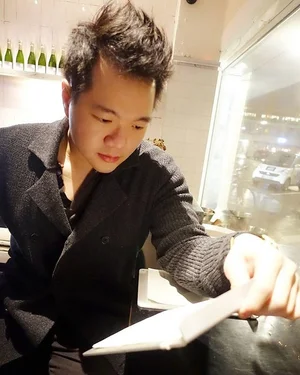
From his mother's gamjatang restaurant in Seoul to the kitchens of Tetsuya Wakuda in Sydney and Singapore, chef-owner Sun Kim has spent his career exploring the relationship between technique, tradition, and personal identity. At Meta Restaurant, his interpretation of contemporary Korean cuisine has earned two Michelin stars, international recognition, and a distinctive place within Singapore's fine dining landscape.
When Sun Kim opened Meta Restaurant in Singapore in November 2015, he had already accumulated considerable experience in professional kitchens. He had worked in France-inspired and Italian restaurants in Seoul, trained under celebrated Japanese-Australian chef Tetsuya Wakuda in Sydney, and continued that association at Waku Ghin in Singapore.
Yet despite this international experience, Kim had not fully established the culinary identity that would eventually define his restaurant.
Meta began as a contemporary dining concept incorporating influences from Korean, Japanese, and European cuisine. Its dishes demonstrated the techniques he had learned throughout his career, combining premium ingredients with carefully structured presentations.
Over time, however, Kim began reconsidering what he wanted his food to communicate.
Rather than continually introducing more elaborate preparations, he gradually reduced unnecessary elements and placed greater emphasis on the flavours he remembered from childhood.
Korean fermented ingredients, traditional rice preparations, seafood, and familiar dishes from his upbringing became increasingly important.
The transformation proved significant.
Meta received its first Michelin star in 2017 and a second in 2024, establishing itself among Singapore's most recognised restaurants.
In 2026, the restaurant was named Restaurant of the Year at the Tatler Best Awards in Singapore.
Yet Kim's ambitions extend beyond awards.
His goal is to create a restaurant where guests return because they genuinely enjoy the food, and where the techniques accumulated throughout his international career support the Korean flavours that remain central to his identity.
Growing Up in Korea: A Childhood Surrounded by Food
Sun Kim was born in Busan, South Korea, and raised in Seoul.
His earliest experiences with food were closely connected to his mother's restaurant, which specialised in gamjatang.
Gamjatang is a traditional Korean soup prepared with pork bones, potatoes, vegetables, and seasonings. The dish is known for its substantial character and deeply flavoured broth.
For Kim, the restaurant was part of everyday family life.
He grew up surrounded by the activities of a working kitchen, observing the preparation of food and the interactions between the restaurant's employees and customers.
According to a 2026 Tatler Asia interview with Sun Kim, several of his childhood friends also came from families operating restaurants.
One friend's family ran a Korean-Chinese restaurant, while another operated a seafood hotpot establishment.
As children, they frequently moved between these restaurants, sharing meals and experiencing different styles of cooking.
The environment made food an ordinary but important part of Kim's upbringing.
It also introduced him to the diversity of Korean cuisine beyond the dishes prepared at home.
His earliest cooking experience was considerably simpler than the elaborate preparations he would eventually create at Meta.
As a child, Kim prepared egg fried rice with ketchup for himself and his older brother when their parents were working.
The dish became a personal family memory.
In his Tatler interview, Kim recalled that his brother continued requesting the preparation during visits to Singapore.
Although Kim now possesses extensive professional experience, the childhood dish remains meaningful because of the circumstances in which it was originally prepared.
This relationship between food and memory would eventually become central to his culinary philosophy.
Discovering Professional Cooking in Seoul
Kim's interest in cooking developed into a professional ambition while he was still young.
He began working in restaurants in Seoul, gaining experience in kitchens serving French and Italian cuisine.
These early appointments introduced him to European cooking techniques and the discipline expected within professional restaurant environments.
However, Kim's aspirations extended beyond the kitchens in which he was working.
He became fascinated by the possibilities of contemporary fine dining, particularly the ways chefs could transform familiar ingredients into elaborate and visually distinctive preparations.
One important influence emerged through cookbooks.
During his days away from work, Kim visited bookshops to explore publications by internationally recognised chefs.
It was there that he discovered the work of Tetsuya Wakuda.
Wakuda, a Japanese-born chef who established his reputation in Australia, was recognised for combining Japanese influences with European techniques.
His restaurant, Tetsuya's in Sydney, became internationally celebrated for its distinctive interpretation of contemporary cuisine.
Kim was particularly impressed by the visual presentation of Wakuda's dishes.
The photographs demonstrated how technical precision, ingredient selection, and composition could produce food that resembled an artistic creation.
For Kim, the discovery provided a new professional ambition.
He wanted to work in Wakuda's kitchen and learn the techniques behind his cooking.
Achieving that goal would require him to leave Korea.
Moving to Sydney and Training at Le Cordon Bleu
In 2011, Kim moved to Sydney, Australia.
The decision represented a significant turning point in his career.
He was leaving an established professional environment in Seoul to pursue opportunities within a different culinary culture.
His move also required him to develop his English-language abilities.
Kim enrolled at Le Cordon Bleu in Sydney, undertaking formal culinary training while continuing to pursue his ambition of working at Tetsuya's.
The institution provided opportunities to strengthen his technical knowledge within a structured educational environment.
However, his principal objective remained securing a position in Wakuda's restaurant.
Kim repeatedly applied for opportunities at Tetsuya's until he was eventually accepted.
The appointment placed him within one of Australia's most internationally recognised fine dining establishments.
Between 2011 and 2013, he trained under Wakuda, developing a deeper understanding of the chef's approach to ingredients and culinary technique.
The experience would become one of the most influential periods of his professional career.
Learning from Tetsuya Wakuda
Tetsuya Wakuda's cooking demonstrated how different culinary traditions could be brought together without losing the identity of the chef responsible for the dishes.
His approach combined Japanese sensibilities with European techniques, placing particular importance on the quality of ingredients, balance, and precise execution.
For Kim, the experience provided more than an opportunity to learn individual recipes.
It introduced him to a way of thinking about cuisine.
Rather than treating Japanese, French, and other culinary traditions as separate systems, Wakuda demonstrated how their techniques could support a coherent personal style.
Kim later explained that much of his technical knowledge came from working under Wakuda.
He also regarded the chef as an enduring professional inspiration.
This influence would eventually become apparent at Meta.
Although Kim's restaurant developed a distinctly Korean identity, its cooking continued incorporating methods learned in Japanese and European kitchens.
The important distinction was how those techniques were used.
During his earlier years, Kim sometimes employed elaborate preparations to demonstrate technical ability.
As his cooking matured, he increasingly used those techniques to support the natural character of his ingredients and the Korean flavours he wanted to communicate.
Wakuda's influence therefore remained important even as Kim developed a more independent culinary identity.
Following Tetsuya Wakuda to Singapore
In 2014, Kim moved to Singapore to continue working under Wakuda at Waku Ghin.
Located at Marina Bay Sands, Waku Ghin was established as an intimate fine dining restaurant combining Japanese ingredients and culinary sensibilities with contemporary international techniques.
The restaurant's format placed considerable emphasis on the relationship between the kitchen and its guests.
Chefs prepared dishes within carefully organised dining spaces, allowing diners to observe elements of the cooking process.
For Kim, the appointment provided an opportunity to continue refining his skills within an internationally recognised restaurant environment.
It also introduced him to Singapore's rapidly developing fine dining industry.
By the middle of the 2010s, the city had become an important destination for international chefs and restaurant groups.
Luxury hotels, independent restaurants, and major hospitality developments were contributing to an increasingly varied culinary landscape.
Singapore's multicultural population also provided opportunities for chefs to introduce flavours and ingredients from different traditions.
For Kim, the city offered a setting in which he could eventually develop his own restaurant.
After several years working under Wakuda, he began considering how to establish an independent culinary identity.
The opportunity arrived in 2015.
Opening Meta Restaurant in 2015
Sun Kim opened Meta Restaurant on Keong Saik Road in November 2015.
The name was derived from metamorphosis, reflecting the idea of transformation and continuous development.
At the time, Kim was approximately 31 years old.
He had developed considerable technical experience but was still exploring how to express his own cooking philosophy.
Meta's early cuisine incorporated Korean, Japanese, and European influences.
The restaurant's dishes reflected the techniques Kim had learned throughout his career, combining ingredients and preparations from different culinary traditions.
However, the initial concept was not yet as clearly associated with Korean cuisine as it would become in subsequent years.
In his 2026 Tatler interview, Kim acknowledged that he had initially been more concerned with creating interesting dishes than establishing a particular culinary identity.
He experimented with different cooking techniques and frequently included numerous components within individual preparations.
This approach reflected his enthusiasm and professional ambitions as a relatively young chef-owner.
However, maintaining an independent restaurant also introduced responsibilities beyond cooking.
Kim was now responsible for developing menus, managing a kitchen team, maintaining consistency, and establishing a reputation in Singapore's competitive dining industry.
The experience gradually encouraged him to reconsider his priorities.
Rather than concentrating exclusively on complexity, he began asking which ingredients and techniques were genuinely necessary.
The resulting transformation would become central to Meta's development.
The Meaning of Metamorphosis
Meta's name has become particularly appropriate to the restaurant's history.
Since opening in 2015, its culinary direction has evolved considerably.
The early menus reflected Kim's international training, often presenting technically complex dishes incorporating influences from several culinary traditions.
Over time, he began removing elements that did not contribute meaningfully to flavour.
The changes were not immediate.
They developed through years of experimentation, experience with different ingredients, and growing confidence in his personal identity.
Kim increasingly recognised that the flavours he remembered from childhood could provide the foundation for his cooking.
Traditional Korean dishes, fermented condiments, rice preparations, and seasonal ingredients became more prominent.
Japanese and French techniques remained important, but their purpose changed.
Rather than defining the cuisine, they became tools for expressing Korean flavours in a contemporary setting.
This development also changed how Kim understood simplicity.
A dish did not necessarily require numerous garnishes or elaborate technical elements to be interesting.
Instead, the central ingredients and their relationship to one another could provide sufficient complexity.
In his Tatler interview, Kim reflected on the unnecessary additions that had characterised some of his earlier cooking.
He explained that removing those elements allowed the essential flavours to become clearer.
Meta's metamorphosis therefore represented more than a change in menu style.
It reflected Kim's development as a chef and his growing understanding of the food he wanted to prepare.
Returning to Korean Culinary Traditions
Although Kim's professional training was heavily influenced by European and Japanese cuisine, his personal culinary memories remained rooted in Korea.
As Meta evolved, he began drawing more deliberately from those traditions.
Fermented ingredients became particularly important.
Korean cuisine has a long history of fermentation, using techniques that develop complex flavours while preserving ingredients.
Among the most recognisable examples are gochujang, a fermented chilli paste, and doenjang, a fermented soybean paste.
Both belong to the broader family of Korean fermented condiments known as jang.
These preparations provide combinations of savouriness, saltiness, acidity, and fermented depth.
At Meta, Kim incorporates such ingredients into contemporary dishes rather than restricting them to traditional presentations.
Other Korean ingredients, including perilla oil, kimchi, seaweed, and omija, also contribute to the restaurant's flavour profile.
Omija, sometimes called the five-flavour berry, is valued for its distinctive combination of taste characteristics.
For Kim, these ingredients are important because they connect his contemporary cooking with familiar Korean flavours.
However, he does not regard the restaurant as limited exclusively to traditional Korean cuisine.
His approach allows room for techniques and ingredients from other countries while retaining Korean food as its central influence.
The distinction helps explain why Meta's cuisine is best understood as a personal interpretation of contemporary Korean gastronomy rather than a strict reproduction of traditional recipes.
Jeju Abalone: A Signature Dish Built Around Memory
One of Meta's most recognisable dishes is its preparation of Jeju abalone.
The dish has remained an important part of the restaurant's menu through several stages of its development.
Its significance extends beyond the use of a premium seafood ingredient.
For Kim, abalone is closely associated with Korean food culture, particularly the traditional preparation known as jeonbokjuk.
Jeonbokjuk is a rice porridge prepared with abalone.
In Korea, it is often associated with nourishment and comfort, particularly when someone is recovering from illness.
Kim's contemporary interpretation retains that emotional connection while incorporating the techniques developed throughout his professional career.
In his 2026 Tatler interview, he described preparing the abalone by placing it with Korean seaweed overnight before steaming it.
The abalone is subsequently grilled over charcoal and finished with butter.
The accompanying porridge incorporates ingredients including seaweed, anchovy stock, abalone liver, and sesame oil.
These components preserve the savoury character of the traditional preparation while introducing additional layers of flavour and texture.
The dish also features kamtae, a delicate Korean seaweed, alongside lily bulb.
The resulting composition brings together familiar Korean flavours with techniques associated with Japanese and French fine dining.
Its importance lies in the relationship between those elements.
The abalone is not simply a luxury ingredient placed within an elaborate presentation.
It serves as a means of expressing a traditional Korean preparation through Kim's personal culinary experience.
For a closer examination of the restaurant's dishes and dining experience, explore our existing feature, Meta Restaurant Singapore: Sun Kim's Korean Fine Dining Finds Its Own Voice.
Discover the Chefs Behind Singapore's Restaurants
Singapore's dining landscape is shaped by chefs whose professional journeys connect different cultures, ingredients, and culinary traditions.
From Sun Kim's interpretation of Korean cuisine at Meta to Shintaro Hozumi's journey as a third-generation sushi chef, each chef brings a different understanding of the relationship between tradition and contemporary cooking.
Explore more culinary personalities and restaurant stories through The Cuisine Journal.
Discover the people behind the plate.
A New Home on Mohamed Sultan Road
In 2023, Meta moved to 9 Mohamed Sultan Road.
The relocation represented another important stage in the restaurant's development.
Having operated on Keong Saik Road since 2015, including a move between addresses within the neighbourhood, Kim wanted a space that reflected the increasingly refined character of his cuisine.
The new restaurant adopted a restrained contemporary design, placing attention on the dining experience and the work taking place in the kitchen.
Its interior features a minimalist aesthetic with neutral colours and an intimate dining arrangement.
The open kitchen allows guests to observe elements of the preparation process.
According to a June 2024 feature published by DanielFoodDiary, the restaurant accommodated approximately 26 guests at the time.
This relatively small capacity allowed the kitchen to concentrate on a carefully structured tasting-menu experience.
The relocation also coincided with a period of growing recognition for Kim's cooking.
Meta had already received one Michelin star, but its cuisine was becoming increasingly distinctive.
Korean ingredients and culinary memories were now more central to the menu, while the restaurant's presentation had become more restrained.
The new dining room provided an environment suited to that development.
Rather than relying on elaborate decoration, the restaurant allowed the dishes and their preparation to become the principal focus.
For Kim, the move represented another expression of Meta's continuing transformation.
Two Michelin Stars: Recognition in 2017 and 2024
Meta received its first Michelin star in 2017, two years after opening.
The recognition established the restaurant among Singapore's notable fine dining establishments.
However, Kim continued refining the cuisine over the following years.
The restaurant's move towards a more recognisably Korean identity coincided with increasing international attention.
In 2021, Meta received the American Express One To Watch Award from Asia's 50 Best Restaurants.
The distinction recognised the restaurant as an emerging establishment with considerable potential.
Meta also began appearing in the Asia's 50 Best Restaurants rankings.
The most significant Michelin milestone arrived in 2024.
That year, Meta received its second Michelin star.
The achievement placed the restaurant among Singapore's two-Michelin-starred establishments and represented an important stage in Kim's professional development.
However, the award should be understood within the context of the restaurant's gradual evolution.
Meta did not achieve its second star through an abrupt change in culinary direction.
Instead, its cooking had become increasingly focused over several years.
The restaurant's menu developed from an international contemporary approach towards a more personal interpretation of Korean flavours.
By 2026, Meta continued holding two Michelin stars.
For Kim, the recognition acknowledged the work of the restaurant's entire team.
Yet he has also expressed the belief that awards should not become the principal objective of running a restaurant.
His preference is to create food that encourages guests to return.
The Role of Korean Fermentation in Contemporary Fine Dining
Fermented ingredients occupy an important place in Meta's contemporary cooking.
Traditional Korean cuisine uses fermentation to develop complex flavours and preserve ingredients.
These preparations include kimchi, fermented soybean pastes, chilli pastes, and numerous regional variations.
At Meta, Kim incorporates these ingredients into dishes prepared using techniques accumulated through his international career.
The result is not necessarily a traditional Korean meal presented in miniature.
Instead, familiar flavours become part of a contemporary dining experience.
Gochujang, for example, can provide a combination of fermented depth, sweetness, and chilli heat.
Doenjang contributes savoury characteristics developed through soybean fermentation.
Perilla oil introduces a distinctive aromatic quality, while fermented vegetables can provide acidity and contrast.
These ingredients allow Kim to construct dishes around flavour relationships that are recognisably Korean.
His approach is particularly interesting because it reverses a pattern sometimes found in international fine dining.
Rather than using Korean ingredients merely to add an unusual accent to European dishes, Kim increasingly begins with Korean flavour traditions and uses international techniques to refine their presentation.
The distinction is central to Meta's identity.
The restaurant remains contemporary and internationally influenced, but its culinary foundations have become more closely connected to Kim's heritage.
Reinterpreting Gyeran Jjim and Other Familiar Dishes
Among the Korean preparations that have influenced Meta's menu is gyeran jjim.
The traditional dish consists of steamed eggs, usually prepared to produce a soft and delicate texture.
In Korean home cooking, gyeran jjim is often served as part of a larger meal.
Its appeal lies in its warmth, simplicity, and familiar flavour.
At Meta, Kim has presented a contemporary interpretation incorporating ingredients such as omija, basil, and crème fraîche.
The preparation retains the essential character of steamed egg while introducing additional flavour and texture.
This approach illustrates how Kim works with traditional dishes.
He does not necessarily reproduce their familiar appearance.
Instead, he identifies the characteristics that make a preparation meaningful and considers how they can be expressed through different techniques.
Other dishes follow similar principles.
Bibim guksu, a Korean preparation of mixed noodles, has appeared on Meta's menu with fermented chilli and perilla oil.
The combination preserves the dish's relationship with Korean seasoning traditions while allowing for contemporary presentation.
For Kim, the objective is not to demonstrate that traditional food can be made more complicated.
It is to use the techniques available to him while preserving the flavours that make those preparations recognisable.
Cooking from Childhood Memories
One particularly revealing example of Kim's culinary philosophy is his approach to rice.
Rice occupies a central place in Korean food culture, accompanying numerous meals and appearing in preparations ranging from porridge to elaborate mixed dishes.
For Kim, it is also connected to specific childhood memories.
In his 2026 Tatler interview, he recalled disliking the green pea rice prepared by his mother.
As a child, he refused to eat it.
Years later, however, he encountered exceptionally sweet seasonal green peas from France.
Their flavour caused him to reconsider the dish he remembered from childhood.
At Meta, he developed a preparation combining seasonal peas with rice cooked in a cast-iron pot.
The dish became an accompaniment to a meat course.
Its significance lies in how a childhood memory was transformed through professional experience.
Kim did not simply reproduce his mother's preparation.
Instead, he revisited the underlying idea after encountering an ingredient that changed his understanding of its possibilities.
The result connected Korean home cooking with the seasonal produce and techniques he had discovered during his international career.
This relationship between memory and reinterpretation has become increasingly important to Meta.
The restaurant's dishes are not merely technical demonstrations.
They often begin with a familiar flavour or experience that Kim wants to communicate in a contemporary form.
Seasonality and the Search for Korean Ingredients
Seasonality is another important aspect of Kim's cooking.
Although Meta draws upon Korean culinary traditions, its kitchen also works with ingredients sourced internationally.
The restaurant's menus change according to the availability and quality of seasonal produce.
For Kim, this approach creates opportunities to explore ingredients that may not have been familiar during his childhood.
At the same time, he has become increasingly interested in introducing Korean produce that remains relatively unfamiliar outside the country.
One example is dureup, a spring mountain vegetable associated with Korean seasonal cooking.
The vegetable has a distinctive combination of bitterness and sweetness.
In his Tatler interview, Kim described how its flavour communicates the character of spring.
This appreciation reflects his broader understanding of ingredients.
Rather than selecting produce exclusively for its luxury or rarity, he considers how its seasonal characteristics can contribute to a dish.
The approach also creates opportunities to connect Korean culinary traditions with ingredients from other countries.
His green pea rice is one example.
A familiar Korean preparation becomes the foundation for a dish incorporating French seasonal produce.
For Kim, such combinations are not necessarily intended to create fusion cuisine.
They reflect the practical reality of a chef whose professional experiences span several countries.
Recognising the Value of Restraint
One of the clearest changes in Kim's culinary philosophy has been his growing appreciation for restraint.
During Meta's early years, he experimented with numerous techniques and ingredients.
The objective was partly to create food that appeared distinctive within a competitive fine dining market.
However, experience gradually changed his understanding of what made a dish successful.
He began recognising that additional components could sometimes distract from the principal ingredients.
Removing unnecessary garnishes allowed the central flavours to become more apparent.
This development did not mean abandoning technical sophistication.
Meta's dishes continue involving elaborate preparation methods, careful ingredient selection, and detailed kitchen work.
However, the finished presentation has become more restrained.
The complexity is increasingly concentrated within the preparation rather than displayed through numerous visible components.
Kim's Jeju abalone illustrates this approach.
The dish involves several techniques, including overnight preparation with seaweed, steaming, charcoal grilling, and the development of a deeply flavoured porridge.
Yet the finished composition remains focused on a relatively small number of ingredients.
The objective is to communicate the flavour and character of abalone rather than overwhelm it.
For Kim, restraint has become an expression of confidence.
He no longer feels the same need to demonstrate every technique he has learned within a single dish.
Instead, he selects the methods that best serve the preparation.
Singapore as a Home and Culinary Influence
Although Kim was born and raised in South Korea, Singapore has become an important part of his personal and professional life.
He moved to the city in 2014 and established Meta the following year.
Over the subsequent decade, he built his restaurant career while developing a family life in Singapore.
Kim is married to a Singaporean, and the couple have a son.
He has described Singapore as his home and expressed appreciation for the city's multicultural dining culture.
This environment has influenced his understanding of cuisine.
Singapore diners encounter food from numerous traditions, including Chinese, Malay, Indian, European, Japanese, and Korean cooking.
For Kim, the willingness of local diners to explore different flavours has provided opportunities to develop a restaurant that does not fit neatly within a conventional category.
Although Meta is rooted in Korean cuisine, its dishes incorporate techniques from Japan and Europe.
Kim believes that Singapore's openness to international dining allows such an approach to be understood and appreciated.
The city has also introduced him to personal food memories unrelated to his Korean upbringing.
In his 2026 Tatler interview, he spoke about enjoying the Singaporean Indian food prepared by his mother-in-law.
Dishes such as chicken curry and prawn sambal have become part of his own understanding of comfort food.
These experiences demonstrate how his culinary identity continues evolving.
Korean food remains central to his professional cooking, but his personal definition of home has expanded to include Singapore.
The Importance of Mentorship and Kitchen Development
Kim's career has been shaped by the influence of experienced chefs.
His years with Tetsuya Wakuda were particularly important, providing technical knowledge and a model for developing a personal culinary identity.
However, his role at Meta has also placed him in the position of mentoring younger professionals.
As chef-owner, Kim is responsible for maintaining the restaurant's culinary standards while developing the abilities of its kitchen team.
The relationship between experienced chefs and younger colleagues is an important part of professional restaurant culture.
Technical skills are often developed through repeated practice, observation, and direct instruction.
At Meta, this includes the preparation of seafood, the handling of seasonal ingredients, and the techniques required to maintain consistency throughout a tasting menu.
Kim's professional influence can also be seen through chefs who have worked alongside him.
In his 2026 Tatler interview, he mentioned Kevin Wong of Seroja as one of the chefs who had previously worked with him at Meta.
The connection reflects the relationships that develop within Singapore's professional culinary community.
For Kim, the experience of working under Wakuda demonstrated how mentorship could influence a chef's understanding of cooking.
His own leadership now contributes to the development of other culinary professionals.
Recognition Beyond the Michelin Guide
Meta's development has been accompanied by recognition from several international restaurant organisations.
In 2021, the restaurant received the American Express One To Watch Award from Asia's 50 Best Restaurants.
The distinction recognised Meta as an establishment demonstrating considerable potential within the regional dining industry.
The restaurant subsequently appeared in the Asia's 50 Best Restaurants rankings.
In 2024, Meta was ranked No. 95 on the extended World's 50 Best Restaurants list.
By 2026, it appeared at No. 77 on the extended Asia's 50 Best Restaurants list.
That same year, Meta received the Restaurant of the Year distinction at the Tatler Best Awards in Singapore.
These achievements reflect the growing recognition of Kim's cooking.
However, he has expressed a preference for measuring the restaurant's success through the experiences of its guests.
In his Tatler interview, Kim explained that awards represented recognition of the team's work, but he did not want them to become the central objective of the restaurant.
Instead, he wanted Meta to develop a loyal customer base.
The distinction is significant.
Awards can attract attention and introduce restaurants to new audiences, but maintaining a successful establishment requires guests to continue finding value in the experience.
For Kim, the most meaningful outcome is when diners enjoy the food enough to return.
Looking Beyond Meta: A More Casual Expression of Korean Cooking
Although Meta remains the centre of Kim's professional career, he has also expressed an interest in developing a more casual Korean restaurant concept.
In his 2026 Tatler interview, he discussed plans for an establishment inspired by traditional Korean comfort food.
At the time, the project remained in development, with further details not publicly disclosed.
The proposed concept reflected another aspect of his culinary identity.
Although Meta presents Korean flavours through contemporary fine dining, Kim continues enjoying the traditional meals associated with family gatherings.
Korean barbecue is one example.
He described the experience of wrapping grilled meat in lettuce and perilla leaves, accompanied by vegetables and seasonings.
The preparation is associated with communal dining, where family members gather around a grill and share food.
For Kim, it is also part of his personal family routine.
He enjoys preparing Korean barbecue for his family on Sundays.
The proposed restaurant would therefore represent a different expression of the same culinary traditions that influence Meta.
Where Meta uses elaborate techniques and tasting-menu presentations, a more casual establishment could focus directly on the familiar experience of Korean home cooking.
The idea also reflects Kim's growing confidence in the food of his childhood.
Rather than moving further away from traditional cuisine, his professional ambitions increasingly return to the dishes that shaped his earliest experiences.
Sun Kim's Continuing Culinary Evolution
Sun Kim's professional journey reflects the development of a chef whose understanding of cuisine has changed considerably over time.
His childhood in Busan and Seoul introduced him to the everyday traditions of Korean cooking.
Working in his mother's gamjatang restaurant and sharing meals at the restaurants operated by his friends' families provided early experiences that would remain important throughout his life.
His subsequent career in Seoul introduced him to European culinary techniques.
Discovering Tetsuya Wakuda's cooking inspired him to move to Sydney, where he studied at Le Cordon Bleu and eventually secured a position at Tetsuya's.
His training continued at Waku Ghin in Singapore before he established Meta in November 2015.
The restaurant initially reflected a broad international approach, incorporating Korean, Japanese, and European influences.
However, Kim gradually recognised that the dishes most meaningful to him were those connected to his Korean heritage.
Through years of experimentation, he developed a more restrained style that placed familiar ingredients and memories at the centre of his cooking.
The restaurant's progression from one Michelin star in 2017 to two in 2024 reflected its growing reputation.
International recognition followed, including awards from Asia's 50 Best Restaurants and Tatler.
Yet Kim's most distinctive achievement may be the culinary identity that emerged through this process.
Meta no longer depends primarily on demonstrating the variety of techniques its chef has mastered.
Instead, those techniques support a deeply personal interpretation of Korean food.
Jeju abalone becomes a reflection of traditional porridge, while seasonal pea rice connects a childhood memory with ingredients discovered later in life.
Fermented condiments, seaweed, steamed eggs, and traditional noodles provide familiar foundations for contemporary dishes.
For Kim, the meaning of metamorphosis has therefore become increasingly clear.
Professional development does not always require abandoning earlier influences in pursuit of something entirely new.
Sometimes, it involves returning to familiar experiences with a greater understanding of their significance.
At Meta Restaurant, Sun Kim has transformed the flavours of his childhood into a distinctive expression of contemporary Korean fine dining.
His career demonstrates how international training, technical mastery, and personal memories can come together to create a culinary identity that remains connected to its origins while continuing to evolve.
Continue Exploring The Cuisine Journal
Singapore's culinary landscape is shaped by chefs whose professional journeys connect different cultures, traditions, and approaches to cooking.
Discover more culinary personalities, including Yuji Sato, the sushi chef who pays close attention to both his ingredients and his guests, or explore our dedicated feature on Meta Restaurant and Sun Kim's contemporary Korean cuisine.
For more restaurant discoveries, browse our Singapore dining and venue directory or explore our curated culinary collections.
The Cuisine Journal — Discover the people behind the plate.