Firangi Superstar Singapore: A Cinematic Love Letter to India on Craig Road
Firangi Superstar is a modern Indian restaurant on Craig Road built around an unusual premise: India as remembered, imagined and reinterpreted by outsiders. Its theatrical dining rooms, playful menu and global approach to Indian flavours turn the restaurant into something between a dining room, a film set and a deliberately exaggerated travel fantasy.
Firangi Superstar is not particularly interested in looking restrained.
Walk through the restaurant and the scenery keeps changing.
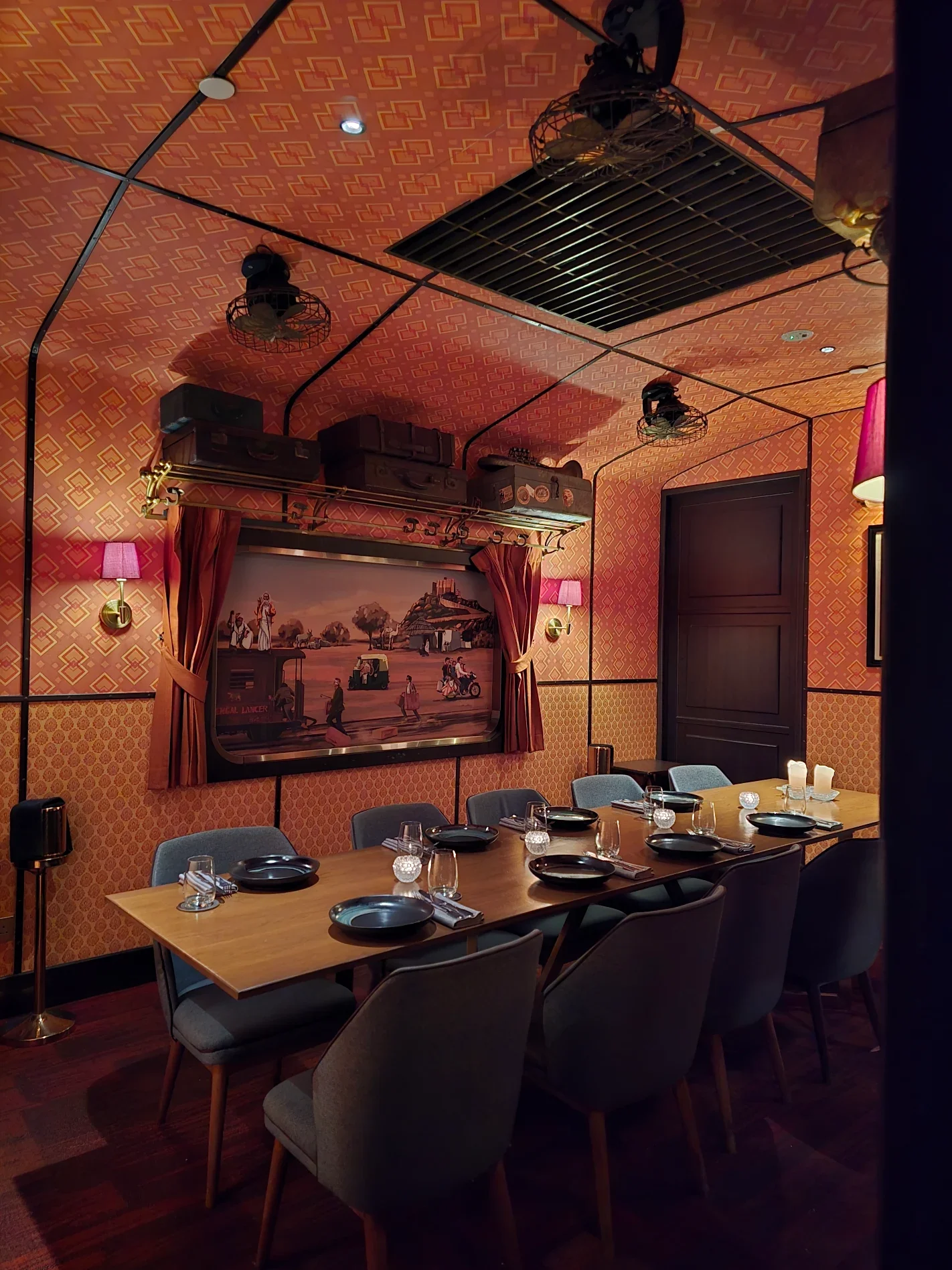
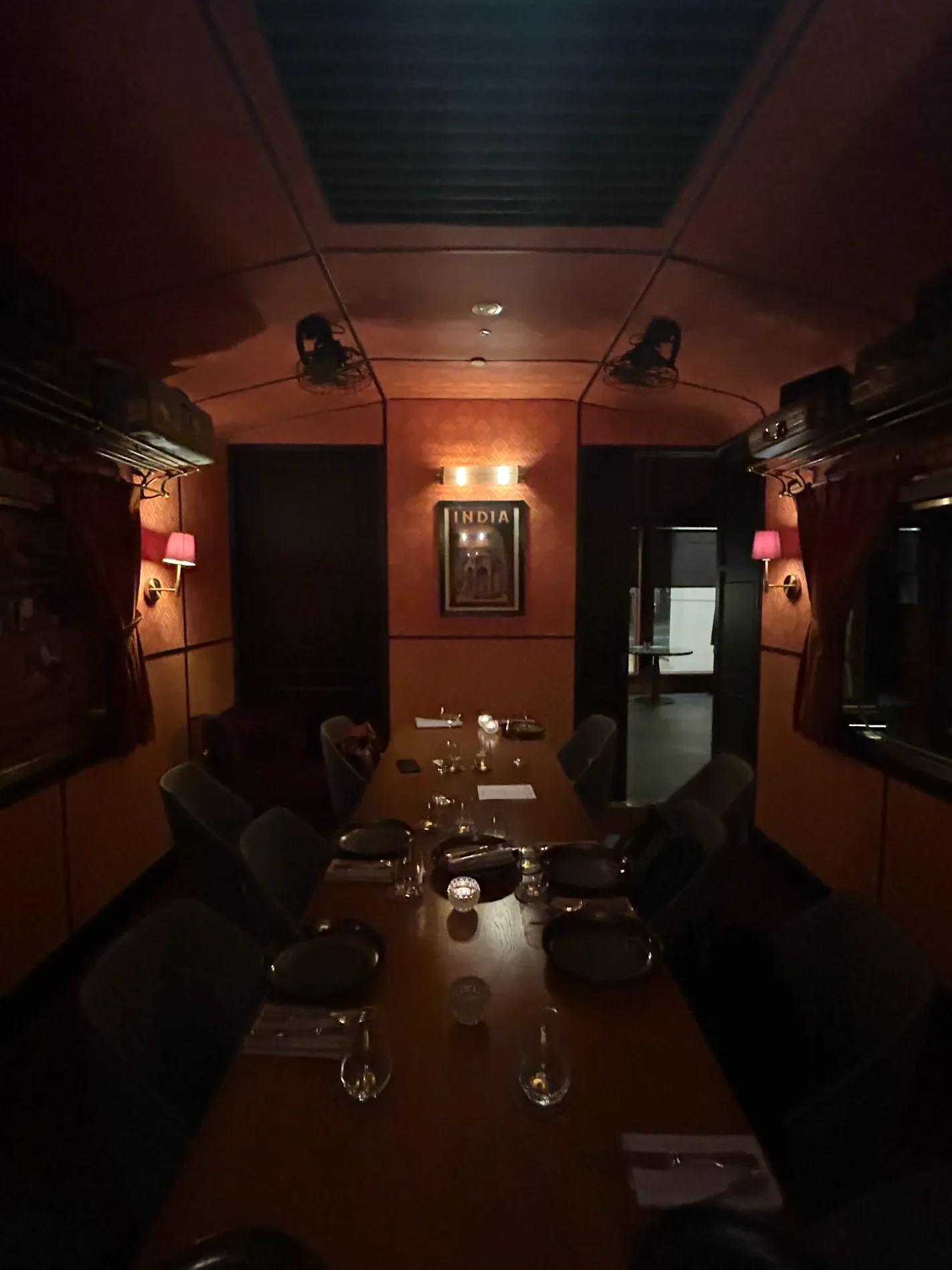
One room resembles an old railway carriage.
Another evokes a colonial-era club.
There are elephants.
Antique-looking objects.
Dark timber.
Deep colours.
Tiger imagery.
Velvet.
Pattern.
And enough visual detail that eating dinner can occasionally feel secondary to figuring out where exactly the restaurant has transported you.
That is deliberate.
Firangi Superstar describes itself as a “foreigner’s love letter to India” — a modern Indian restaurant imagining the country through a deliberately cinematic and kaleidoscopic lens.
The food follows the same idea.
Indian flavours remain recognisable, but dishes are pulled apart, reconstructed, combined with techniques from elsewhere and given names that rarely take themselves too seriously.
At 20 Craig Road, the result is a restaurant where the theatrical environment and the cooking are intended to tell the same story.
What Does “Firangi” Mean?
The restaurant's name explains much of the concept.
Firangi is a word historically used in India for a foreigner, particularly someone perceived as coming from Europe or the West.
Co-founder Rohit Roopchand has a more personal relationship with it.
Although born in Mumbai, he spent part of his childhood in Nigeria and later studied abroad. Returning to boarding school in India with a different accent meant he could himself be called firangi.
That ambiguity became useful.
Firangi Superstar was not intended to present itself as an authoritative definition of Indian food.
It was conceived from the perspective of someone looking at India from both inside and outside.
The CNA Lifestyle account of the restaurant's opening describes founders Rohit Roopchand and Michael Goodman framing the project as an expression of affection and gratitude towards India rather than an attempt at straightforward culinary reproduction.
That distinction remains essential to understanding the restaurant.
The Restaurant Is Designed Like a Film
Most restaurants have one visual identity.
Firangi Superstar effectively has several.
The original interior was divided into four principal environments:
The Officer's Club
The Old Railway Room
The Elephant Palace
The Jungle Lodge
Moving between them is almost like moving between scenes.
The Officer's Club uses dark wood, leather and objects associated with an imagined colonial-era salon.
The Old Railway Room references vintage Indian train travel.
The Elephant Palace draws visually from Rajasthan and the palatial architecture of Udaipur.
The Jungle Lodge becomes darker, greener and more tropical.
The Time Out Singapore profile of Firangi Superstar described the rooms as resembling individual movie sets, with the Old Railway Room in particular recalling the visual world of The Darjeeling Limited.
The theatricality puts Firangi Superstar in interesting company within Singapore.
KOMA Singapore similarly demonstrates what happens when the physical restaurant becomes part of the performance rather than simply the room in which food happens.
Firangi simply uses a completely different visual language.
India as an Imagined Journey
The interiors are not intended as a geographically precise reconstruction of India.
That would be almost impossible.
India is too large and culturally diverse to compress neatly into four rooms.
Instead, Firangi Superstar deliberately treats the country like an imagined journey.
Railways.
Palaces.
Clubs.
Forests.
Cinema.
Travel memories.
Objects collected or reproduced because they suggest something about the India the founders remember.
That gives the restaurant permission to exaggerate.
The concept is closer to storytelling than documentation.
The same distinction applies to the food.
Modern Indian, Rather Than Traditional Indian
Firangi Superstar describes itself as a modern Indian restaurant.
That wording matters.
The kitchen is not trying to serve definitive versions of regional Indian classics.
Instead, Indian flavour structures become starting points.
Aloo gobi can be dismantled.
Prata can become a waffle.
Corn can be treated through the lens of Mumbai street snacks and Mexican elote.
Crab cakes can carry Malabar flavours.
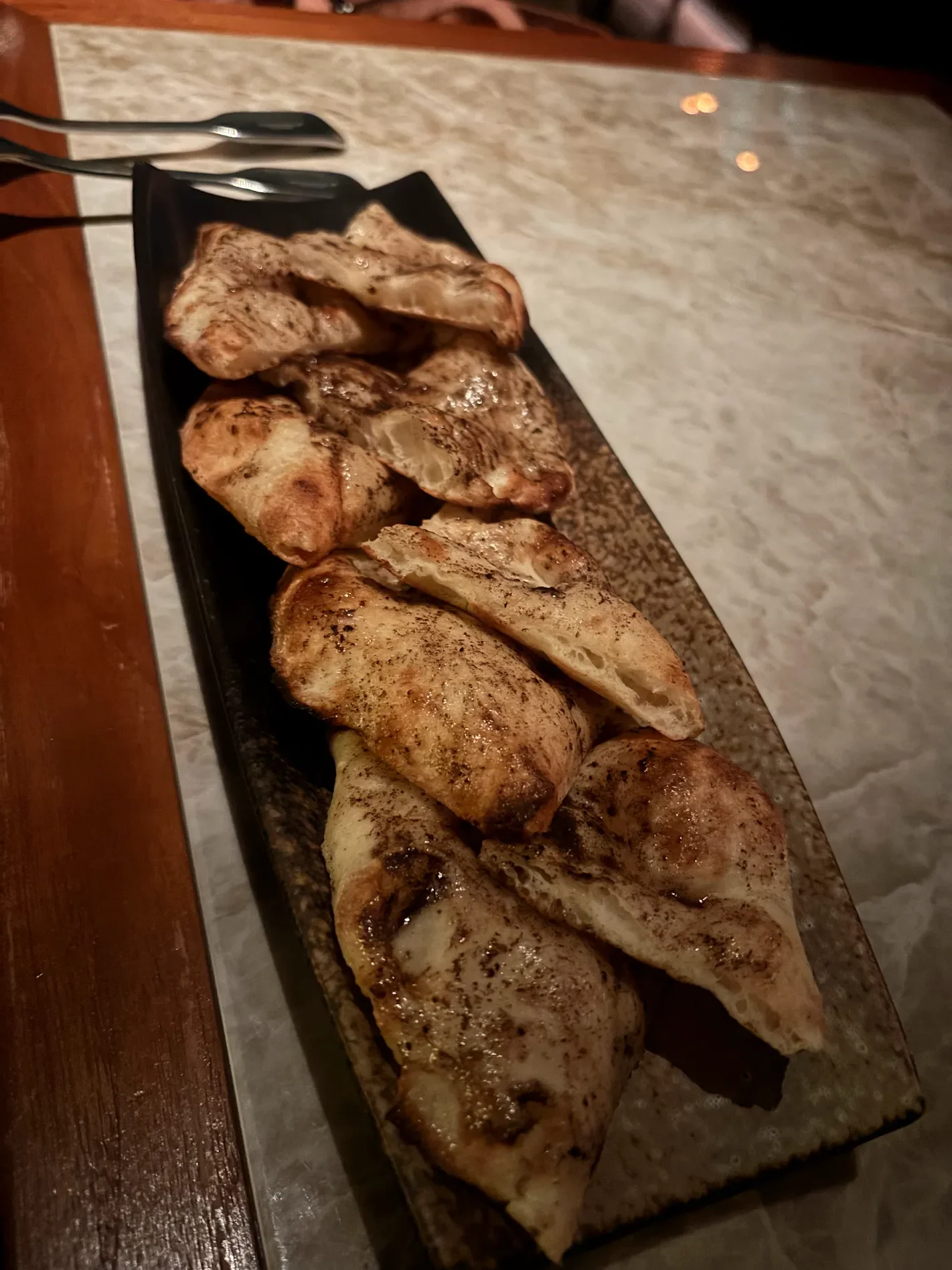
Black garlic can enter naan.
Iberico pork can sit within Indian seasoning.
That looseness occasionally creates debate among diners.
Some customers with close familiarity with Indian cooking describe the restaurant as clearly fusion-oriented rather than traditional, while the restaurant itself openly says that the menu is intended as a modern interpretation of Indian flavours.
That is probably the fairest framework through which to understand it.
Firangi Superstar is not trying to replace traditional Indian cooking.
It is playing with it.
This Is Not Aloo Gobi
One of the restaurant's longest-running ideas is announced directly in its name:
This Is Not Aloo Gobi.
Traditional aloo gobi is a straightforward North Indian combination of potatoes, cauliflower and spices.
Firangi Superstar takes those components and changes the architecture.
Earlier versions used cauliflower couscous, masala preparations and crisp potato.
More recent iterations have continued to rebuild the relationship between potato, cauliflower, spice and texture rather than simply plating a conventional curry.
The joke in the name works because diners understand what the dish is referencing.
It is not aloo gobi.
But it is difficult to understand fully without knowing aloo gobi.
That relationship between familiarity and reconstruction runs throughout the menu.
Prata Becomes a Waffle
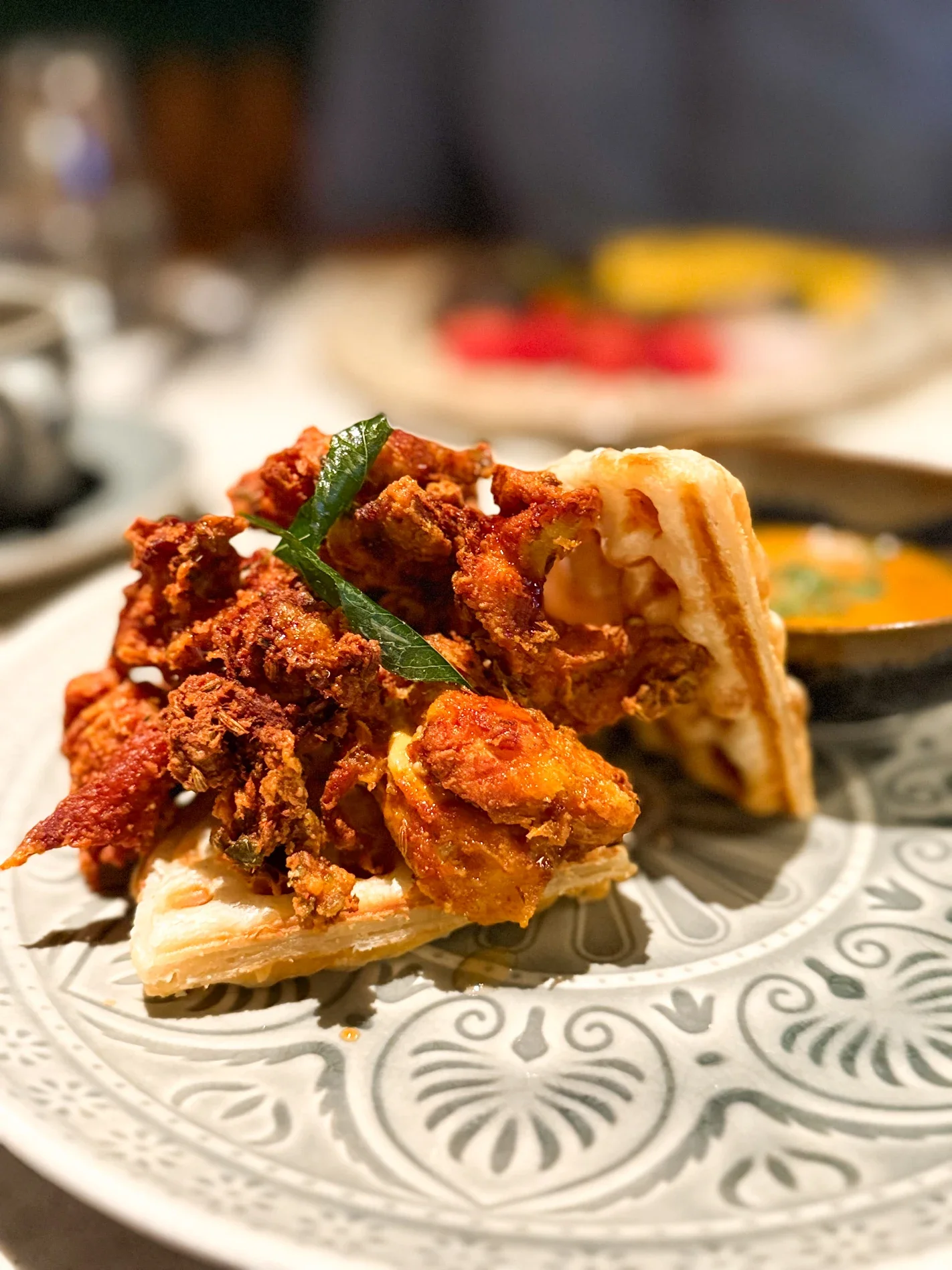
The Prata Waffle may be an even clearer expression of the Firangi approach.
Instead of serving prata flat from a griddle, the dough is transformed through a waffle format.
Then fried chicken enters.
Butter-chicken-inspired sauce enters.
The final structure recalls American chicken and waffles while the flavours point in several Indian directions.
It is deliberately hybrid.
And it became one of Firangi Superstar's most recognisable dishes.
Recent diners continue to mention the Prata Waffle with Madras-style fried chicken during the restaurant's Saturday brunch.
The dish makes little sense if culinary authenticity is measured entirely through preservation.
It makes much more sense if the objective is reinterpretation.
The Menu Keeps Changing
Firangi Superstar's current restaurant is no longer frozen in its 2021 opening form.
The menu has continued evolving.
The restaurant has continued developing new dishes around Indian flavours, international influences and its established appetite for playful reinterpretation.
That evolution is important because restaurants built around a strong concept can easily become trapped by their original signatures.
People expect the dish they saw online three years earlier.
The restaurant still needs something new to cook.
Firangi's solution has been to preserve the attitude more than any fixed collection of plates.
The food can change as long as it remains recognisably Firangi.
The Starter Box Turns Dinner into Theatre
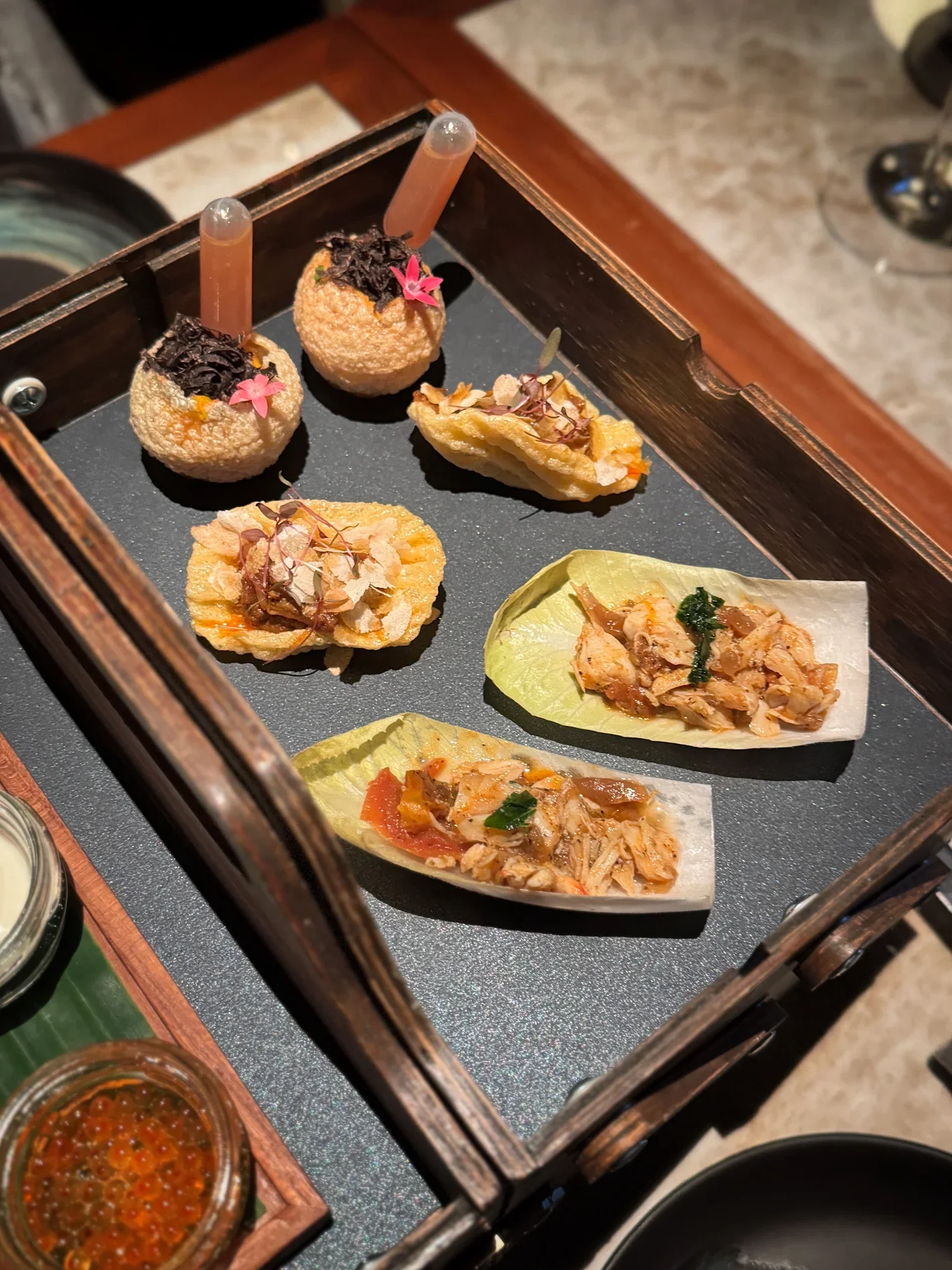
Recent diners frequently mention Out of the Box, a collection of small introductory bites.
It functions almost like a miniature tasting menu before the larger dishes begin.
The box format is theatrical.
It creates anticipation.
Compartments open.
Different textures appear.
One bite can be highly spiced.
Another creamy.
Another crisp.
Recent customer accounts mention combinations involving items such as caviar puri, murukku and lassi-inspired preparations.
The point is partly flavour.
But presentation clearly matters too.
Firangi Superstar understands that people start forming expectations before the food reaches their mouths.
Bombay Elote Crosses Continents
Bombay Elote shows another side of the restaurant.
Elote comes from Mexico.
Bombay points towards Mumbai.
Corn provides the bridge.
The restaurant combines Indian seasoning and textures with a food format that belongs somewhere else entirely.
That could easily become novelty for novelty's sake.
But the broader idea fits Firangi Superstar remarkably well.
This is food viewed by travellers.
The menu is comfortable allowing culinary languages to overlap.
That makes Firangi different from restaurants built around a clearly bounded national tradition, such as Antonio Manetto at Acqua e Farina, whose story is much more directly anchored to regional Italian cooking.
Firangi's boundaries are intentionally less stable.
The Restaurant Is Still Rooted in Indian Flavour
Global references do not mean Indian flavours disappear.
Chutneys remain important.
Tandoori spice appears.
Dal makhani appears.
Naan appears.
Kashmiri chilli appears.
Mughlai ideas appear.
Coastal flavours appear.
The restaurant simply refuses to let those references determine the final physical form of a dish.
That makes it useful to compare Firangi with Burma Social, another Singapore restaurant that builds a contemporary concept by moving between several historical and regional culinary influences rather than presenting cuisine as something culturally sealed off.
The approaches are very different.
The willingness to treat cuisine as something that moves is shared.
The Tandoori Lamb
Lamb has been an important recurring protein at Firangi Superstar.
Earlier menus featured Tandoori Lamb Saddle, with yoghurt-based seasoning and Indian aromatics.
Current diner accounts continue to mention tandoori-spiced lamb and the restaurant's preference for cooking the meat more like a premium restaurant main rather than burying it beneath sauce.
That is another characteristic of the restaurant's cooking.
Spice does not necessarily mean curry.
Indian flavour can be expressed through marinades, crusts, condiments, smoke and sauces surrounding a recognisable centrepiece.
Pork Has a Place Here Too
Firangi Superstar also demonstrates how far it is willing to move beyond expectations of a conventional Indian restaurant.
Iberico pork has appeared on the menu.
That immediately moves the restaurant away from a simplified international understanding of Indian cuisine built mainly around chicken, lamb and vegetarian food.
India itself contains enormous variation in pork consumption.
Coastal communities and several northeastern Indian cuisines have strong pork traditions.
Firangi's use of Iberico pork is therefore not inherently non-Indian.
But its premium European sourcing and contemporary presentation again reveal the restaurant's willingness to treat Indian flavours as a vocabulary rather than a strict rulebook.
Recent diners mention grilled Iberico pork alongside tandoori lamb and black garlic naan.
Crab, Coast and Regional References
Seafood provides another opportunity to move geographically.
Crab cutlets and coastal flavour combinations have appeared repeatedly.
A dish such as Coastal Highlands uses seafood in a format that diners recognise immediately while allowing the seasoning to point towards India.
Firangi's food therefore does not ask diners to know every regional reference.
You can recognise a crab cake first.
Then the spices tell you something else.
That approach makes the food accessible without necessarily reducing Indian flavour to the familiar international shorthand of tikka masala and naan.
Dal Makhani Still Has a Place
For all the experimentation, some dishes stay relatively close to their roots.
Dal makhani is one example.
Black lentils cooked slowly with richness and spice provide something important within a meal full of reconstructed food.
Not every plate needs a joke.
Not every dish needs to be reinvented.
Traditional or recognisable preparations give the menu reference points.
Without those, the more experimental dishes would have nothing to push against.
That balance between reinterpretation and familiarity is part of why modern restaurant cooking works when it works.
The Dining Room Is Part of the Menu
At Firangi Superstar, writing about the food without discussing the interiors would miss half the concept.
The restaurant does not treat decoration as background.
The décor tells diners what kind of world they have entered before the first plate arrives.
That is why individual rooms have identities.
It is also why the experience differs fundamentally from a minimalist fine-dining room where attention is funnelled almost entirely towards the plate.
Firangi wants your eyes to wander.
Visitors continue to describe the interior as one of the most memorable parts of the restaurant, even when their opinions of individual dishes differ.
That places it within a broader movement towards restaurants as immersive environments — a subject explored elsewhere in The Cuisine Journal's venue profiles.
A Restaurant Built During the Pandemic
Firangi Superstar opened in June 2021.
That date is significant.
Singapore was still dealing with Covid-era restrictions.
Travel was heavily disrupted.
The restaurant industry was unstable.
And Firangi Superstar opened a concept based fundamentally on travel and escape.
The timing unintentionally strengthened the idea.
People could not easily travel to India.
The restaurant offered a deliberately fictionalised version of the journey instead.
Its founders described the space as somewhere diners could escape, imagine and temporarily get lost.
That made Firangi Superstar particularly well suited to the moment in which it arrived.
The Dandy Collection Connection
Firangi Superstar came from The Dandy Collection, the hospitality group associated with concepts including Neon Pigeon and Fat Prince.
That background helps explain why the restaurant feels so concept-driven.
The idea is not simply:
“open a good Indian restaurant.”
Instead, a restaurant begins with a personality.
A visual world follows.
Food language follows.
Drinks follow.
Service follows.
Even the restaurant's written voice becomes part of the character.
Anyone reading Firangi Superstar's current social responses or website language can see that the brand deliberately speaks with a mischievous, exaggerated personality.
The restaurant is performing even when nobody is sitting at a table.
Firangi Superstar Has a Sense of Humour
That humour is important.
There are restaurants that describe every dish with solemnity.
Firangi generally refuses.
Dish names have historically included things such as:
This Is Not Aloo Gobi
Prata Waffle
and other deliberately irreverent titles.
The menu language allows the restaurant to communicate that modernisation does not necessarily have to mean making Indian food more serious.
Sometimes it means making it stranger.
That separates Firangi from modern restaurants that use technical minimalism to signal sophistication.
Saturday Becomes Champagne Superstar
Firangi Superstar also changes personality on Saturdays.
The Champagne Superstar Brunch runs from noon into the afternoon, with food-only and beverage packages available.
Recent diner accounts mention the Prata Waffle with fried chicken, Steak and Eggs with masala scrambled eggs, starter boxes and dessert selections as part of this daytime format.
The brunch demonstrates how easily the restaurant's food moves into another dining culture.
Indian brunch is not being defined here through dosa, idli or paratha breakfasts.
Instead, Firangi takes international brunch conventions and runs Indian flavours through them.
Again, the starting point is movement rather than preservation.
Guest Chefs Give Regional Indian Food Another Stage
The restaurant has also hosted regional food events.
Recent diners mention a Sindhi Supper Club featuring visiting chef Vicky Ratnani, offering dishes connected more explicitly with Sindhi cooking.
That kind of event creates an interesting counterpoint to Firangi's normal menu.
The everyday restaurant takes liberties.
A regional supper club can become more specific.
Both can coexist.
It is another reminder that “Indian cuisine” is far too large a category to be represented completely by any one restaurant.
Dessert Does Not Become Conventional at the End
The playful approach continues through dessert.
Recent menus and diner accounts mention preparations such as:
Banoffee Fritters
Bru Cannoli
cookies with white chocolate frosting,
chai-influenced sweets,
and dessert selections that move between Western pastry formats and Indian flavours.
The Bru Cannoli is particularly representative.
Cannoli is Italian.
Bru coffee is unmistakably associated with India.
The combination makes no attempt to pretend that the two traditions historically belong together.
Firangi simply decides that they can.
The Question of Authenticity
Any restaurant working this way eventually encounters the same question.
Is it authentic?
For Firangi Superstar, that may be the wrong question.
The restaurant tells you from the name that it is a firangi's perspective.
It tells you that the India inside is imaginary.
It tells you the food is modern.
It tells you that global references are part of the concept.
There is no attempt to disguise the reinterpretation as untouched tradition.
That does not mean every experiment will satisfy every diner.
Recent customer material contains both enthusiastic responses and criticism from diners who feel some dishes move too far away from the Indian flavour structures they expect.
That disagreement is almost inevitable.
The restaurant is built precisely in the space between recognition and reinvention.
A Love Letter Can Be Subjective
The phrase “love letter to India” is therefore more useful than “authentic Indian restaurant”.
A love letter is personal.
It selects memories.
It exaggerates.
It romanticises.
It leaves things out.
It says as much about the person writing it as the subject being described.
That is effectively what Firangi Superstar does.
Its India contains railways, palaces, clubs, tigers, jungles, street snacks, chutneys, tandoori spices, butter chicken, colonial references and contemporary global cooking.
It is not all of India.
It was never supposed to be.
The DestinAsian feature on Firangi Superstar similarly frames the restaurant around this idea of affection filtered through design, travel and contemporary cooking.
Five Years Later, the Concept Still Works
Firangi Superstar opened with a concept strong enough that it could easily have become gimmicky once the novelty wore off.
The interiors remain the interiors.
People have photographed the Elephant Palace before.
The Railway Room is no longer new.
Yet the restaurant continues because the menu can change underneath the scenery.
That may ultimately be the more important part of its design.
The dining rooms provide continuity.
The kitchen provides movement.
A new chef can alter the menu.
New dishes can arrive.
Brunch can develop.
Guest chefs can appear.
The restaurant still feels recognisably Firangi.
That is how a highly themed restaurant becomes something more durable than a themed restaurant.
For more Singapore establishments where food, environment and restaurant identity intersect, explore The Cuisine Journal Collections.
Firangi Superstar: Quick Information
Restaurant: Firangi Superstar
Cuisine: Modern Indian
Address: 20 Craig Road, #01-03, Singapore 089692
Concept: A cinematic “foreigner's love letter to India”
Known For: Modern interpretations of Indian flavours, theatrical interiors, Prata Waffle, This Is Not Aloo Gobi, contemporary tandoori dishes and Champagne Superstar Brunch
Frequently Asked Questions
What kind of restaurant is Firangi Superstar?
Firangi Superstar is a modern Indian restaurant that reinterprets Indian flavours through contemporary techniques and international culinary references rather than focusing exclusively on traditional recipes.
What does “Firangi” mean?
Firangi broadly refers to a foreigner or outsider. The name reflects the restaurant's concept of India viewed through an outsider's affectionate, imagined perspective.
When did Firangi Superstar open?
Firangi Superstar opened in June 2021 on Craig Road.
What are the different rooms at Firangi Superstar?
The restaurant became known for four cinematic spaces: The Officer's Club, Old Railway Room, Elephant Palace and Jungle Lodge.
Is Firangi Superstar traditional Indian food?
Not primarily. The restaurant deliberately presents modern interpretations of Indian flavours, often changing the form of familiar dishes or combining Indian seasoning with ideas from other cuisines.
What is the Prata Waffle?
The Prata Waffle transforms prata into a waffle-like format and pairs it with fried chicken and Indian-inspired sauces, creating Firangi Superstar's version of chicken and waffles.
Does Firangi Superstar serve brunch?
Yes. Champagne Superstar Brunch is served on Saturdays.
Are there vegetarian dishes?
Yes. Recent diners report vegetarian choices across several portions of the menu, consistent with the restaurant's broad use of vegetables, pulses and Indian flavour combinations.
Where is Firangi Superstar?
The restaurant is at 20 Craig Road, #01-03, Singapore 089692, in the Tanjong Pagar area.