Dirty Supper Singapore: Peter Smit’s Whole-Animal Restaurant in Tiong Bahru
Dirty Supper at Moh Guan Terrace is Chef Peter Smit’s constantly changing restaurant built around whole-animal cooking, grilling, seasonal produce and the idea that the less obvious parts of an ingredient deserve just as much attention as the prized ones.
There are restaurants built around signature dishes.
Dirty Supper is built around whatever turns up.
The restaurant at 78 Moh Guan Terrace in Tiong Bahru keeps its menu intentionally small and changeable, allowing Chef-Owner Peter Smit to work according to the animals, seafood and produce available to the kitchen rather than maintaining a large catalogue of permanent dishes.
Dirty Supper describes the principle simply as “pride in produce.”
That means whole-animal cooking, grilling over fire, using unusual cuts and finding somewhere useful for ingredients that other kitchens might overlook. (Dirty Supper)
It is also the clearest expression yet of a cooking philosophy Smit developed over years working in Australia, London and Singapore.
The Cuisine Journal has explored Peter Smit’s career separately, from his early experiments with nose-to-tail cooking in South Australia to positions at Pitt Cue and Rogan & Co. in Britain and his eventual move to Singapore.
Dirty Supper is where those experiences now converge.
The Whole Animal Is the Menu
Whole-animal cooking is sometimes discussed primarily as a sustainability practice.
For Peter Smit, it is also a cooking challenge.
Buying an animal does not simply give the kitchen steaks, chops or breasts. It leaves necks, heads, hearts, livers, skin, fat, bones and other parts that require very different approaches.
Dirty Supper tries to find uses for them.
Pig head has appeared as a nugget and schnitzel. Duck hearts have become sausage. Lamb neck can be grilled over charcoal. Chicken skin has accompanied smoked mackerel. Kidneys, liver, tripe and other less fashionable cuts have all moved through the restaurant's changing specials. (Dirty Supper)
Recent diner material supplied to The Cuisine Journal reflects the same approach, with references to pork kidney, chicken liver sausage, pig head, duck neck, lamb neck and other cuts that rarely occupy such prominent positions on conventional restaurant menus.
The point is not that every diner has to order offal.
A steak can still be steak.
But when an entire animal enters the kitchen, Dirty Supper attempts to make the rest of it useful too.
Peter Smit and the Logic Behind Dirty Supper
Smit's path to Dirty Supper helps explain why the restaurant works the way it does.
As explored in The Cuisine Journal's profile, Peter Smit: The Chef Who Would Rather Use the Whole Animal, he began experimenting seriously with nose-to-tail cooking while working in South Australia.
His career later brought him to Britain, including periods as Head Chef at Pitt Cue and Rogan & Co.
Those kitchens represented two ideas that continue to appear at Dirty Supper.
At Pitt Cue, there was meat, smoke and fire.
At Rogan & Co., produce and seasonality played a much larger role.
Smit moved to Singapore in 2019 and subsequently worked at Adrift before taking senior culinary roles across Sago House, Low Tide and Underdog Inn.
Dirty Supper initially appeared as a supper-club concept before becoming a permanent restaurant in Tiong Bahru in 2024.
The progression makes sense.
A chef who does not want a fixed menu needs a restaurant capable of changing with him.
Produce Decides What Gets Cooked
Dirty Supper's food menu is deliberately described as a sample.
That distinction matters.
The restaurant says the menu depends heavily on the produce available on a particular day, and a separate specials board changes continually according to what Peter Smit and the kitchen have to work with.
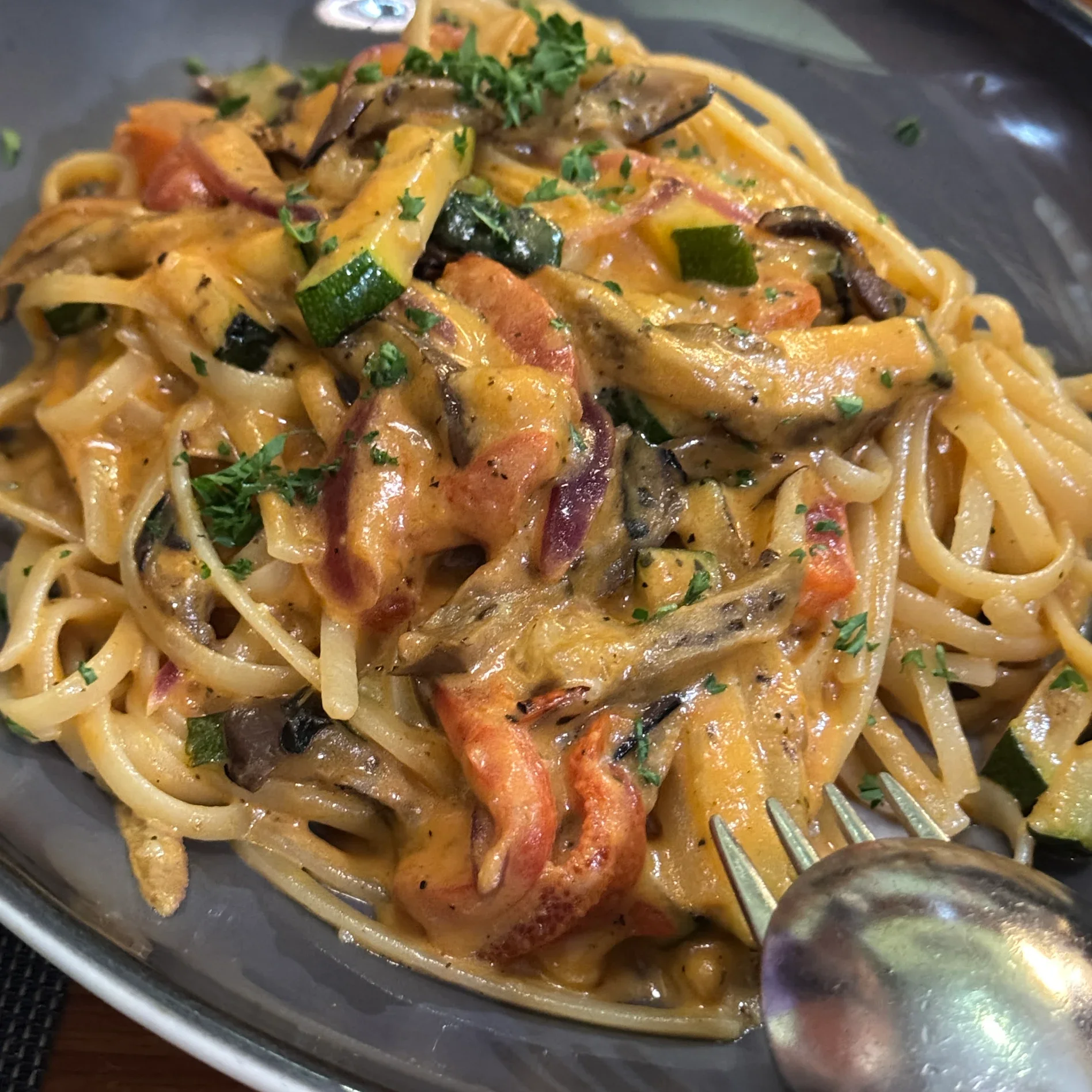
A sample menu has included dishes such as Pig Head Nugget with White Anchovy, Smoked Mackerel with Fried Chicken Skin, Duck Liver Parfait, Kingfish Pastrami, Raw Prawn with Burnt Orange and Wasabi and Lamb Tartare with Tendon Crisp. (Dirty Supper)
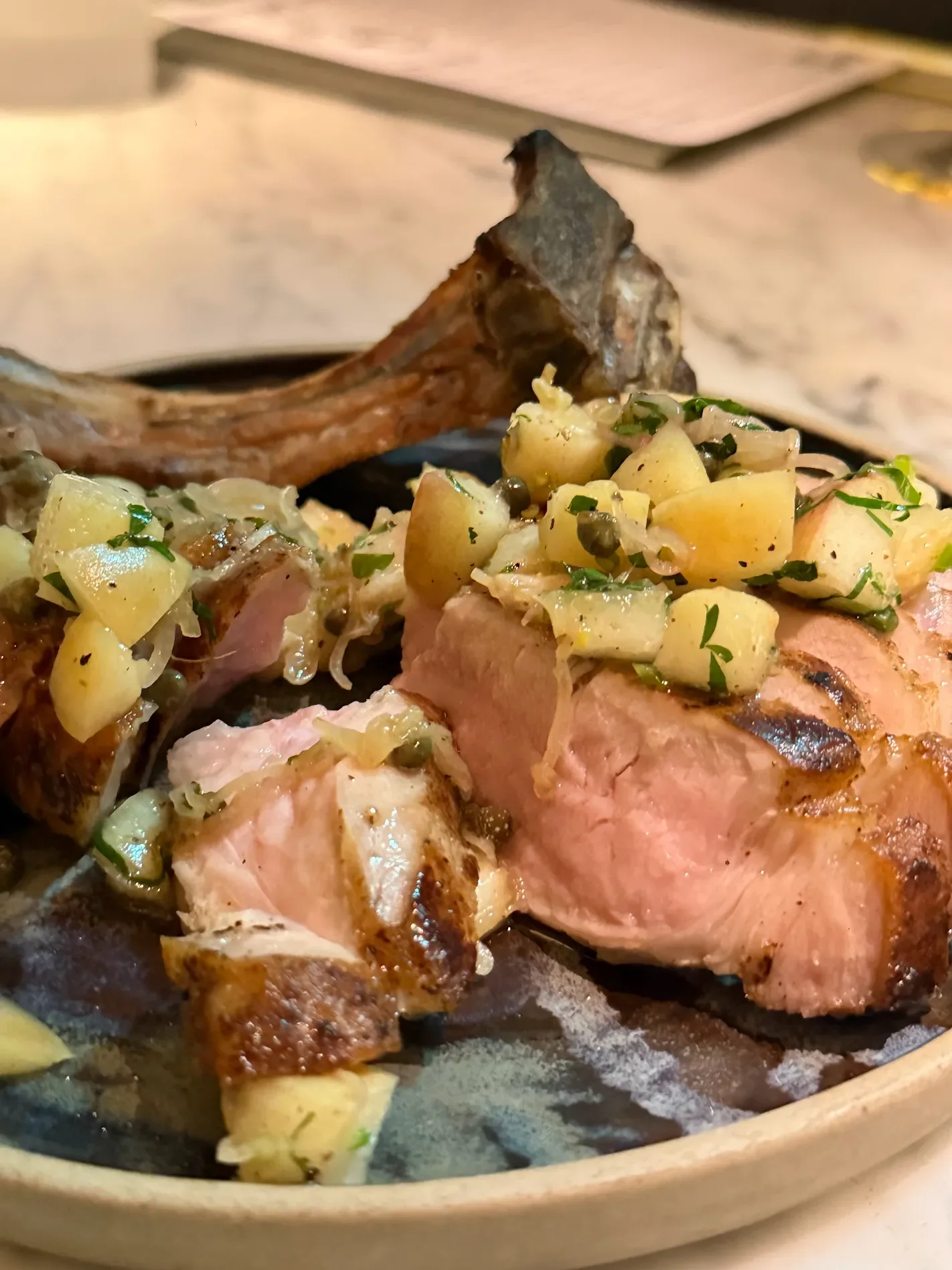
Larger plates have included Aged Duck Breast, pork, Black Angus beef, BBQ squid and aubergine.
Even vegetables receive similar treatment, with dishes built around celeriac, green beans, broccoli, corn and cabbage.
The exact combinations are less important than the principle behind them.
Dirty Supper is not trying to guarantee that a particular plate will always be waiting.
The ingredient comes first.
The menu follows.
The Specials Board May Matter More Than the Printed Menu
This makes the restaurant's daily specials board unusually important.
Dirty Supper explicitly tells diners to check the board when they arrive, because Smit regularly produces limited dishes that do not appear on the standard menu. (Dirty Supper)
Recent diners describe specials lists that can be almost as extensive as the permanent offering. Some dishes appear in only a handful of portions before disappearing.
That creates a restaurant where repeat visits need not produce the same meal.
One week an ingredient may become sausage.
Another might end up over charcoal.
Another could become part of a sauce, snack or larger sharing dish.
This is where whole-animal cooking and a produce-led menu reinforce one another.
Both require flexibility.
Fire Is the Other Constant
If the ingredients change, grilling remains one of Dirty Supper's more consistent techniques.
Peter Smit has built much of the restaurant around his interest in cooking over fire, allowing smoke, char and rendered fat to form part of the flavour rather than hiding them behind highly polished presentations.
BBQ squid, grilled meats, smoked fish, charcoal vegetables and various cuts cooked directly over fire recur throughout both published menus and daily specials. (Dirty Supper)
Diner material similarly mentions charcoal-grilled lamb neck, pork and kidney, liver and smoked seafood among the restaurant's changing offerings.
That connection with fire also links Dirty Supper to an earlier part of Smit's career.
His years in meat- and barbecue-focused kitchens were not abandoned when he opened his own restaurant.
They were incorporated into a looser way of cooking.
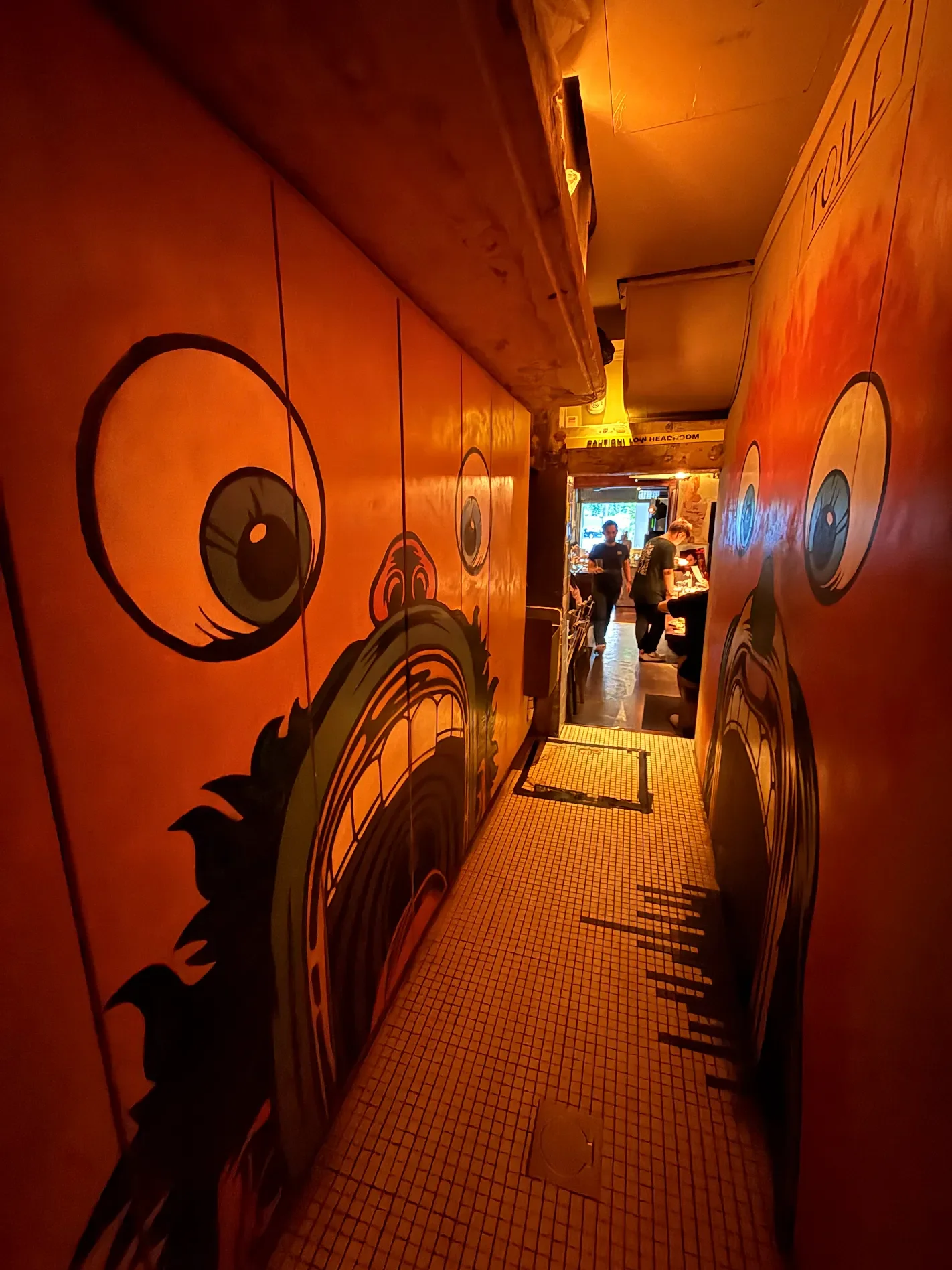
A Restaurant Inside an Old Coffee Shop
Dirty Supper's setting is almost as unconventional as the menu.
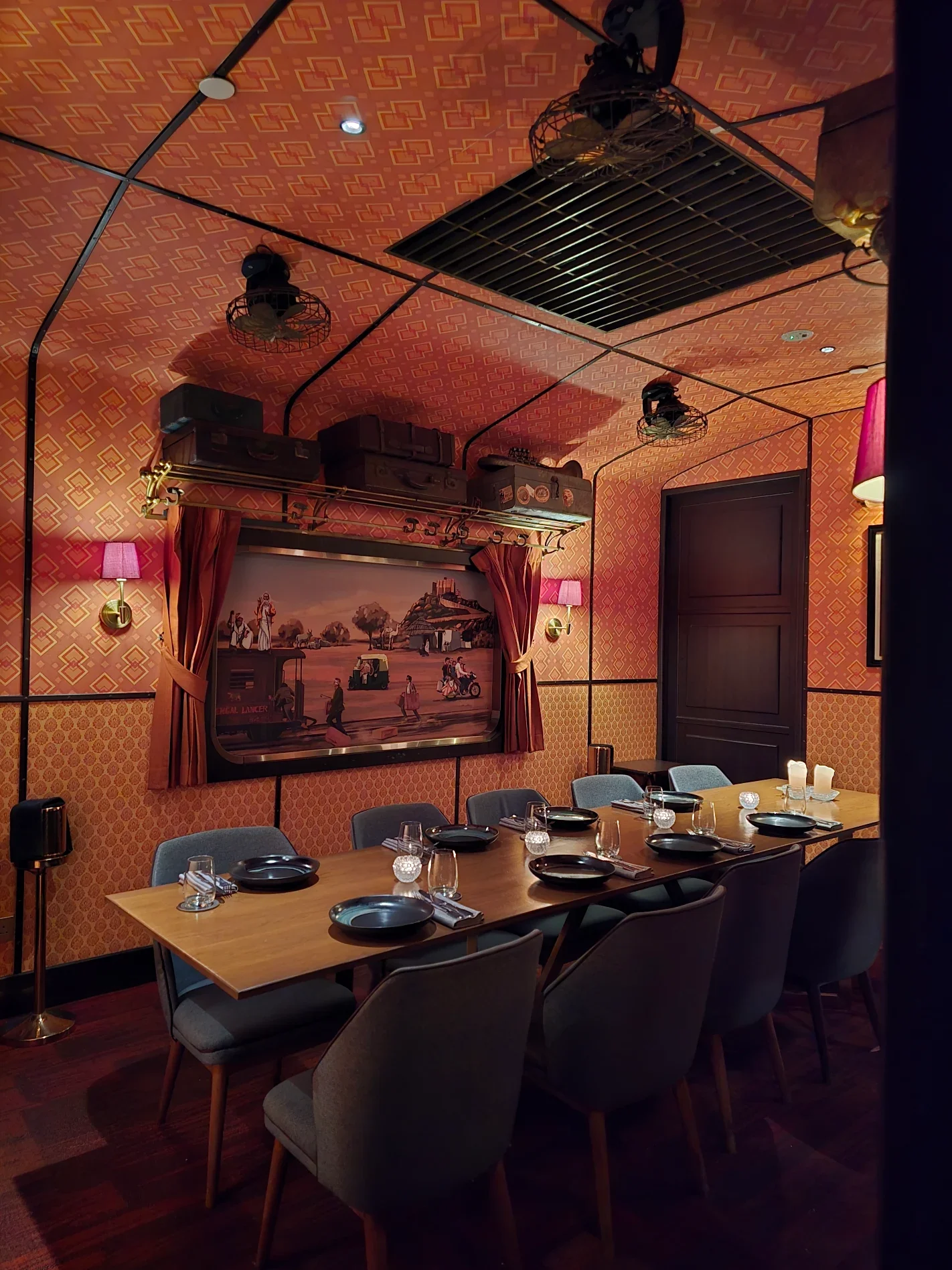
The restaurant occupies the former Bincho space within the historic Hua Bee coffee shop at Moh Guan Terrace.
Rather than stripping the room back and rebuilding it as a conventional contemporary restaurant, Dirty Supper retained much of the older coffee-shop character.
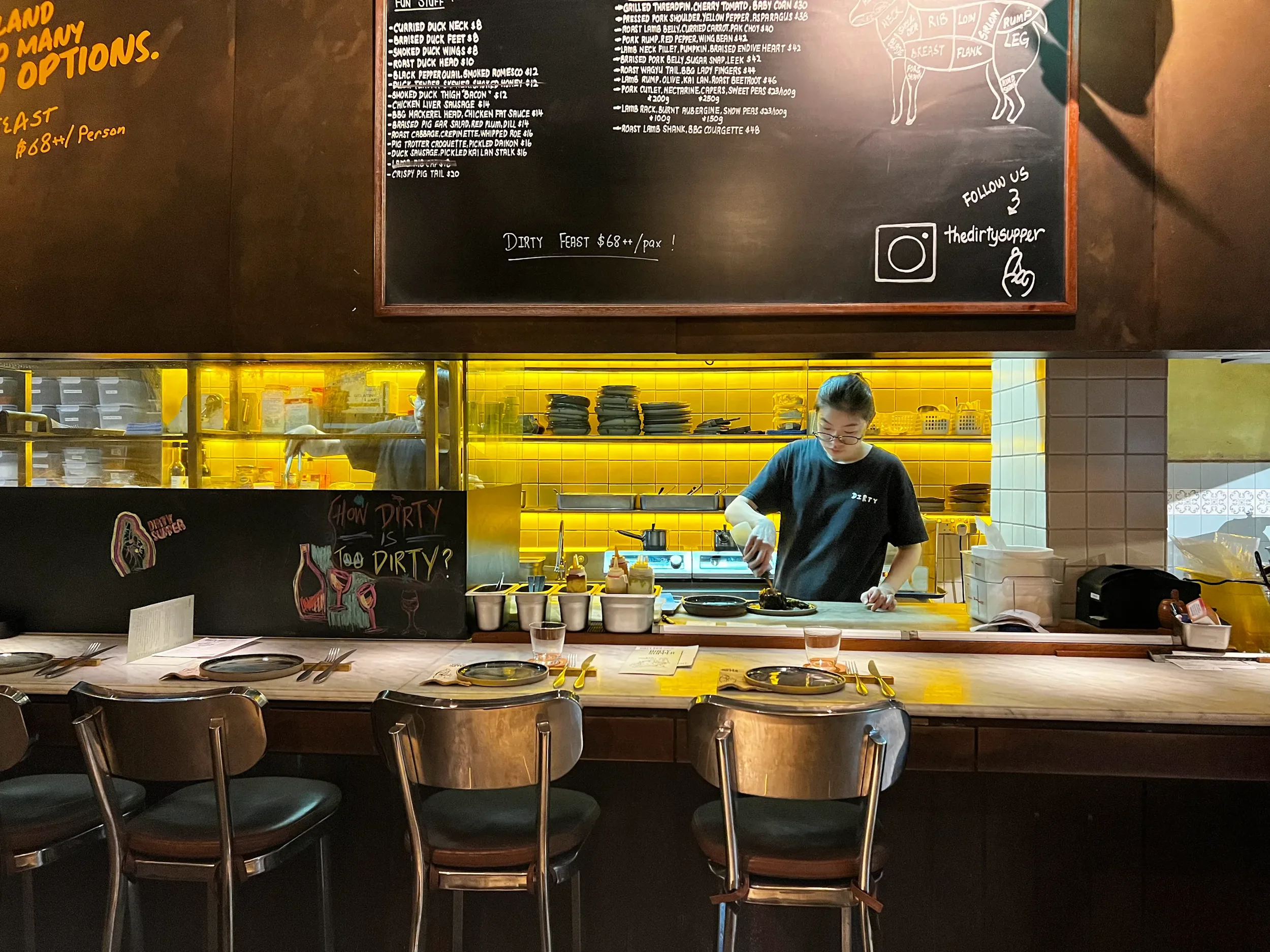
The restaurant describes the space as combining vintage charm with underground, grungy elements. Existing pieces were reused where possible, including marble tables and timber, while stainless steel and industrial furniture were introduced alongside them. (Dirty Supper)
The result deliberately avoids the visual language of formal fine dining.
That seems appropriate for the food.
Whole-animal cooking is inherently physical.
There is cutting, grilling, smoking, rendering, butchering and dealing with ingredients in forms that may not always be particularly elegant.
Dirty Supper does not pretend otherwise.
Sit at the Counter and Watch
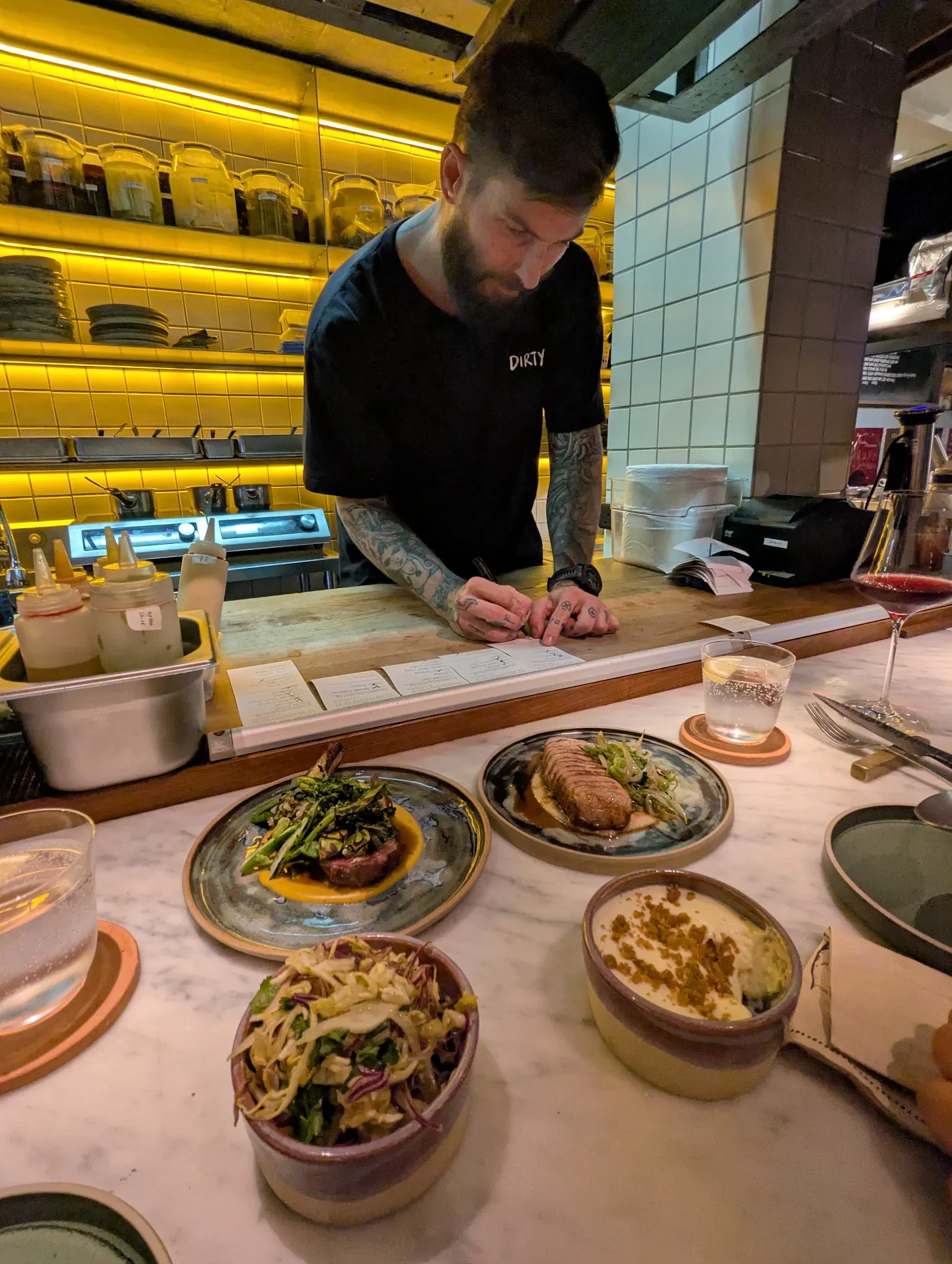
The open kitchen and counter seating make some of that process visible.
Recent diners specifically mention choosing the counter to watch the kitchen work, while others describe conversations with Smit about ingredients, market sourcing and the reasoning behind individual dishes.
That gives Dirty Supper something closer to the feel of its earlier supper-club origins than might be expected from a permanent restaurant.
There is still a separation between guest and kitchen, but considerably less distance.
For a restaurant built around ingredients changing from day to day, that interaction can be useful.
Sometimes the easiest way to understand why a particular cut is on the menu is simply to ask what arrived.
The Dirty Feast
For diners who would rather avoid making those decisions themselves, Dirty Supper offers the Dirty Feast format.
Rather than individually choosing every dish, the table allows the kitchen to assemble a progression from what is available.
Recent accounts describe versions containing several snacks and smaller dishes followed by larger plates, sides and dessert, with the exact composition shifting along with the menu.
The format fits the restaurant particularly well.
If Dirty Supper's philosophy is that the kitchen should respond to ingredients, then allowing the kitchen to decide what arrives at the table is perhaps the most direct way to experience it.
Dirty Sips: The Bar Uses the Kitchen Too
The same ingredient-driven thinking extends into the drinks programme.
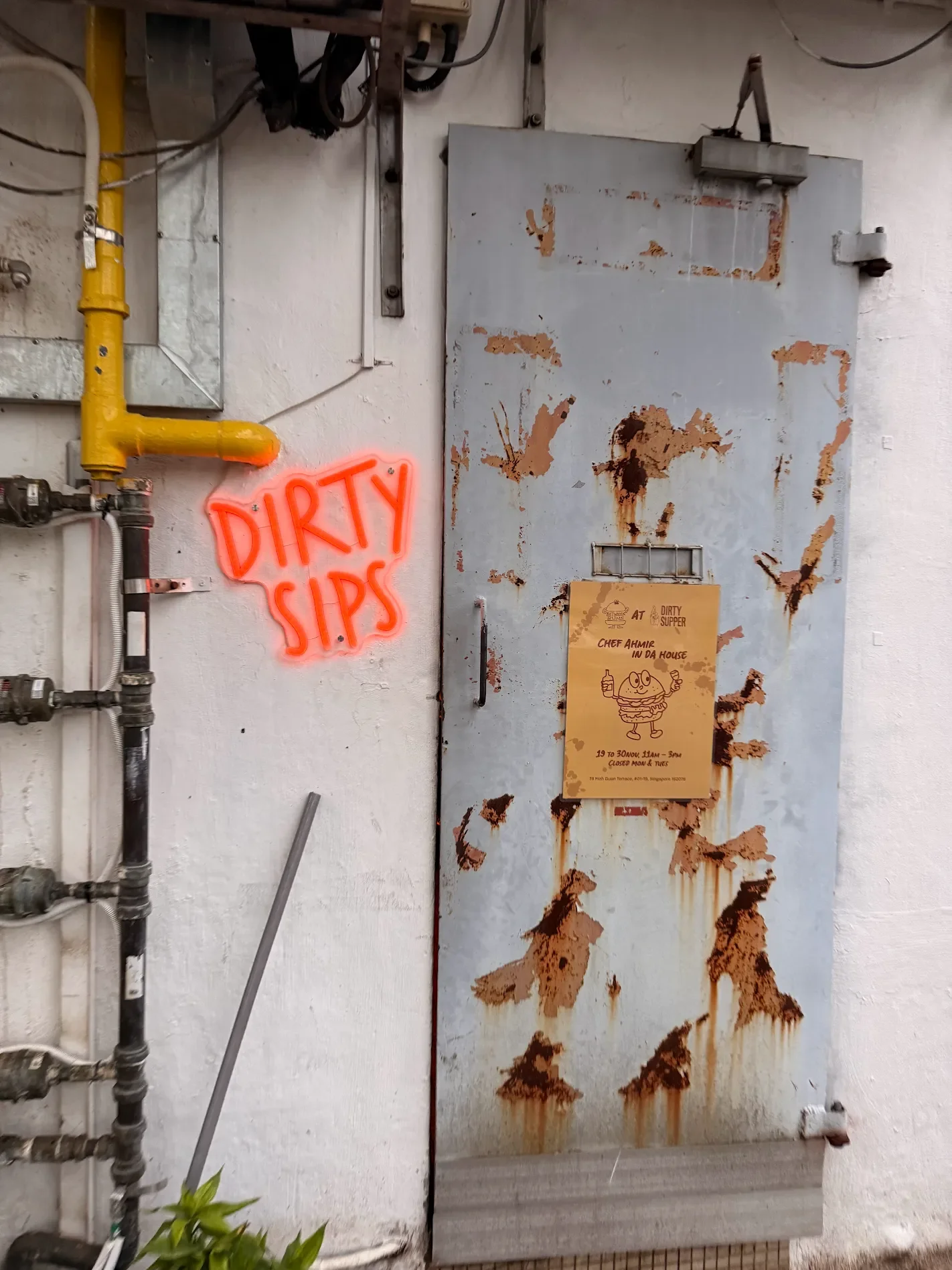
Dirty Supper's bar, often referred to through the Dirty Sips identity, serves a deliberately compact cocktail menu incorporating savoury elements from the kitchen. (Dirty Supper)
That has resulted in cocktails incorporating ingredients that would more commonly appear on a plate than behind a bar.
The approach is consistent with the restaurant's larger philosophy: if an ingredient has flavour, it does not necessarily need to remain confined to one part of the operation.
Recent diner material mentions savoury cocktails, customised drinks and unusual preparations including bacon- and shiitake-influenced drinks.
The wine list follows a similarly independent direction, covering established and lesser-known regions while giving attention to sustainable and minimalist winemaking practices. (Dirty Supper)
Food and beverage consequently feel like parts of the same restaurant rather than separate programmes occupying the same room.
Dirty Supper Now Does Brunch
Dirty Supper has also expanded beyond supper.
As of 2026, Dirty Brunch runs from Wednesday to Sunday between 9am and 2pm, with last orders at 1:30pm. Brunch operates on a walk-in basis. (Dirty Supper)
The morning format gives the kitchen another place to apply its ingredient philosophy.
Recent dishes have included a bacon egg burger, grilled sourdough, a fry-up and sausage with curried egg, while even waffles have been connected to the restaurant's whole-use approach through bacon ice cream made by infusing smoked bacon skin trimmings into milk and cream.
That may sound like a small detail.
At Dirty Supper, it is almost the entire point.
The trim has flavour.
So the kitchen uses it.
Light Bites Before Dinner
The restaurant now operates through several distinct periods.
From Tuesday to Saturday, 3pm to 6pm, Dirty Supper serves light bites before dinner begins at 6pm.
Dinner continues until midnight, with the kitchen's last food order at 9:30pm, while Dirty Sips continues operating through the evening. (Dirty Supper)
This makes the Moh Guan Terrace space considerably more than the evening supper concept from which Dirty Supper took its name.
Brunch, afternoon bites, dinner and drinks now occupy different parts of the week.
The core cooking philosophy, however, remains recognisable throughout them.
The Restaurant Is Allowed to Change
Restaurants often talk about seasonality while keeping most of the menu fundamentally intact.
Dirty Supper takes the idea further.
Its structure actively depends on not knowing exactly what tomorrow's menu will be.
That introduces complications.
Unusual cuts need more preparation. Whole animals create constraints. Daily specials can sell out. Ingredients do not always arrive in predictable quantities.
But those restrictions are also what give the restaurant its identity.
Peter Smit is not using whole-animal cooking simply to place unfamiliar organs on a menu.
He is using it to establish a different relationship between the kitchen and its ingredients.
As The Cuisine Journal's profile of Peter Smit puts it, the premium cut is not necessarily the most interesting test of a cook.
The harder question is what happens to everything else.
At Dirty Supper, the answer changes every day.
Dirty Supper Singapore
Restaurant: Dirty Supper
Chef-Owner: Peter Smit
Cuisine: Produce-led contemporary cooking, whole-animal cooking and grilling
Address: 78 Moh Guan Terrace, #01-19, Singapore 162078
Telephone: +65 6438 4567
Website:Dirty Supper
Chef Profile:Peter Smit: The Chef Who Would Rather Use the Whole Animal — The Cuisine Journal
Dirty Brunch: Wednesday–Sunday, 9am–2pm
Brunch last order: 1:30pm
Brunch reservations: Walk-ins only
Light Bites: Tuesday–Saturday, 3pm–6pm
Dinner: Tuesday–Saturday, 6pm–12am
Dinner last food order: 9:30pm
Dirty Sips Bar: Tuesday–Saturday, 6pm–12am
(Dirty Supper)
Frequently Asked Questions
What is Dirty Supper?
Dirty Supper is Chef-Owner Peter Smit's restaurant in Tiong Bahru, Singapore. Its menu focuses on whole-animal cooking, grilling and produce-led dishes that change according to ingredient availability. (Dirty Supper)
Who is the chef behind Dirty Supper?
Dirty Supper is helmed by Australian chef Peter Smit, whose career has included kitchens in Australia, London and Singapore. His background and whole-animal cooking philosophy are covered in The Cuisine Journal's profile of Peter Smit.
Where is Dirty Supper?
Dirty Supper is located at 78 Moh Guan Terrace, #01-19, Singapore 162078, within the Tiong Bahru neighbourhood. (Dirty Supper)
What does whole-animal cooking mean?
Whole-animal cooking means finding culinary uses for more than the familiar premium cuts. At Dirty Supper, heads, necks, hearts, liver, skin and other parts can become snacks, sausages, grilled dishes, sauces and daily specials rather than being automatically discarded.
Does Dirty Supper have a fixed menu?
Not entirely. Dirty Supper keeps its core menu deliberately lean and operates an extensive rotating specials board. The available dishes can change depending on the produce and animal cuts available to the kitchen. (Dirty Supper)
What dishes is Dirty Supper known for?
The changing menu has included dishes such as Pig Head Nuggets, Smoked Mackerel with Fried Chicken Skin, Aged Duck Breast, lamb neck, BBQ squid, sourdough with cultured butter and various whole-animal specials.
What is the Dirty Feast?
The Dirty Feast is a chef-selected way of experiencing several dishes from Dirty Supper rather than choosing each plate individually. Because the restaurant's menu changes regularly, the exact progression can vary.
Does Dirty Supper serve brunch?
Yes. Dirty Brunch runs Wednesday to Sunday from 9am to 2pm, with last orders at 1:30pm. It is currently walk-in only. (Dirty Supper)
Does Dirty Supper have a bar?
Yes. Dirty Sips forms the beverage side of the restaurant, with cocktails that often incorporate savoury ingredients and techniques connected to the kitchen. Dirty Supper also maintains a wine list focused on a mix of established and less familiar wine regions and producers. (Dirty Supper)
Where can I read more about Peter Smit?
The Cuisine Journal has a dedicated chef profile covering his career, whole-animal philosophy and path to Dirty Supper: Peter Smit: The Chef Who Would Rather Use the Whole Animal.