Yoshio Sakuta: The Sushi Chef Who Once Hated Raw Fish
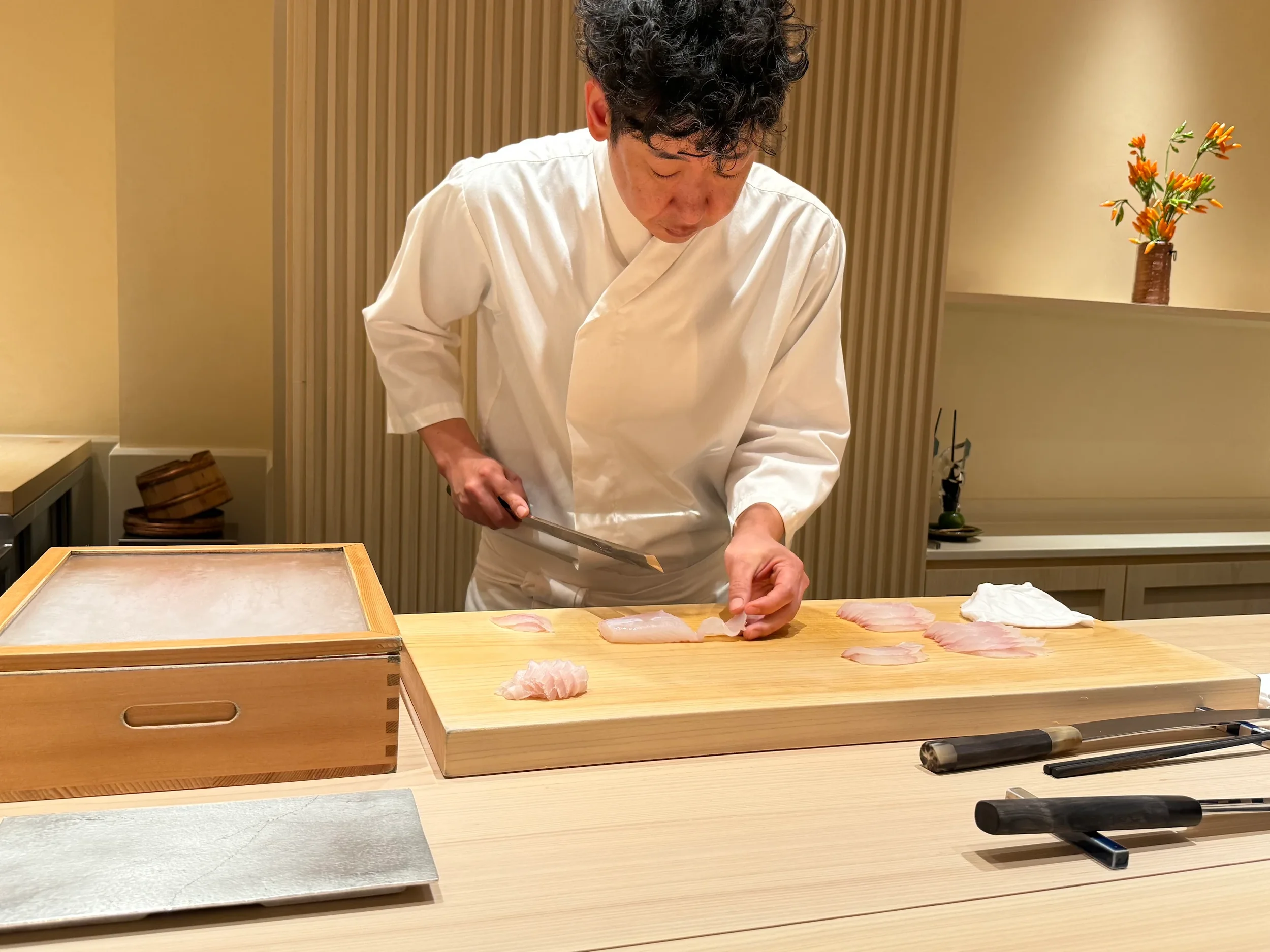
Yoshio Sakuta built his career around raw fish.
Which is slightly inconvenient when you consider that he once could not stand it.
Long before he became the chef-owner of Sushi Sakuta in Singapore, Sakuta had an aversion to the smell and texture of raw fish. What could have pushed him away from sushi instead seems to have sharpened his sensitivity to it.
If the fish smelled wrong, he noticed.
If the texture was wrong, he noticed.
And eventually, understanding why became part of the craft.
Today, Sakuta has spent more than two decades working with sushi across Japan, San Francisco and Singapore. His restaurant holds two Michelin stars, and his cooking has become known for almost the opposite of excess.
Precision.
Restraint.
And an obsessive concern with getting each piece of fish exactly where it needs to be.
It Started in Hokkaido
Sakuta was born and raised in Hokkaido, Japan.
His professional sushi career began when he was around 18 or 19, when he joined Ganko Sushi at its Atsubetsu branch.
He remained there for approximately three years, learning the fundamentals of professional sushi preparation before his career took him considerably further from home.
For a young sushi chef, those first years matter.
Knife work can be taught.
Rice can be taught.
Fish can be taught.
But sushi is also a profession built around repetition.
The same movements, performed thousands of times, gradually stop looking like individual tasks and begin becoming instinct.
Sakuta kept going.
Then Came San Francisco
As Japanese food grew in popularity internationally, Sakuta moved to the United States and joined Hotaru in San Francisco.
He spent roughly four years there as a sushi chef before eventually returning to Japan.
That made San Francisco an important early international chapter in his career.
It also gave Sakuta experience preparing Japanese food outside Japan, something that would become considerably more relevant later when Singapore became home.
After returning to Japan, he went back to Ganko Sushi for another three years.
Then came Sushi Odajima.
There, Sakuta worked both as sushi chef and restaurant manager for around two years, giving him experience not only with preparing an omakase menu but with interacting directly with guests across the counter.
That counter interaction would eventually become central to his career.
Because at serious sushi restaurants, the chef is not hidden away in a kitchen.
The chef is the kitchen.
Singapore Came Before Sushi Sakuta
Before opening a restaurant under his own name, Sakuta built a significant part of his Singapore career inside other acclaimed sushi counters.
Most notably, he worked at Shoukouwa, the two-Michelin-starred sushi restaurant in Singapore, eventually serving as Chef de Cuisine.
He later helmed Sushi Kou.
By then, Sakuta already had more than twenty years of sushi experience behind him.
These were not insignificant stops.
Shoukouwa placed him inside one of Singapore’s most serious sushi environments.
Sushi Kou gave him another counter from which to develop his own approach.
Eventually, that approach needed a restaurant carrying his name.
Sushi Sakuta Arrived
Sushi Sakuta opened in Singapore in the early 2020s, initially at The Capitol Kempinski Hotel Singapore.
The restaurant was deliberately intimate.
A hinoki counter became the centre of the experience, with Sakuta working directly in front of a small number of diners.
The format suited him.
Because Sakuta’s cooking is built around details that become most visible when there is nowhere for them to hide.
Temperature.
Vinegar.
Texture.
The condition of the fish that particular day.
The amount of soy sauce.
The way a piece is sliced.
Nothing needs to be dramatic.
It just needs to be right.
The Same Fish Is Never Really the Same Fish
One of the most revealing things about Sakuta’s philosophy is his refusal to treat ingredients as completely predictable.
Sushi Sakuta explains that even fish of the same species, caught in the same area, can taste different from one day to another.
That means the preparation cannot simply become automatic.
Sakuta works within Edomae-style sushi, but the restaurant occasionally adapts its methods according to the condition and individual characteristics of the fish.
This distinction is important.
Tradition provides the technique.
The ingredient decides how that technique should be used.
A piece might need more curing.
Another might need less.
Temperature might change how sweetness appears.
Fat behaves differently from lean flesh.
The chef has to notice.
The Raw Fish Problem Became an Advantage
This is where Sakuta’s childhood aversion to raw fish becomes surprisingly relevant.
Tatler reported that he once found raw fish unpleasant because of its aroma and texture.
Rather than simply learning to tolerate those characteristics, Sakuta seems to have built part of his cooking around eliminating the things he disliked.
Fish is salted.
Cured.
Sliced.
Temperature is adjusted.
Each intervention is intended to draw out what is good while controlling what is not.
That sensitivity becomes a strength.
Someone who never noticed an unpleasant texture would have little reason to fix it.
Sakuta noticed.
Then he learned what to do about it.
Even the Rice Is Engineered
At Sushi Sakuta, the fish receives most of the attention.
The rice is no less deliberate.
The restaurant uses a blend of Hitomebore and Sasanishiki rice, combined with both red and white vinegars.
Michelin inspectors have specifically highlighted the attention paid to shari temperature and vinegar seasoning.
This is where high-level sushi becomes almost microscopic.
A diner may experience one piece of nigiri in a few seconds.
The chef has spent years thinking about what temperature those few grams of rice should be.
That imbalance between effort and consumption is part of the strange beauty of sushi.
Hours of preparation disappear in one bite.
Luxury Without Noise
Sushi Sakuta is unquestionably a luxury restaurant.
But Sakuta’s approach to luxury is relatively restrained.
There are Baccarat bowls.
Handcrafted Japanese ceramics.
A custom donabe.
A five-metre hinoki counter.
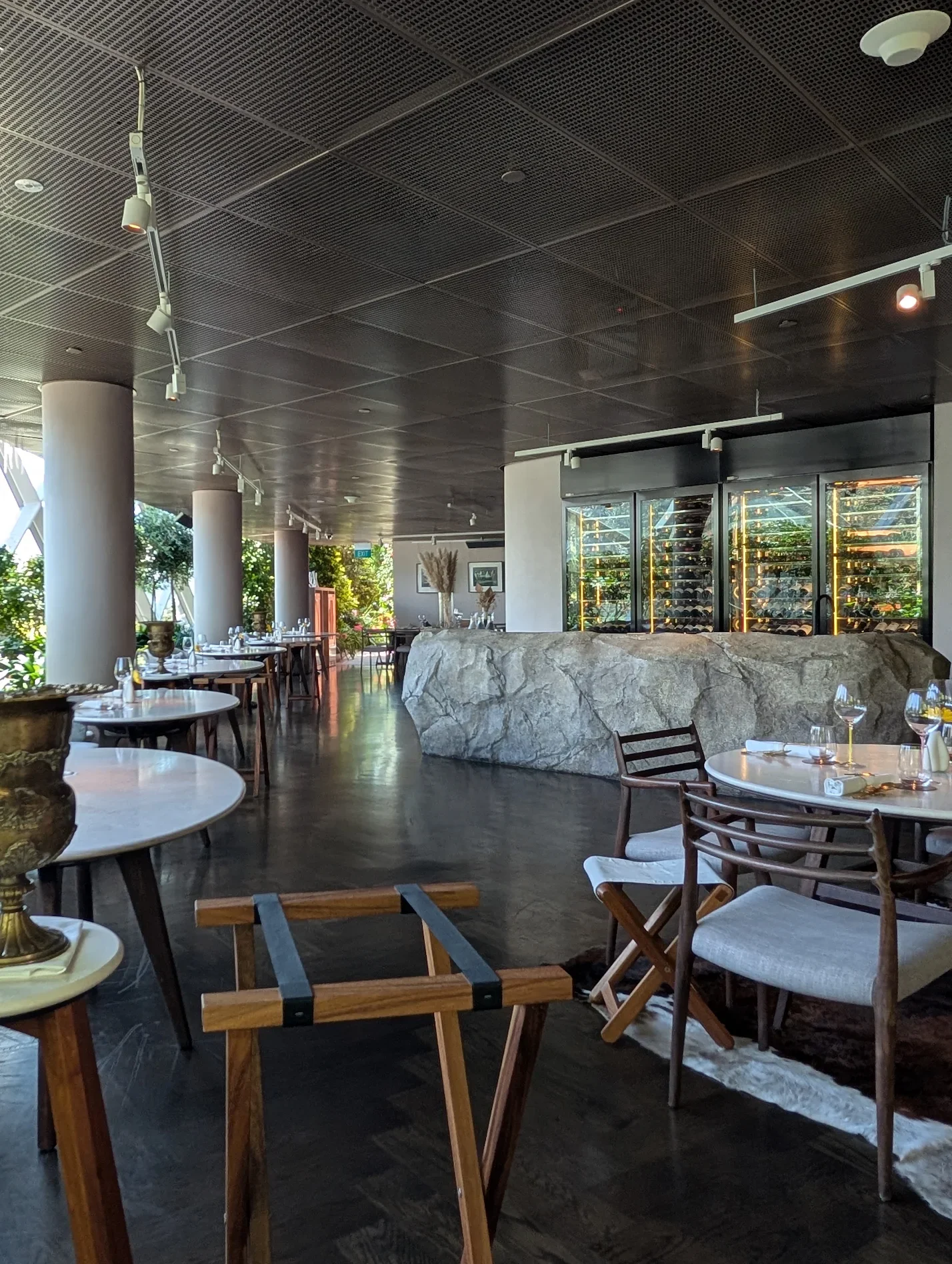
At the restaurant’s current Millenia Walk home, sugi cedar, Ajiro bamboo and washi lighting contribute to an interior influenced by sukiya-zukuri, the architectural language associated with traditional Japanese tea spaces.
Yet none of those objects are supposed to become louder than the food.
Tatler describes the restaurant’s current direction as increasingly pared back.
After earning two Michelin stars, Sakuta did not respond by making his cooking more complicated.
He simplified it.
That is perhaps the more interesting response to success.
More recognition did not require more decoration.
It required less interference.
One Star Became Two
Sushi Sakuta received its first Michelin star in 2023.
In the 2025 Michelin Guide Singapore, it was promoted to two Michelin stars.
Michelin’s inspectors highlighted the restaurant’s consistency, technical depth and extreme attention to detail when discussing the promotion.
Two stars inevitably bring expectations.
More attention.
More pressure.
More diners arriving already convinced that the evening needs to be extraordinary.
Sakuta’s answer appears to have been remarkably simple.
Keep focusing on the sushi.
Then Sushi Sakuta Moved
In November 2025, Sushi Sakuta left The Capitol Kempinski Hotel Singapore and moved to Millenia Walk.
Sakuta was heavily involved in the design of the new restaurant.
The space remains centred around a long hinoki counter and a small number of seats, preserving the intimate relationship between chef and diner while giving the restaurant a new architectural identity.
As of 2026, Sakuta remains chef-owner and continues to lead the restaurant there.
So unlike some of the Japanese chefs we are profiling, there is no need for a caveat here.
Yoshio Sakuta is still very much in Singapore.
Yoshio Sakuta Turned Dislike Into Precision
There is something almost too perfect about Sakuta’s career beginning with an aversion to raw fish.
The easiest response would have been to avoid it.
Instead, he spent decades studying it.
Japan.
San Francisco.
Japan again.
Shoukouwa.
Sushi Kou.
Then Sushi Sakuta.
And somewhere across that journey, the thing he disliked became the thing he understood exceptionally well.
Today, the defining quality of Sakuta’s sushi is not extravagance.
It is control.
Knowing when fish needs curing.
Knowing how warm the rice should be.
Knowing when a dish needs another element.
And perhaps more importantly, knowing when it does not.
For a chef who once thought raw fish smelled and felt wrong, Yoshio Sakuta has spent a remarkable career learning how to make it feel exactly right.