Tiong Bahru Bakery: How a Neighbourhood Bakery Became a Singapore Institution
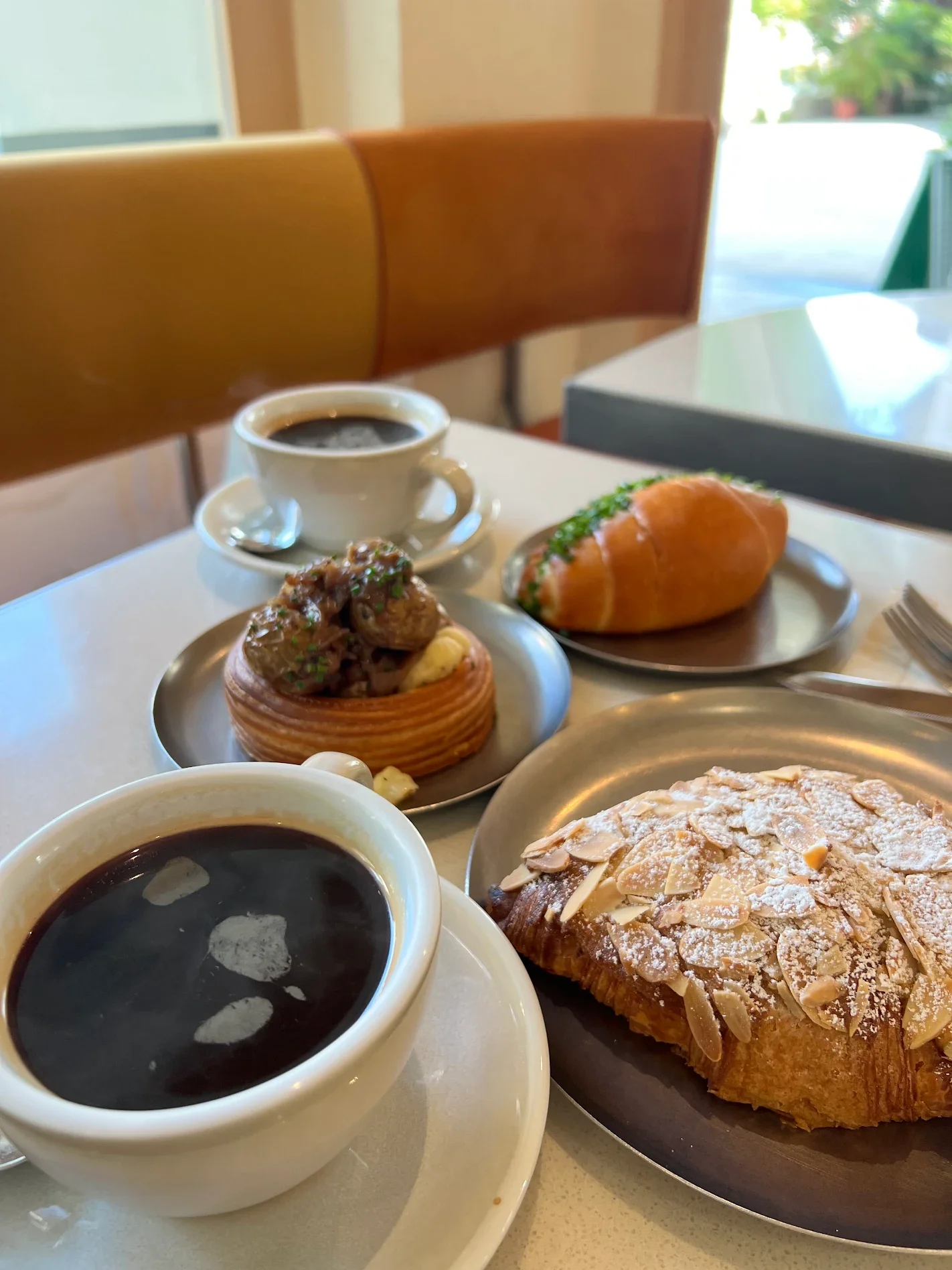
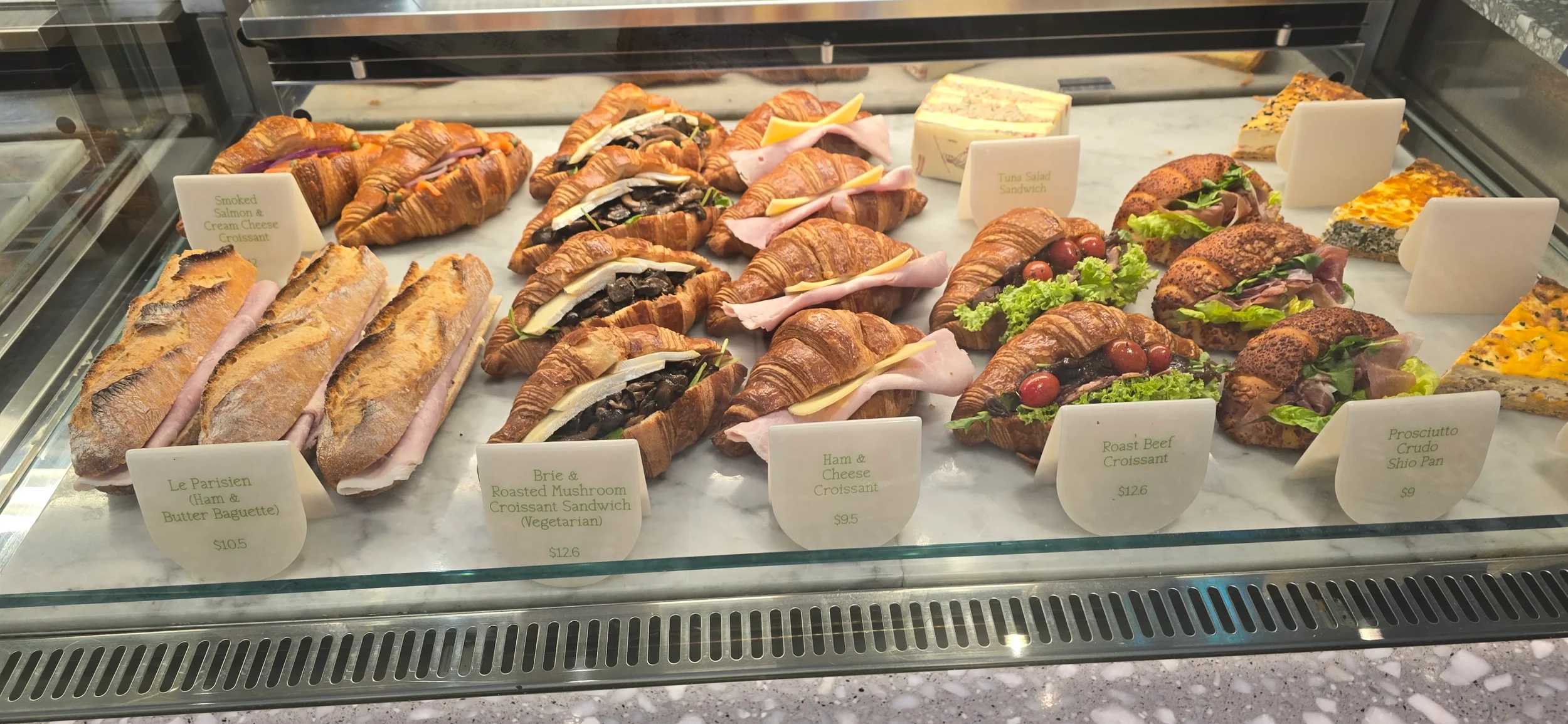
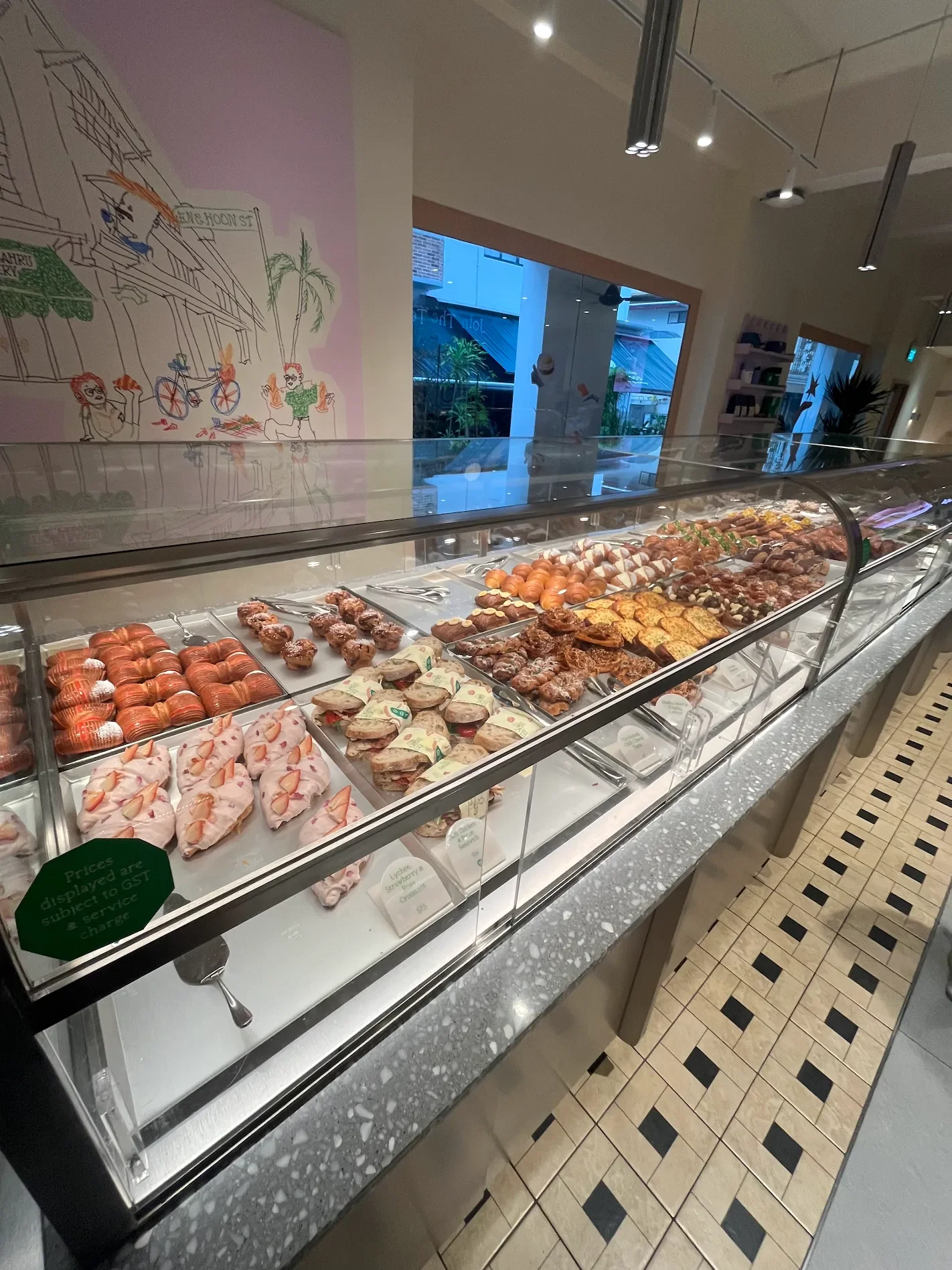
Tiong Bahru Bakery began at 56 Eng Hoon Street in 2012 with handmade croissants, kouign-amann and French baking at its centre. More than a decade later, it has grown across Singapore while continuing to build its identity around laminated pastry, bread, coffee and the rituals of the neighbourhood bakery.
Tiong Bahru Bakery has become large enough that it is easy to forget the name once described something extremely specific.
A bakery in Tiong Bahru.
The first Tiong Bahru Bakery opened at 56 Eng Hoon Street in 2012, beginning with one shop inside one of Singapore's oldest residential neighbourhoods.
Its proposition was comparatively simple: make French-style bread and viennoiserie properly, serve coffee alongside them and create somewhere people could incorporate into their everyday routines.
The bakery itself now describes its history as:
“Born in Tiong Bahru. Baked into the city.”
More than a decade later, the brand has spread across Singapore, but the original Eng Hoon Street bakery remains the place from which everything else developed.
It Started with Croissants
When Tiong Bahru Bakery opened in 2012, croissants, baguettes and kouign-amann formed the core of the offering.
The original bakery was created through a collaboration between Singapore's Spa Esprit Group, founded by Cynthia Chua, and French baker Gontran Cherrier.
Cherrier came from a family of bakers and pâtissiers and had already established his own bakery in Paris by the time the Singapore collaboration began.
The idea was not simply to import finished French pastries into Singapore.
The bread and viennoiserie would be made locally, with traditional baking techniques forming the foundation of what would eventually become a much larger Singapore bakery operation.
The croissant remains so central to the brand that Tiong Bahru Bakery now calls itself the “Home of the Handmade Croissant.”
Read more about Tiong Bahru Bakery and its current stores here.
The Kouign-Amann
If the croissant is the obvious symbol of French viennoiserie, Tiong Bahru Bakery helped introduce another pastry to a much wider Singapore audience.
The kouign-amann originated in Brittany.
Its name comes from the Breton words for cake and butter, which is an appropriately direct description of what it is: laminated dough folded with substantial quantities of butter and sugar.
During baking, the sugar caramelises around the pastry while the laminated dough expands into crisp layers.
The result sits somewhere between bread, pastry and caramel.
Kouign-amann was part of Tiong Bahru Bakery's original 2012 selection and remains one of the products most closely associated with the bakery today.
Recent customer material supplied to The Cuisine Journal continues to identify both the croissant and kouign-amann among the products people associate most readily with the original Eng Hoon Street bakery.
What Handmade Croissants Actually Require
Calling a croissant handmade sounds straightforward.
The process is not.
Croissant dough has to be mixed and fermented before a slab of butter is enclosed inside it. The dough is then rolled and folded repeatedly, creating alternating layers of butter and dough.
That process is known as lamination.
Temperature matters throughout.
If the butter becomes too warm, it blends into the dough and destroys the layers.
If it becomes too cold, it can fracture instead of rolling evenly.
After shaping, the croissants still need to proof sufficiently before baking.
The result depends not only on a recipe but on consistency across mixing, fermentation, lamination, shaping, proofing and baking.
That work becomes considerably more complicated when the bakery is no longer producing for a single neighbourhood shop.
Tiong Bahru Bakery now operates stores across Singapore.
Behind those pastries is therefore a much larger production system built around maintaining the same baking fundamentals at scale.
The Baker Behind the Bread
One of the people responsible for that daily production is Head Baker Goh Jia Jun.
His work extends beyond croissants into Tiong Bahru Bakery's wider bread programme, including naturally fermented loaves and the production systems required to provide bread across multiple outlets.
For more on the person behind that work, read Goh Jia Jun: Behind the Bread at Tiong Bahru Bakery.
His role also illustrates an important part of Tiong Bahru Bakery's development.
The brand may have begun through a collaboration with a French baker, but maintaining a bakery over more than a decade requires building a baking team in Singapore capable of carrying those techniques forward.
Bread is made every day.
Eventually, the people producing it become as important as the person who created the original recipes.
More Than Viennoiserie
Croissants remain prominent, but Tiong Bahru Bakery today extends considerably beyond its original French pastry selection.
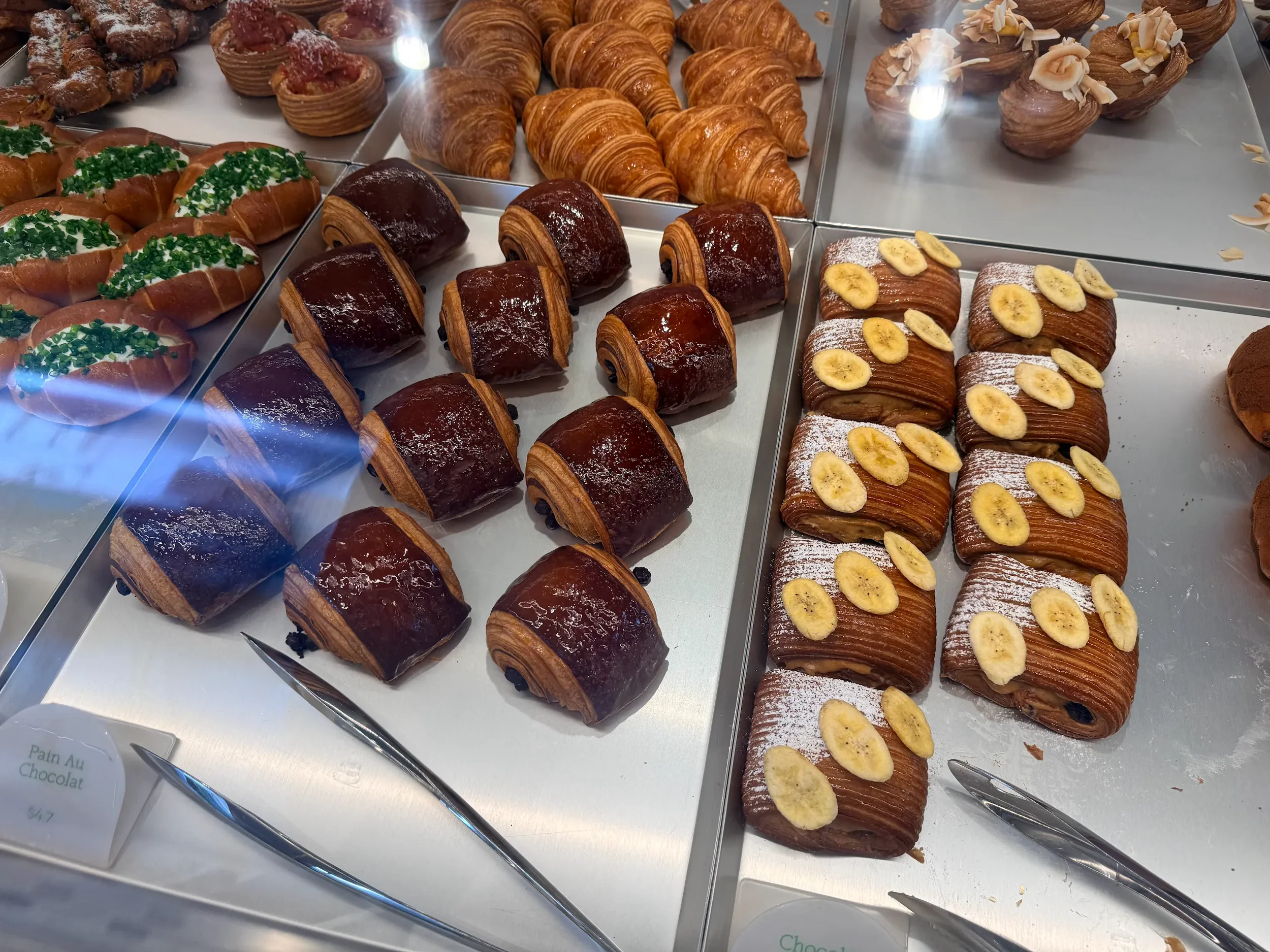
Its displays can move between croissants, pain au chocolat, kouign-amann, canelé, tarts, choux pastries, cakes, sandwiches, shio pan and seasonal creations.
Recent products at the Eng Hoon Street store have included a Black Sesame Matcha Danish, Raspberry Vanilla Cream Ribbon, Pain Suisse, Arabiki Mustard Sausage Roll and various flavoured shio pan, alongside the familiar croissants and breads.
The mix demonstrates how Tiong Bahru Bakery has gradually changed.
The underlying baking techniques are still heavily French.
The flavours no longer need to be.
French Technique, Singapore Appetite
This is perhaps where Tiong Bahru Bakery has become most recognisably Singaporean.
A bakery can preserve technique without preserving every flavour combination unchanged.
Over the years, Tiong Bahru Bakery has used ingredients and ideas including matcha, black sesame, gochujang, pandan, coconut, kopi and satay.
For Singapore's 2026 National Day season, for example, the bakery introduced products including Otah Pain Suisse, Beef Satay Shio Pan, Pandan Coconut Tart, Pandan Coconut Financier and Kopi Chendol.
The shapes and techniques remain connected to boulangerie and pâtisserie.
The flavour vocabulary can travel much further.
That makes the bakery's evolution different from simply recreating Paris in Singapore.
Tiong Bahru Bakery started with French baking.
Over time, it became increasingly comfortable allowing Singapore into the pastry case.
Shio Pan Enters the Bakery
One of the clearest recent examples is shio pan.
Japanese salt bread has become increasingly visible across Singapore's bakery scene, and Tiong Bahru Bakery has incorporated the format into its own selection.
Recent customers at Eng Hoon Street mention versions including spring onion shio pan, while the bakery has used the format for more experimental seasonal products.
It is an interesting development for a bakery that once would have been defined primarily through French baking.
Japanese bread culture itself developed partly through imported European baking techniques before evolving into its own forms.
A Singapore bakery founded around French viennoiserie is now incorporating Japanese bread formats and Southeast Asian flavour combinations.
That is how food culture normally develops.
Not through perfectly preserved borders, but through borrowing.
Bread Still Matters
The visual excitement of laminated pastries can sometimes overshadow the other half of the bakery.
Bread.
Tiong Bahru Bakery produces sourdough and other loaves alongside its pastry programme, with fermentation playing a central role.
Unlike commercial bread produced rapidly with large quantities of yeast, naturally fermented bread depends on cultures of wild yeast and bacteria maintained inside a starter.
Fermentation develops both flavour and structure.
It also introduces another variable into bakery production.
A starter is alive.
Temperature, hydration, feeding schedules and fermentation time all affect how it behaves.
For a neighbourhood baker, maintaining that process is already a discipline.
Doing it consistently for a growing bakery network becomes a production challenge of an entirely different scale.
Coffee and the Bakery Ritual
Coffee was part of Tiong Bahru Bakery from its beginning.
That matters because it changed the way the business functioned.
A traditional bakery can be largely transactional.
Walk in.
Buy bread.
Leave.
A bakery with coffee becomes somewhere people stay.
The original Tiong Bahru store developed around precisely that behaviour.
Breakfast, coffee between errands, an afternoon pastry and weekend conversations all became reasons to use the bakery beyond buying a loaf for home.
Recent customer accounts still describe the Eng Hoon Street location in these terms, with people using it for breakfast, brunch, solo lunches and coffee alongside pastries.
Today, Tiong Bahru Bakery's coffee uses a house blend roasted by fellow Spa Esprit Group brand Common Man Coffee Roasters.
The pastry may draw customers through the door.
Coffee helps turn the visit into a routine.
Why Tiong Bahru Mattered
The neighbourhood was not incidental to the original bakery.
Tiong Bahru's low-rise architecture, pre-war shophouses and Streamline Moderne housing blocks had already given the area an unusually distinctive physical identity.
By the early 2010s, a new group of cafés, restaurants and independent businesses was also beginning to change the neighbourhood's commercial character.
Tiong Bahru Bakery arrived directly within that period.
The bakery's success then became intertwined with the transformation of Tiong Bahru itself into one of Singapore's best-known café and lifestyle districts.
The relationship worked in both directions.
The neighbourhood gave the bakery its identity.
The bakery helped make the neighbourhood a destination.
56 Eng Hoon Street
The original store remains at:
56 Eng Hoon Street, #01-70, Singapore 160056.
The space has changed over the years and has undergone renovations, but it remains the flagship location most directly connected to the bakery's beginnings.
Recent visitors continue to describe indoor and outdoor seating alongside the extensive pastry display, with the bakery becoming particularly busy around breakfast and weekends.
It is worth remembering that this store predates the network surrounding it.
Before Tiong Bahru Bakery became something you could encounter in shopping centres, Orchard Road, Fort Canning or the east of Singapore, this was the bakery.
Everything began here.
From One Bakery to a Singapore Network
Tiong Bahru Bakery now operates throughout the island.
Its current locations stretch across central Singapore, Tiong Bahru, Orchard Road, Bukit Timah, River Valley, Serangoon Gardens, Tampines, Siglap, Joo Chiat, Jurong and other neighbourhoods.
The network includes conventional bakery cafés as well as more specialised formats.
At Tiong Bahru itself, the company now also operates TBB Crumb & Go, a smaller takeaway-oriented concept at 55 Tiong Bahru Road.
Yet the brand still describes itself as a neighbourhood bakery.
That might initially sound strange for a business operating across so many locations.
But it explains the strategy.
Rather than making every store identical, Tiong Bahru Bakery positions individual outlets as parts of their respective neighbourhoods.
The original idea has been duplicated geographically rather than simply replicated architecturally.
Keeping Handmade Baking at Scale
Expansion creates an obvious tension.
The qualities people associate with an artisan bakery — handwork, fermentation, small-batch production and craft — are precisely the qualities that become difficult to maintain as demand grows.
Tiong Bahru Bakery's solution has been to make production itself part of the organisation.
Bakers specialise.
Processes are documented.
Recipes are controlled.
Fermentation is monitored.
Lamination becomes a repeatable craft rather than something dependent entirely upon one individual baker.
That does not make the work industrial in the conventional sense.
It makes craftsmanship systematic.
This is also why experienced bakers such as Goh Jia Jun become important to a growing bakery brand.
A croissant recipe can be written down.
Knowing what properly laminated dough should feel like in Singapore's humidity requires something else.
A Bakery That Keeps Changing
Tiong Bahru Bakery today looks considerably different from the bakery that opened in 2012.
The croissant remains.
The kouign-amann remains.
But around them has grown a much larger pastry programme.
Current displays can include fruit-filled laminated pastries, Basque cheesecake, choux, Japanese-inspired bread, savoury rolls and limited seasonal collections.
The Tiong Bahru Bakery website also now supports app ordering, advance pickup and the TBB Crumb Club loyalty programme.
The business surrounding the bread has become more sophisticated.
The fundamental product remains unusually simple.
Flour.
Butter.
Water.
Salt.
Sugar.
Yeast or starter.
The difficulty is making them behave exactly the way the baker wants.
More Than a Croissant Shop
Tiong Bahru Bakery is often introduced through its croissants.
That is understandable.
Croissants are photogenic, immediately recognisable and central to the bakery's history.
But the more interesting story is what happened after the first croissant was sold.
A collaboration between a Singapore lifestyle group and a French baker became a neighbourhood bakery.
The neighbourhood bakery became a multi-outlet Singapore brand.
The original French pastry programme expanded into sourdough, Asian flavours, Japanese breads, coffee, sandwiches and increasingly experimental seasonal products.
And behind those products is now a generation of bakers responsible for translating artisanal techniques into the daily production of a much larger organisation.
If you want to understand that side of the bakery, read about Head Baker Goh Jia Jun and the work behind Tiong Bahru Bakery's daily bread.
Tiong Bahru Bakery may now be found across Singapore.
But its story still leads back to 56 Eng Hoon Street.
One bakery.
One neighbourhood.
And a lot of laminated butter.
Tiong Bahru Bakery: Quick Information
Bakery: Tiong Bahru Bakery
Founded: 2012
Original Location: Tiong Bahru
Flagship Address: 56 Eng Hoon Street, #01-70, Singapore 160056
Concept: French-inspired artisan bakery and café
Known For: Handmade croissants, kouign-amann, bread, viennoiserie and coffee
Parent Group: Spa Esprit Group
Tiong Bahru Hours: Monday–Friday, 7:30am–8pm; Saturday–Sunday, 8am–8pm
Telephone: +65 6220 3430
Website: Tiong Bahru Bakery
Locations: Tiong Bahru Bakery Locations
Meet the Baker: Goh Jia Jun: Behind the Bread at Tiong Bahru Bakery — The Cuisine Journal
Frequently Asked Questions
When did Tiong Bahru Bakery open?
Tiong Bahru Bakery opened its first store at 56 Eng Hoon Street in 2012.
Who started Tiong Bahru Bakery?
The bakery began as a collaboration between Spa Esprit Group and French baker Gontran Cherrier. Early reporting from 2012 described the Eng Hoon Street bakery as a joint venture between Cherrier and Cynthia Chua's Spa Esprit Group.
What is Tiong Bahru Bakery known for?
Tiong Bahru Bakery is particularly known for its handmade croissants and kouign-amann, alongside bread, pain au chocolat, canelé and an expanding range of contemporary pastries. Recent diners at the original store also mention shio pan, filled Danish pastries and savoury rolls.
What is a kouign-amann?
Kouign-amann is a laminated Breton pastry made from dough, butter and sugar. During baking, the sugar caramelises while the butter creates flaky layers.
Who is the head baker at Tiong Bahru Bakery?
Goh Jia Jun is one of the bakers closely associated with Tiong Bahru Bakery's bread programme. Read Goh Jia Jun: Behind the Bread at Tiong Bahru Bakery for more about his work.
Is the Tiong Bahru outlet the original Tiong Bahru Bakery?
Yes. The bakery at 56 Eng Hoon Street is the original location that opened in 2012.
Does Tiong Bahru Bakery only make French pastries?
No. French baking techniques remain central, but the bakery now uses flavours and formats from much further afield, including matcha, black sesame, shio pan and Singapore-inspired seasonal products.
How many Tiong Bahru Bakery outlets are there?
Tiong Bahru Bakery now operates a substantial network across Singapore, including locations in Tiong Bahru, Orchard Road, Raffles City, Bukit Timah, River Valley, Serangoon Gardens, Tampines, Siglap, Joo Chiat, VivoCity and Jurong. The current outlet list is available on the official locations page.
Can you order Tiong Bahru Bakery in advance?
Yes. Tiong Bahru Bakery's app supports advance pickup orders, and delivery is also available through its delivery partners.