Terry Ang: The Bread Master Behind Burnt Ends Bakery
Burnt Ends may have been built around fire.
But before the doors open at Burnt Ends Bakery, someone still has to make the bread.
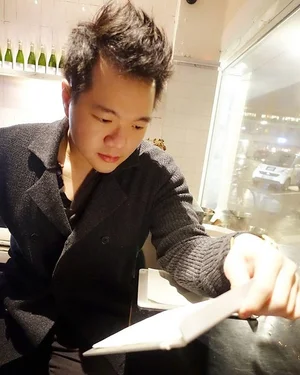
That person is Chef Terry Ang.
Known within Burnt Ends Bakery as its Head Baker and professionally listed as Chief Baker for Burnt Ends Hospitality Group, Terry has spent close to two decades working in baking across hotels and hospitality groups.
The restaurant group has given him a slightly more colourful title as well.
Bread master.
It is difficult to argue with it.
Nineteen Years of Baking
When Burnt Ends Bakery introduced Terry in 2024, it described him as having 19 years of baking experience across various hotels and hospitality groups.
That immediately distinguishes his story from many of the younger bakers emerging through independent cafés and home-based businesses.
Terry's career has been built over time.
Bread is particularly unforgiving of shortcuts.
Flour, water, salt and fermentation may look simple on paper, but professional baking depends on repetition and control. Temperature changes. Fermentation changes. Hydration changes. Dough behaves differently from one day to another.
Experience does not remove those variables.
It teaches a baker how to respond to them.
For someone who has been working with dough for almost two decades, much of that knowledge eventually becomes instinct.
Burnt Ends Bakery Starts Early
Burnt Ends Bakery is the bakery arm of the wider Burnt Ends Hospitality Group, founded by chef-owner Dave Pynt.
It began as an e-commerce operation with occasional pop-ups before developing into its permanent bakery at Dempsey.
The bakery is closely connected to the live-fire identity of Burnt Ends itself and operates with what the group describes as Singapore's only wood-fired bakery oven.
And the work starts long before customers arrive.
Burnt Ends Bakery has described its production as beginning from around 2am, with pastries produced in small batches through the morning.
Terry has even been given another nickname by the bakery:
Night slayer.
For a baker, that one may be almost as appropriate as bread master.
Bread, Viennoiserie and Everything Around Them
Terry's own social posts reveal someone deeply immersed in the technical side of baking.
His work has included sourdough, viennoiserie, croissants, panettone and other artisan breads. His posts frequently refer to flour types, butter, fermentation and individual stages of production rather than simply presenting the finished pastry.
That distinction is worth noticing.
A finished croissant photographs beautifully.
The process behind it is considerably less glamorous.
Lamination.
Resting.
Proofing.
Temperature control.
More resting.
Then doing it again.
Terry's public baking posts tend to show an interest in that process itself.
It is the working baker's side of pastry.
The Bakery Carries the Burnt Ends Attitude
Burnt Ends Bakery sits in an unusual position.
It belongs to the same hospitality group as one of Singapore's best-known restaurants, but the bakery itself remains deliberately approachable.
Its range extends across bread, doughnuts, cookies, scones, tarts, cakes and pastries, alongside coffee.
The food carries some of the same instincts found across the wider Burnt Ends group.
Technique matters.
Good ingredients matter.
But the final product does not need to look overly precious.
A loaf should still feel like bread.
A doughnut should still be satisfying to eat.
A pastry does not need to explain how difficult it was to make.
That last part is perhaps where an experienced baker becomes particularly valuable.
The more complicated the work behind the scenes becomes, the simpler the experience should feel for the person eating it.
His Work Has Gone Beyond the Bakery Counter
Terry's baking has also taken him into professional competition and industry events.
Public posts have identified him as part of a Singapore team alongside other professional bakers, including La Levain's Wythe Ng, representing Singapore in international bread-related competition.
That gives us another useful glimpse into his career.
He is not simply producing bread for retail service.
He remains connected to the wider professional baking community.
There is also evidence of him continuing to develop specific recipes and techniques, including work with artisan breads and enriched doughs such as panettone.
It is a career that appears to still be interested in getting better at the thing it has already spent years doing.
The Man Outside the Bakery Looks Much Simpler
There is another side of Terry Ang that has very little to do with laminated dough.
His public personal posts are markedly ordinary.
There are baking posts, certainly.
But there are also affectionate posts about his son and family.
That contrast is appealing.
At work, he occupies a senior role inside a major Singapore hospitality group and deals with the precision and repetition demanded by professional baking.
Outside it, the public glimpses are much less elaborate.
Family.
Birthdays.
Life happening away from the oven.
We should be careful not to pretend that social media gives us a complete understanding of somebody's private life.
It does not.
But the picture Terry chooses to show publicly is that of someone for whom family clearly matters alongside his work.
There is something refreshingly uncomplicated about that.
Terry Ang Makes the Difficult Stuff Look Ordinary
The best bakers sometimes make their work look almost disappointingly simple.
There is the loaf.
There is the croissant.
There is the pastry sitting behind glass.
Nothing about it announces the years required to make it consistently.
Terry Ang has spent nearly two decades acquiring that experience.
At Burnt Ends Bakery, customers encounter the result rather than the process.
They do not need to think about the baker arriving in the middle of the night.
They do not need to think about fermentation schedules, flour types, butter temperature or how many times a dough has been folded.
They just eat.
Perhaps that is the point.
Terry's work lives in the strange part of baking where enormous amounts of discipline are required to produce something that should ultimately feel completely effortless.
And after nineteen years, making difficult things look ordinary might be one of the clearest signs that the bread master knows exactly what he is doing.