Masaaki Sakashita: The Sushi Chef Who Never Stopped Swimming
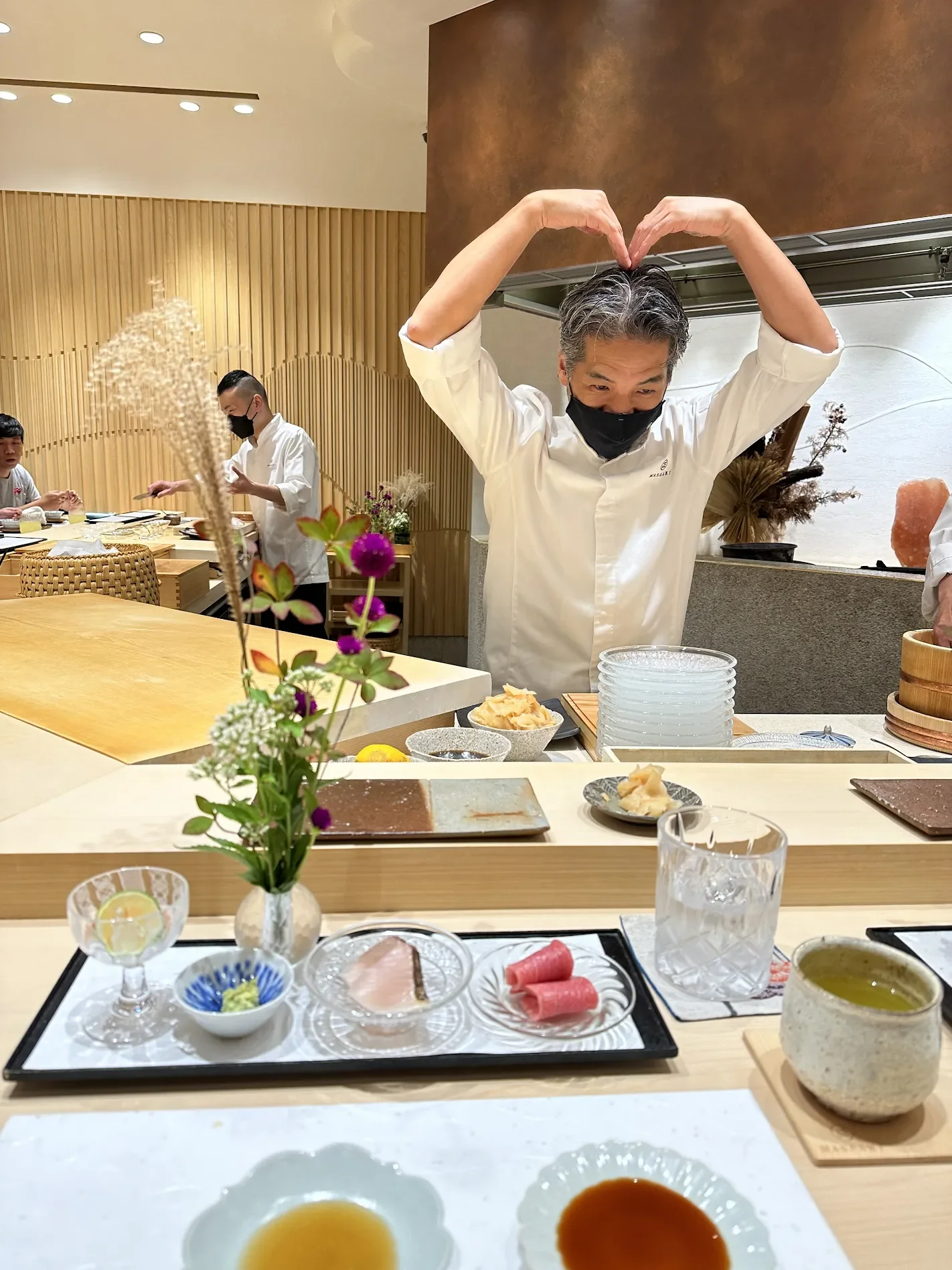
Some sushi chefs learn to love fish through the kitchen.
Masaaki Sakashita seems to have started much earlier.
The Kyoto-born chef behind Sushi Masaaki grew up beside the Kamo River, where fishing was already part of his childhood. His own restaurant biography says his mother once remarked that he would probably become a sushi chef because of how much he loved fish.
She was not far off.
Sakashita entered the culinary industry at 18 and has now spent decades working with Japanese food, including stints at Hashida Sushi and Ishi in Singapore before opening a restaurant under his own name.
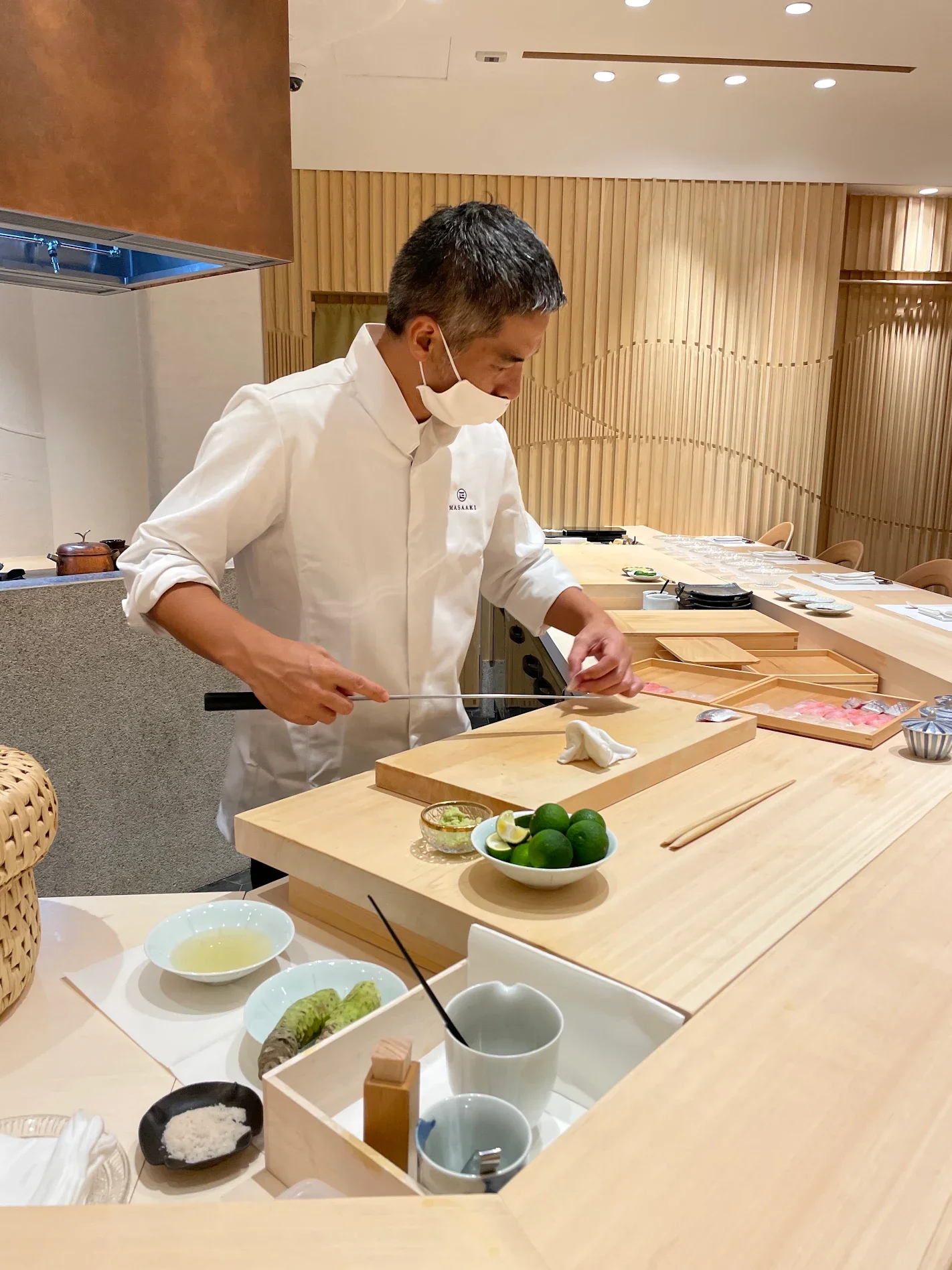
Today, Sushi Masaaki remains at South Beach in Singapore, with Sakashita still identified as its owner-chef.
And underneath all the technique, vinegar, knives and omakase ceremony, there is still something remarkably simple driving the whole thing.
He really likes fish.
A Childhood by the Kamo River
Sakashita grew up in Kyoto near the Kamo River.
Fishing was one of his early interests, and fish became part of his relationship with food long before it became his profession. According to Sushi Masaaki's own biography, he was also the pickiest of three siblings and would sometimes refuse dinner if he did not think the food tasted good.
That may sound like the behaviour of a difficult child.
In hindsight, it also looks remarkably consistent.
Taste mattered to him early.
So did curiosity.
At 18, he formally entered the culinary industry and apparently approached learning with the same intensity. His restaurant recalls that he would arrive hours before his peers, finish the work assigned to him and then try to learn other tasks.
Sakashita himself remembers being the junior chef who made mistakes, got scolded and kept going because he wanted to learn.
The obsession had simply moved from the river into the kitchen.
From Kyoto to Singapore
Sakashita's career eventually brought him to Singapore.
Before establishing Sushi Masaaki, he worked at Hashida Sushi and later Ishi, two names closely associated with Singapore's high-end Japanese dining scene.
By 2020, he was ready to step out under his own name.
Sushi Masaaki opened at South Beach Avenue, giving Sakashita his own counter and a restaurant in which the experience could reflect more of his personality. Contemporary reviews immediately noticed that distinction.
This was serious omakase.
It just did not always behave seriously.
Omakase Does Not Have to Feel Like a Funeral
High-end sushi can become very quiet.
There is the counter.
The chef works.
Guests watch.
Everyone behaves as though saying the wrong thing might somehow ruin the tuna.
Sakashita does not seem particularly interested in that version of the experience.
Robb Report described him as an entertainer as much as a chef, someone willing to bring banter and humour into the room rather than treating omakase as a rigid performance. City Nomads similarly found the experience unexpectedly lively, with jokes and laughter across the meal.
That does not mean the food is casual.
It means the chef is.
There is an important difference.
Sakashita has said that he does not hide who he is in the kitchen. He does not expect perfection from himself as a person simply because he is standing behind the counter.
That makes Sushi Masaaki feel less like watching a craftsman perform from a distance and more like being fed by somebody who actually wants you there.
Tradition Is Something to Question
Sakashita is Japanese.
His food is grounded in Japanese technique.
But he does not describe himself as particularly traditional.
In a 2021 interview, he said that after more than 20 years in the industry, he was still questioning tradition and looking for ways to improve or improvise, even if that process ultimately brought him back to the traditional method.
That is a useful way to understand his cooking.
Tradition is not something he seems interested in rejecting.
Neither is it something he follows automatically.
At Sushi Masaaki, the restaurant itself describes his philosophy as combining traditional techniques with personal ingenuity. Ingredients are sourced from across Japan, while individual courses are built to preserve the natural characteristics of what is being served.
The foundation is Japanese.
The interpretation belongs to Sakashita.
The Fish Comes First
For all the personality surrounding Sushi Masaaki, the restaurant remains intensely focused on seafood.
Fresh fish and seafood are flown in from Tokyo's Toyosu Market several times a week, according to 50 Best Discovery.
The preparation can be meticulous.
The restaurant has paid attention not only to which fish it buys, but also to how that fish is handled before it reaches the kitchen. Robb Report noted that its sashimi supplier uses a method intended to dispatch fish while relaxed, which the restaurant believes contributes to the tenderness of the flesh.
That attention continues onto the counter.
Fish can be sliced differently according to texture.
Different parts of the same fish may appear together in one piece of sushi.
Liver, fin and flesh can all become part of the same bite when the ingredient calls for it.
This is not simply a chef buying expensive seafood and letting the price tag do the work.
The fish is studied.
Even the Rice Has an Opinion
At a serious sushi restaurant, fish is only half the conversation.
The rice matters just as much.
Sushi Masaaki's shari has been particularly noted for its texture and seasoning. 50 Best Discovery describes it as being mixed with three vinegars, including akazu red vinegar, while earlier reporting also highlighted Sakashita's attention to achieving a firmer exterior and softer centre in the grain.
It is a small detail until you remember that almost every piece of nigiri depends on it.
The fish changes.
The rice remains underneath.
A sushi chef can spend a lifetime refining both.
Taste Before Instagram
Sakashita also has a fairly uncomplicated answer to the question of what matters most on the plate.
Taste.
He has spoken openly about not cooking primarily for appearance and about treating visual flourish as secondary to flavour.
That does not mean Sushi Masaaki is visually careless.
Quite the opposite.
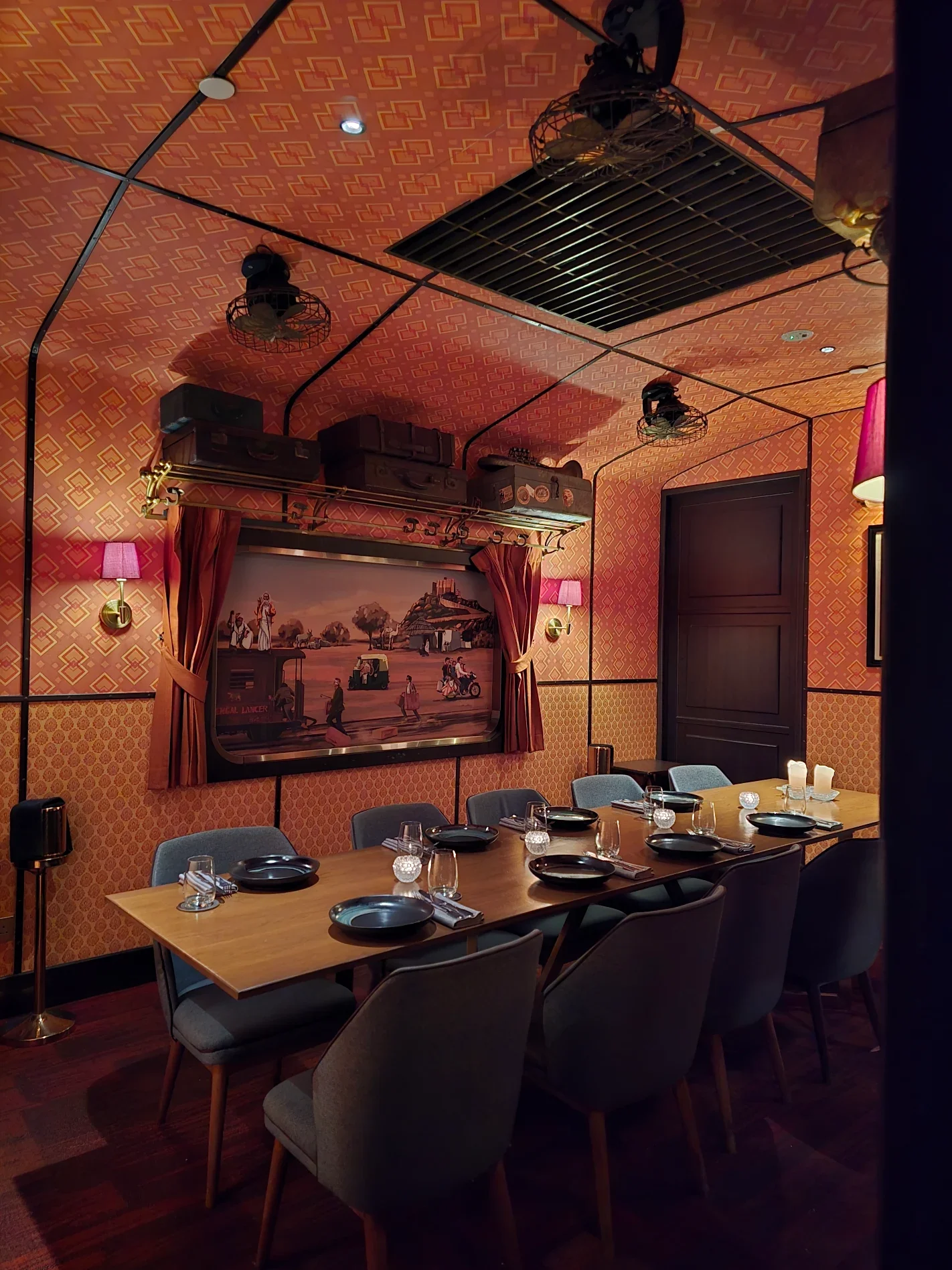
The restaurant is filled with design details, from pink Gucci cranes and suspended washi to a sushi counter made from a 250-year-old piece of hinoki wood.
But Sakashita's food is not designed merely to generate a photograph.
Presentation serves the meal.
The meal does not exist to serve the photograph.
For a chef working in one of the most visually scrutinised cuisines in the world, that is a useful position to take.
A Tuna That Cannot Stop
There is perhaps no better explanation of Sakashita's personality than the answer he once gave when asked what fish he would choose to be if he could live life again.
A tuna.
His reasoning was that tuna cannot stop swimming, and he liked the idea because he did not want to stop either.
It is a playful answer.
It is also surprisingly revealing.
Sakashita has spent his career learning, moving, questioning and refining.
He began as the child fishing beside the Kamo River.
Then came the professional kitchen at 18.
Then years of Japanese cooking.
Then Hashida.
Then Ishi.
Then a restaurant bearing his own name.
And still, the curiosity does not appear to have gone away.
Masaaki Sakashita Was Always Going to End Up With Fish
Some career stories only make sense when you look backwards.
This one almost feels predetermined.
A boy growing up beside a river.
A mother joking that his love of fish might turn him into a sushi chef.
A young cook arriving early because he wanted to learn more.
Decades later, Masaaki Sakashita stands behind his own sushi counter in Singapore, flying seafood in from Toyosu and serving it according to a philosophy that combines Japanese tradition with his own instincts.
He still fishes.
He still cooks fish.
And when someone asks what animal he would return as in another life, he chooses a fish that dies if it stops moving.
Maybe his mother saw this coming before he did.