Korea Culture Terminal 3: A Korean Banchan Buffet Built for Changi Airport
Korea Culture at Changi Airport Terminal 3 is built around a different idea from the usual Korean restaurant: order a main, then explore a large free-flow selection of banchan, soups, drinks and desserts. With more than 50 rotating side dishes, family-friendly menus and an entertainment-inspired dining room, it turns the Korean tradition of shared side dishes into the centre of the meal.
Korean restaurants often begin with banchan.
Small dishes arrive before the main meal: perhaps kimchi, vegetables, tofu, pickles or something simmered and seasoned. They occupy the table almost casually, yet they are one of the most recognisable parts of Korean dining.
At Korea Culture, the supporting cast becomes the main attraction.
The restaurant at Singapore Changi Airport Terminal 3 describes itself as being created out of a particular enthusiasm for banchan — not simply as accompaniments, but as an expression of the generosity and variety of Korean meals. Its answer was to build a restaurant around a rotating buffet of more than 50 hot and cold banchan and side dishes.
That produces a restaurant with an unusual structure:
choose a Korean main course,
then build the rest of the meal yourself.
Banchan Is Not Supposed to Be an Afterthought Here
The Korean word banchan refers broadly to the small side dishes traditionally served alongside rice and the main components of a meal.
They can be fermented.
Pickled.
Stir-fried.
Seasoned.
Braised.
Cold.
Hot.
Very simple or surprisingly involved.
Korea Culture's menu concept takes that familiar part of Korean dining and expands it into a buffet format.
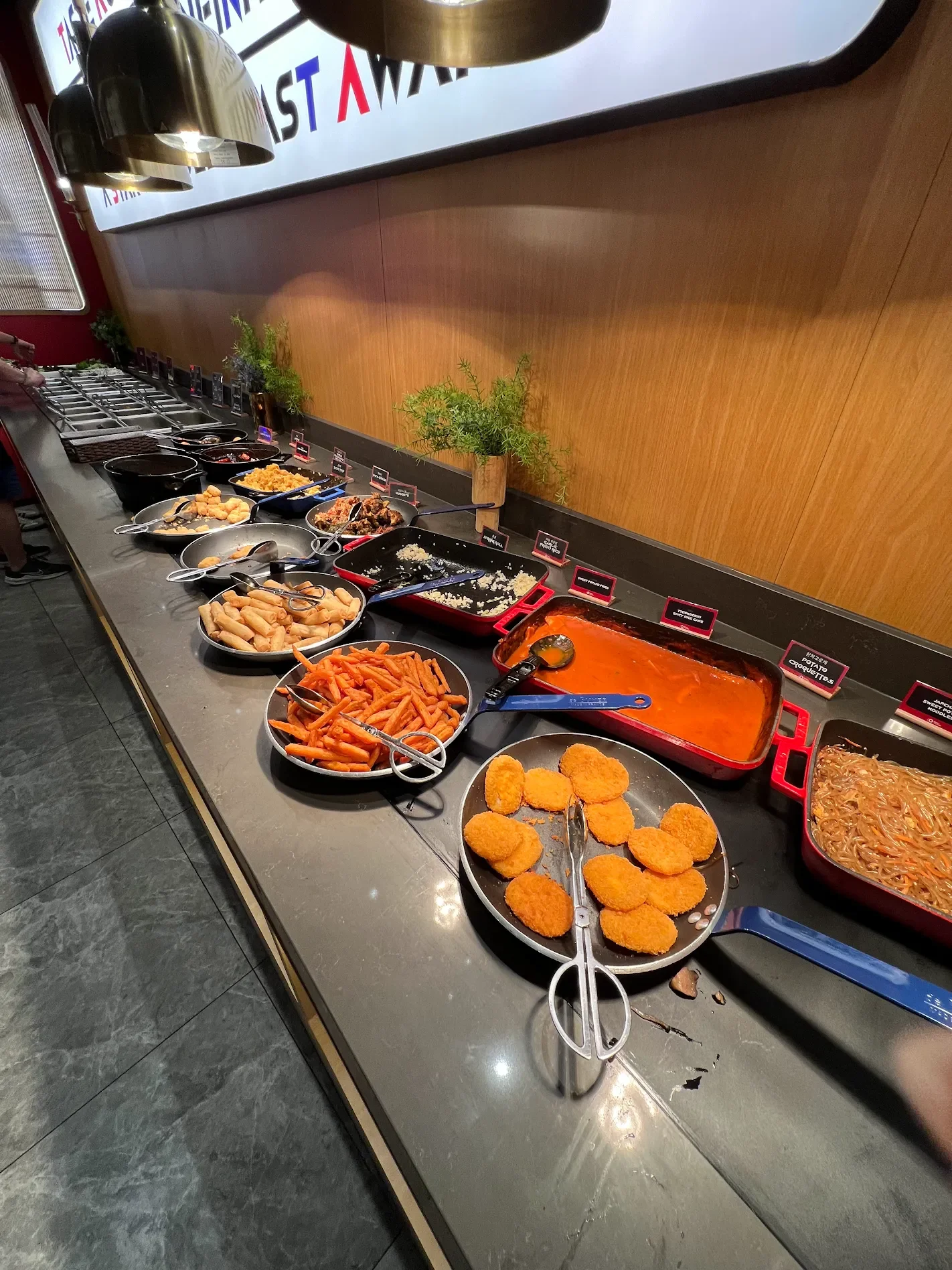
The restaurant says its selection rotates and can include kimchi, pickled vegetables, greens, tofu and other hot and cold dishes, alongside soups, beverages and desserts.
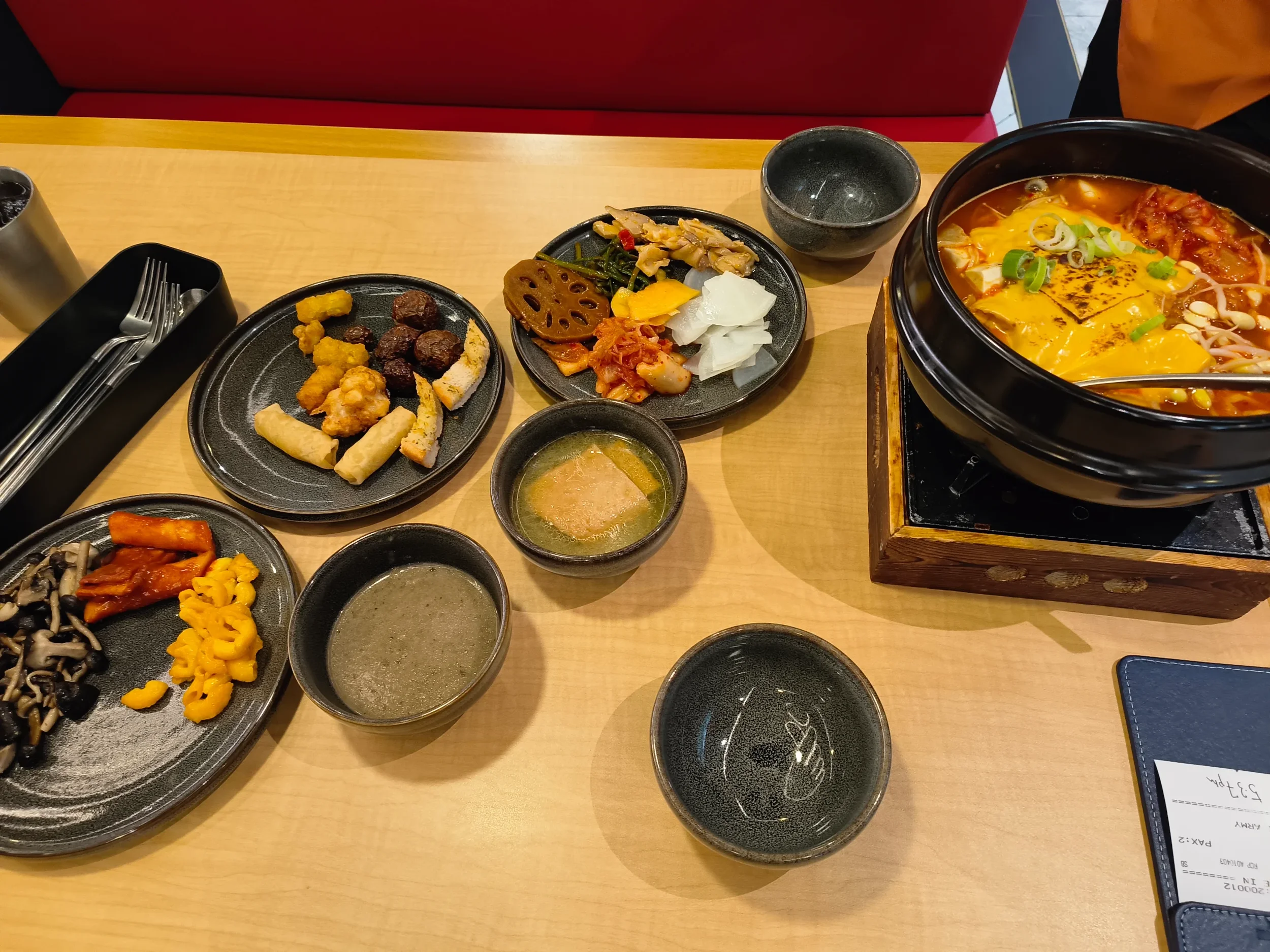
The result is less like receiving six predetermined side dishes at the table and more like assembling your own Korean meal around the main course.
That freedom is central to the concept.
How Korea Culture Terminal 3 Works
The basic system is straightforward.
Order a main course and access to the free-flow banchan buffet is included.
Diners can also choose to purchase the buffet without ordering a main.
The restaurant currently operates the buffet on a 90-minute dining period.
This distinction is useful because Korea Culture is neither a conventional à-la-carte Korean restaurant nor a full buffet in the usual sense.
The main dishes remain important.
But the buffet changes how the meal behaves.
Someone ordering bibimbap may build a plate around vegetables and kimchi.
Another diner eating samgyetang might concentrate on lighter sides.
Children may gravitate towards fried items and desserts.
The table can therefore contain people eating quite differently while still sharing the same restaurant format.
For more restaurants and food destinations, explore TCJ's Dining Venues.
The Main Menu Is Broader Than Barbecue
Korean food in Singapore is frequently reduced to grilled meat.
Korea Culture takes a broader approach.
Its current menu spans rice dishes, grilled preparations, fried chicken, stews and other Korean comfort-food formats. The restaurant describes its food as drawing from different regions of Korea, from Jeju to Seoul.
Recent diners mention dishes including:
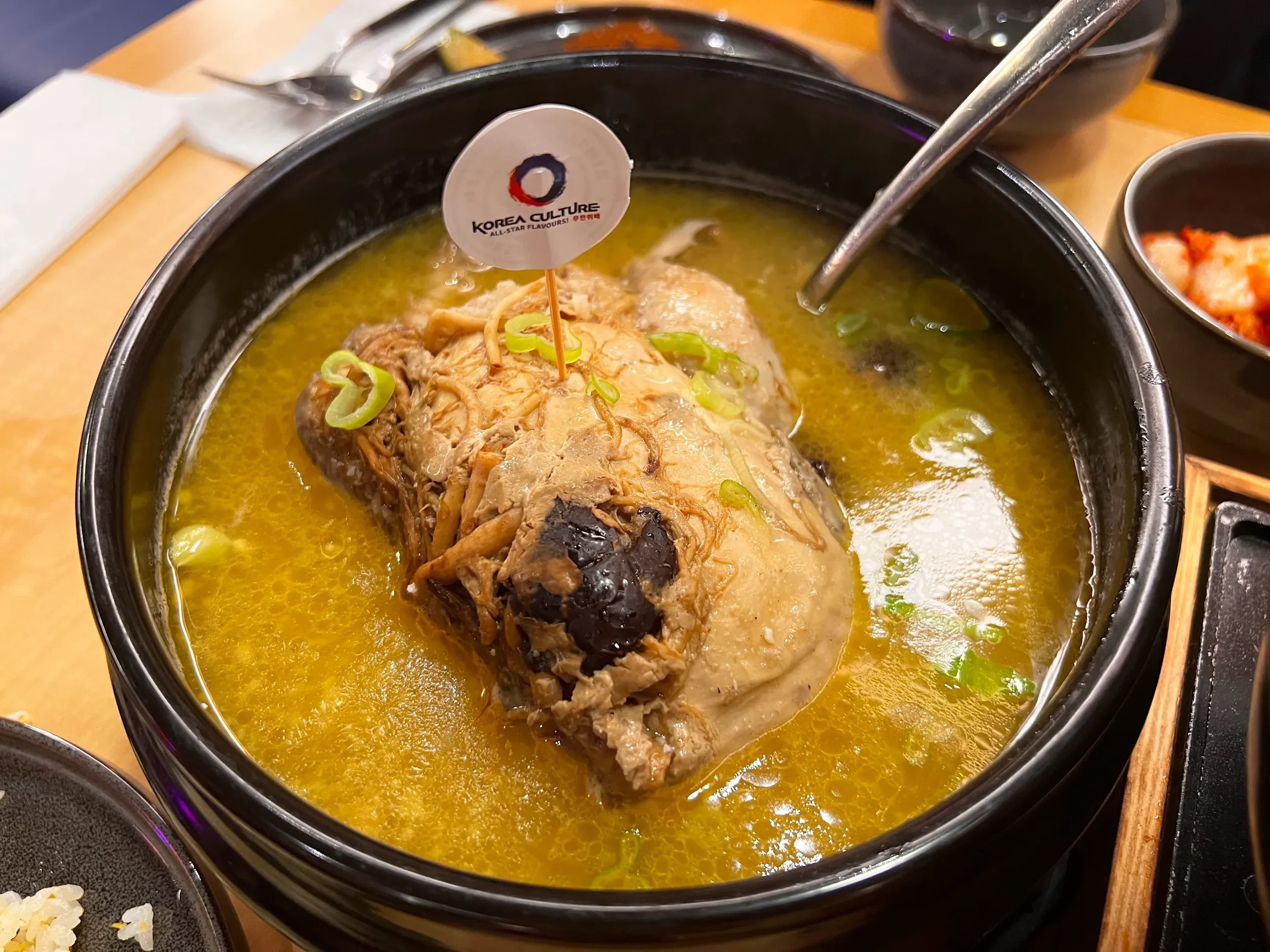
samgyetang, or Korean ginseng chicken;
army stew;
bibimbap;
Korean fried chicken;
and various larger dishes designed for sharing.
That variety makes sense for an airport restaurant.
Changi serves families, workers, travellers and groups whose appetite for Korean food may range from highly familiar to completely new.
A narrow specialist concept would exclude many of them.
Korea Culture instead aims for recognisable Korean dishes with a format flexible enough to accommodate different appetites.
Samgyetang Is One of the Restaurant's More Natural Fits
Among the mains frequently mentioned by diners is samgyetang, Korea's well-known ginseng chicken soup.
It is an interesting dish to place beside a banchan buffet.
Samgyetang is already a complete, comforting meal: chicken simmered in broth, traditionally associated with ginseng and other aromatics.
But its relatively restrained flavour makes it particularly compatible with side dishes.
Something fermented brings acidity.
Something spicy adds heat.
Vegetables interrupt the richness.
The diner effectively adjusts the meal while eating.
That interaction between a central dish and multiple small accompaniments gets closer to the logic of Korean dining than a buffet of unrelated mains would.
Army Stew Moves in the Opposite Direction
Then there is budae jjigae, commonly known in English as Korean army stew.
This is a louder dish.
The stew is associated with a mixture of Korean ingredients and processed foods that became available around American military bases after the Korean War — resulting in combinations that can include kimchi, noodles, sausage, luncheon meat and other ingredients in a spicy broth.
Korea Culture offers its own army-stew format among the restaurant's shared mains, and diners frequently mention its generous portion size.
Alongside samgyetang, it illustrates something useful about the restaurant.
"Korean food" here does not mean one particular level of refinement.
There is space for traditional soups, casual comfort food, rice bowls and modern crowd-pleasers within the same meal.
The Buffet Is Intentionally Larger Than Traditional Banchan Service
Korea Culture currently promotes more than 50 rotating buffet items.
Not everything in that spread should be understood as traditional banchan in the narrowest sense.
Diner accounts mention conventional Korean items alongside fried foods, salads, soups, fruit, soft drinks, coffee and Häagen-Dazs ice cream.
That makes the word "banchan buffet" slightly broader here than the small-dish service someone might encounter at a traditional restaurant in Korea.
This appears intentional.
Korea Culture is adapting the concept into an all-ages buffet format.
For a family restaurant at an international airport, that is arguably more useful than trying to create a museum-piece reproduction of Korean dining.
The Korean side dishes establish the identity.
The wider buffet makes the format accessible.
It Is Particularly Well Suited to Families
The Terminal 3 restaurant seats roughly 80 to 100 guests and explicitly positions itself as family-friendly.
Its current children's policy divides dining by age: children below three are treated separately, those aged three to nine order from the Kids Set Meal, while diners aged ten and above use the adult menu.
This matters because Korean communal food can already work particularly well for families.
One large stew can be shared.
Everyone has access to the side dishes.
A child who does not want kimchi can choose something milder.
Someone with a larger appetite can return to the buffet.
Recent reviews repeatedly describe the restaurant as suitable for families and groups rather than primarily as a couple-oriented Korean dining room.
That fits the Changi setting very naturally.
The Airport Location Is Part of the Concept
Korea Culture is located in the public area of Terminal 3, at the Level 3 Dining Atrium.
No boarding pass is required.
That distinction is important.
This is not simply somewhere for passengers waiting for a flight.
It can function as a destination for people visiting Changi, meeting arriving relatives, having a family meal or looking for somewhere to eat in the east of Singapore.
The airport location also explains the restaurant's relatively broad menu.
A Terminal 3 restaurant serves a different audience from a specialist Korean restaurant hidden in a neighbourhood enclave.
It needs to make sense to someone who planned the visit three weeks ago and someone who simply walked upstairs hungry.
The Interior Takes Its Cues From Korean Entertainment
Korea Culture does not limit the idea of "culture" to food.
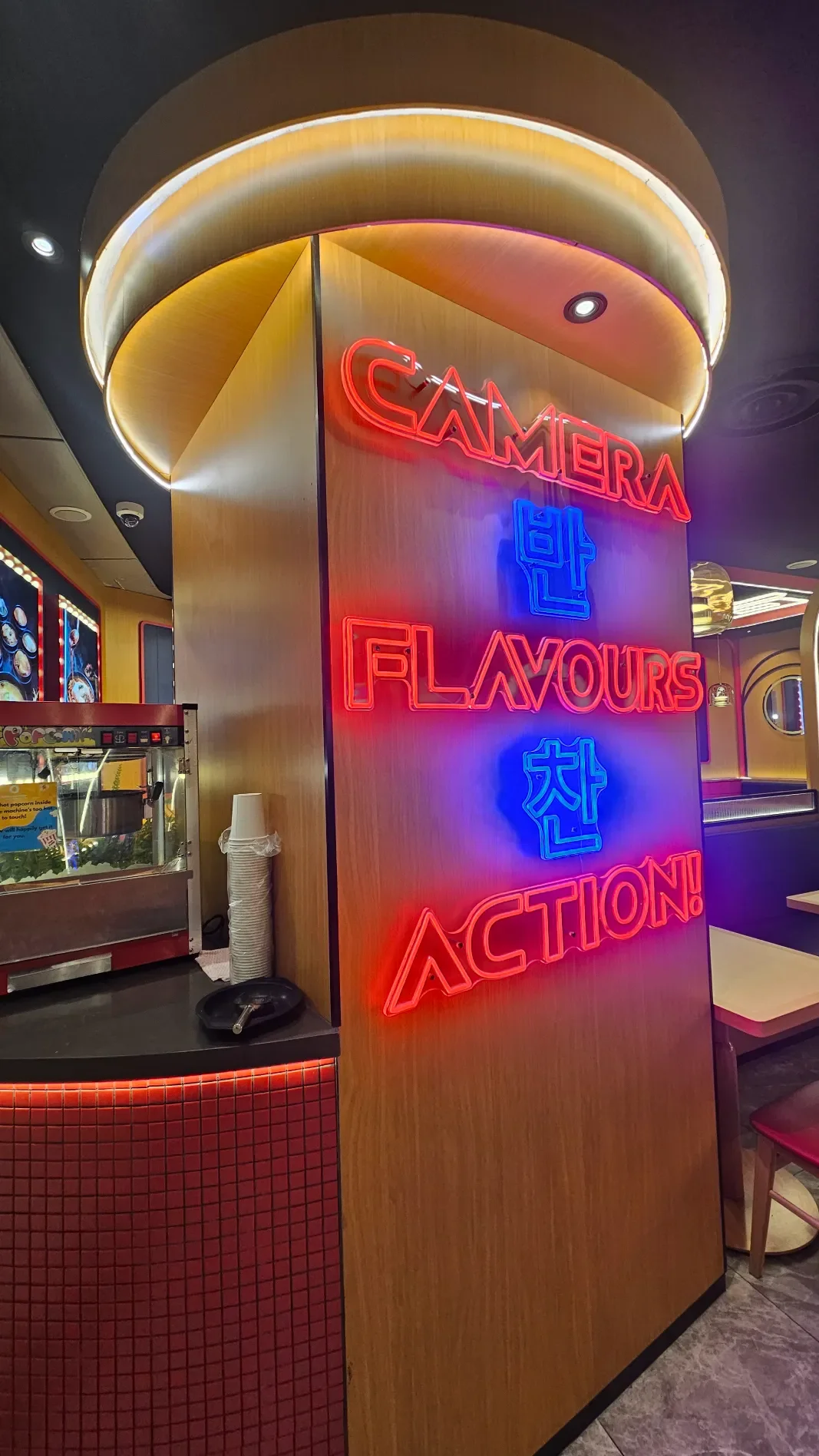
The Terminal 3 restaurant uses an entertainment-inspired interior built around Korean television, cinema and popular culture.
The company describes the space as being influenced by the energy of Korean reality television, with rotating themes and studio-like visual elements. It says themed environments are intended to change periodically so repeat visits do not necessarily look identical.
That means Korea Culture is not aiming for the visual language of a traditional hanok restaurant.
It is closer to contemporary K-culture as entertainment.
Some diners have encountered staff dressed around recognisable Korean television themes, while K-pop and other pop-cultural references contribute to the atmosphere.
Whether someone personally wants that much theming around dinner is a matter of taste.
But it makes the positioning clear.
The name is Korea Culture, not simply Korea Kitchen.
The Concept Is Designed to Change
One of the more interesting ideas on Korea Culture's site is that its themed dining environments are intended to evolve.
The company says themes can change approximately every six months.
That approach treats the restaurant slightly differently from the usual dining room.
Most restaurants design an interior once, then preserve it until the next renovation.
Korea Culture treats the environment more like programming.
The food remains Korean.
The banchan remains the central device.
But the cultural layer around it can change.
That is an increasingly common approach in entertainment-driven hospitality: the venue itself gives customers a reason to return even if the core product remains familiar.
Halal Accessibility Is an Important Part of the Restaurant
Korea Culture positions the Terminal 3 restaurant as a halal-friendly and inclusive Korean dining concept.
Its current About page states that the business is officially Halal-certified.
There is, however, an inconsistency across Korea Culture's own website: the Terminal 3 and menu pages still contain older wording stating that certification is in process, while the current About page and the restaurant's public listing identify the venue as halal-certified.
The practical point remains significant.
Halal Korean dining expands access to dishes that Muslim diners may otherwise have to investigate carefully, particularly recipes that can traditionally involve pork, lard or alcohol.
Korea Culture states that it does not use pork, lard or alcohol in its dishes.
For Singapore's diverse family and workplace groups, that broad accessibility is an important part of the restaurant's usefulness.
This Is Not a Review of Korea Culture
Korea Culture has a substantial volume of public diner feedback.
At the time of the supplied material, its Terminal 3 listing showed hundreds of reviews, with many diners praising the banchan variety, generous meal format, staff and suitability for groups.
There are criticisms too.
Some customers have questioned the consistency of certain buffet items or mains, while others have commented on replenishment, the 90-minute limit or policies around taking leftover à-la-carte food away.
But this article is not attempting to score Korea Culture or decide whether those diners are right.
The reviews are useful here only where they help explain how the restaurant functions in practice.
TCJ is documenting the venue:
what it is,
how its dining model works,
and where it fits within Singapore's food landscape.
A separate review would require a different methodology.
The More Interesting Question Is Why the Format Works
Banchan is traditionally generous by design.
Many small plates create choice.
People share.
One flavour corrects another.
A spicy dish is followed by something mild.
Something fermented sits beside something fresh.
Korea Culture takes that principle and exaggerates it into a buffet.
Purists may reasonably argue that a 50-item spread containing ice cream and fried snacks is no longer simply traditional banchan service.
But perhaps that is not really the point.
The format has been translated for contemporary Singapore.
It combines Korean dishes with the city's enthusiasm for buffets, family dining and high-value meal formats.
It also places the restaurant somewhere between Korean restaurant and casual entertainment venue.
That hybrid identity is precisely what distinguishes it.
Who Is Korea Culture Terminal 3 For?
Korea Culture makes particular sense for:
families,
larger groups,
halal-conscious diners,
people visiting Changi Airport without travelling,
Korean-food newcomers who want to sample many flavours,
and diners with large enough appetites to make use of both a main course and a substantial buffet.
Someone looking for a quiet specialist restaurant dedicated to one regional Korean cuisine will find a different proposition here.
Korea Culture is deliberately broad.
It is supposed to allow one diner to eat ginseng chicken while another has bibimbap, someone else shares army stew and a child finishes the meal with ice cream.
The banchan connects all of them.
And that may be the cleverest part of the idea.
A Korean side dish normally occupies only a small amount of space on the table.
At Korea Culture, those small dishes have been given an entire restaurant.
Korea Culture – Changi Airport Terminal 3
Terminal 3 Departure Hall Mezzanine South
#03-33/34, Singapore 819663
Cuisine: Korean
Format: Main Course + Free-Flow Banchan Buffet / Buffet-Only Option
Dining Period: 90 minutes
Location: Terminal 3 public area; no boarding pass required
The restaurant currently lists opening hours of 10:30am to 10pm daily, with last orders at 9:30pm.
Read more about Korea Culture Terminal 3, explore the Korea Culture menu, or learn about the concept through About Korea Culture.
Explore more through TCJ's Dining Venues, discover the people behind food through Professionals, browse culinary Products, or continue through our Food Guides.