Dave Pynt: The Chef Who Built Burnt Ends Around Fire
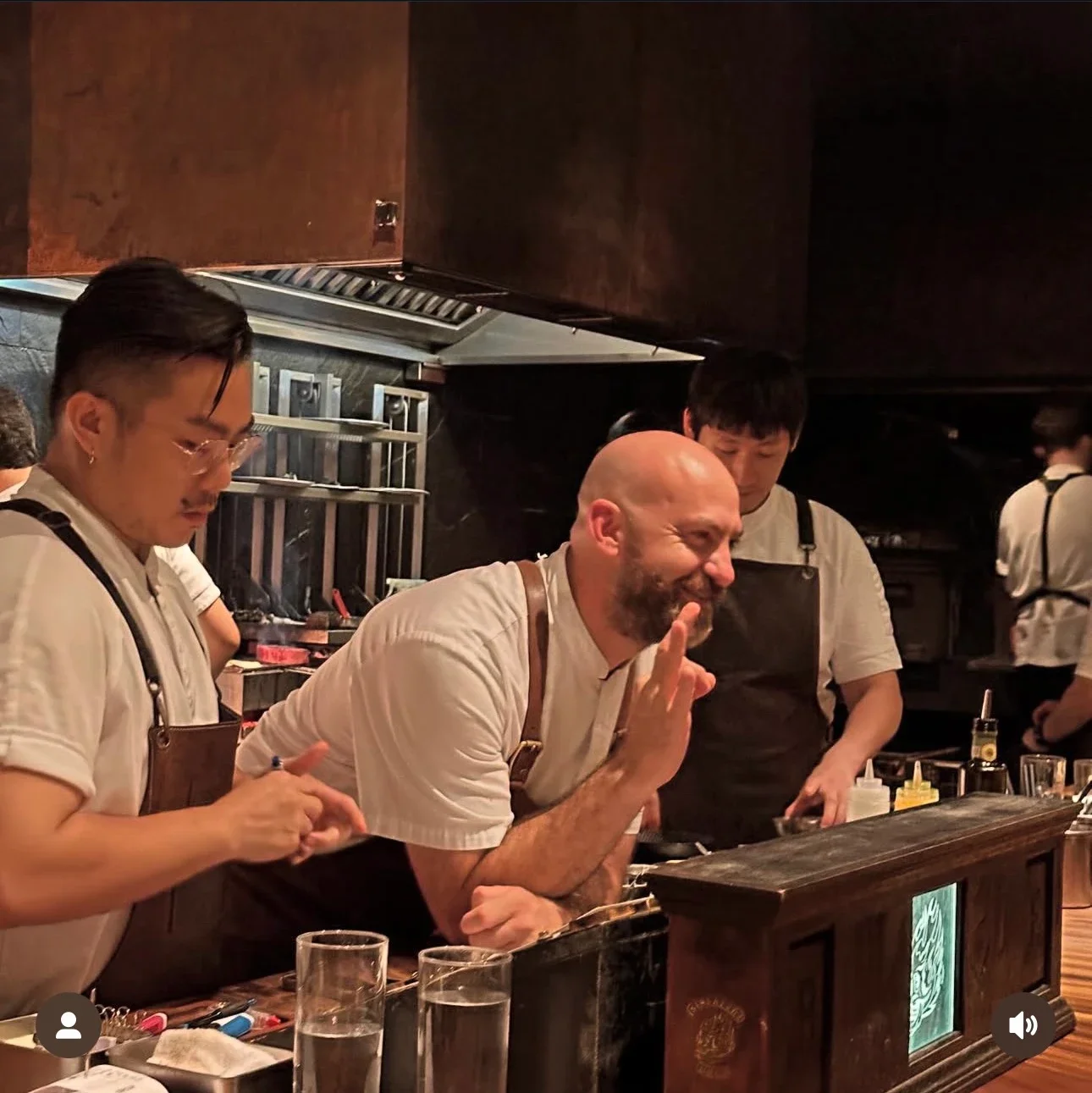
Some chefs become associated with a particular dish. Others with a technique, a restaurant, or a very recognisable style of plating.
For Dave Pynt, it is difficult to separate the chef from fire.
The Australian chef behind Burnt Ends has spent much of his career exploring what happens when good ingredients meet wood, heat and smoke. Yet despite the reputation that has grown around his cooking, Pynt's approach has remained remarkably straightforward. At its heart is the idea that food should first and foremost taste good.
It sounds obvious. In modern restaurants, it sometimes isn't.
From Perth to Some of the World's Most Influential Kitchens
Pynt was born in Perth, Western Australia, and studied commercial cooking before leaving Australia to work overseas.
The kitchens he passed through would eventually read like a cross-section of influential modern European cooking. He worked with René Redzepi at Noma, Fergus Henderson at St John, Nuno Mendes in London and Tetsuya Wakuda in Sydney.
One experience, however, seems particularly important to understanding the chef he became.
Pynt worked at Asador Etxebarri in Spain, where chef Victor Arguinzoniz built an extraordinary restaurant around the possibilities of cooking over fire.
For Pynt, wood-fired cooking was not simply about producing smoke or aggressively charring meat. Fire created another variable for the cook to understand and control. Compared with switching on a gas burner, cooking with wood demanded more attention.
That difficulty appears to be part of what attracted him to it.
There is something satisfying about having to work with the fire rather than simply commanding it.
The Restaurant That Became Burnt Ends
Burnt Ends opened in Singapore in 2013.
The original idea could easily have become something else. Pynt's eventual business partner, Loh Lik Peng, had initially considered a yakitori concept. Pynt instead proposed developing an idea related to a pop-up he had operated in London.
That decision eventually produced a restaurant quite unlike most of Singapore's fine-dining establishments.
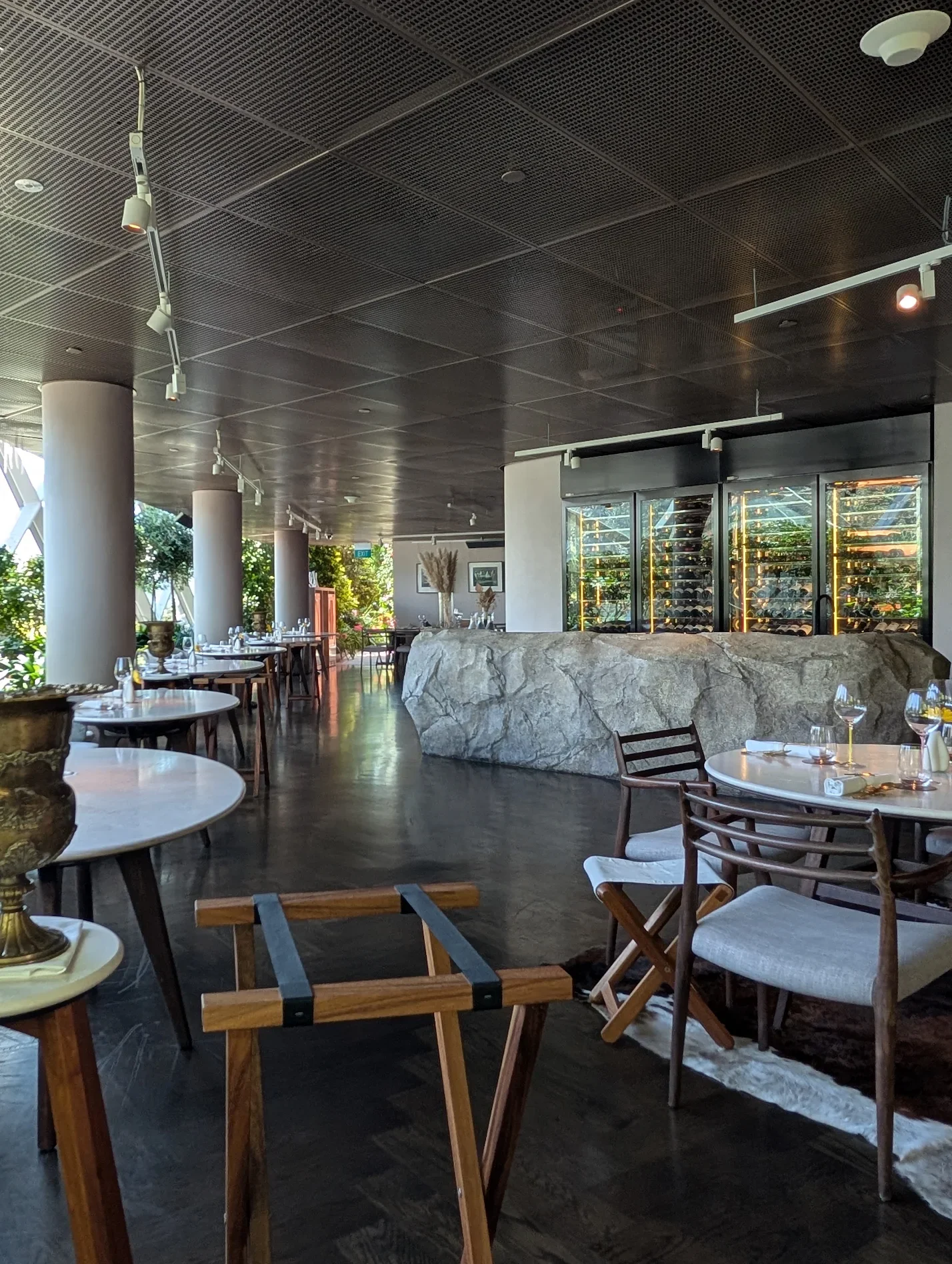
Burnt Ends centred itself around an open kitchen and wood fire rather than white-tablecloth ceremony. Its cooking was ambitious, but the restaurant did not need to behave as though eating ambitious food was a solemn occasion.
Over time, that combination became part of its identity: very serious cooking served in an environment that remained comparatively relaxed.
The restaurant later moved from its original Chinatown home to Dempsey, where the operation grew substantially. At the centre of the kitchen sits a custom four-tonne, dual-cavity oven accompanied by elevation grills that allow the cooks to control the distance between food and fire.
The equipment is impressive, but it makes sense only because of the philosophy behind it.
Burnt Ends writes its menus around produce and cooks with the understanding that fire changes constantly. Heat rises and falls. Wood burns differently. Fat drips onto coals. Smoke changes flavour. Ingredients respond differently depending on where they are positioned.
The cook has to pay attention.
Modern Barbecue Without Too Many Rules
Trying to define Burnt Ends purely as barbecue can be difficult.
It certainly uses the language of barbecue: fire, smoke, grills, meat and char. But Pynt's interpretation is considerably broader than the traditional barbecue styles associated with any single country.
“Modern barbecue” became the convenient description.
Perhaps the better explanation is simply that Pynt cooks the things he wants to cook over fire, provided the result tastes good.
That freedom is important.
There is technique behind the food, but the technique does not need to become the story every time a plate reaches the table. There is also an appealing lack of preciousness in that philosophy. Ingredients can be treated carefully without being treated reverentially.
Fire is allowed to leave its mark.
Edges blacken. Fat renders. Surfaces caramelise. Smoke becomes an ingredient of its own.
The goal is not perfection in the immaculate sense. It is flavour.
A Chef Who Doesn't Quite Fit the Fine-Dining Stereotype
Pynt himself fits Burnt Ends rather well.
There is something slightly contradictory about a chef whose restaurant has accumulated international recognition while retaining an image built around grills, smoke, large pieces of meat and a famously substantial beard.
Even the beard has a story.
While travelling through South America, Pynt noticed men wearing short hair with beards. His girlfriend suggested the look might suit him. Her expectation was apparently something reasonably tidy.
Pynt had other ideas.
The beard kept growing.
It is a minor anecdote, but strangely appropriate. There is a little of the same instinct visible in Burnt Ends: begin with a recognisable idea, then allow it to become something more individual.
Recognition Came Afterwards
Burnt Ends eventually became one of Singapore's most internationally recognised restaurants.
It received a Michelin star in 2018 and has retained it since. The restaurant has also appeared repeatedly in major international restaurant rankings.
Pynt himself has received recognition from within the industry, including the Asia's 50 Best Restaurants Chef's Choice Award in 2017.
Those achievements matter, but they are not particularly useful for explaining why his cooking works.
Plenty of restaurants have awards.
The more interesting accomplishment is that Burnt Ends developed an identity strong enough that the restaurant's name now communicates a way of cooking.
Wood. Heat. Smoke. Produce. Controlled aggression.
And underneath all of it, simplicity.
Beyond One Restaurant
What began with Burnt Ends has gradually expanded into the Burnt Ends Hospitality Group.
Its restaurants and related concepts now stretch beyond the original dining room, including Burnt Ends Bakery, Burnt Ends Bar, Meatsmith and international projects connected to Pynt's style of live-fire cooking.
That growth could easily have diluted the original idea.
Instead, fire remains a recurring language across much of the group.
This may ultimately be the more interesting part of Pynt's career. He did not simply create dishes that people wanted to eat. He developed a cooking philosophy clear enough to travel beyond one chef standing behind one grill.
why Dave Pynt is the man
Dave Pynt belongs to a generation of chefs who helped loosen the boundaries between fine dining and more elemental forms of cooking.
At Burnt Ends, expensive ingredients and serious technique can coexist with smoke, blackened surfaces and the atmosphere of a restaurant that would rather feed people than intimidate them.
That balance is harder to achieve than it looks.
Pynt's cooking is sophisticated without constantly announcing its sophistication. The restaurant can be internationally celebrated without requiring the guest to understand every technique taking place in the kitchen.
You can analyse the ovens, the grills, the temperatures and the influence of the kitchens in which Pynt trained.
Or you can simply eat.
For a chef who has built so much of his career around one of humanity's oldest cooking methods, perhaps that is exactly the point.